
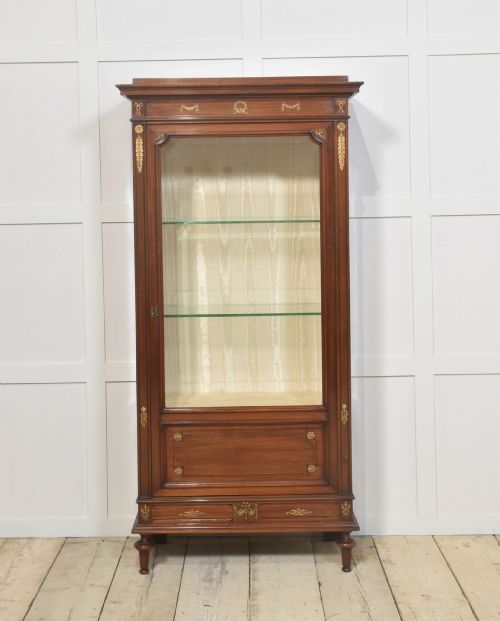


Louis XVI Vitrine
A Louis XVI vitrine brings classical French elegance and refined display space into any room through its balanced proportions and delicate glazing.
What a louis xvi vitrine is
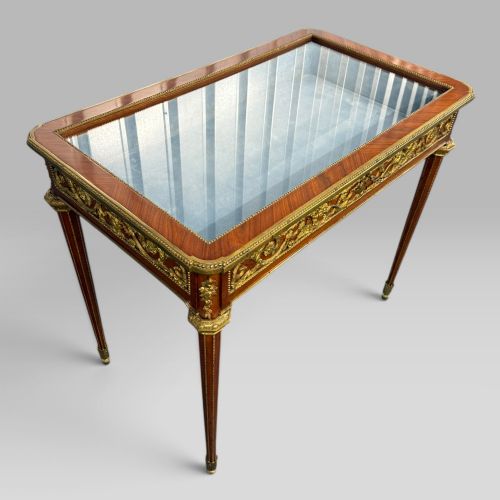
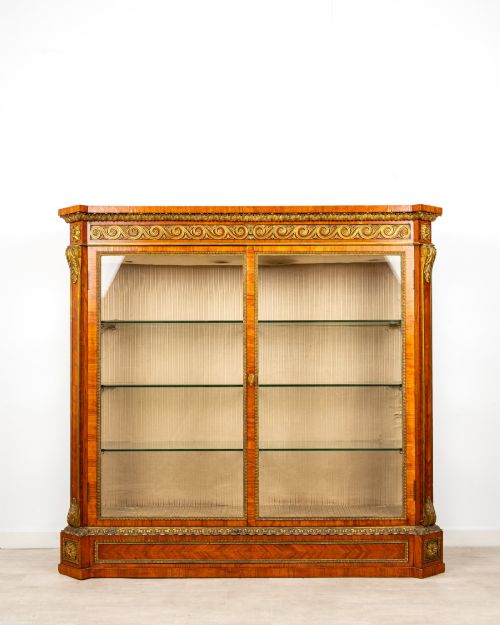
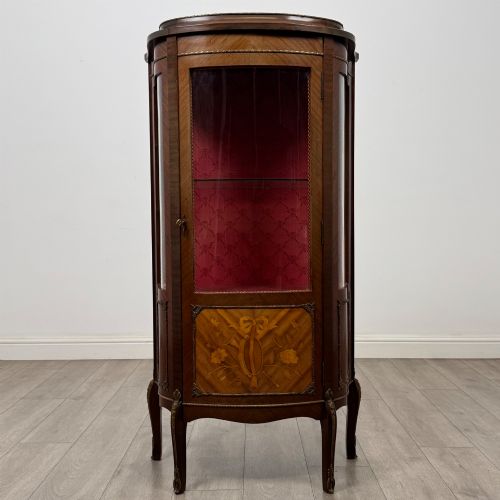
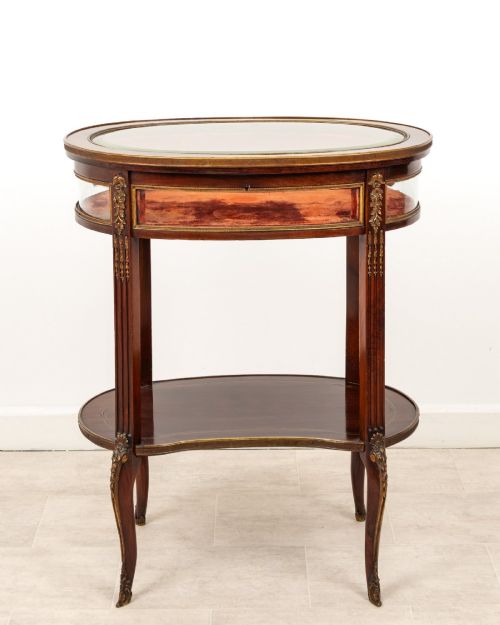
A louis xvi vitrine functions primarily as a display cabinet designed to showcase fine objects behind glass panels. These pieces draw directly upon eighteenth-century French classicism, though the examples on this page date from the nineteenth and early twentieth centuries, spanning the Edwardian period, 1800s, 1900, 1880, and the French Belle Epoque.
Most pieces encountered here belong to the Louis XVI style, Louis XVI revival, or French chateau aesthetic, often taking the form of display cabinets or two-door bookcase vitrines. Makers and designers produced these structures using traditional French furniture forms scaled for later domestic interiors, maintaining the signature rectilinear geometry and restrained ornamentation characteristic of the revival periods.
Materials and construction
Cabinetmakers constructed these frames principally in mahogany, walnut, and kingwood, housing them with clear glass panels and mirrored backs to reflect light through the interior shelves. Structural integrity relied on dense timber framing, while visual richness came from applied brass and ormolu mounts placed along structural corners and cornices.
Surface detailing frequently incorporated carved wooden elements alongside metal fittings, sometimes complemented by fabric-lined interiors or marble tops. Workshops paired these decorative components with hinged glass doors designed to seal tightly against dust, protecting the displayed items within.
Retail Price Guide 2026
Typical UK retail prices for louis xvi vitrine, calculated from the Sellingantiques database of over a million retail prices indexed since 2003. This retail price guide relies exclusively on Sellingantiques data; no external sources or auction records are used, so the figures do not describe the wider market.
Some cabinet doors shut with a satisfying click from original brass latches that have faithfully sealed out household dust for over a century.
Distinctions in quality
The sophistication of the cast ormolu mounts and the crispness of the timber carving separate standard cabinetmaking from exceptional studio production. Finer pieces demonstrate precision in the joinery of the door frames and the integration of heavy bronze or brass mounts that follow the contours of the mahogany or walnut carcase without gaps.
The choice of secondary woods and the quality of the internal mirror glass also indicate workshop standards. Cabinets carrying attributions to notable makers typically exhibit superior finishing in concealed areas and heavier, more finely chased metalwork than anonymous pieces of the same period.
Paul Sormani·Paul Somani·Maison Gouffe·Lampre
The Louis XVI Vitrine Glossary
- Ormolu
- Gilded bronze used for decorative mounts and hardware on fine furniture. This technique involves applying a gold amalgam to bronze before firing.
- Belle Epoque
- A period of French cultural and artistic flourishing spanning the late nineteenth and early twentieth centuries. Furniture from this era often reinterprets earlier neoclassical motifs.
- Kingwood
- A dense, richly figured timber native to Brazil, prized by cabinetmakers for decorative veneers. It displays dark violet-brown tones arranged in striking contrasting patterns.
- Bijouterie table
- A specialised display table with a glazed compartment beneath the top surface. It allows small precious items or jewellery to be viewed from above.
Frequently Asked Questions
What fits inside a vitrine?
These cabinets suit porcelain collections, silver items, glassware, and small decorative objects that benefit from enclosed, dust-free shelving. The internal glass or wooden shelves distribute weight evenly across the timber base.
Larger two-door formats accommodate taller items, while single-door or table variants serve smaller collections of treasured ornaments.
Where should I place a vitrine?
Position your cabinet away from direct sunlight to protect internal fabric linings and any displayed items from fading over time. Placing the piece against a sturdy interior wall ensures stability for the heavy glass doors.
Rooms with controlled ambient temperatures prevent the timber and veneers from drying out or reacting to sudden humidity shifts.
How do I identify the style?
Look for straight tapered legs, architectural cornices, and symmetrical neoclassical ornamentation rather than the curved lines associated with earlier Rococo furniture. Ormolu mounts on these pieces typically depict ribbons, floral garlands, or classical bead reels.
Mahogany or walnut carcases combined with extensive glass panels and mirrored backs point directly to late nineteenth or early twentieth-century revival production.
Are these cabinets fragile?
While built with sturdy timber frames, the extensive use of plate glass and protruding metal mounts requires careful handling during placement or relocation. Removing loose shelves and interior contents before moving the cabinet prevents internal damage.
Regular dusting with a soft cloth maintains the polished finish of the mahogany and keeps the glass panels clear.