

Ormolu Vitrine Cabinet
An ormolu vitrine cabinet brings together fine glass, gilt mounts, and polished hardwood to showcase precious collections in the drawing room.
Ormolu Vitrine Cabinet
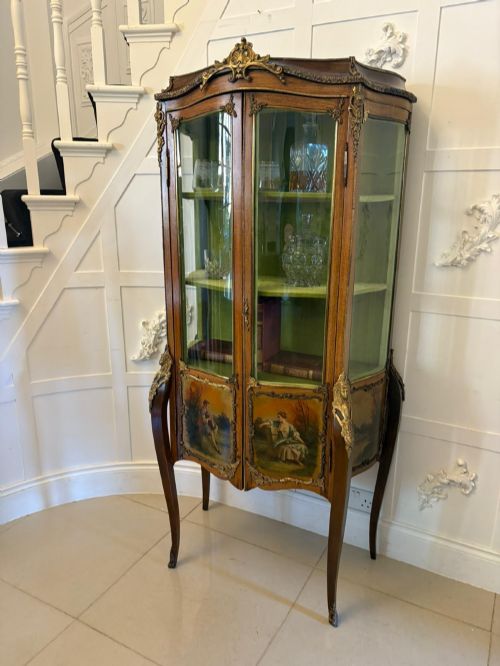
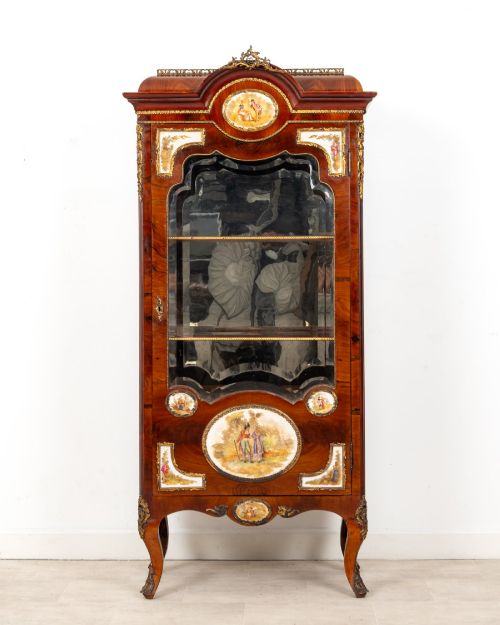
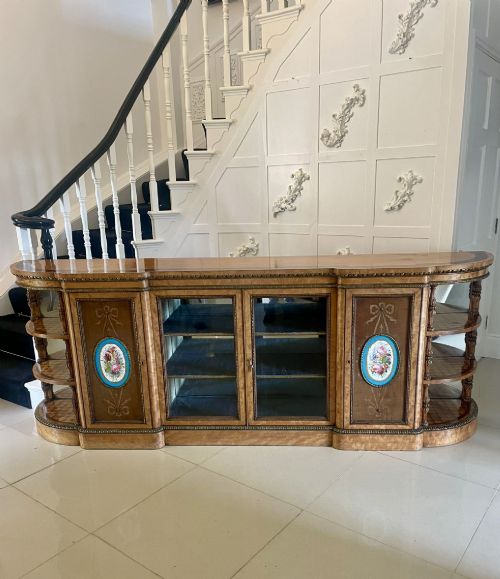
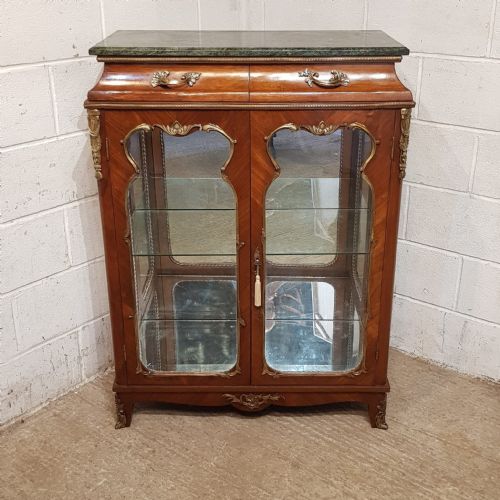
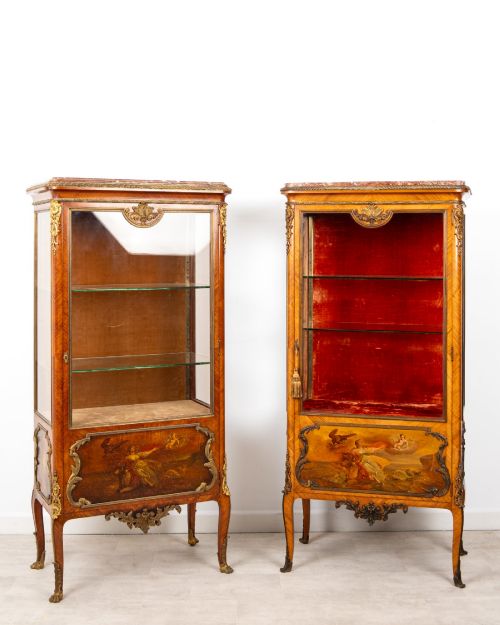
When searching for an ormolu vitrine cabinet, buyers encounter elaborate display furniture predominantly rooted in the nineteenth century and revivalist French aesthetics. These pieces serve primarily to protect and display porcelain, glass, and small decorative objects behind glazed doors and side panels.
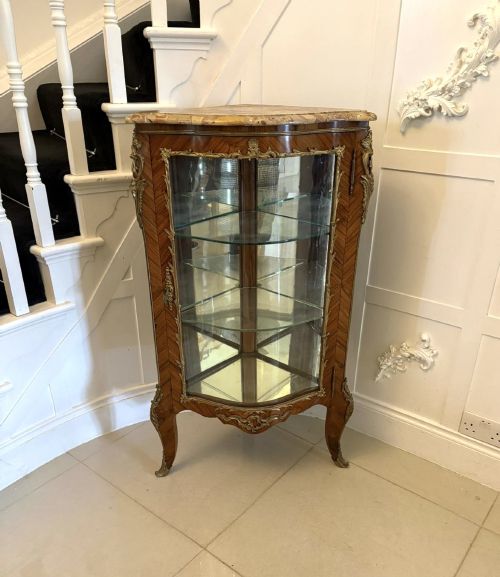
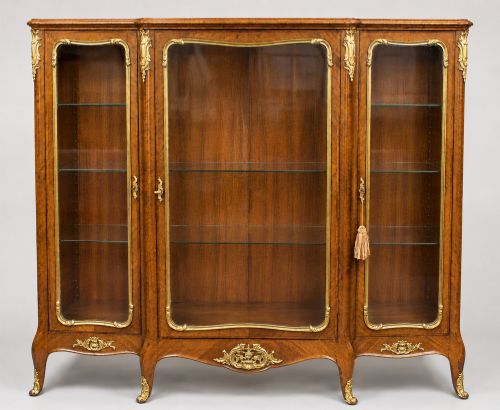
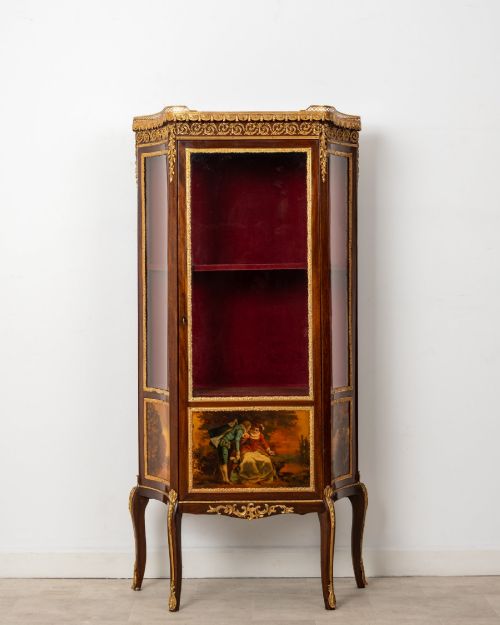
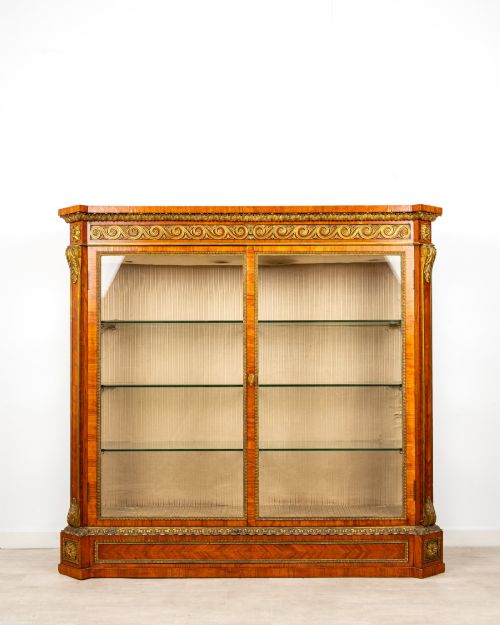
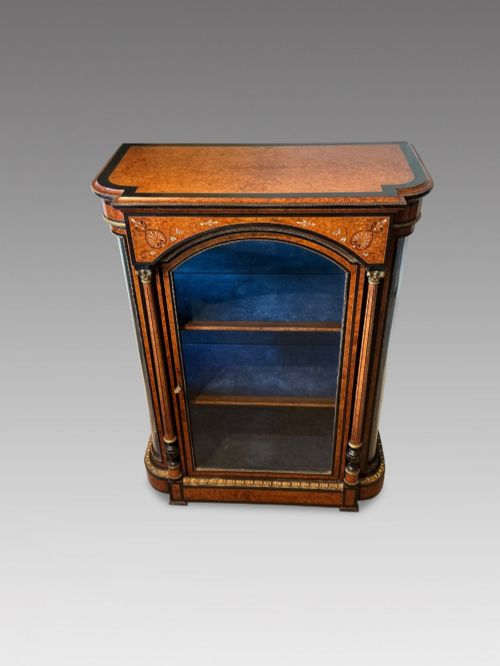
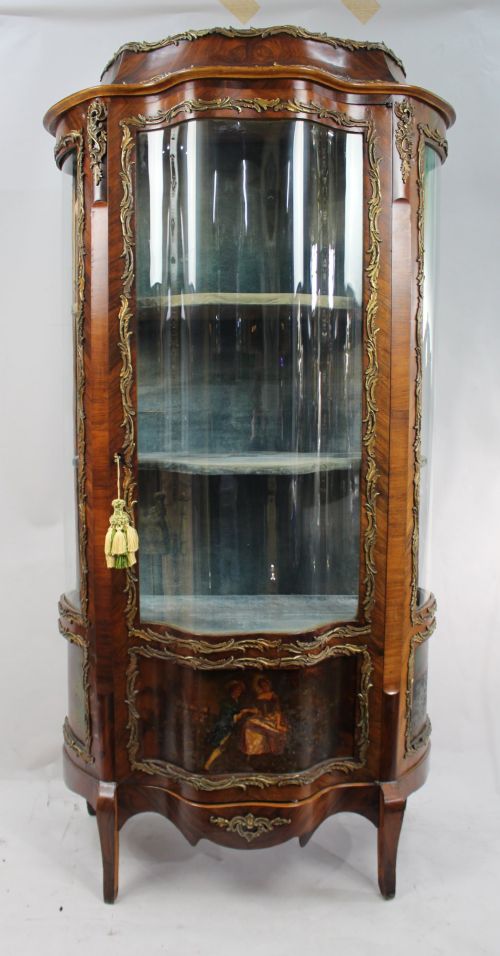
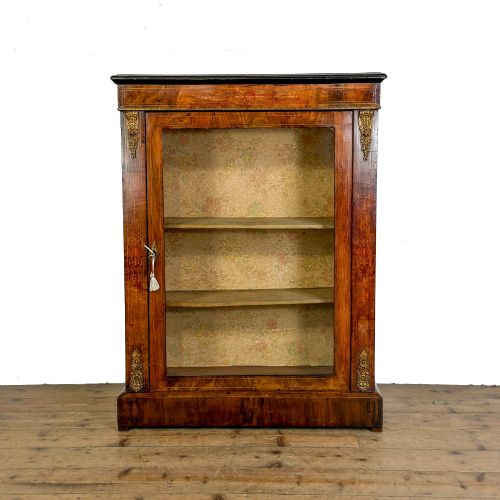
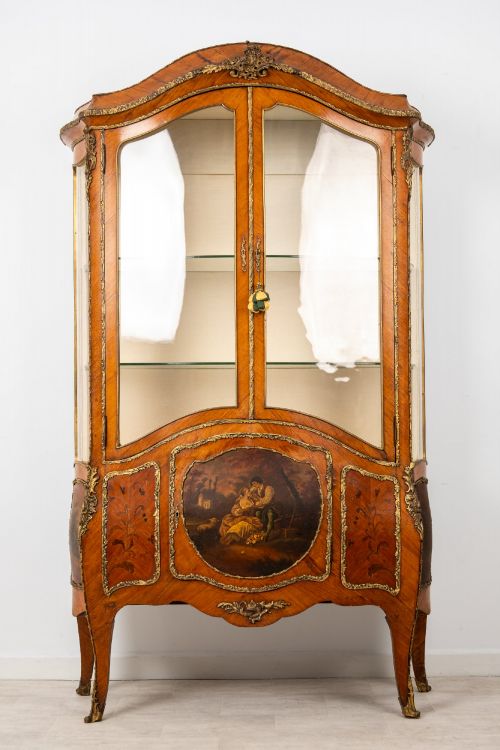
The most common examples on this page are freestanding French cabinets featuring kingwood or mahogany veneers, surmounted by marble tops and heavily adorned with cast gilt bronze mounts. Victorian English iterations in walnut, mahogany, and satinwood also appear frequently, often taking the form of pier cabinets or credenzas with glass doors.
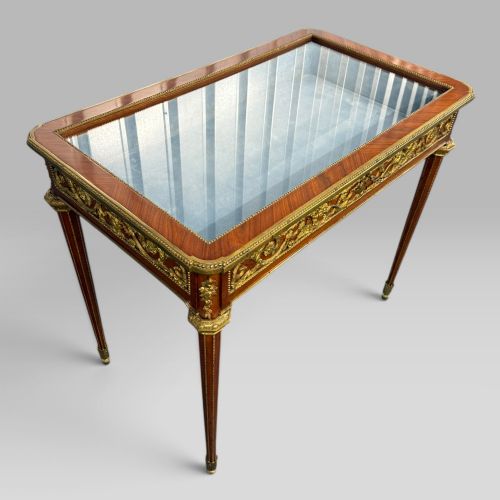
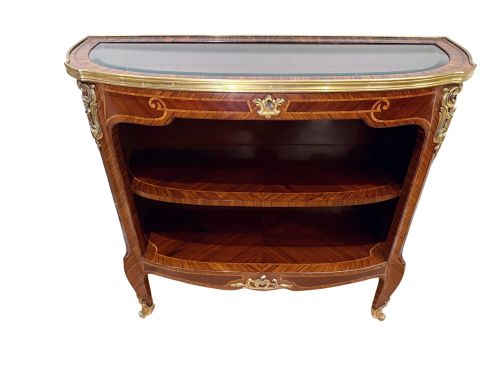
Forms range from serpentine and bowfront single-door cupboards to grand corner cabinets and low bijouterie tables intended for tabletop viewing. Their origins trace heavily to Parisian workshops and English cabinet makers inspired by Louis XV and Louis XVI court styles.
Materials and Construction
Makers built the carcases of these cabinets using native and exotic timbers such as walnut, mahogany, and kingwood, frequently laid over supportive pine or oak frameworks. Marquetry, parquetry, and Boulle brass-and-tortoiseshell inlay decorate the flat surfaces, while painted Vernis Martin panels adorn the lower cupboard doors.
Ormolu, or gilt bronze, provides the heavy cast mounts that frame the glass panels, edge the marble tops, and accentuate the corners and feet. Natural marble slabs, often white or veined, form the top surface of many French examples, fitted precisely to the wooden contours below.
Ormolu Vitrine Cabinet Retail Price Guide 2026
Typical asking prices for ormolu vitrine cabinet among the pieces listed under this phrase on Sellingantiques today, from the lower quarter to the upper quarter. They describe what is for sale here now, not the wider market.
Listings demonstrate a strong prevalence of nineteenth-century French manufacture, with kingwood and mahogany serving as the primary carcase materials.
Distinctions in Quality
The refinement of the cast ormolu mounts dictates much of the visual success of the piece, with superior examples showing crisp chasing, deep relief, and rich fire-gilding rather than flat, dull brass. The quality of the timber veneers and the precision of the marquetry patterns further separate standard production from masterwork furniture.
Structural grace and proportion also define the top tier, where curved glass is bevelled and fitted smoothly into rebated frames without excessive framing timber. Cabinets bearing the signatures or distinct stylistic hallmarks of prominent makers command greater regard for their superior joinery and balanced design.
François Linke·H. J. Hatfield & Sons·Maple & Co·Victor Raulin
The Ormolu Vitrine Cabinet Glossary
- Ormolu
- Gilded bronze used for decorative mounts and hardware on furniture. The technique involves applying a gold amalgam to bronze and heating it to drive off the mercury.
- Vitrine
- A glass-fronted display cabinet designed for showing porcelain, curiosities, and fine objects. They often feature glazed side panels to maximise light penetration.
- Vernis Martin
- A type of decorative lacquer finish developed in eighteenth-century France and imitated in later revival pieces. It usually depicts pastoral scenes in translucent green, yellow, or red tones.
- Boulle
- A form of marquetry consisting of tortoiseshell and brass inlay developed by André-Charles Boulle. It creates a contrasting pattern of dark shell and shining metal.
- Bijouterie table
- A glass-topped display table with a shallow well for exhibiting jewellery and small ornaments. They stand on slender legs and often feature hinged or lift-off tops.
Ormolu Vitrine Cabinet: Frequently Asked Questions
What is an ormolu vitrine cabinet?
An ormolu vitrine cabinet is a glass-fronted display piece adorned with cast, gilded bronze mounts. These cabinets were designed to hold and protect delicate porcelain and objets d'art.
Most surviving examples date from the nineteenth century, reflecting a strong Victorian and Edwardian taste for French revival design.
How do you style a vitrine cabinet?
These cabinets suit formal drawing rooms, libraries, and grand reception spaces where their reflective glass and gilded mounts catch the light. Interior lighting or mirrored backs often assist in illuminating displayed collections.
Grouping items of similar scale or material inside the cabinet helps maintain visual balance and avoids a cluttered appearance.
What woods were used in these cabinets?
Cabinet makers utilised exotic and native timbers, with kingwood, walnut, and mahogany appearing most frequently across the listings. Satinwood, rosewood, and ebonised woods also feature in specific revivalist pieces.
Veneers were often arranged in geometric parquetry patterns or intricate floral marquetry to enhance the decorative surface.
Are marble tops original to these cabinets?
Marble tops are original to many French and continental vitrine cabinets, providing a durable and decorative surface. They were selected to complement the tone of the wood veneers and the weight of the ormolu mounts.
Slabs are typically unattached, resting directly upon the wooden carcase beneath.