





Empire Style Bureau
An empire style bureau brings monumental architectural presence and clever concealed writing surfaces into a room.
Empire Style Bureau
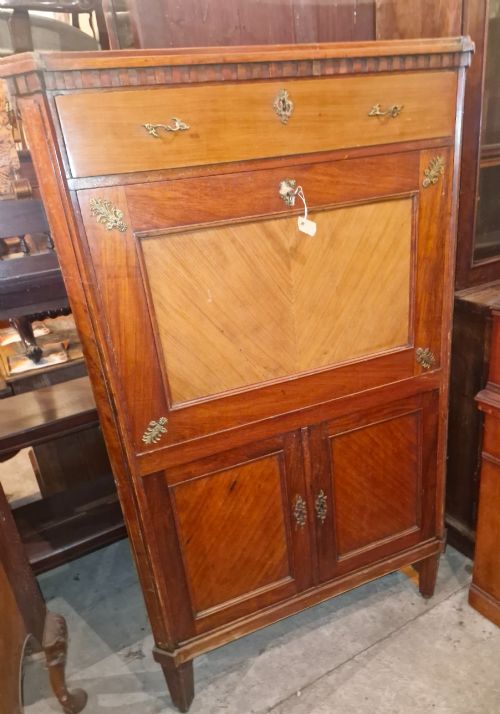
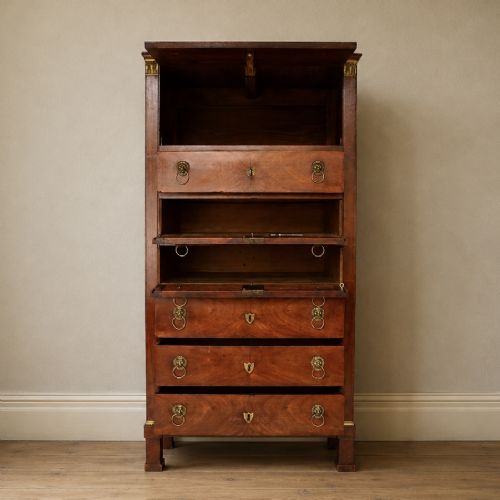
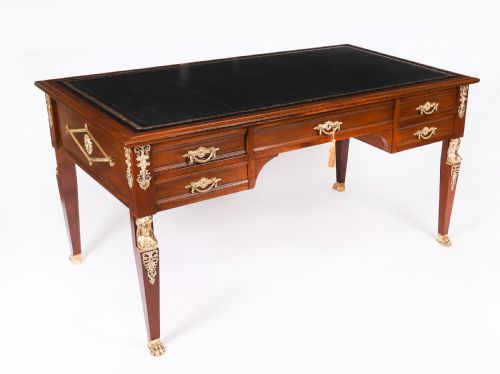
When searching for an empire style bureau, collectors encounter case pieces and writing tables designed for formal study or private correspondence. The selection spans distinct forms including upright secretaire cabinets with drop-down writing flaps, flat-topped bureau plat desks, and cylinder desks.
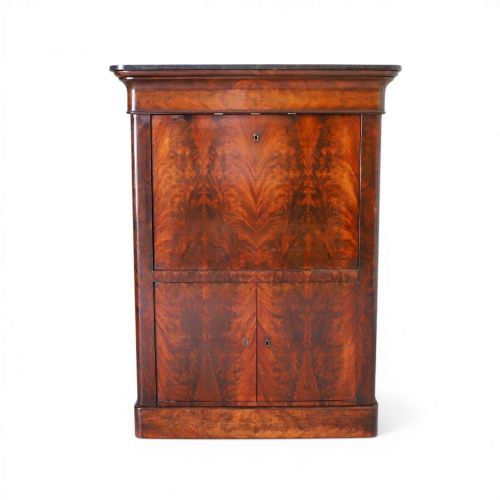
Most examples originate from the nineteenth century, drawing upon French Empire, Directoire, and Regency vocabularies alongside Swedish revival movements. These pieces range from grand flame mahogany cabinets topped with marble to compact writing tables fitted with leather inserts.
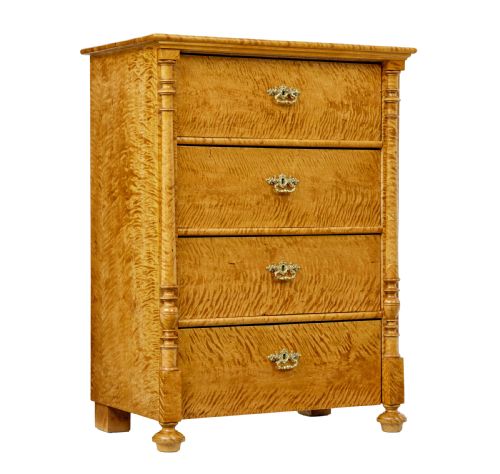
Alongside primary writing desks, the category encompasses complementary seating and storage forms such as bureau chairs, drinks cabinets, and birch chests of drawers. Each piece shares a disciplined classical geometry rooted in continental cabinet-making traditions.
How They Were Made
Construction relies upon solid timber foundations faced with selected veneers such as flame mahogany, burr walnut, and birch. Cabinet-makers used these figured grain patterns across large flat surfaces to create striking symmetrical panels.
Cast bronze and ormolu mounts punctuate the timber structures, secured with traditional brass hardware around keyholes and drawer edges. Writing surfaces frequently incorporate fitted leather inserts, while upright cabinets conceal secret drawers behind drop-down writing flaps and internal pigeonholes.
Secret drawers tested the patience of wandering houseguests by hiding behind spring-loaded mechanisms within the pigeonholes.
What Varies in Quality
The standard of execution rests upon the depth of the timber selection and the crispness of the cast metal mounts. Superior pieces display finely chased ormolu details that integrate harmoniously with the underlying mahogany or walnut carcase.
Interior engineering also defines the tier of a piece, particularly in the smooth movement of secret compartments, cylinder actions, and drop-down writing surfaces. The integration of high-grade marble tops and robust locking mechanisms distinguishes master cabinet work from standard production.
The Empire Style Bureau Glossary
- Secrétaire à abattant
- An upright cabinet featuring a hinged fall-front panel that drops down to create a writing surface. This form conceals internal compartments, pigeonholes, and secret drawers.
- Bureau plat
- A freestanding writing table fitted with drawers across the frieze, typically finished on all sides for placement in the centre of a room. These desks often incorporate inset leather writing surfaces.
- Ormolu
- Gilt bronze applied as decorative mounts and feet upon case furniture and desks. The material provides bright metallic contrast against dark mahogany and ebonised wood surfaces.
- Cylinder desk
- A writing desk enclosed by a quarter-cylinder rolling shutter that retracts to reveal a pull-out writing slide and internal stationery compartments.
- Fauteuil de bureau
- A specialised desk chair designed for use at a writing table, often featuring a rounded upholstered back and stable wooden framing.
Empire Style Bureau: Frequently Asked Questions
What is an empire style bureau?
An empire style bureau is a formal nineteenth-century writing desk or upright cabinet rooted in classical architectural proportions. These pieces emphasise symmetry, polished wood veneers, and distinct metal mounts.
They serve as both functional workspaces and commanding decorative focal points within a room, offering hidden compartments and drop-down writing surfaces.
How do I use a secretaire cabinet?
A secretaire cabinet operates through a hinged front panel that lowers to form a horizontal writing desk. Behind this flap lie pigeonholes, small drawers, and often secret compartments for letters.
When closed, the cabinet presents a neat architectural facade that conceals the writing materials and paperwork stored within.
Where should I place a bureau plat?
A bureau plat is traditionally positioned in the centre of a study or library rather than pushed against a wall. Because the back of the desk is finished with the same attention as the front, it stands freely in an open space.
Pair the desk with a matching bureau chair to maintain the classical proportion of the setting.
How do I distinguish French Empire from Biedermeier furniture?
French Empire pieces frequently incorporate gilt bronze ormolu mounts, dark mahogany, and monumental classical detailing derived from Roman precedents. The aesthetic is grand and assertive.
Biedermeier furniture, seen particularly in Swedish and continental pieces, favours domestic warmth through birch, tiger birch, and ebonised wood while paring back excessive metal ornamentation.