
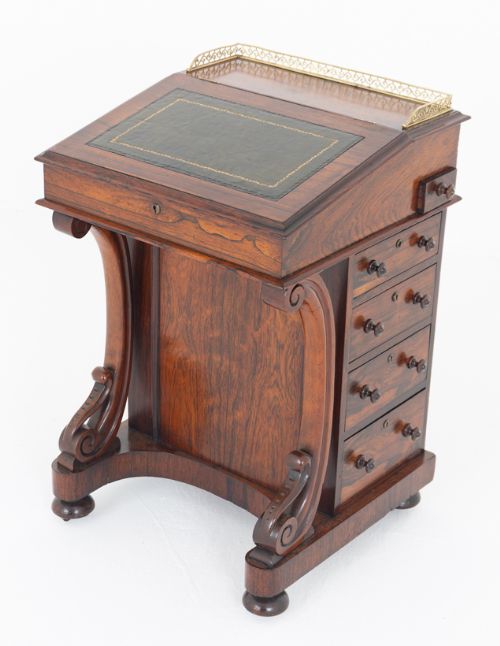


Compact Pedestal Desk
A compact pedestal desk offers dedicated workspace and storage in a modest footprint, suiting smaller rooms while providing traditional character.
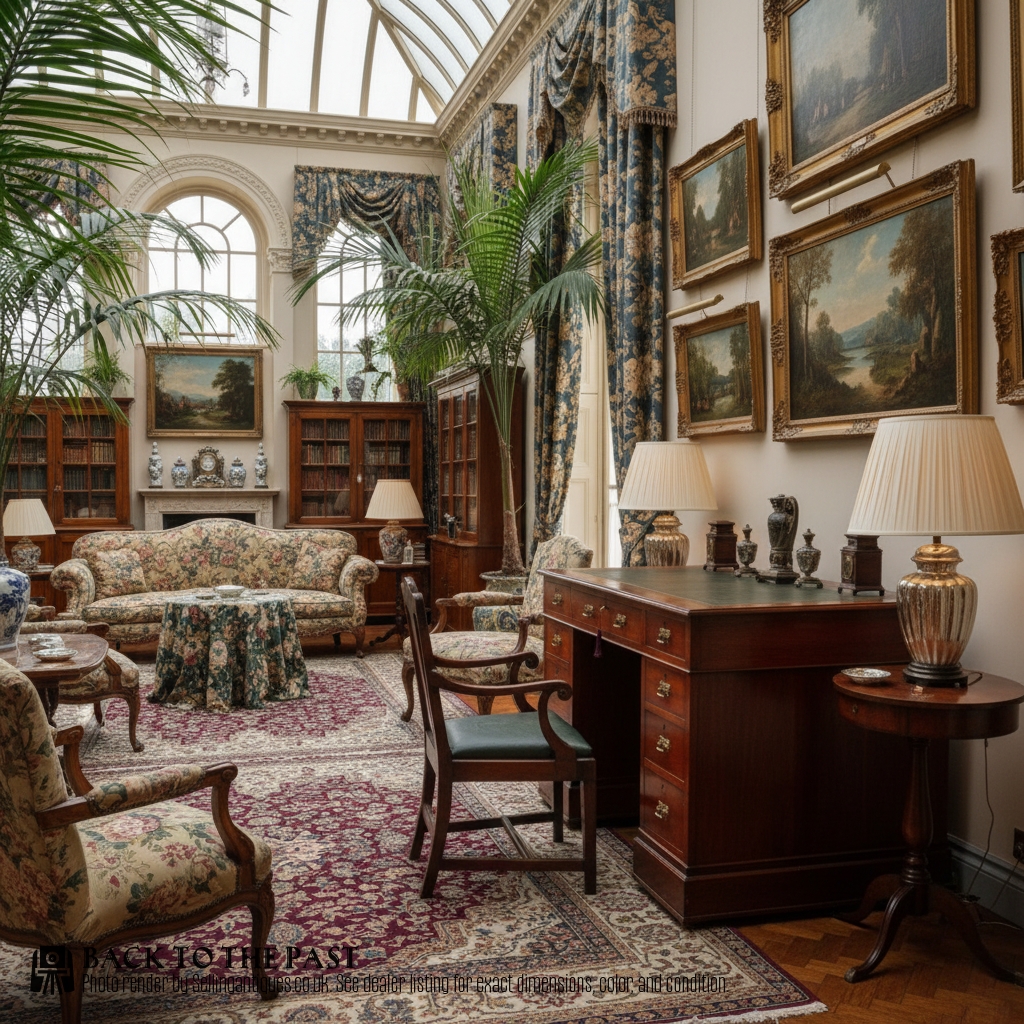
Compact Pedestal Desk
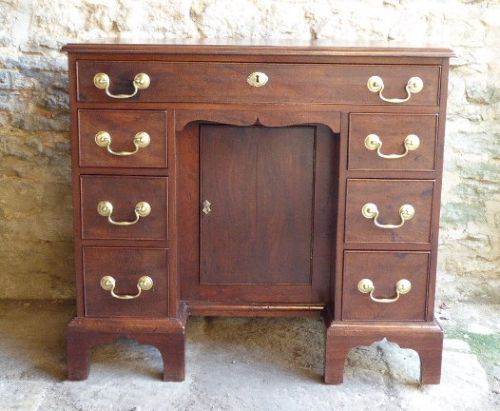
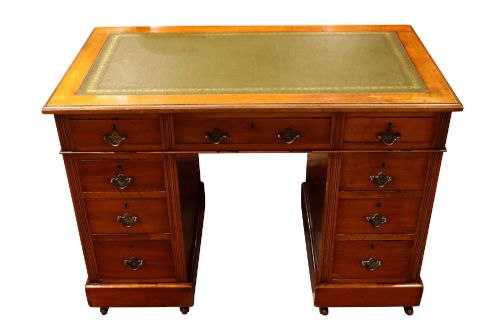
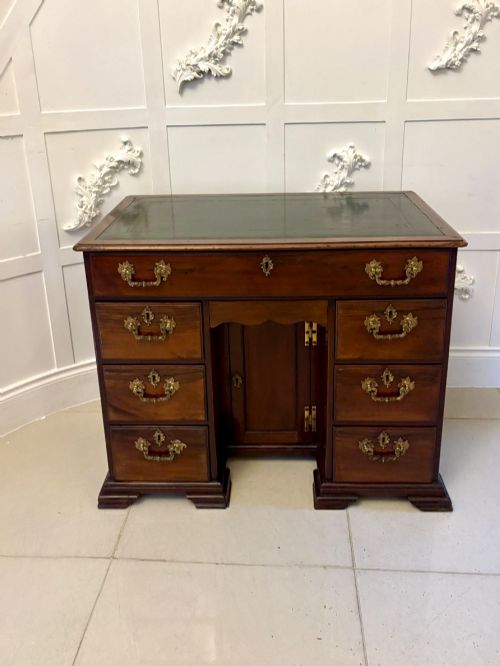
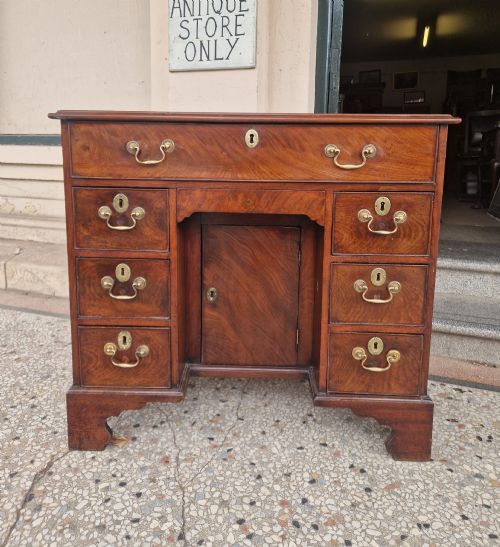
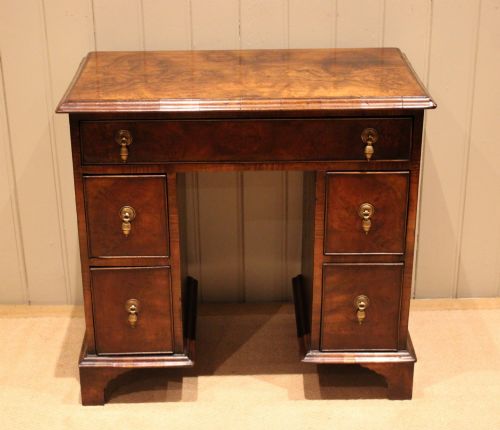
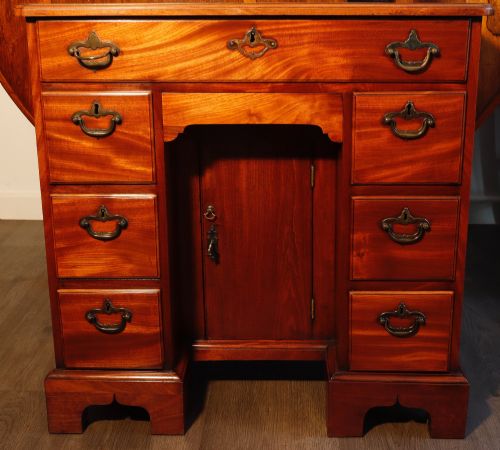
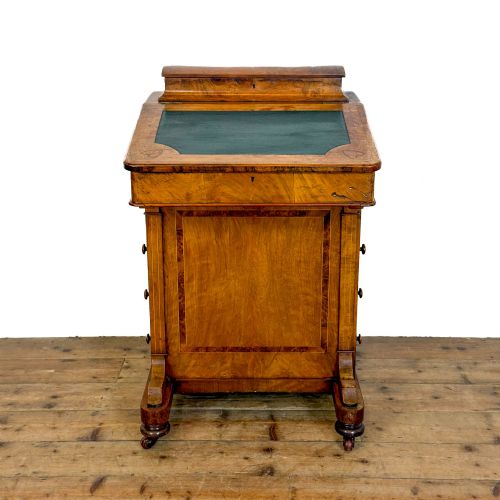
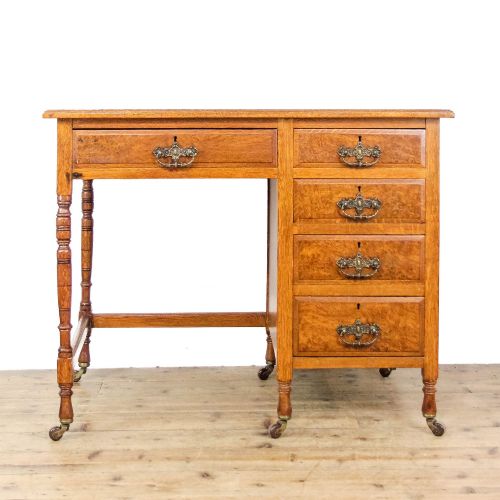
A compact pedestal desk is a functional workspace designed to occupy minimal floor space whilst maintaining the traditional pedestal or kneehole arrangement. Buyers searching for a compact pedestal desk encounter various forms, including kneehole desks, writing tables, and Davenports originating from the eighteenth, nineteenth, and early twentieth centuries.
The pieces appearing on this page span several distinct historical periods, notably the Georgian, Regency, Victorian, and Edwardian eras. Mahogany and walnut dominate the selection, often featuring fitted drawers and writing surfaces inset with leather.
Makers and cabinetmakers of these periods produced scaled-down versions of larger executive furniture to suit smaller chambers or domestic studies. The selection frequently includes diminutive kneeholes and slant-front Davenports configured with side drawers and stationery compartments.
Materials and Construction Techniques
Cabinetmakers utilised solid timbers and decorative veneers such as mahogany, walnut, burr walnut, and rosewood over secondary woods. Surfaces frequently incorporated contrasting stringing, boxwood inlay, and crossbanding to accentuate the rectilinear or sloping forms.
Writing surfaces on these desks were commonly lined with panels of tooled leather, secured with brass tads or decorative borders. Structural integrity relied on traditional dovetailed drawer construction and mortise and tenon joints, sometimes complemented by brass hardware and fitted desk interiors.
Some Victorian Davenports include hidden pull-out pen trays and secret inkwell compartments designed to keep the desktop clear of clutter.
Distinguishing Quality and Craftsmanship
Quality in a compact pedestal desk is determined by the selection of timber figures, such as flame mahogany or burr walnut, and the precision of the cabinet work. Superior examples exhibit tightly fitted drawer joints, original hardware, and refined proportions that balance the reduced scale.
The treatment of secondary details separates standard production from finer workshop pieces. Subtle elements like finely cut boxwood inlay, well-figured crossbanding, and intact internal fittings indicate higher levels of original craftsmanship.
Gillows of Lancaster
The Compact Pedestal Desk Glossary
- Pedestal desk
- A freestanding desk comprising a top surface supported by two pedestals containing banks of drawers. It provides substantial storage beneath the writing surface whilst maintaining a finished rear for placement in the centre of a room.
- Kneehole desk
- A form of desk featuring a central recess for the user's legs, flanked by two banks of drawers or cupboards. Georgian and Victorian examples of this type are frequently built to modest proportions.
- Davenport
- A compact writing desk featuring a sloping, hinged writing surface above a pedestal of drawers. Originating in the late eighteenth century, this form often includes internal stationery compartments and side-opening drawers.
- Crossbanding
- A decorative border technique where thin strips of veneer are laid across the grain of the primary wood. This method frames the desktop or drawer fronts with a contrasting grain direction.
- Stringing
- Inlay work consisting of narrow, contrasting lines of wood or light-coloured material embedded into the surface. It serves to outline panels, drawers, and table tops on period furniture.
Compact Pedestal Desk: Frequently Asked Questions
What is a compact pedestal desk?
A compact pedestal desk is a scaled-down workspace featuring two banks of drawers supporting a central writing surface. These pieces were designed to provide functional storage and writing space without dominating a room.
They appear in various period styles, utilising traditional timbers such as mahogany and walnut, and often include fitted interior compartments or leather-lined tops.
How do I identify a Georgian desk?
Georgian desks are typically characterised by solid proportions, conservative use of decorative veneers, and traditional cabinet-making methods like hand-cut dovetails. They often employ mahogany or walnut and feature restrained brass hardware.
The interiors of these desks frequently showcase small pigeonholes and concealed compartments suited to handwritten correspondence.
What is a Davenport desk?
A Davenport is a small, sloping writing desk with a box-like superstructure and a pedestal of drawers opening to the side. They were popular during the Victorian and Regency periods for domestic correspondence.
The sloping lid typically lifts to reveal small drawers and letter slots, making them practical for smaller living spaces.
Where should I place a pedestal desk?
Pedestal desks are well-suited to studies, bedrooms, or living rooms where floor space is limited but traditional character is desired. Many period examples are finished on all sides, allowing them to sit away from a wall in the centre of a room.
Their reduced scale ensures they integrate easily with contemporary or traditional interior layouts.