
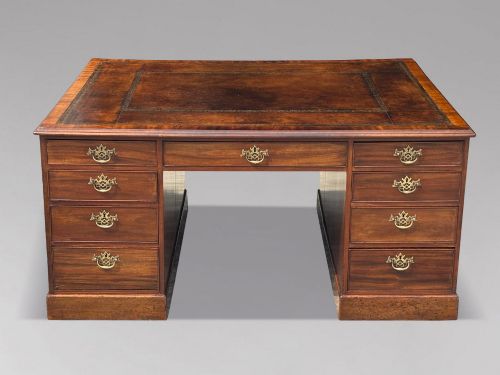


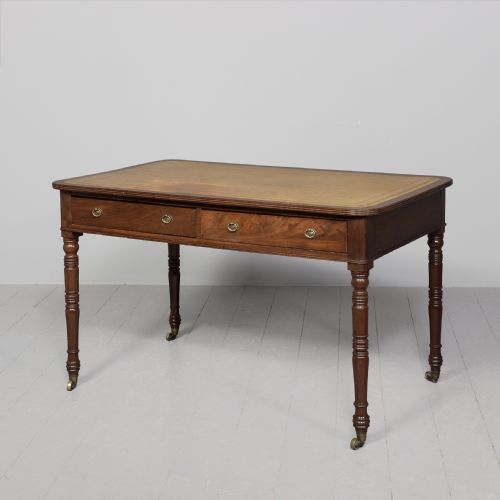


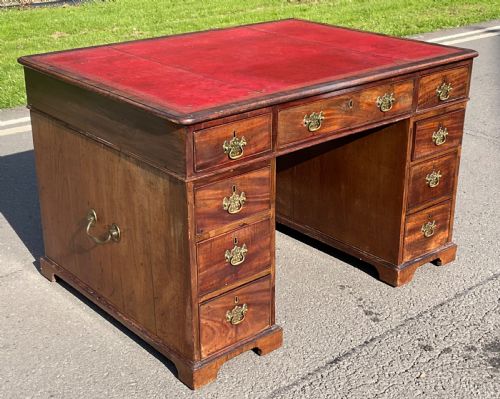


18th Century Partners Desk
An 18th century partners desk is a substantial double-sided workspace designed for two people to face one another, prized for grand proportions and rich timbers.
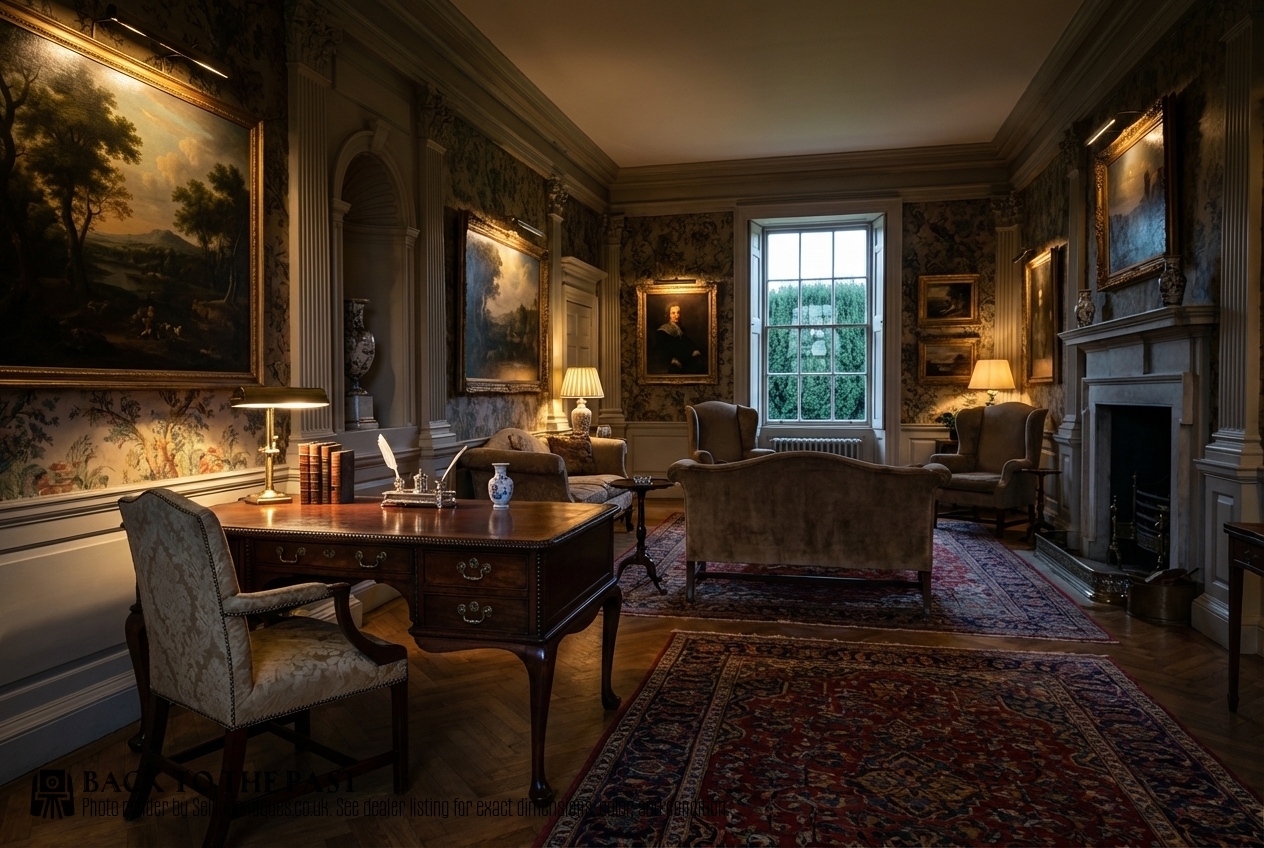
18th Century Partners Desk
An 18th century partners desk is a substantial double-sided piece designed with drawers and cupboards on both faces, allowing two people to work opposite each other. You will most frequently encounter mahogany examples from the Georgian and George III periods, often built as pedestal desks or library tables.
The form accommodates dual usage through paired drawers and matching pedestals. Pieces appear in various scales, ranging from massive library tables to smaller pedestal formats.
Origins trace directly to Georgian cabinet-making traditions, aligning with Chippendale styles and George III designs. These workstations served estate libraries and administrative rooms with equal distinction.
Materials and construction
Makers relied heavily on solid and veneered mahogany, frequently complemented by walnut. Leather inserts formed the primary writing surfaces across the top panels.
Hardware incorporates brass for handles, while internal security depended on specialised mechanisms such as George Rex locks. Timber selection favored rich grain patterns, including flame mahogany variations.
Postmasters sorting desks appear among the pieces, built for rapid postal distribution rather than quiet library reading.
Assessing craftsmanship
Quality rests in the treatment of both primary and secondary faces, ensuring the reverse side receives the same structural and aesthetic care as the front. Superior examples retain original brass hardware and functional period locks rather than later replacements.
The integration of timber grain, particularly matched flame mahogany panels, distinguishes finer cabinet-making. Proportions remain balanced regardless of whether the piece takes a pedestal or library table configuration.
W. Priest·Gillows of Lancaster
The 18th Century Partners Desk Glossary
- Partners desk
- A double-sided writing table featuring drawers and cupboards on opposing faces. This layout allowed two individuals to sit and work opposite one another.
- Pedestal desk
- A form comprising two freestanding drawer pedestals supporting a large top board. The central space remains open for seating.
- Library table
- A large freestanding table utilised for reading and writing. These pieces often feature frieze drawers beneath the main top.
- Chippendale
- A mid to late eighteenth-century English furniture style named after Thomas Chippendale. It is known for carved mahogany details and robust classical proportions.
- Flame mahogany
- A veneer cut from the fork of the mahogany tree where the branch meets the trunk. This technique produces a distinctive flickering flame pattern across the wood.
18th Century Partners Desk: Frequently Asked Questions
What is an 18th century partners desk?
An 18th century partners desk is a large double-sided writing table designed with storage accessible from both faces. It allowed two people to sit opposite each other in a library or office.
These pieces typically date from the Georgian and George III eras. They are constructed primarily from mahogany and walnut.
How do I spot a genuine period desk?
Examine the construction of both sides to ensure the piece is genuinely double-sided rather than altered. Check for period-appropriate hardware, such as brass handles and functional locks.
Look for traditional timber selection and joinery consistent with eighteenth-century workshop practices. The presence of maker stamps can also confirm authenticity.
Were these desks used in homes?
They were primarily utilised in estate libraries, studies, and administrative rooms. The double-sided format suited professional partners or scholars sharing a workspace.
Their substantial scale required large rooms to accommodate seating on both faces. Smaller pedestal versions also exist for more compact spaces.
What woods were used?
Mahogany served as the predominant timber for these desks, appearing in solid form and as figured veneers. Walnut also occurs in period examples.
Leather inserts traditionally lined the upper writing surfaces. Brass fittings completed the drawer handles and locking mechanisms.