
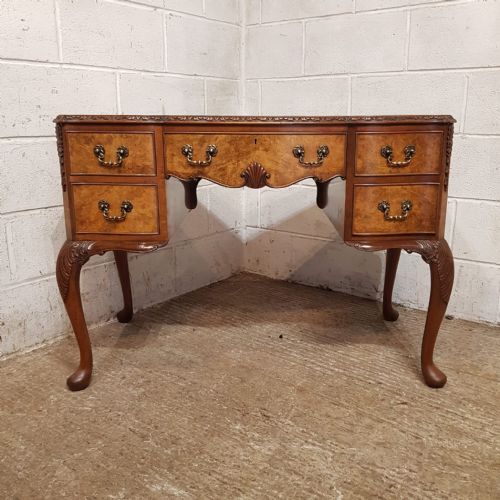
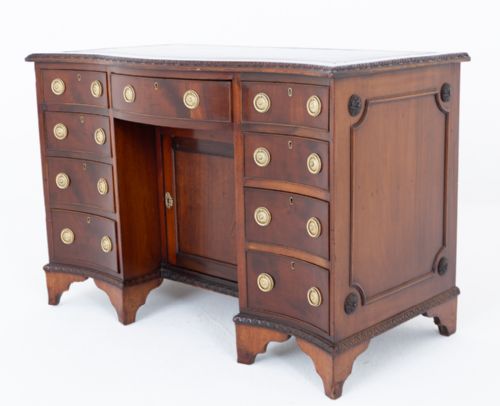


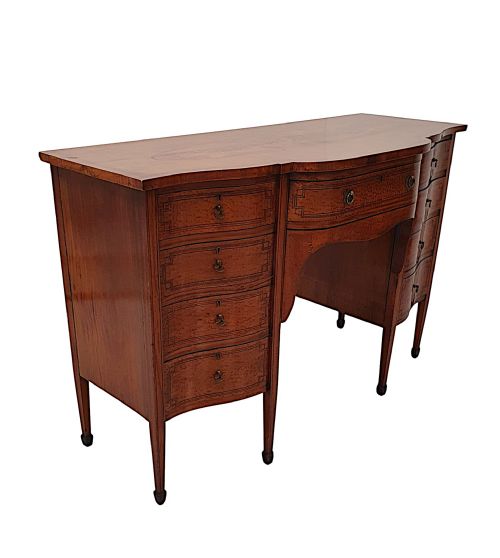


Serpentine Kneehole Desk
A serpentine kneehole desk brings a subtle, undulating curve and fitted drawers to a study, offering both elegance and practical workspace.
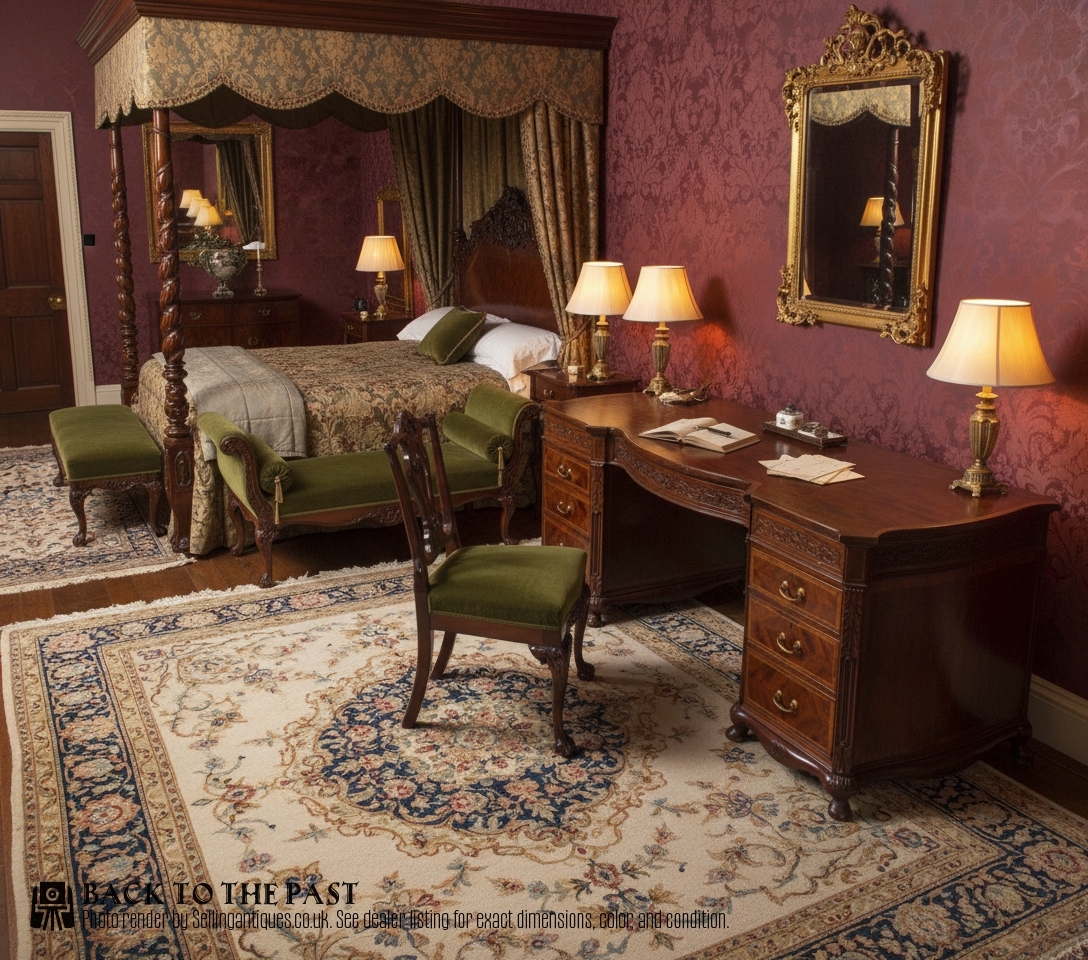
Serpentine Kneehole Desk
The layout typically incorporates a central recessed recess, often flanked by banks of smaller drawers, creating a compact yet functional pedestal form. Surviving examples frequently utilise mahogany or burr walnut, reflecting the favoured timbers of their respective periods.
Materials and construction methods
Cabinetmakers constructed these desks using solid timbers like mahogany and walnut, frequently applying decorative veneers such as burr walnut or satinwood to visible surfaces. Brass hardware, including drop handles and escutcheons, provides functional detailing on the drawer fronts.
Many writing surfaces incorporate inset leather writing panels, bordered by blind tooling or gilt decoration. The curved serpentine fronts required specialist woodworking skills to shape the solid wood and veneer the undulating contours accurately.
Listings span from the 18th century through the Edwardian period, featuring mahogany, satinwood, and burr walnut.
Assessing quality in construction and finish
Quality reveals itself in the handling of the timber and the precision of the drawer construction. Finer examples display carefully matched grain patterns across the serpentine front, ensuring the wood figure flows naturally around the curves.
Internal elements, such as secondary softwoods used for drawer linings and hand-cut dovetail joints, indicate the level of craftsmanship invested in the piece. The depth of the figuring in burr walnut or satinwood also distinguishes exceptional pieces from standard production.
Maple & Co.
The Serpentine Kneehole Desk Glossary
- Serpentine
- A front contour characterised by a convex centre flanked by concave curves. This shaping demands advanced cabinetmaking skill to execute smoothly.
- Kneehole
- A central recessed space beneath a desk or dressing table designed to accommodate the user's legs when seated. It is typically flanked by vertical stacks of small drawers.
- Veneer
- A thin layer of figured wood applied to a secondary timber base to create decorative surfaces. Burr walnut and satinwood veneers are common on these desks.
- Pedestal desk
- A heavy writing table supported by two vertical columns of drawers resting on the floor. Some variations of this form incorporate the serpentine profile.
- Escutcheon
- A decorative brass plate surrounding a keyhole. They protect the surrounding wood and enhance the visual detail of the drawer fronts.
Serpentine Kneehole Desk: Frequently Asked Questions
How do I date a serpentine kneehole desk?
Dating relies on examining the secondary timbers, construction methods, and the style of the hardware. Eighteenth-century pieces often display hand-cut dovetails and distinct timber ageing, while Edwardian revivals utilise machine-sawn elements and different internal woods.
Comparing the overall proportion and veneer choices with documented examples from similar periods helps narrow down the decade of manufacture. Hardware styles also shift from early brass drop handles to later Edwardian alternative designs.
Were these desks used for writing or dressing?
Historical examples served dual purposes as both writing tables and dressing chests, depending on the room and the owner's requirements. Many feature the same internal drawer configuration regardless of whether they stood in a bedroom or a library.
Surviving titles and descriptions show that makers produced similar serpentine forms for multiple domestic functions. The presence of a leather top usually points toward a writing use, while plain wood tops often align with dressing tables.
How do I care for a leather desk top?
Leather writing surfaces benefit from regular dusting with a dry, soft cloth to prevent particulate build-up in the grain. Specialist leather balms help maintain suppleness and prevent the material from drying out over time.
Avoiding direct sunlight and excessive heat sources protects the leather and the surrounding wood from fading or warping. Gentle care preserves the original gilt tooling and surface texture.
What is the difference between Georgian and revival desks?
Original Georgian desks date from the eighteenth century and exhibit period-specific construction techniques and timber ageing. Revival pieces, such as those from the Edwardian era, often copy earlier Chippendale or Queen Anne styles using contemporary machinery.
Inspection of the drawer linings, timber shrinkage, and internal surfaces helps differentiate a period original from a later revival piece. Both categories offer distinct craftsmanship, but eighteenth-century examples carry greater age.