

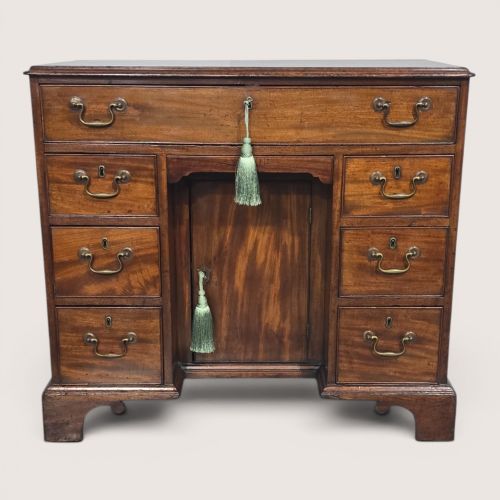
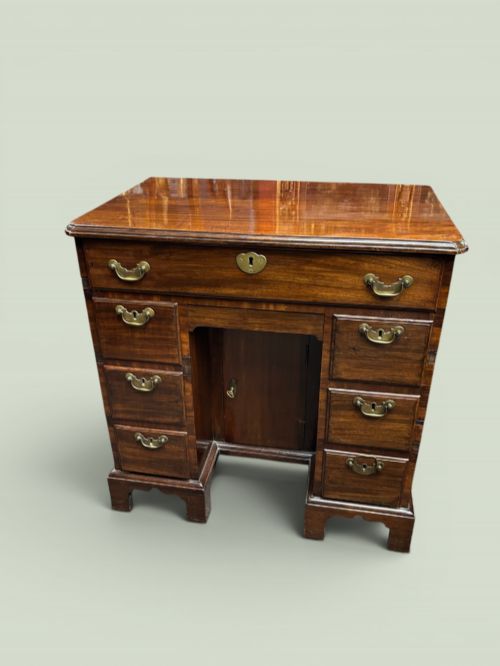

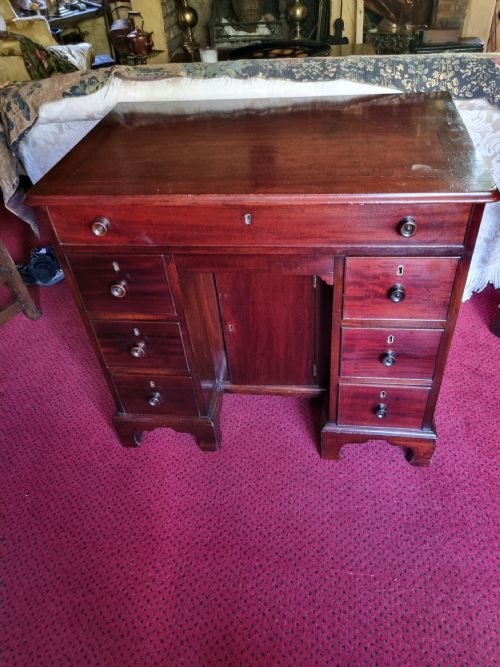


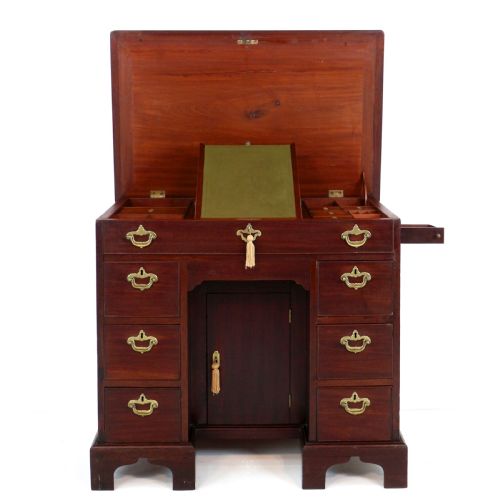
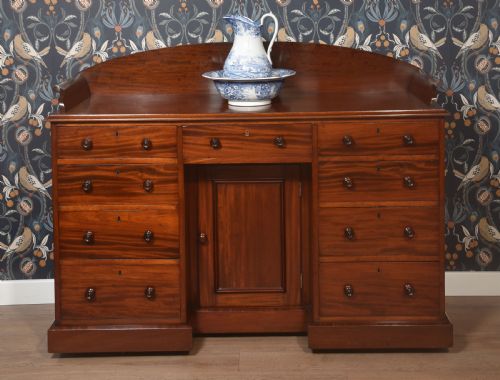
Mahogany Kneehole Chest
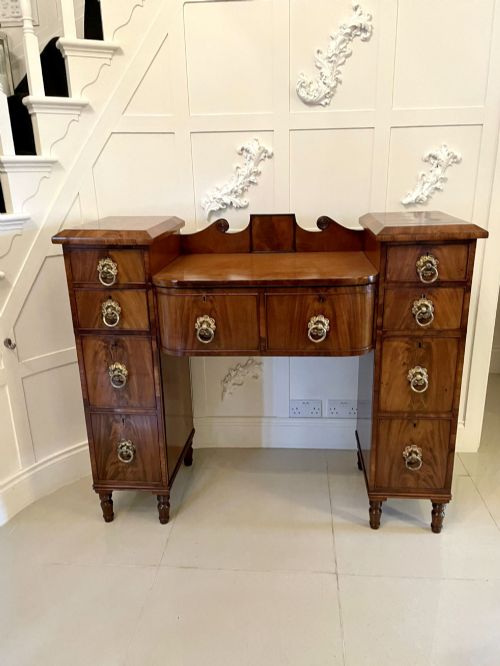
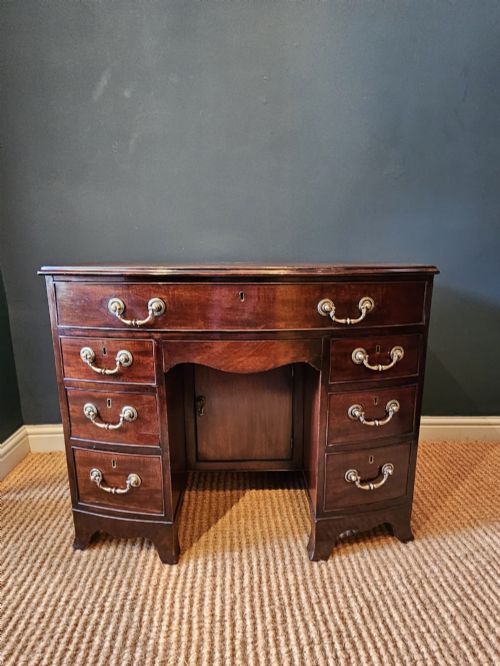
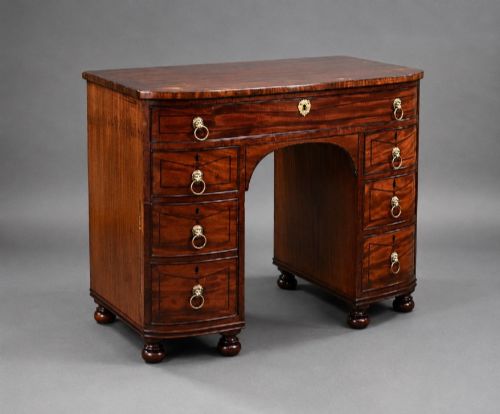
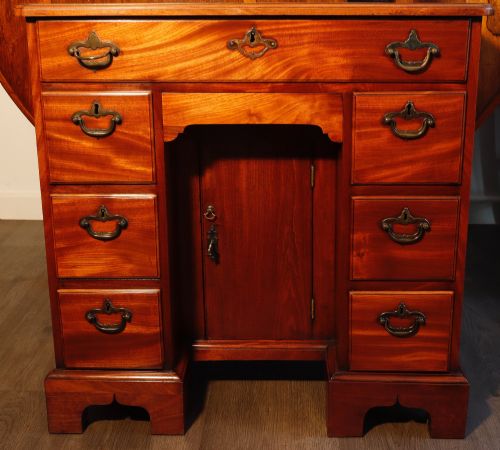
A mahogany kneehole chest is a compact, pedestal-form writing desk or dressing table with a central recessed cupboard, valued for its fine cabinetwork and clever storage.
Mahogany Kneehole Chest
When you search for a mahogany kneehole chest, you encounter a specialised form of case furniture designed for writing or personal grooming, typically featuring a central cupboard flanked by pedestals of small drawers. The pieces seen here span the Georgian, Regency, and Victorian periods, with 18th-century and George III examples appearing most frequently alongside later nineteenth-century interpretations.
These items serve dual purposes as desks and dressing tables, often incorporating fitted top drawers with writing slides or compartments for grooming implements. The scale remains generally modest compared to larger partner desks, making them practical for smaller rooms while offering substantial compartment space.
How they were made
Cabinetmakers constructed these pieces primarily from solid mahogany and mahogany veneers, occasionally utilising dense Cuban mahogany for its rich grain and weight. Secondary timbers such as oak appear in drawer linings and internal framing, providing structural stability to the pedestal framework.
Decorative detailing relies on precision joinery, crossbanding in contrasting timbers, and satinwood inlay rather than heavy carving. Original brass drop handles and escutcheons secure the drawer fronts, matching the period aesthetic of each piece.
Several kneehole desks conceal a secret central panel or hidden upper drawer designed to keep personal ledgers out of sight.
What varies in quality
The distinction between standard and exceptional pieces rests upon the choice of timber and the sophistication of the internal fittings. Dense, highly figured Cuban mahogany and crisp crossbanding elevate a piece, as do fully fitted top drawers containing original compartments and sliding trays.
Construction methods also separate workshop tiers, evident in the neatness of dovetailing on the drawer carcases and the retention of original brass hardware. The presence of a concealed secret drawer behind the central kneehole door represents a higher standard of period craftsmanship.
Grendy
The Mahogany Kneehole Chest Glossary
- Kneehole
- A recessed space beneath the central top section of a desk or dressing chest, designed to allow a person to sit comfortably. It is typically flanked by two vertical stacks of drawers.
- Crossbanding
- A narrow strip of veneer applied to the borders of a drawer front or tabletop so that the grain runs at right angles to the surrounding wood. This technique creates a neat, framed visual boundary.
- Secretaire
- A desk form featuring a fall-front or sliding drawer that opens to reveal a writing surface and small pigeonholes. It combines storage with a dedicated writing space.
- Dovetail
- An interlocking joint used in drawer construction, formed by interlocking wedge-shaped fingers. It provides strong tensile resistance and indicates traditional hand-craftsmanship.
- Escutcheon
- A protective metal plate surrounding a keyhole. On these pieces, they are generally cast in brass and secured with small pins.
Mahogany Kneehole Chest: Frequently Asked Questions
What is a kneehole chest used for?
These pieces functioned historically as writing desks or personal dressing tables for private chambers. The small drawers accommodated papers, inkwells, or grooming accessories.
Today, they serve well as compact dressing desks in bedrooms or functional writing tables in studies. Their pedestal design provides significant storage without occupying excessive floor space.
How do I tell an 18th-century piece apart from a Victorian one?
Eighteenth-century examples often display finer proportions, hand-cut dovetails with irregular spacing, and rich Cuban mahogany timbers. The brass hardware and interior secondary woods such as oak also point to earlier construction methods.
Victorian pieces tend to feature heavier timber scantlings, machine-sawn elements in later decades, and different undertones in the polish. Examining the drawer linings and secondary woods clarifies the period of manufacture.
Are these pieces desks or dressing tables?
They were frequently designed to serve both functions, depending on the internal layout of the top drawer. Some feature fitted compartments with mirrors and boxes, while others incorporate baize-lined writing slides.
This versatility means many examples suit modern use as either a study desk or a bedroom dressing table. The internal drawer arrangement usually indicates the primary intended purpose.
Why is it called Cuban mahogany?
Cuban mahogany refers to the dense, dark timber imported from the Caribbean during the 18th and early 19th centuries. It is celebrated for its deep colour and durability.
Cabinetmakers favoured it for high-status furniture because it took a fine polish and resisted warping. Its presence on a piece often signals quality construction from the Georgian era.