


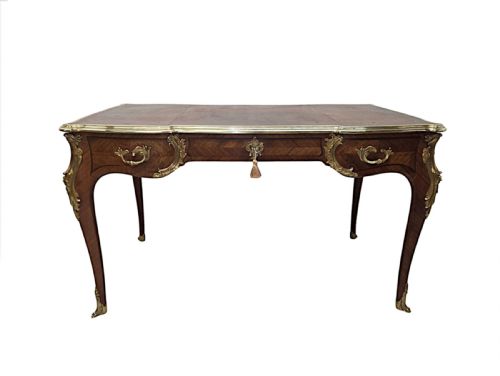
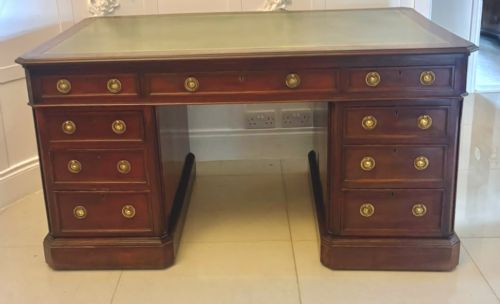
Leather Top Executive Desk
A leather top executive desk provides a grand workspace rooted in nineteenth-century utility and craftsmanship.
What these desks are
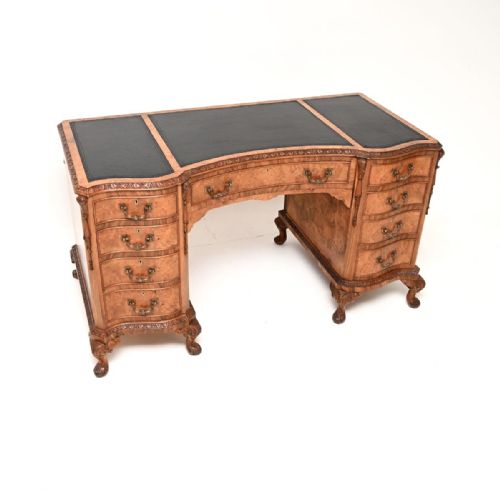
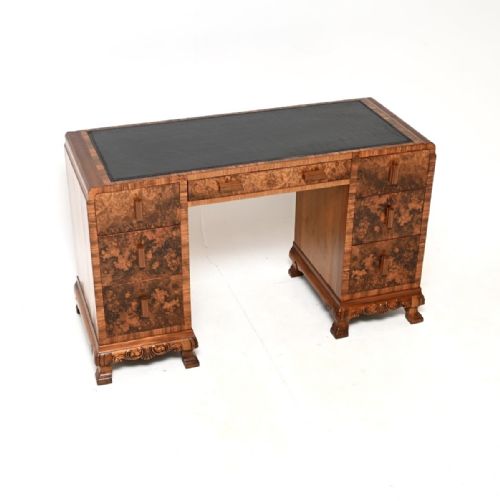
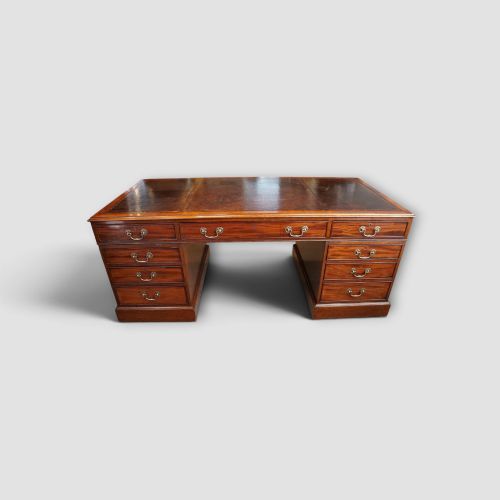
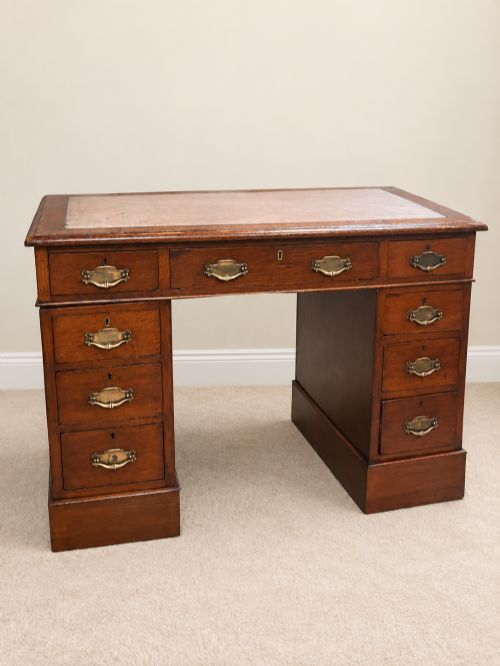
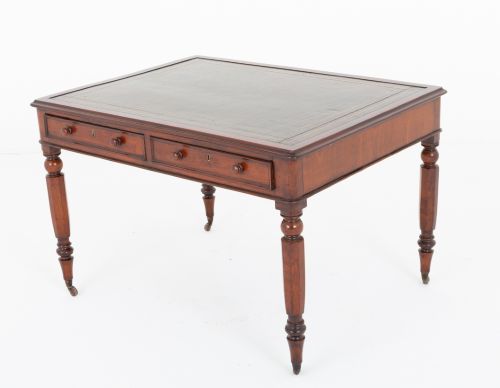
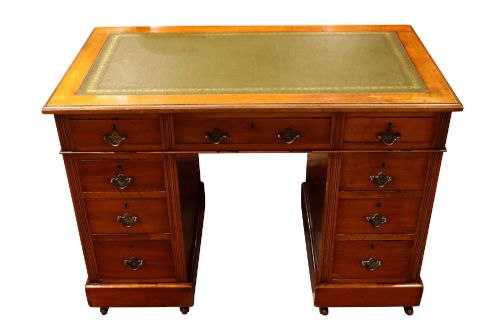
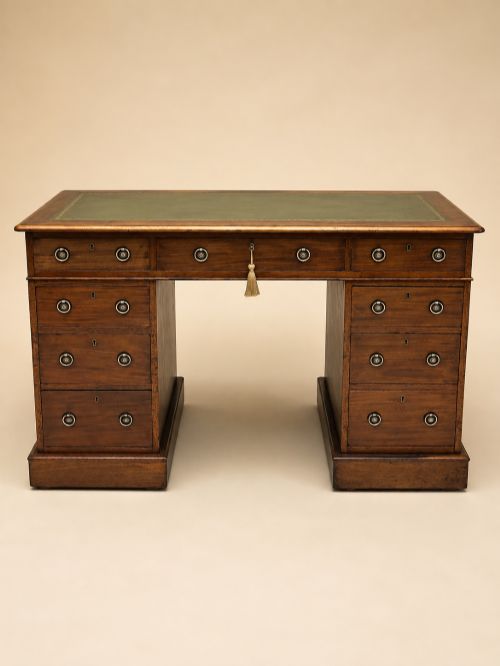
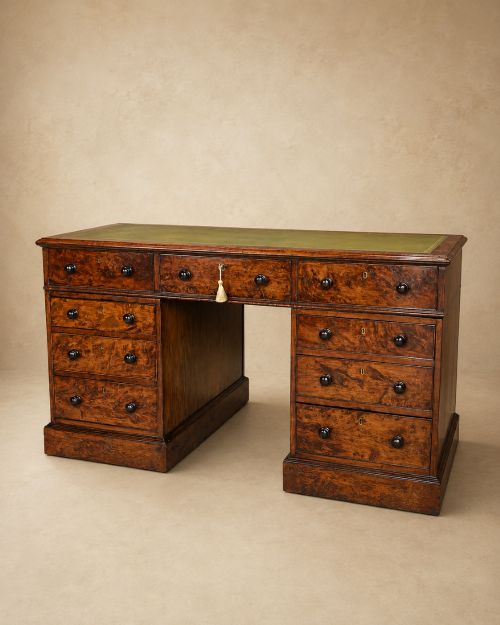
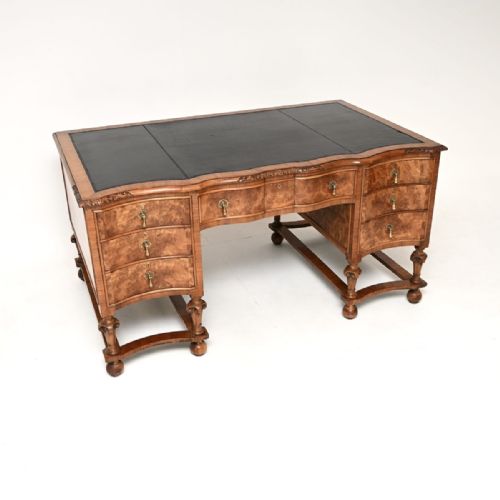
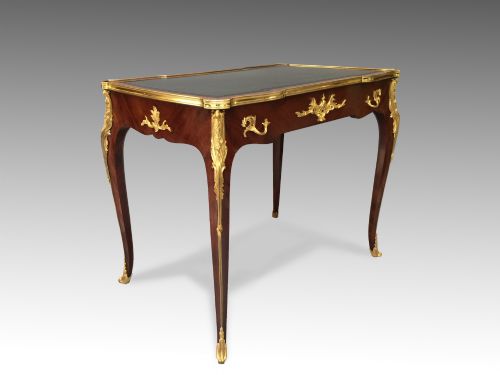
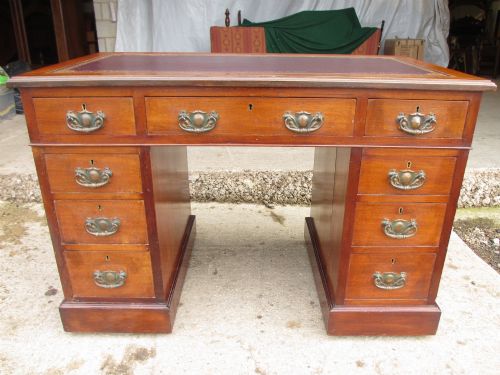
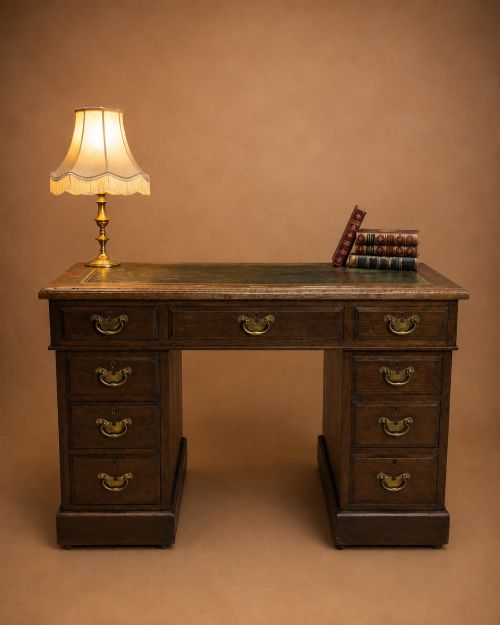
A leather top executive desk spans several distinct historical periods, featuring examples from the eighteenth, nineteenth, and early twentieth centuries. These pieces appear as partners desks, pedestal desks, and double-sided writing or library tables.
The materials used across these forms include mahogany, burr walnut, walnut, pollard oak, and oak, often paired with brass fittings. Styles range from Chippendale and William IV to Victorian and Art Deco.
Buyers most frequently meet nineteenth-century pedestal and partners desks on this page, alongside specific regional iterations like country house library pieces.
How they were made
Craftsmen built these desks using solid hardwoods and veneers such as mahogany, walnut, burr walnut, and pollard oak over sturdy wood carcases. Surface treatments incorporate fitted leather inserts, frequently complemented by brass hardware.
Construction methods rely on traditional joinery techniques suited to heavy pedestal and partners desk forms. Materials are chosen for durability and grain figure, ensuring the structural integrity of large writing tables.
Retail Price Guide 2026
Typical UK retail prices for leather top executive desk, calculated from the Sellingantiques database of over a million retail prices indexed since 2003. This retail price guide relies exclusively on Sellingantiques data; no external sources or auction records are used, so the figures do not describe the wider market.
Listings feature woods including mahogany, burr walnut, walnut, pollard oak, and oak.
What varies in quality
Quality differences emerge in the selection of timber figures, such as the choice of burr walnut or pollard oak against standard mahogany or plain oak. The sophistication of the period style, from simple Art Deco lines to elaborate Victorian or Chippendale carving, dictates the level of finish.
The integration of double-sided functionality, as seen in partners desks and library tables, requires superior secondary framing. Finer examples display meticulous attention to proportion, brass detailing, and the quality of the inset leather top.
Howard And Son S
The Leather Top Executive Desk Glossary
- Partners desk
- A large pedestal desk designed to be used from both sides simultaneously, featuring drawers and cupboards facing in opposite directions.
- Pedestal desk
- A heavy freestanding writing desk comprising a top section resting on two banks of drawers or pedestals.
- Library table
- A large freestanding table used primarily for writing and holding books, often finished on all sides for placement in the centre of a room.
- Pollard oak
- An ornamental timber taken from pollarded oak trees, prized for its clustered knots and dense, swirling grain patterns.
Frequently Asked Questions
What is a partners desk?
A partners desk is a large pedestal writing desk designed with drawers and cupboards on both sides so two people can work facing each other.
These pieces typically date from the nineteenth century and were built for use in large libraries, studies, and administrative offices.
How do I identify a Victorian desk?
Victorian desks are generally characterised by heavy timber construction, using woods like mahogany, walnut, and oak.
They often incorporate pedestal designs with deep drawers, brass hardware, and inset leather writing surfaces reflecting nineteenth-century craftsmanship.
Where should I place a library table?
A library table is finished on all sides, making it suitable for placement in the centre of a room rather than against a wall.
These double-sided writing tables provide access from multiple angles and suit spacious studies or open room layouts.
What woods were used for these desks?
These desks utilise a variety of hardwoods, predominantly mahogany, walnut, burr walnut, pollard oak, and standard oak.
Craftsmen selected these timbers for both their structural strength and their decorative grain patterns.