
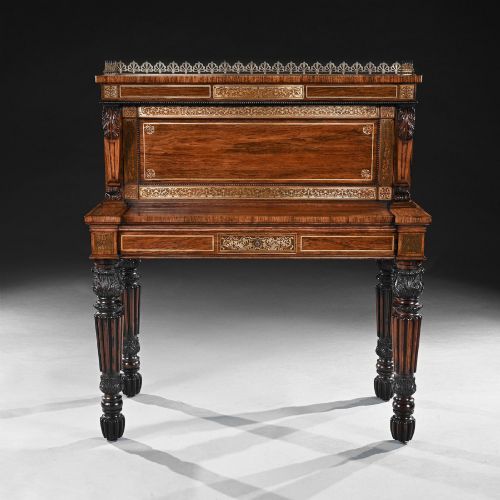
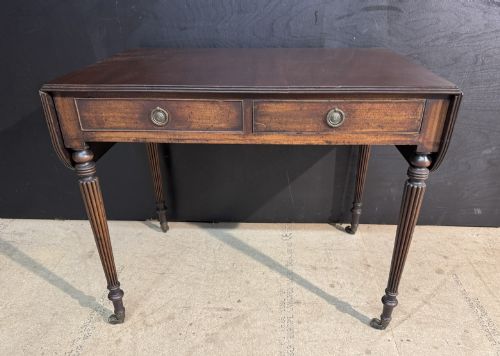
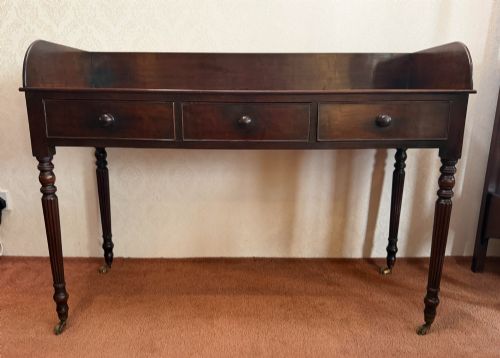
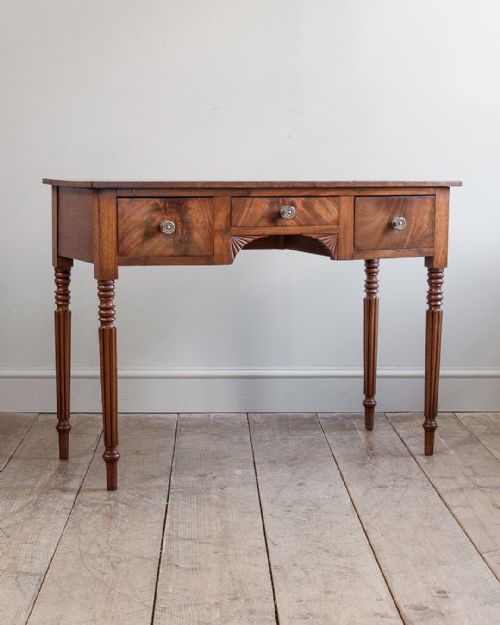
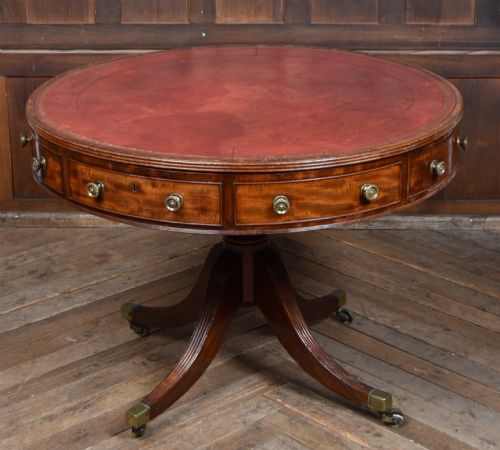
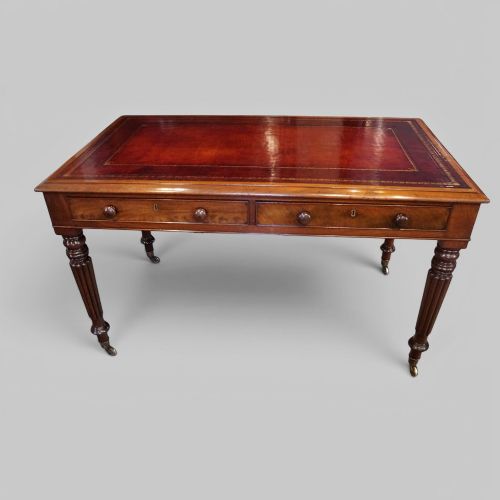
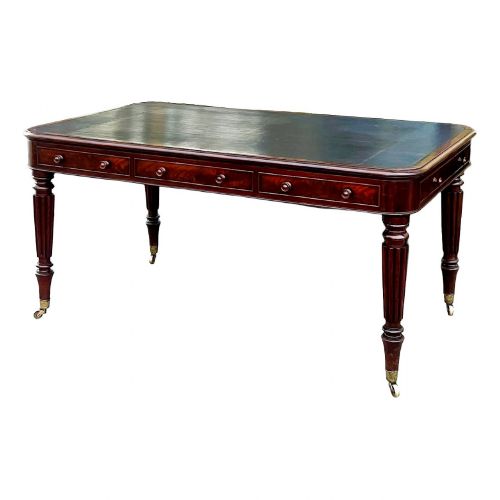
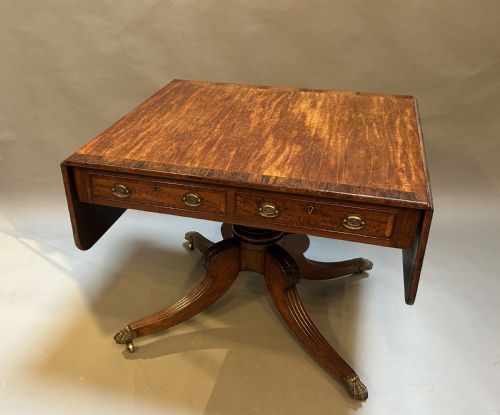
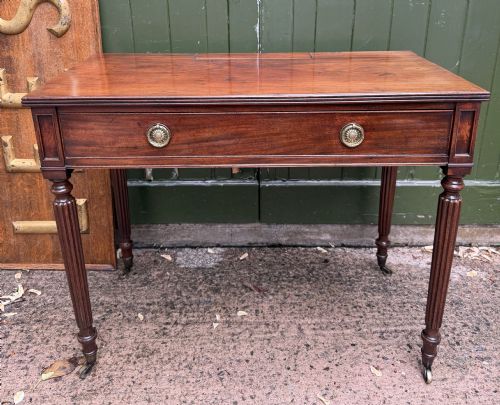


Reeded Leg Writing Table
A reeded leg writing table brings architectural elegance and crisp linear detail to a study.
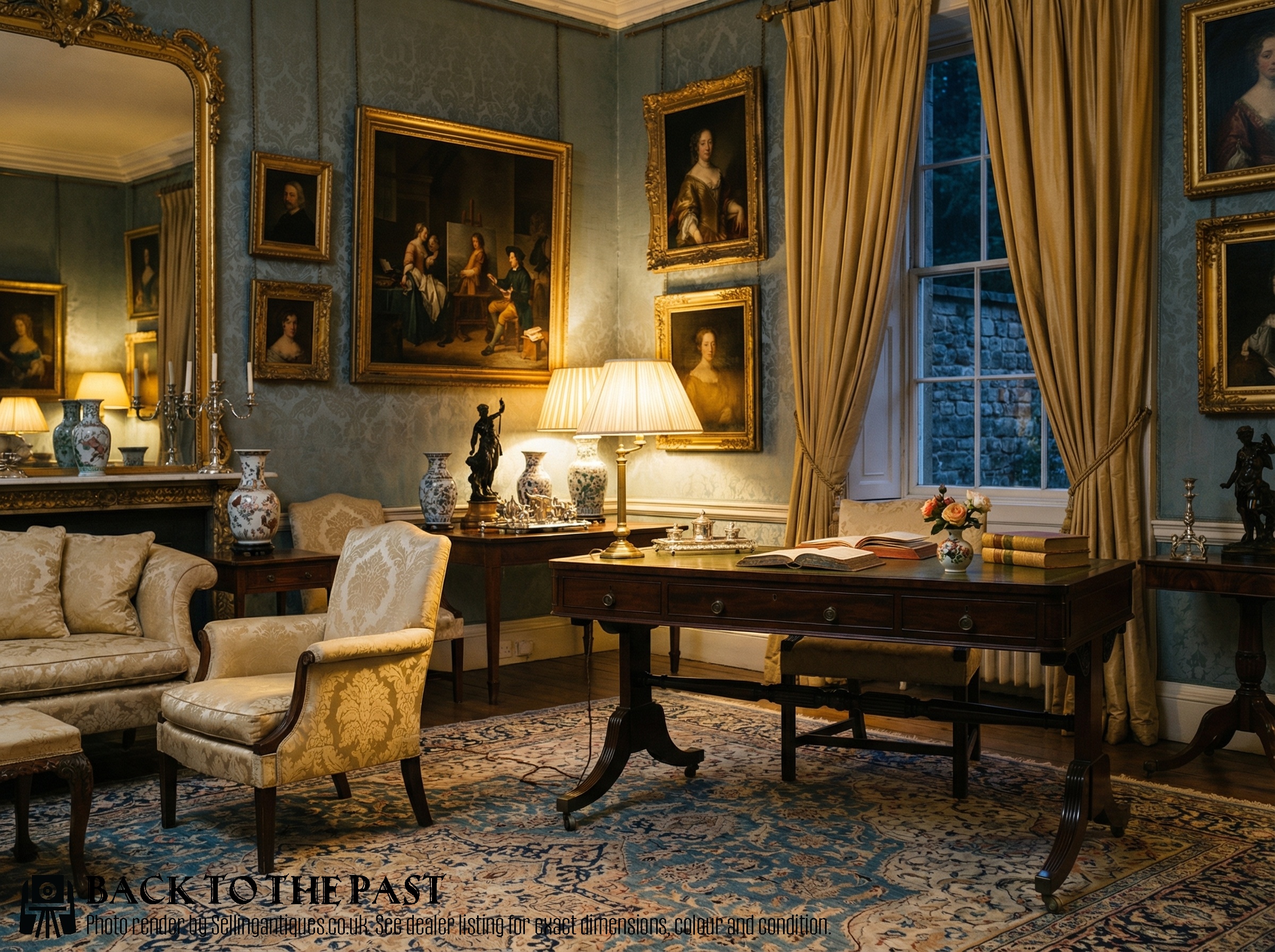
What a reeded leg writing table is
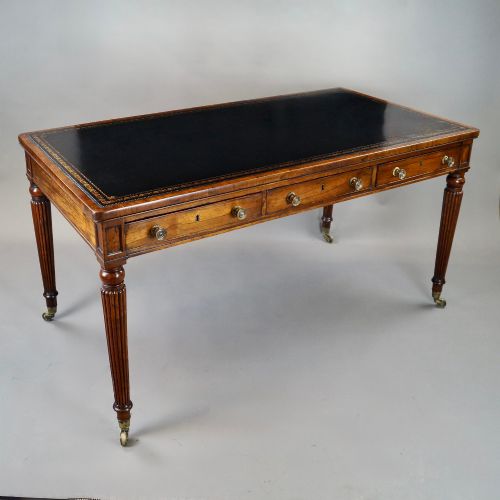
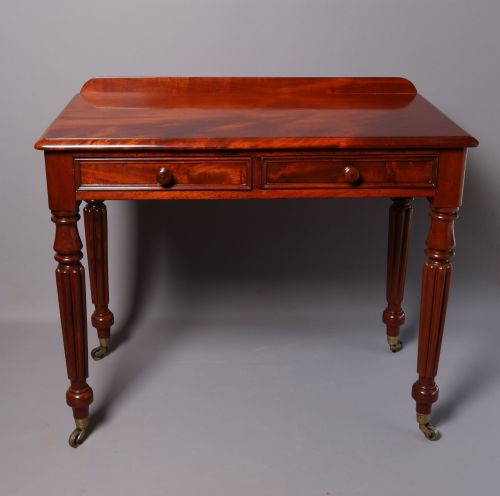
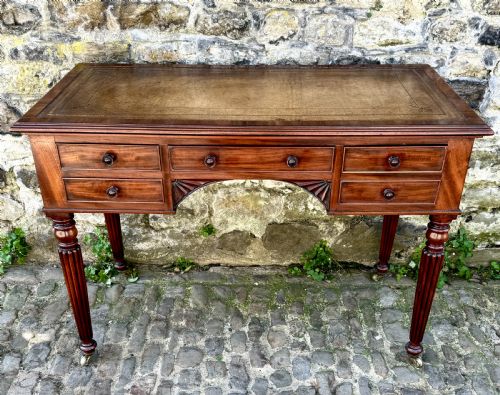
A reeded leg writing table combines a functional surface with distinctive carved parallel mouldings along the supports. These desks appear primarily in mahogany across Regency, George IV, Victorian and Edwardian periods.
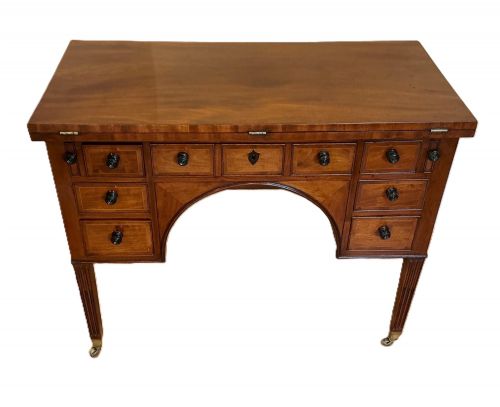
The form encompasses library tables, chamber desks, and multi-drawer writing tables designed for domestic or institutional use. Pieces often feature leather insets, brass castors, and multiple frieze drawers.
Buyers encountering this selection most frequently meet Regency and nineteenth-century examples executed in rich, dark timber. Surviving pieces range from simple three-drawer domestic desks to substantial library tables.
How they were made
Joiners constructed these tables from solid and veneered mahogany, applying turned and hand-carved reeding to the legs. Frizing drawers utilised traditional dovetailed joints alongside brass hardware.
Writing surfaces frequently incorporated inset leather panels, sometimes tooled with gold leaf borders. Brass castors allowed these heavy timber desks to move smoothly across carpets and floors.
Retail Price Guide 2026
Typical UK retail prices for reeded leg writing table, calculated from the Sellingantiques database of over a million retail prices indexed since 2003. This retail price guide relies exclusively on Sellingantiques data; no external sources or auction records are used, so the figures do not describe the wider market.
The listings here span the Regency, George IV, and Victorian periods, utilising solid mahogany, brass fittings, and leather insets.
What varies in quality
Quality rests in the crispness of the timber carving and the depth of the mahogany grain. Sharply defined reeding distinguishes superior workshops from simpler provincial production.
Proportion and secondary timber selection separate standard domestic desks from grand library pieces. Refined hardware and well-figured drawer linings indicate higher standards of craftsmanship.
Gillows of Lancaster
The Reeded Leg Writing Table Glossary
- Reeding
- Parallel convex mouldings carved into timber to resemble bundled reeds. This classical decorative detail adds vertical texture to table legs.
- Frieze
- The horizontal band beneath the top surface of a table that typically houses one or more drawers. Cabinetmakers often integrated drawer fronts seamlessly into this section.
- Library table
- A large freestanding desk finished on all sides so it could sit in the centre of a room rather than against a wall. These versions often incorporate leather writing surfaces.
- Partners desk
- A double-sided writing table designed for two people to work opposite one another. These larger variants feature banks of drawers on both long sides.
- Caster
- A small wheel attached to the base of each leg to facilitate movement. Brass fittings were standard on better-quality nineteenth-century desks.
Frequently Asked Questions
How do I date a reeded leg writing table?
Dating relies on timber characteristics, construction methods, and stylistic cues present in the legs and handles. Regency examples display crisp classical proportions, while later nineteenth-century pieces often introduce heavier proportions or fiddleback veneers.
Examining the drawer linings and secondary woods provides further clues to the exact decade of manufacture.
Where should I place a library table?
Library tables work best positioned in the centre of a room rather than pushed against a wall. Because these pieces are finished on all sides, they command attention from every angle.
Ensure adequate clearance around the desk to allow chairs to pull out comfortably.
How do I care for the leather top?
Leather writing surfaces require gentle cleaning with a slightly damp cloth followed by a neutral leather cream to prevent drying and cracking. Avoid using harsh chemical solvents or placing hot cups directly on the hide.
Regular conditioning maintains the suppleness and rich colour of the original inset.
What is the difference between a chamber table and a library table?
Chamber tables were typically smaller, lighter desks intended for private bedrooms or dressing rooms rather than grand public spaces. Library tables are much larger, freestanding pieces built for serious study and book storage.
Both variants utilise reeded leg supports but serve entirely different spatial requirements.