


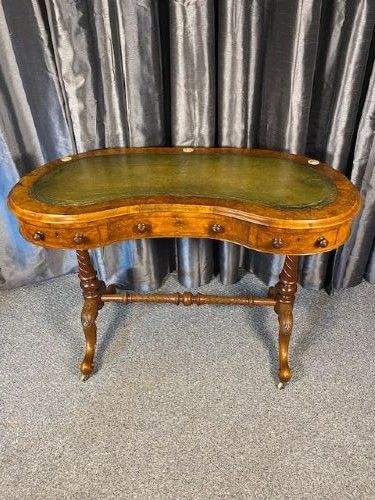
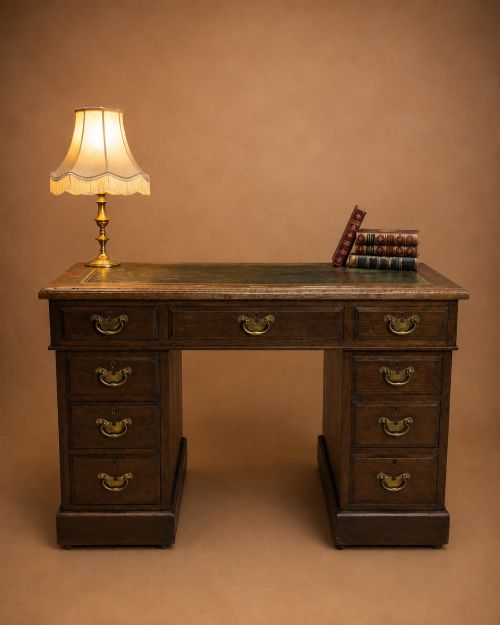
Vintage Leather Writing Desk
A vintage leather writing desk brings tactile warmth and practical workspace into a room through rich timber and supple hide.
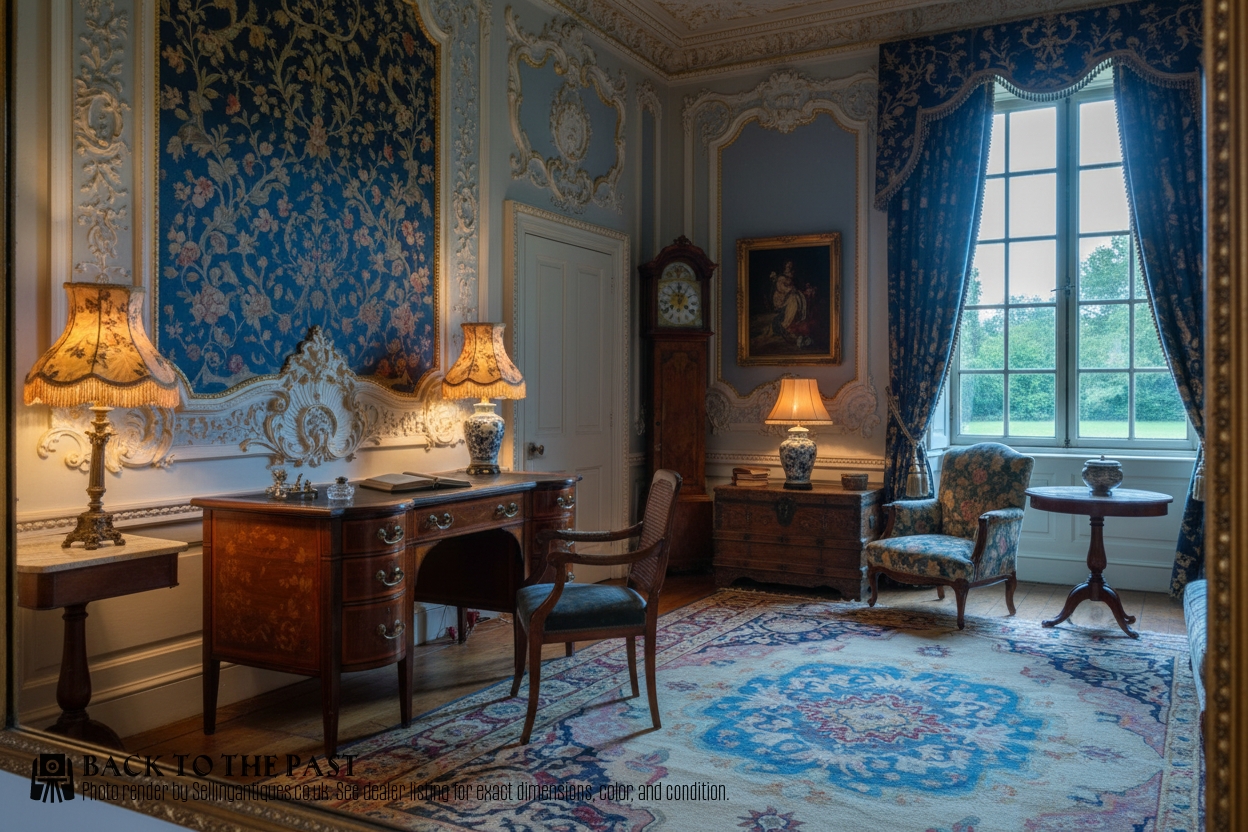
Vintage Leather Writing Desk
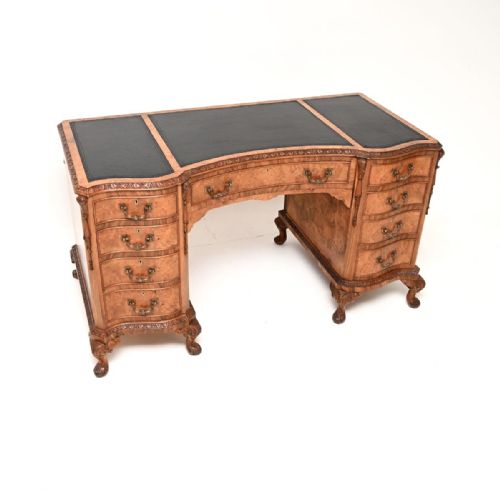
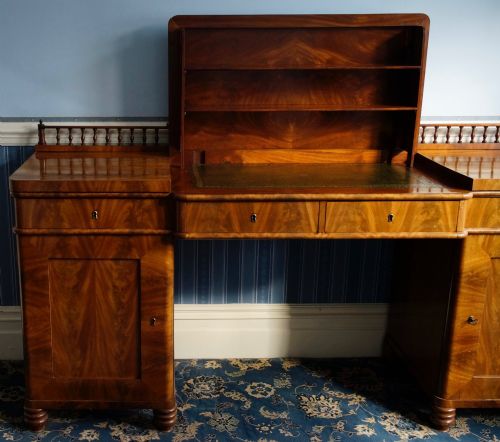
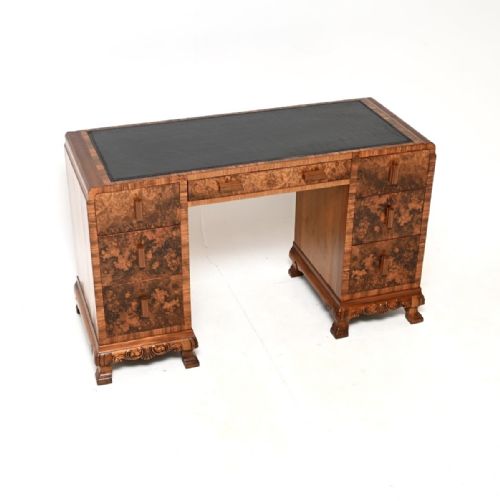
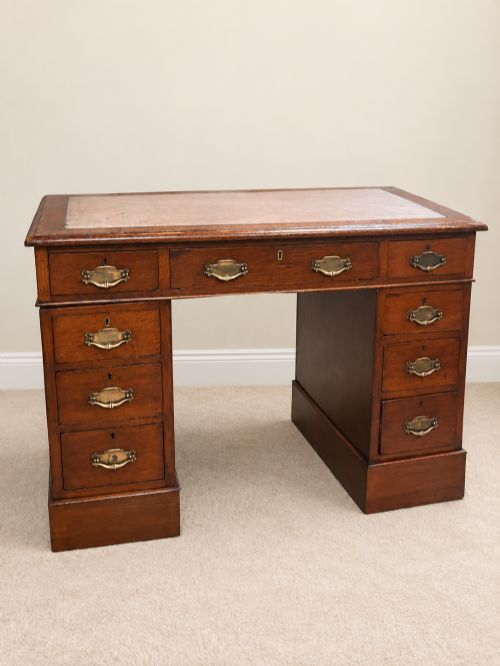
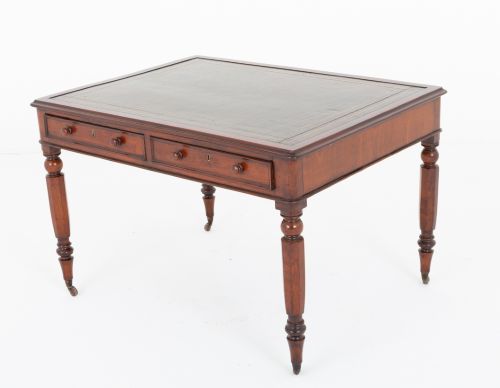
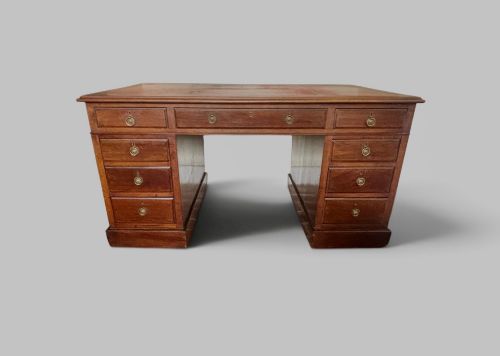
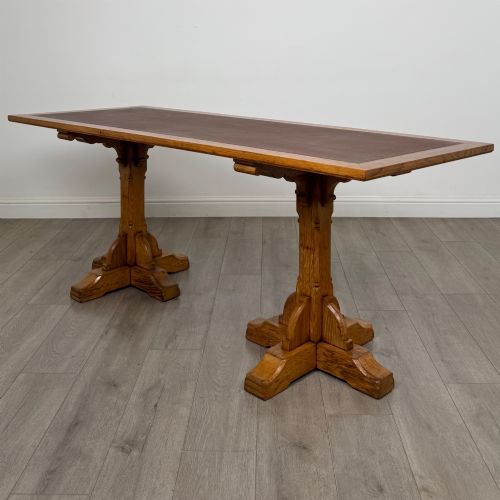
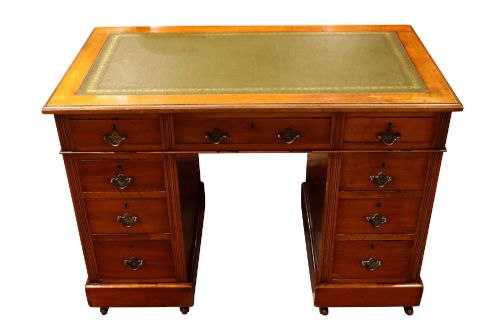
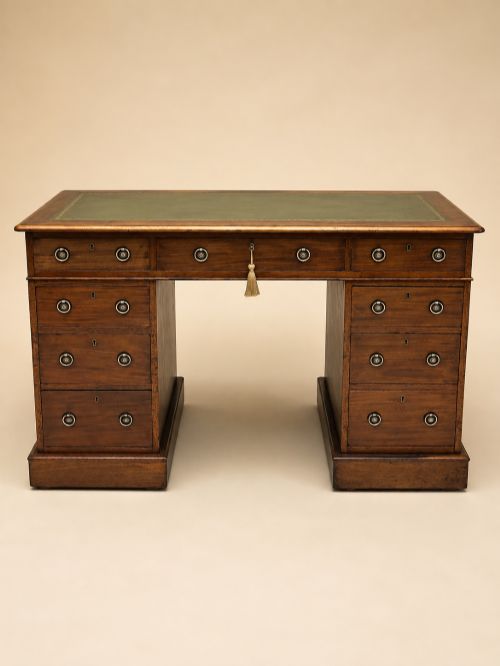
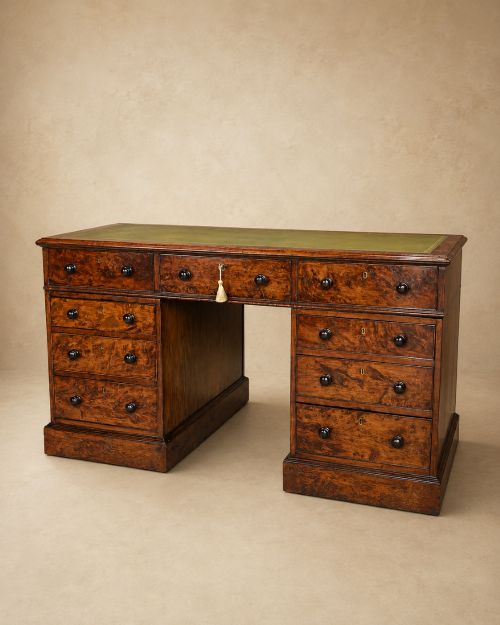
A vintage leather writing desk provides a dedicated writing surface inset with leather, appearing across periods from the nineteenth century through the Art Deco era. Buyers examining this page encounter pedestal desks, partner desks, and library tables designed for heavy daily use.
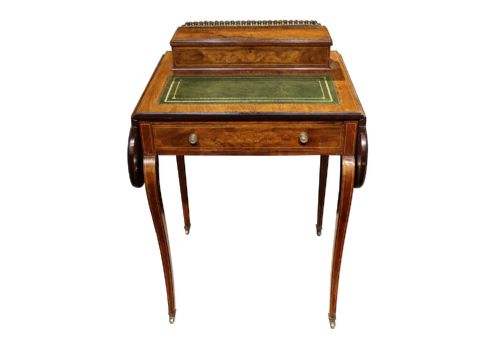
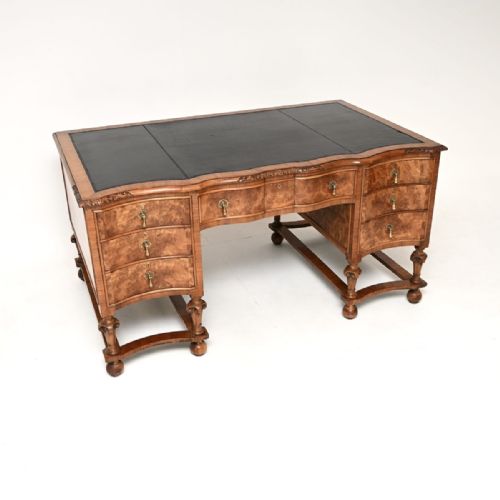
The selection ranges from substantial mahogany and burr walnut pedestal forms to lighter Edwardian rosewood writing tables and oak arts and crafts pieces. Most examples retain their original configuration of drawers and fitted interiors.
Originating predominantly from British workshops alongside French and Danish makers, these pieces reflect the specific domestic and professional requirements of their respective decades.
How they were made
Cabinetmakers constructed the foundational carcases of these desks using solid and veneered timbers including mahogany, walnut, burr walnut, oak, and rosewood. These woods were selected for their structural stability and rich grain patterns.
Working surfaces were traditionally inset with panels of leather, frequently finished with blind or gilt tooling along the perimeter. Brass hardware, such as drop handles and escutcheons, completed the construction.
Vintage Leather Writing Desk Retail Price Guide 2026
Typical asking prices for vintage leather writing desk among the pieces listed under this phrase on Sellingantiques today, from the lower quarter to the upper quarter. They describe what is for sale here now, not the wider market.
Periods represented across the available pieces span the nineteenth century, Victorian era, Edwardian period, and the Art Deco years.
What varies in quality
The calibre of a vintage leather writing desk is determined by the selection of timber veneers, the precision of drawer dovetailing, and the retention of original brass furniture. Superior examples exhibit continuous grain matching across the drawer fronts and robust internal framing.
The condition and quality of the leather top influence the overall character, with finely tooled hide demonstrating superior craftsmanship compared to plain replacement surfaces. Maker attribution also elevates certain pieces through documented workshop provenance.
Trollope and Sons·Maple and Co·CH Jeanselme and Co·Holland and Sons·Liberty of London
The Vintage Leather Writing Desk Glossary
- Pedestal desk
- A freestanding desk comprising two supporting banks of drawers beneath a single top, connected by a kneehole recess.
- Partners desk
- A large double-sided desk designed for two people to work opposite one another, featuring drawers and cupboards on both faces.
- Bureau plat
- A freestanding writing table fitted with drawers across the frieze, originating from French cabinetmaking traditions.
- Blind tooling
- An impression pressed into leather using heated brass tools without the application of gold leaf, creating a subtle decorative border.
- Fitted interior
- Internal compartments, pigeonholes, and small drawers revealed within a desk or writing table for stationery storage.
Vintage Leather Writing Desk: Frequently Asked Questions
What is a partners desk?
A partners desk is a large, double-sided workspace designed with drawers and cupboards on both operational faces. This configuration allowed two individuals to sit opposite each other while working.
Such pieces frequently appeared in large libraries, studies, and administrative offices during the nineteenth century.
How do I date an oak pedestal desk?
Dating an oak pedestal desk involves examining the construction methods of the drawers, the timber selection, and the architectural style. Earlier nineteenth-century examples often feature hand-cut dovetails and solid oak secondary woods.
Later Victorian and Edwardian iterations may incorporate machine-sawn elements and distinct revival stylistic influences.
Are leather desk tops original?
Many vintage desks retain their original leather writing surfaces, though prolonged use frequently necessitated replacement over the decades. Original leather often shows characteristic patination, scuffs, and faded gilt tooling.
Replacements are commonly installed to restore the writing surface while maintaining the historical aesthetic of the timber frame.
Where were these desks used?
These desks were primarily utilised in private studies, grand libraries, and professional offices for correspondence and administrative duties. Their finished backs and freestanding construction allowed them to sit in the middle of a room rather than against a wall.
Smaller tables were also placed in drawing rooms or private chambers for personal correspondence.