
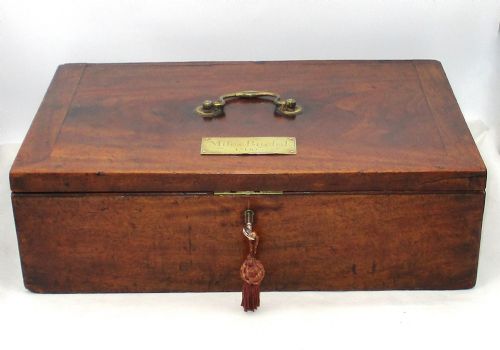
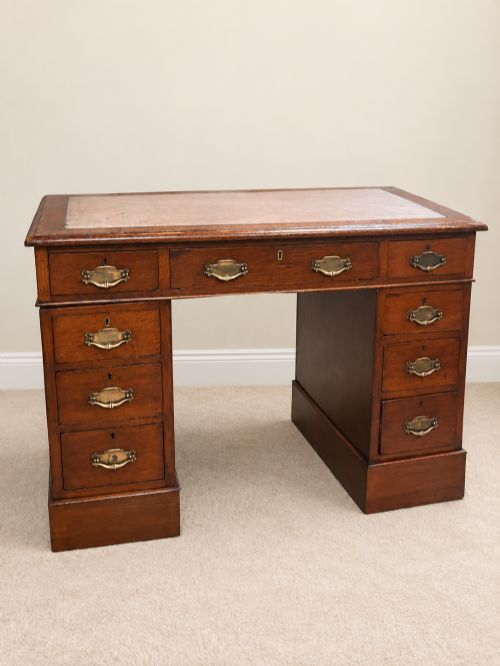

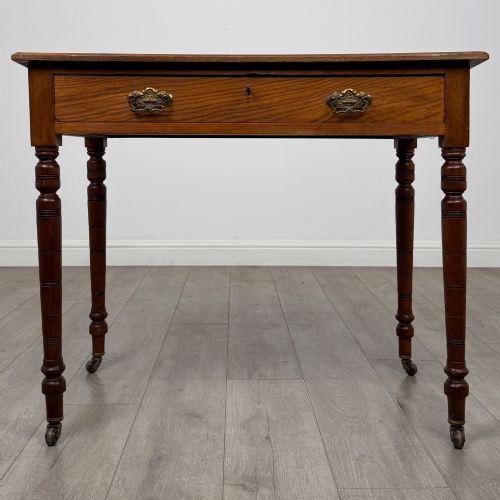

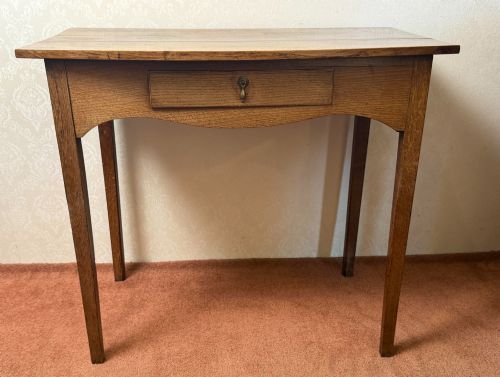
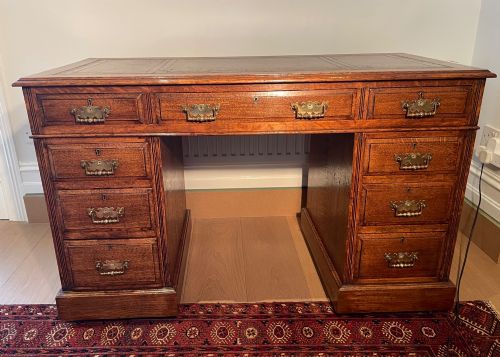
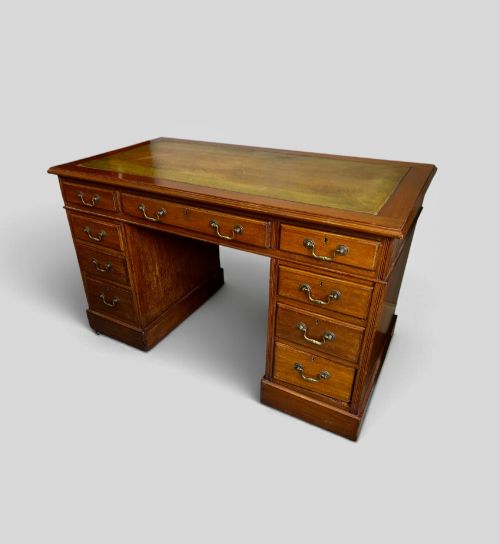
Brass Handle Writing Desk
A brass handle writing desk combines practical workspace with period character, offering functional surfaces defined by metal hardware.
What these desks are
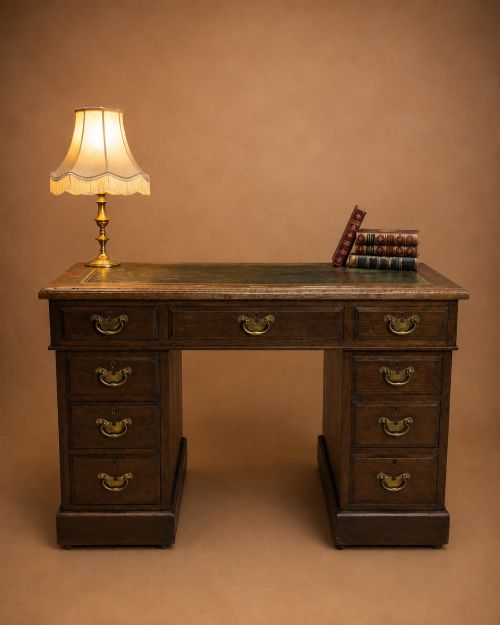
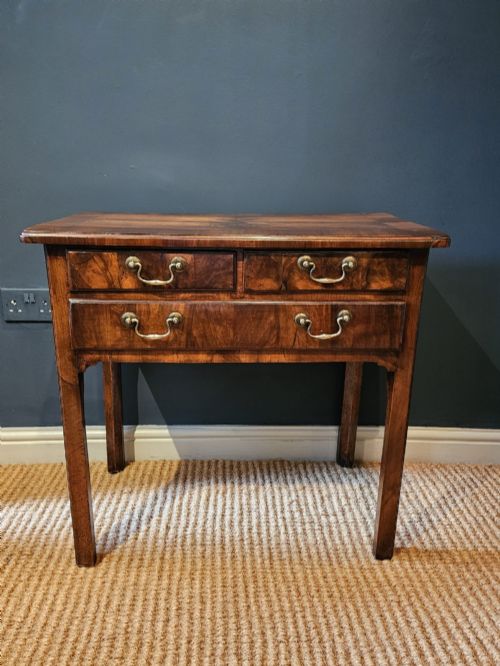
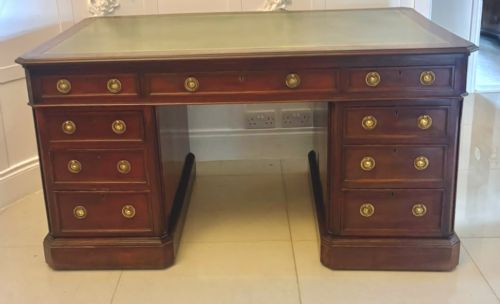
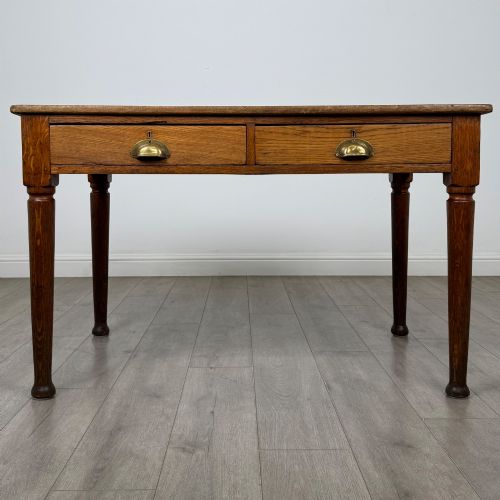
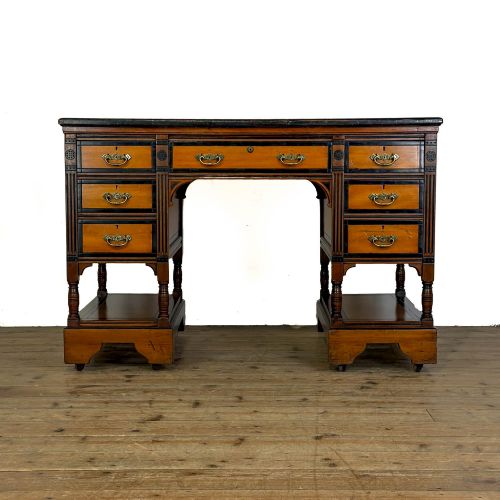
When you search for a brass handle writing desk, you examine pieces designed for correspondence and study from various historical periods. The selection spans compact Edwardian writing tables and grander partner's desks, each incorporating metallic pulls to drawers and compartments.
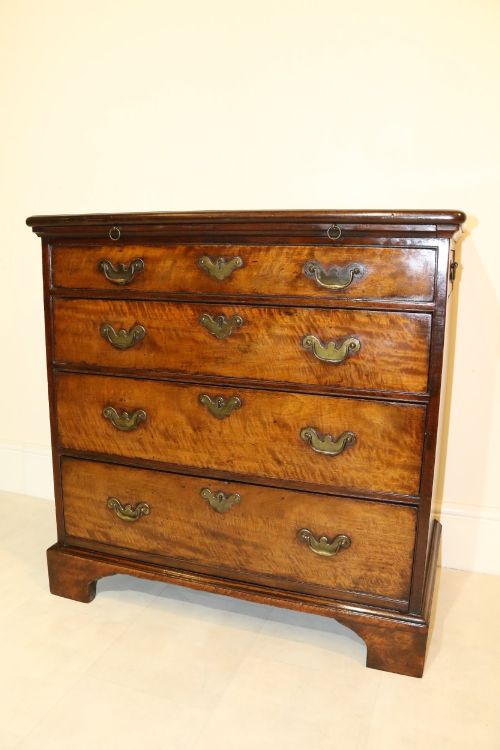
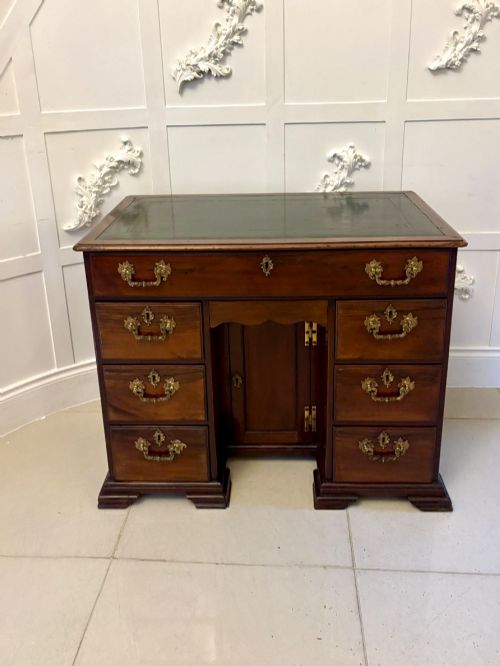
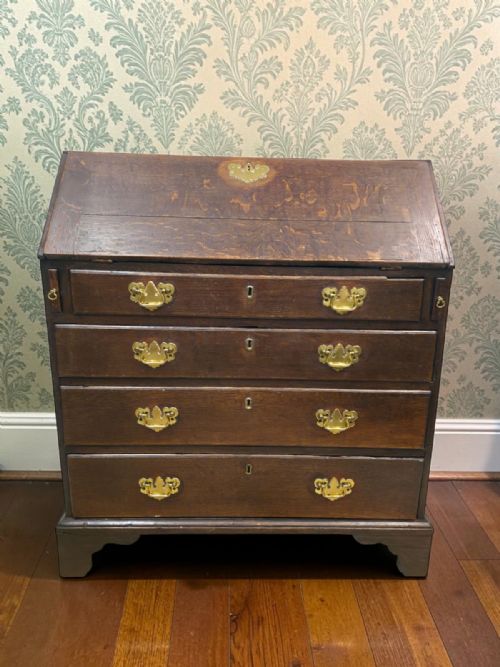
You meet examples originating from the eighteenth century up to the early twentieth century. Common forms include pedestal desks, bureaux, and writing tables featuring mahogany, rosewood, and occasional satinwood surfaces.
Revival styles heavily influence the available stock, notably Georgian Revival and Chippendale Revival pieces. These adaptations borrow earlier aesthetic codes while utilising timber construction characteristic of their actual period of manufacture.
How they were made
Cabinet makers constructed these desks predominantly from dense hardwoods such as mahogany and solid Brazilian rosewood. Selected pieces incorporate contrasting veneers like satinwood alongside inset leather writing surfaces.
Hardware consists of cast and chased brass used for drawer pulls and handles. Support structures range from turned and reeded tapering legs with brass capped castors to barley twist columns on Edwardian bureaux.
Retail Price Guide 2026
Typical UK retail prices for brass handle writing desk, calculated from the Sellingantiques database of over a million retail prices indexed since 2003. This retail price guide relies exclusively on Sellingantiques data; no external sources or auction records are used, so the figures do not describe the wider market.
Periods represented span from the 18th century through the Edwardian era and 1920s.
What varies in quality
The distinction between standard and superior pieces rests in timber selection and the precision of the cabinetwork. Heavier solid hardwoods and finer mahogany figure distinguish the upper tier of writing furniture.
Execution of secondary details, such as the quality of the brass hardware and the neatness of dovetail joints, dictates the overall integrity of the desk. Revivals executed with rigorous attention to historical proportion command greater appreciation.
The Brass Handle Writing Desk Glossary
- Bureau
- A sloping front desk that opens to reveal internal stationary compartments and drawers.
- Pedestal desk
- A freestanding writing table supported by two columns of drawers beneath the main surface.
- Partner's desk
- A large double-sided writing table designed for two people to work opposite one another.
- Rosewood
- A dense, heavily figured timber historically favoured for high-status cabinet furniture.
- Reeded
- A decorative moulding consisting of parallel convex strips resembling bundled reeds.
Frequently Asked Questions
What is a brass handle writing desk?
It is a piece of antique or revival furniture intended for correspondence, distinguished by metal drawer pulls.
These items range from compact Edwardian tables to large partner's desks constructed in mahogany and rosewood.
How do I date these desks?
Dating relies on timber choice, construction methods, and stylistic revival markers seen in the piece.
Evidence spans the eighteenth century through the Edwardian era, incorporating specific design motifs from each period.
Where were these desks used?
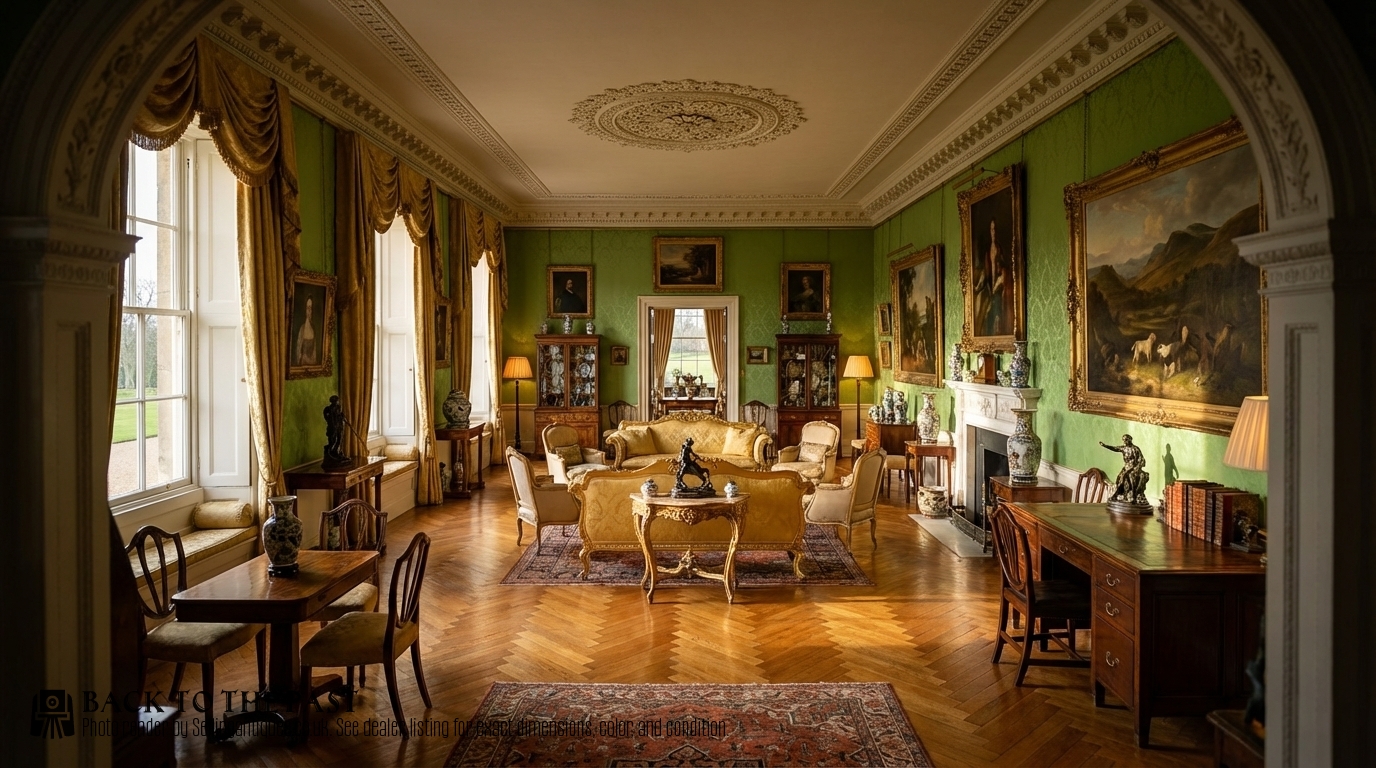
They served as functional workspace in libraries, studies, and principal rooms of period homes.
Their designs accommodated both private correspondence and administrative tasks.
How do I care for the leather top?
Leather surfaces benefit from regular dusting and occasional conditioning to prevent drying and cracking.
Avoiding direct sunlight helps preserve the colour and suppleness of the hide.