


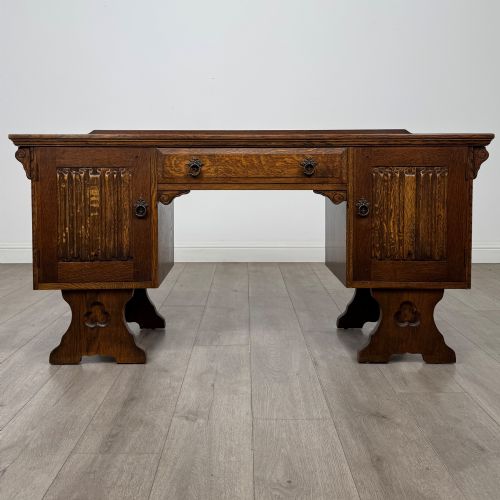
Office Pedestal Desk
An office pedestal desk provides substantial workspace and deep drawers, bringing traditional craftsmanship and practical organisation to a study.
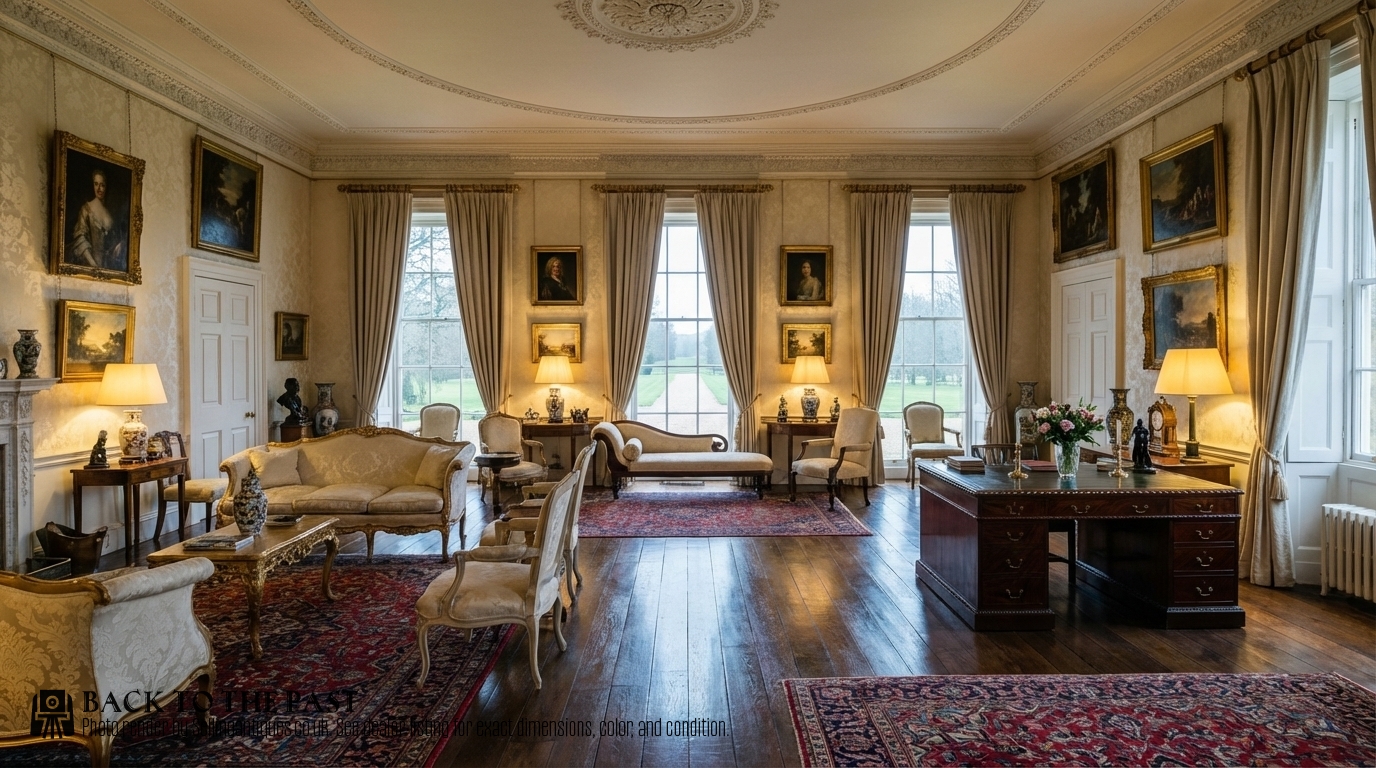
Office Pedestal Desk
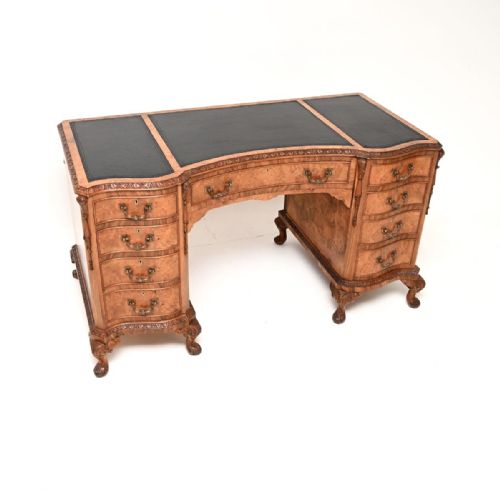
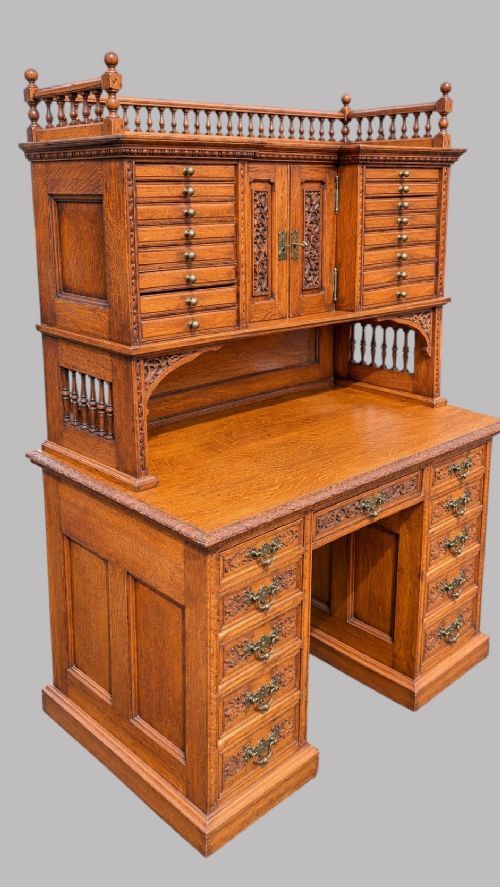
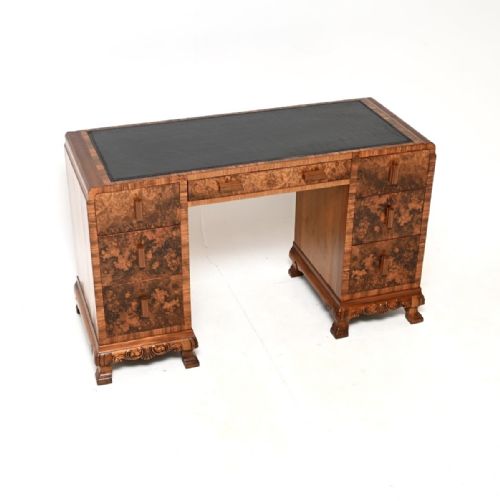
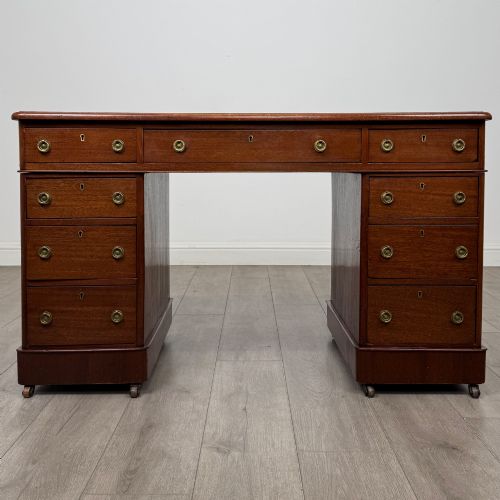
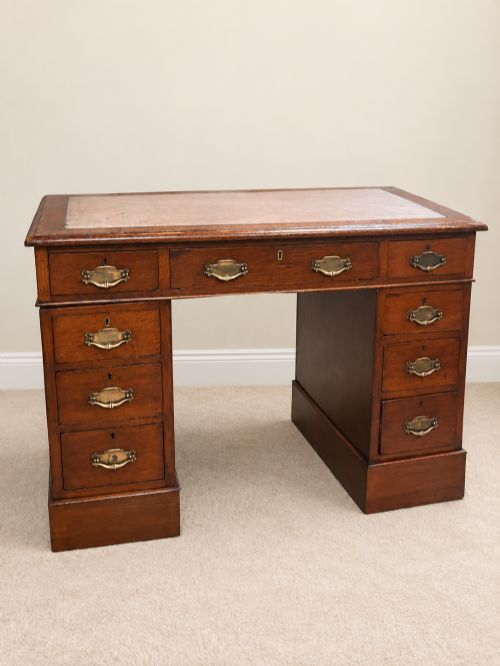
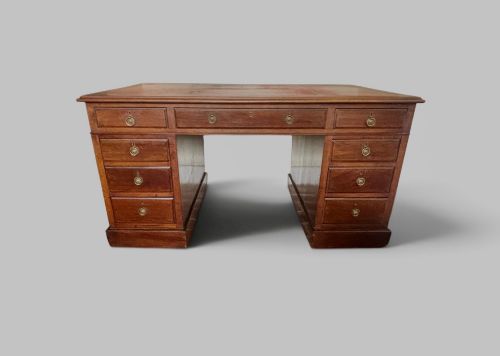
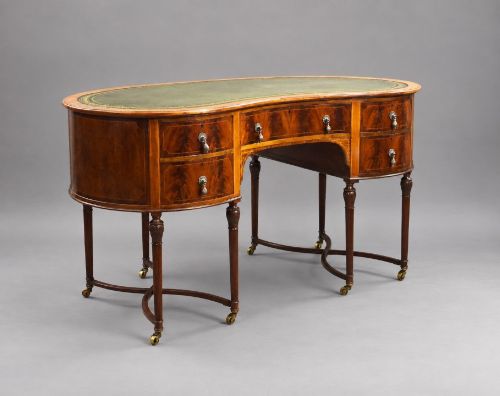
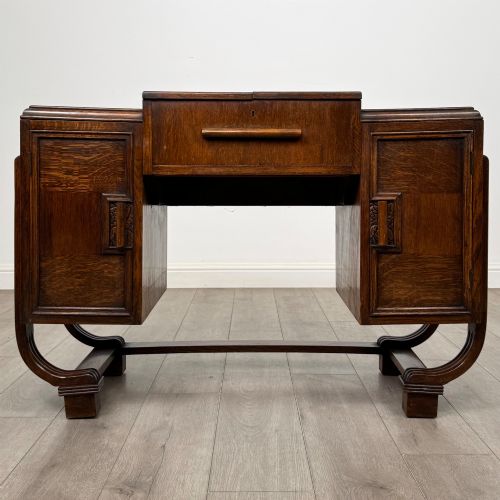
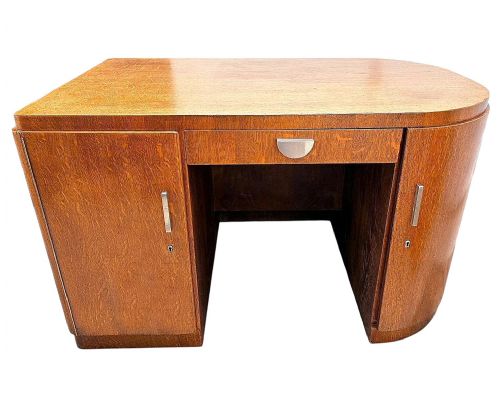
An office pedestal desk unites a flat top with two supporting stacks of drawers, creating a sturdy workspace designed for administrative tasks and daily correspondence. Buyers browsing this selection commonly encounter Victorian and Edwardian examples constructed from mahogany, oak, or walnut.
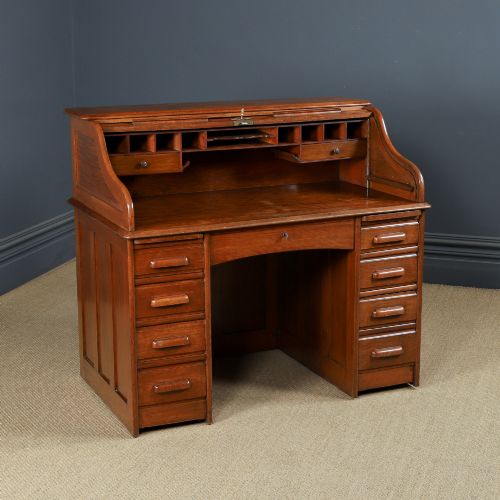
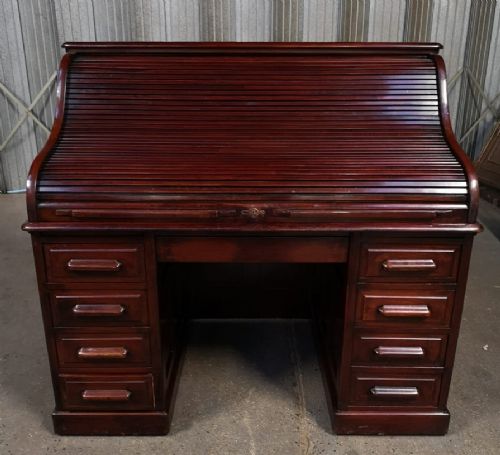
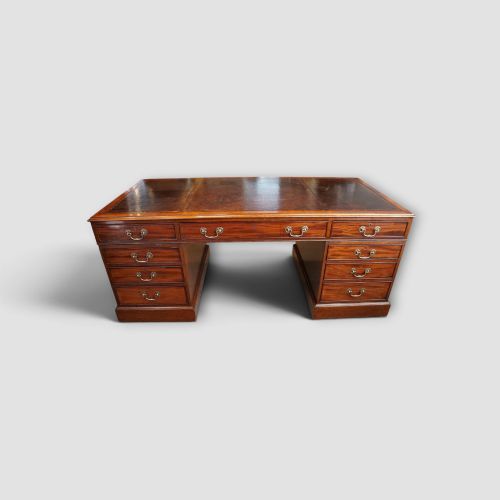
The layout generally comprises a central kneehole flanked by pedestals containing multiple drawers, occasionally modified with sliding writing surfaces or enclosed roll tops. Partners desks appear frequently, offering twin drawer banks and dual workspaces accessible from both sides.
Edwardian interpretations often utilise lighter figured woods or incorporate roll top mechanisms for secure document storage, whereas Victorian editions favour heavy mahogany timbers and tooled leather inserts.
Materials and technique
Cabinet makers built these pieces using solid timbers like oak, mahogany, and walnut, frequently applying burr walnut or flame mahogany veneers to exterior surfaces for decorative impact. Brass hardware, such as drop handles and escutcheons, secures the drawer fronts and structural joints.
Writing surfaces are typically inset with panels of tooled leather, often accented with gilt tooling around the perimeter. Roll top variants rely on tambour construction, comprising narrow vertical slats of wood glued to a flexible canvas backing that slides smoothly within recessed tracks.
Office Pedestal Desk Retail Price Guide 2026
Typical asking prices for office pedestal desk among the pieces listed under this phrase on Sellingantiques today, from the lower quarter to the upper quarter. They describe what is for sale here now, not the wider market.
Some nineteenth-century models feature hidden compartments behind stationery drawers for storing private ledgers and small valuables.
Evaluating craftsmanship
Superior examples distinguish themselves through the selection of timber veneers and the precision of the joinery, such as hand-cut dovetails on drawer boxes. Lesser pieces rely on simpler construction methods and plain, unfigured secondary woods.
The integrity of original fittings, including brass handles, locks, and functioning tambour shutters, marks the distinction between a well-preserved survivor and a heavily altered piece. Finishes that retain their natural grain and patination indicate careful custodianship over generations.
Trollope and sons·Edwards and Roberts·Maple and co·Angus of London·Horrocks Standard Company·Lebus·Charles Andrea Nosotti
The Office Pedestal Desk Glossary
- Pedestal desk
- A freestanding desk comprising two structural pedestals of drawers supporting a central writing surface. The configuration allows for generous storage capacity beneath the working area.
- Partners desk
- A double-sided desk designed for two individuals to work opposite one another, featuring drawers and cupboards on both the front and rear elevations.
- Tambour
- A flexible shutter made from narrow wooden strips affixed to canvas or leather, allowing the top of a roll top desk to curve open and closed. This mechanism conceals the pigeonholes and stationery drawers.
- Kneehole
- The central recess beneath the desk top designed to accommodate the user's legs while seated. It is often flanked by single or double banks of drawers.
- Writing slide
- A pull-out shelf housed immediately beneath the desk top, providing auxiliary space for paperwork without cluttering the main writing surface.
Office Pedestal Desk: Frequently Asked Questions
What is a partner desk?
A partners desk is an expanded version of the standard pedestal desk, built with drawers and cupboards on both sides so two people can work face-to-face.
These pieces were traditionally utilised in professional offices, libraries, and boardrooms where colleagues needed shared access to workspace and documentation.
How do roll top desks work?
Roll top desks utilise a flexible tambour shutter that glides along curved tracks to cover the pigeonholes and small drawers of the upper writing section.
This mechanism allowed nineteenth-century clerks to secure their paperwork quickly at the end of the working day without clearing the desktop.
Are these desks suitable for daily use?
These pieces offer robust construction and generous surface areas, making them highly practical for contemporary home offices and studies.
Their deep drawer banks accommodate modern stationery and electronic equipment while maintaining a traditional aesthetic.
How do I identify the period?
Dating relies on examining the timber species, construction methods, handle designs, and stylistic influences such as Victorian mass or Edwardian lightness.
Earlier nineteenth-century examples often feature solid mahogany and hand-cut dovetails, while twentieth-century pieces introduce Art Deco lines or commercial roll top systems.