





Church Lectern Stand
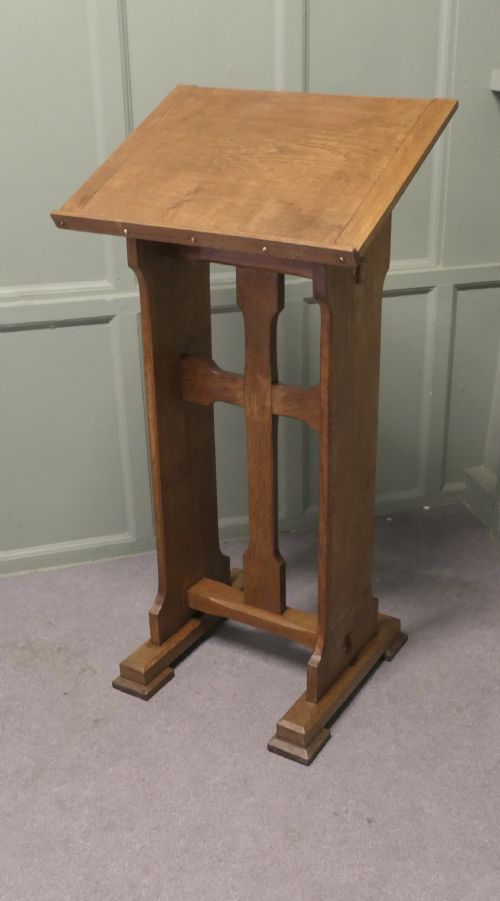
A church lectern stand brings solemn architectural presence into a room, offering a sturdy timber framework designed to hold heavy folios.
Church Lectern Stand
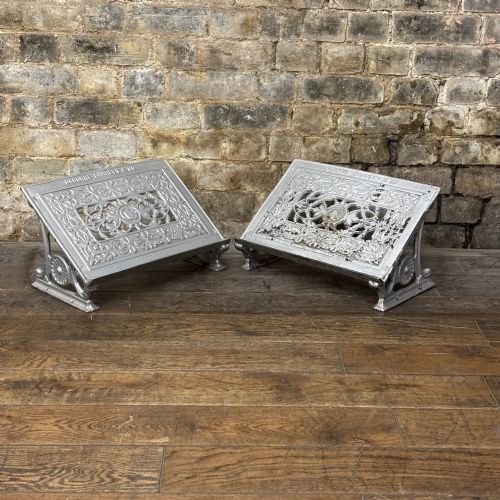
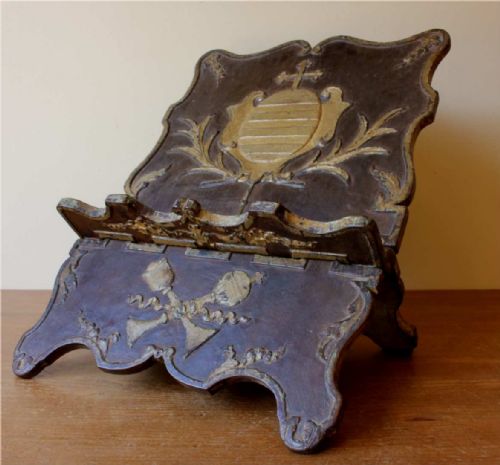
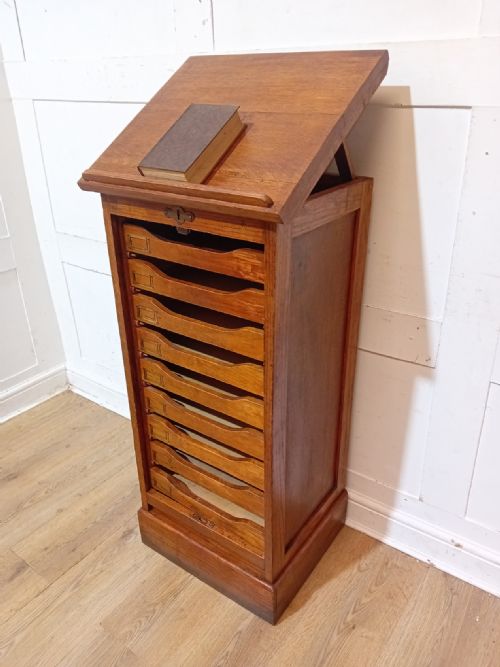
A church lectern stand is an ecclesiastical furnishing primarily designed for holding reading materials during services or study. The pieces appearing here span the late nineteenth century into the early twentieth century, capturing a period deeply influenced by historical church revival styles.
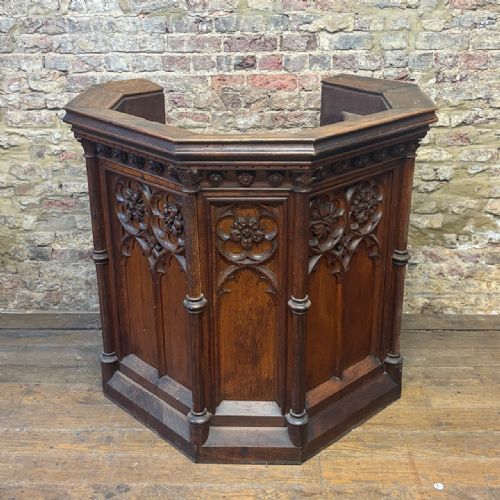
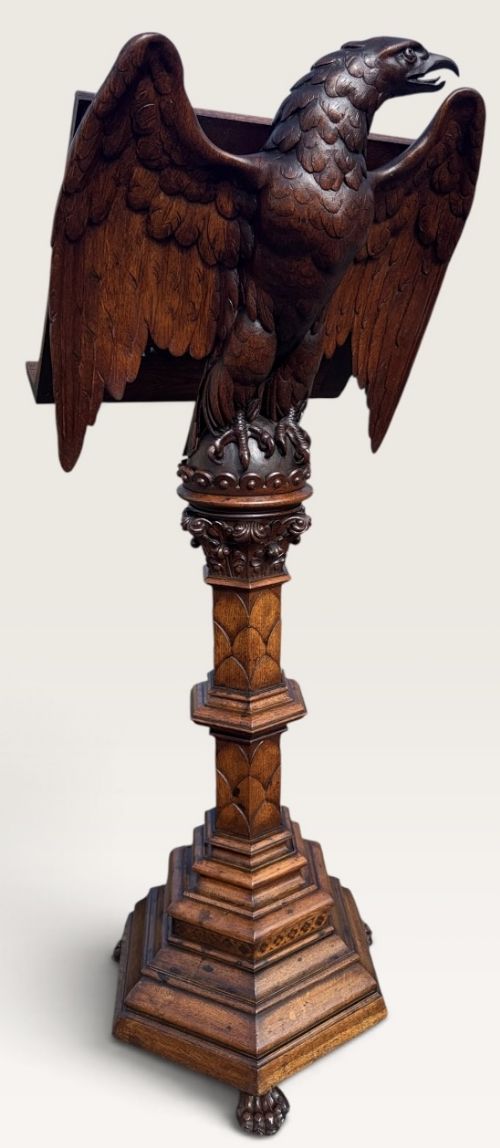
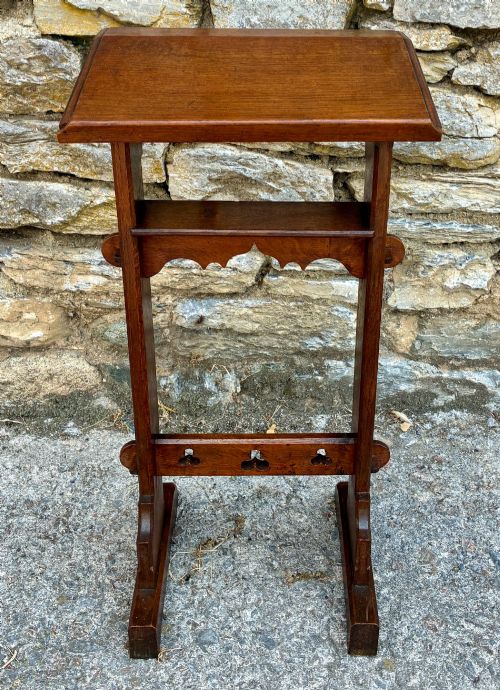
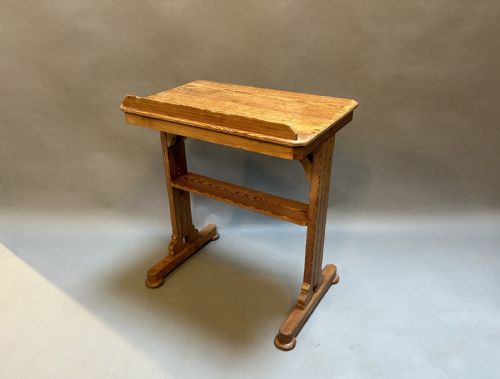
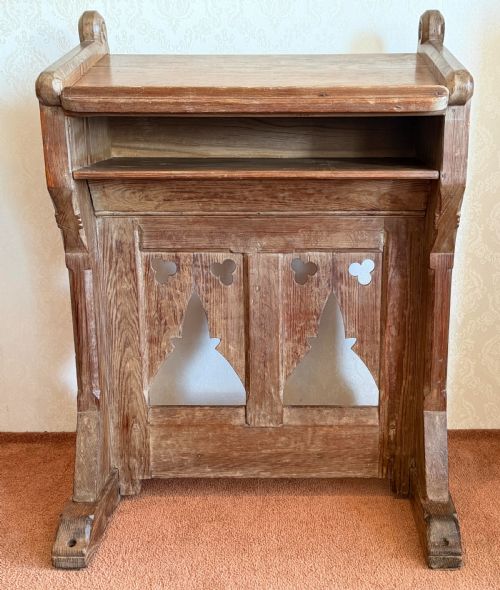
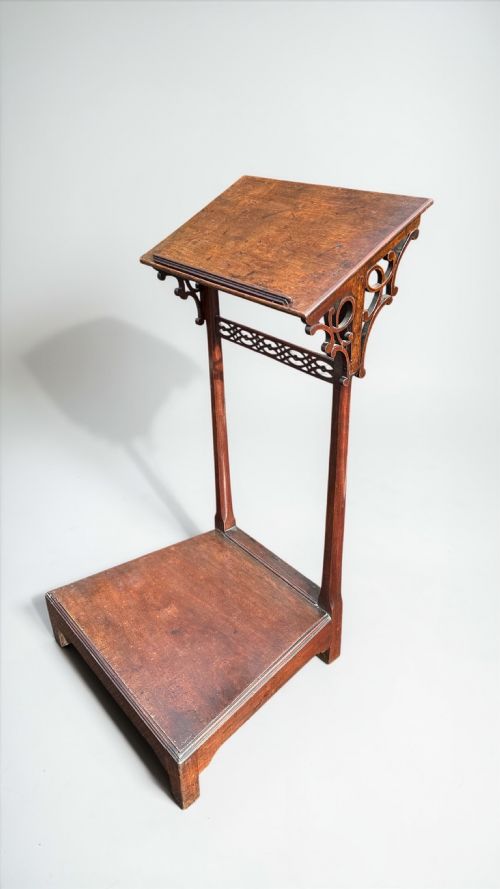
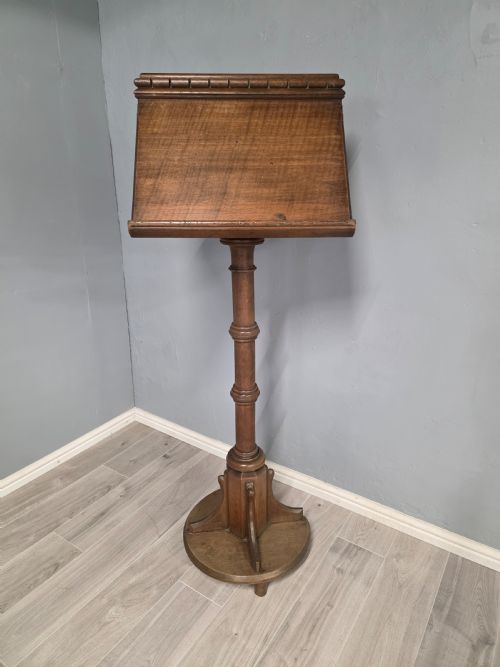
Most examples found on this page adopt the form of a church lectern stand in oak, pine, or mixed timbers, often serving as reading stands or praying-kneeling stations. They derive from British and continental European traditions, including French Gothic interpretations.
Buyers frequently encounter variants labelled simply as reading stands, music stands, or greeting stations. These dual-purpose forms reflect how ecclesiastical furniture adapts readily to domestic or institutional use while retaining its original gravity.
Materials and construction
Construction relies heavily on solid oak and pine, chosen for structural endurance and availability in ecclesiastical workshops. Woodworkers joined these heavy timbers using traditional framing and panel techniques suited to supporting sustained downward pressure.
Church Lectern Stand Retail Price Guide 2026
Typical asking prices for church lectern stand among the pieces listed under this phrase on Sellingantiques today, from the lower quarter to the upper quarter. They describe what is for sale here now, not the wider market.
One French pine reading stand doubles happily as a greeting station, proving that nineteenth-century monks knew a good hospitality hack.
Assessing quality
Quality reveals itself through the depth and crispness of the hand-carved ornament, where sharper architectural detailing distinguishes finer workshops from plain utilitarian pieces. The choice of timber also dictates standard, with well-figured oak boards commanding greater presence than simpler pine constructions.
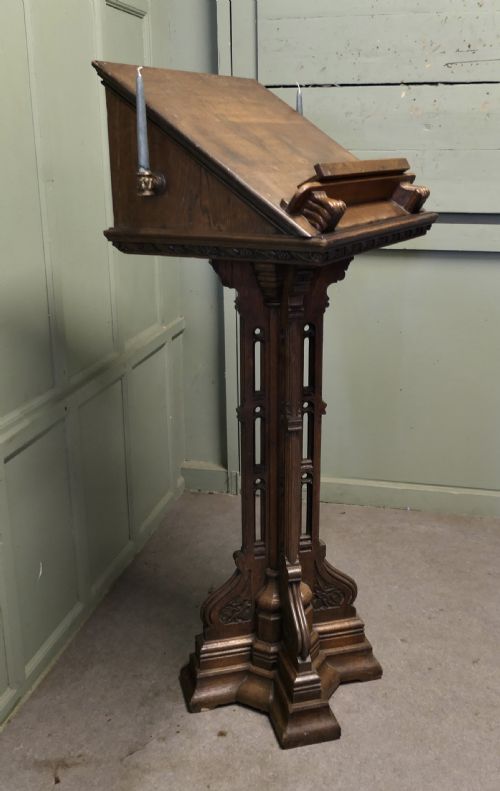
The integration of brass work adds another layer of refinement, separating standard joinery from pieces featuring bespoke metal hinges and supports. Proportion and balance govern the overall success of the stand, ensuring that structural uprights support the reading surface with quiet authority.
The Church Lectern Stand Glossary
- Gothic Revival
- An architectural and decorative style drawing inspiration from medieval design. It dominates the ornamentation of nineteenth-century ecclesiastical furniture.
- Ecclesiastical
- Relating to the Christian Church or its clergy. This term describes items originally built for worship spaces rather than domestic interiors.
- Folio
- A large book or manuscript. Lectern stands were engineered specifically to support these substantial volumes.
- Tracery
- Openwork ornamental stonework or woodwork pattern. It frequently appears carved into the panels of Gothic church stands.
Church Lectern Stand: Frequently Asked Questions
What is a church lectern stand?
A church lectern stand is a tall wooden furnishing designed to support heavy books or Bibles during readings and services. These pieces usually feature a sloping top surface and sturdy upright supports.
Historically placed in chancels or chapels, they provide an elevated platform for public reading. Today, buyers often repurpose them as reading desks or display stands in studies and libraries.
How old are these stands?
The pieces available here date primarily from the nineteenth century up to 1910. This span includes Victorian and Edwardian periods.
Makers working in these eras frequently utilised Gothic Revival motifs. The resulting objects carry the substantial patination of genuine historical use.
What woods were used?
Makers constructed church lectern stands predominantly using oak and pine. Oak provided exceptional strength and a rich grain for visible surfaces.
Pine was often employed for secondary framework or simpler provincial pieces. Some examples also incorporate brass work for structural or decorative reinforcement.
Can I use one at home?
These stands integrate well into domestic interiors as reading stations, book displays, or standing desks. Their architectural presence makes them striking focal points in a room.
Because they were built to hold heavy folios, they easily accommodate modern books, laptops, or art displays. Their sturdy construction ensures they remain functional daily furniture.