

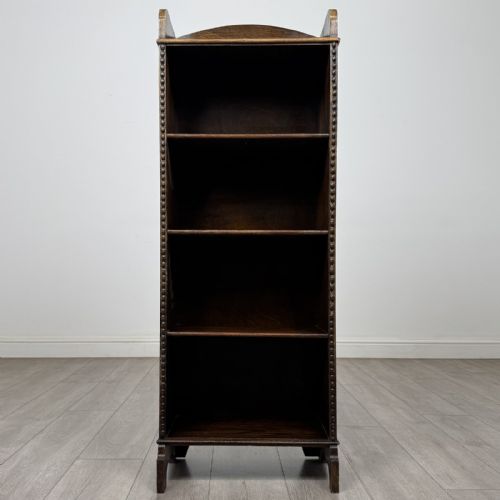
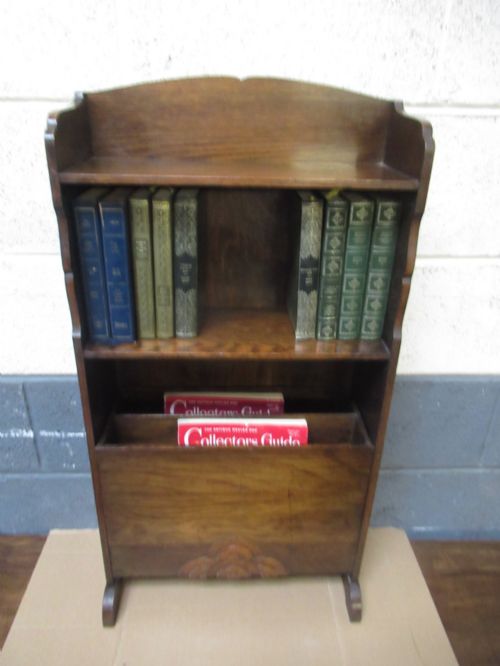

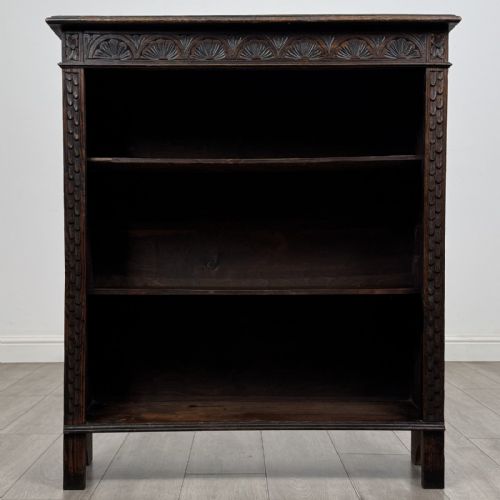
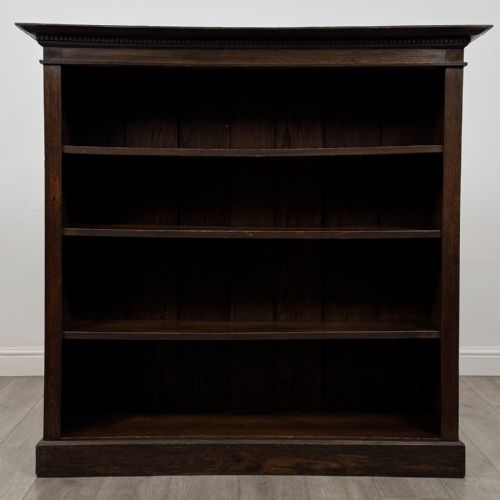
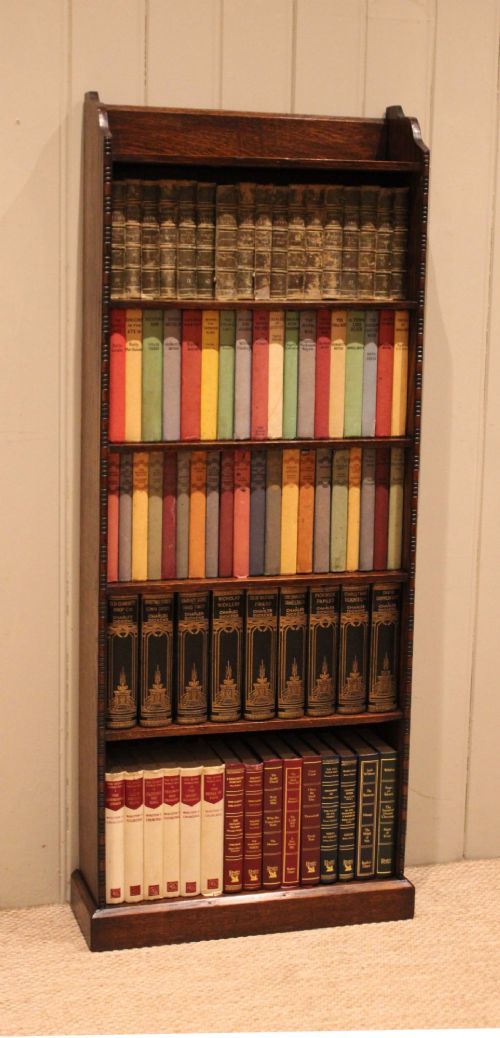
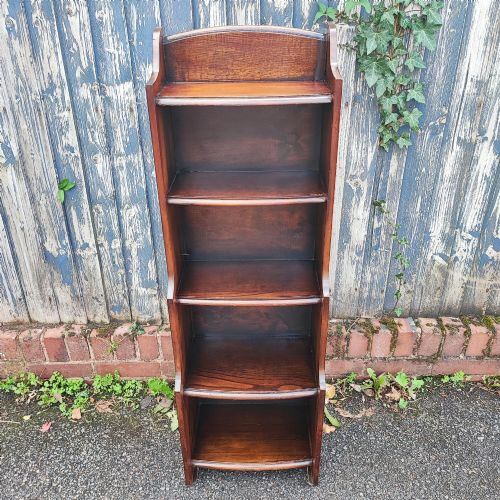
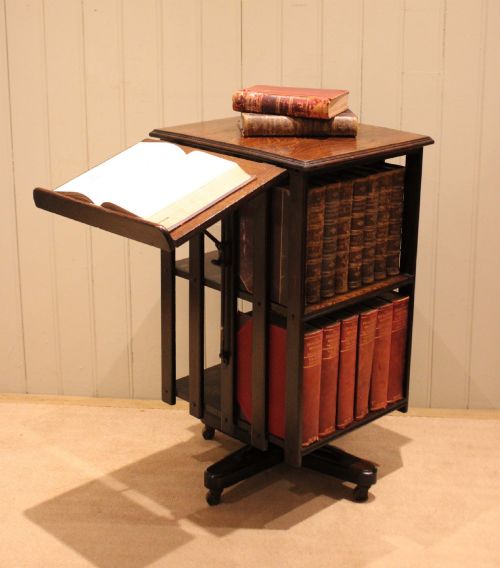
Dark Oak Book Stand
A dark oak book stand brings rich timber grain and sturdy utility to your study, holding your volumes close at hand.
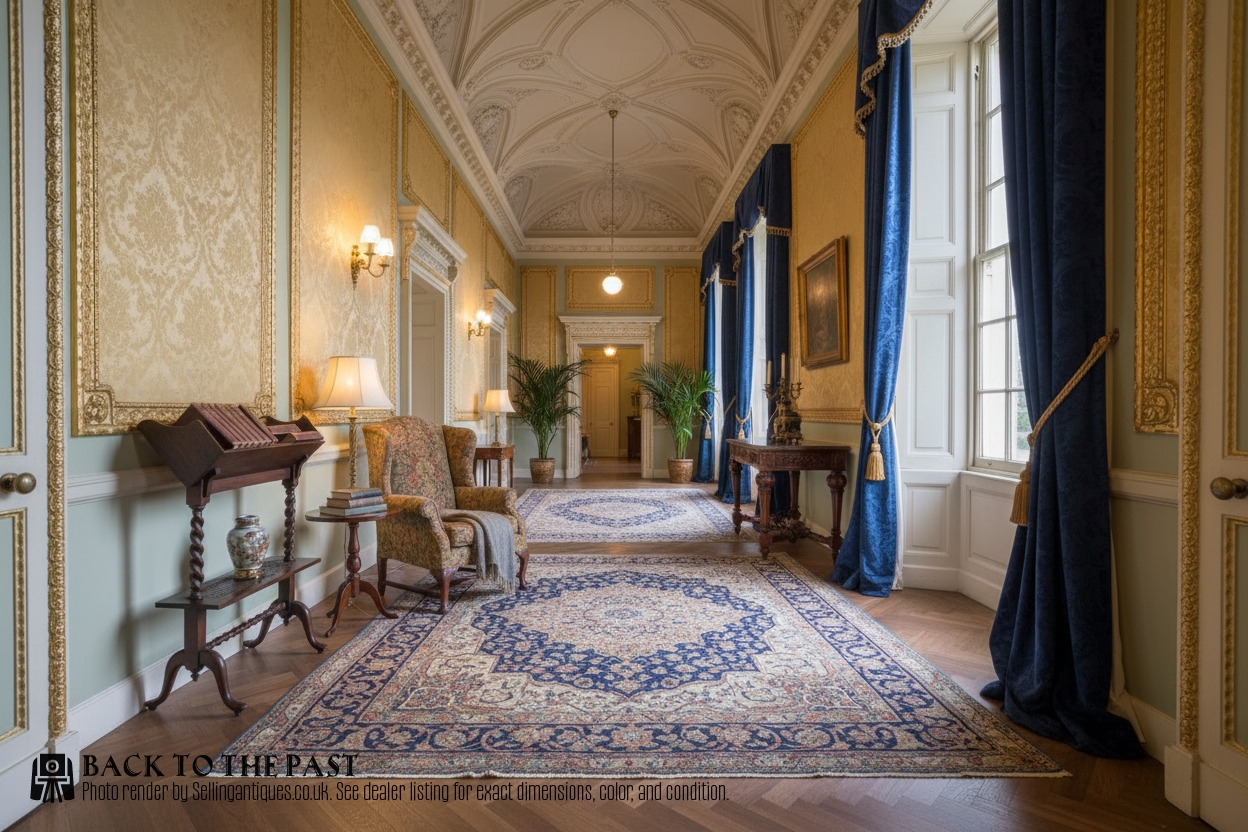
Dark Oak Book Stand
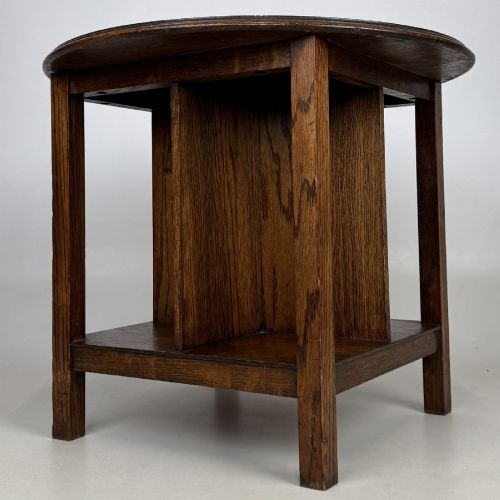
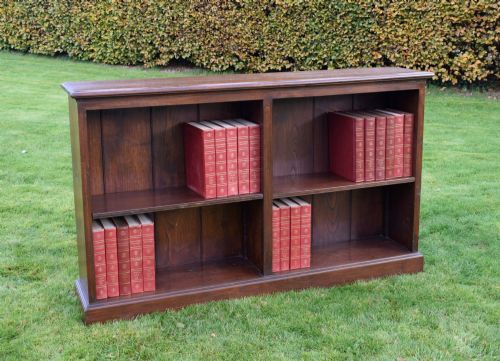
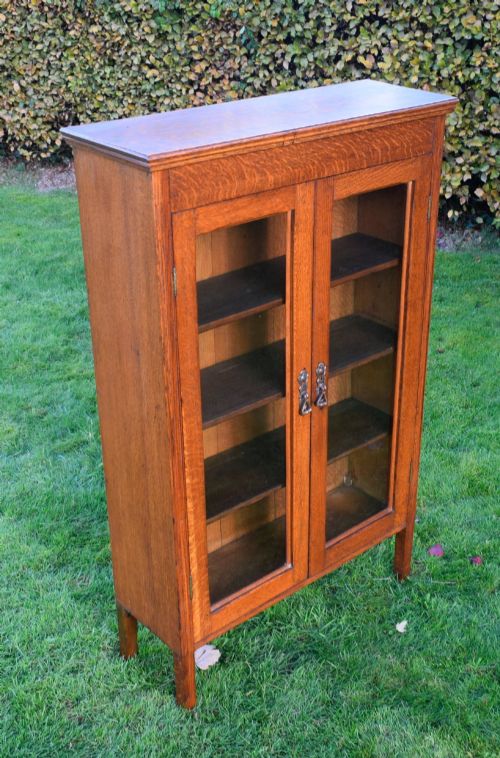
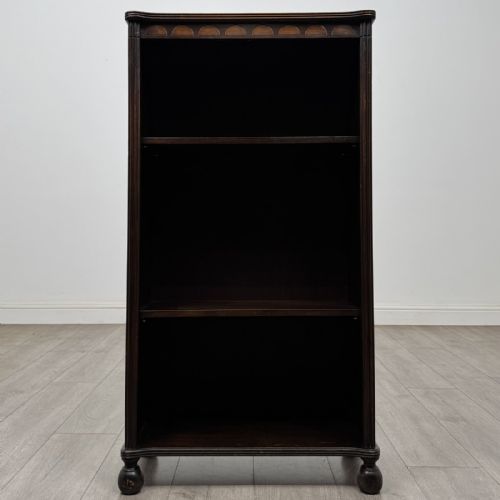
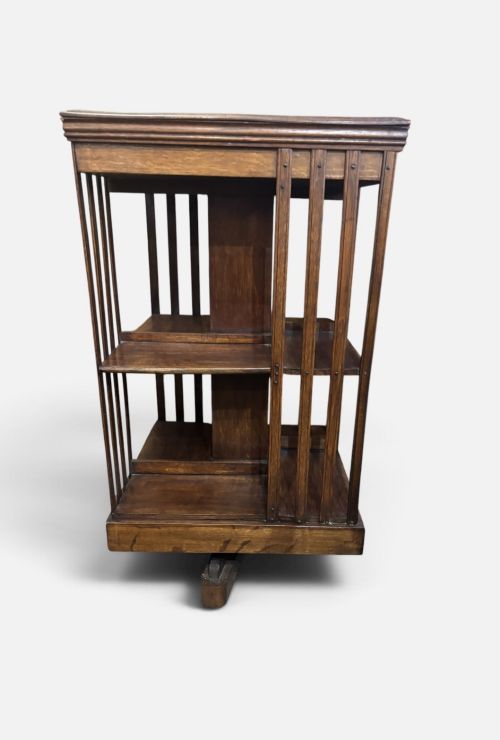
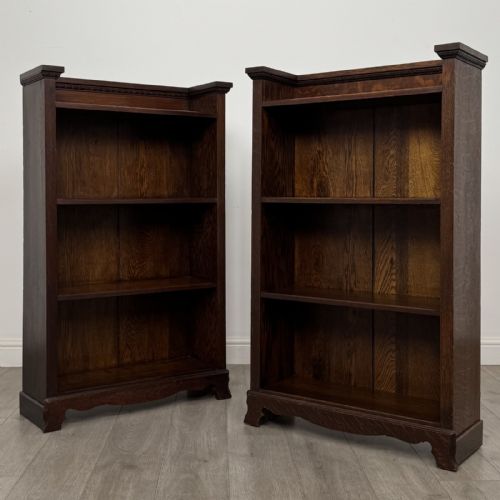
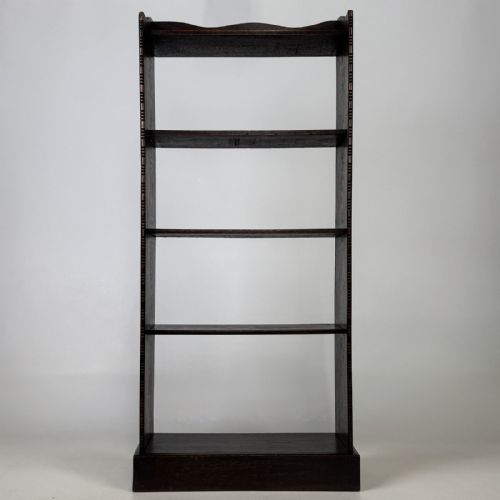
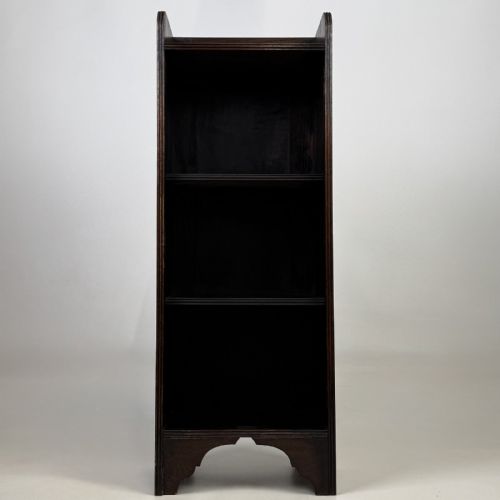
When you search for a dark oak book stand, you find furniture designed to support and display volumes in a study or library. These objects range from compact revolving table top models to standing open shelves and lecterns.
The versions you meet most often on this page date from the Victorian and Edwardian eras, spanning the late nineteenth century. Makers of this period worked within styles such as Arts and Crafts, Gothic Revival, and Jacobean Revival.
The selection includes rotating mechanisms for easy access alongside fixed slope shelves and open front cases. Each form reflects the practical demands of nineteenth-century reading rooms and domestic libraries.

How they were made
The primary material across these listings is oak, complemented by hardware in brass and iron. Some examples incorporate cast iron elements for structural stability, whilst others integrate cane details.
Construction techniques involve traditional joinery suited to heavy timber, alongside carved ornamentation seen on specific Gothic and Victorian pieces. The dark finish highlights the natural grain of the wood.
Dark Oak Book Stand Retail Price Guide 2026
Typical asking prices for dark oak book stand among the pieces listed under this phrase on Sellingantiques today, from the lower quarter to the upper quarter. They describe what is for sale here now, not the wider market.
Listings feature pieces from the Victorian and Edwardian eras, utilising oak, brass, iron, and cane across Arts and Crafts and Gothic Revival styles.
What varies in quality
Quality in these pieces rests upon the crispness of the timber carving and the smoothness of any mechanical revolving action. Superior examples display thoughtful proportions and robust construction using well-seasoned oak.
The refinement of brass or iron fittings and the integrity of the original dark finish separate standard utility furniture from more ambitious Arts and Crafts or Gothic Revival commissions.
The Dark Oak Book Stand Glossary
- Revolving bookcase
- A rotating table top or floor-standing unit allowing multiple directions of access to stored volumes. This mechanism requires precise internal balancing to turn without friction.
- Lectern
- A slanted stand designed to hold a book at a comfortable reading angle. These pieces often feature a projecting ledge to keep open volumes in place.
- Arts and Crafts
- A design movement valuing visible construction and honest materials over machine-made ornament. Pieces in this style often display simpler lines and exposed joinery.
Dark Oak Book Stand: Frequently Asked Questions
Where should I place a revolving book stand?
These rotating stands sit well beside an armchair or desk where you need frequent access to reference books. Their revolving action allows them to function efficiently in corners or tighter spaces.
Ensure the surrounding floor space permits the full rotation of the tier without striking adjacent furniture or walls.
How do I care for dark oak timber?
Keep the wood away from direct heat sources and strong sunlight to prevent the dark finish from drying out. Dust regularly with a soft, dry cloth.
Apply a traditional beeswax polish occasionally to nourish the oak and maintain its natural lustre.
What is the difference between an open bookcase and a lectern?
An open bookcase provides vertical storage across multiple fixed shelves for general book storage. A lectern uses a single sloped surface specifically designed for reading an active volume.
Lecterns place the book at an inclined angle, whereas bookcases present spines vertically on horizontal planes.
How do I identify an Edwardian piece?
Edwardian furniture dates from the reign of King Edward VII, spanning the early years of the twentieth century. These objects often show lighter interpretations of earlier Victorian and Arts and Crafts styles.
Construction methods remain solid, but proportions tend to be more compact to suit smaller domestic interiors of the period.