


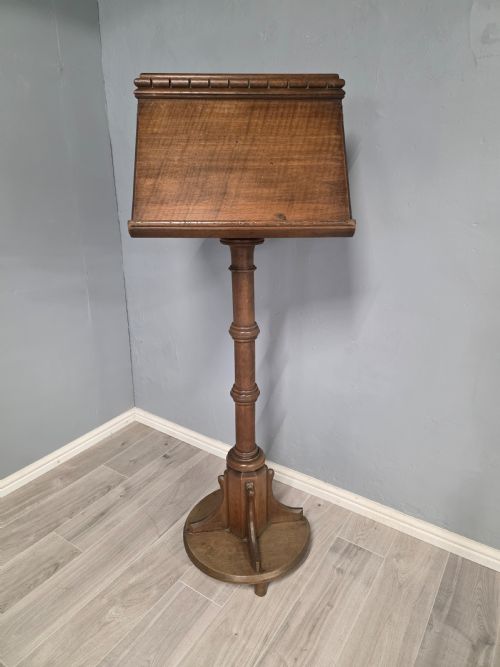


Oak Church Lectern
An oak church lectern brings heavy timber architecture and centuries of ecclesiastical gravity directly into a domestic interior.
Oak Church Lectern
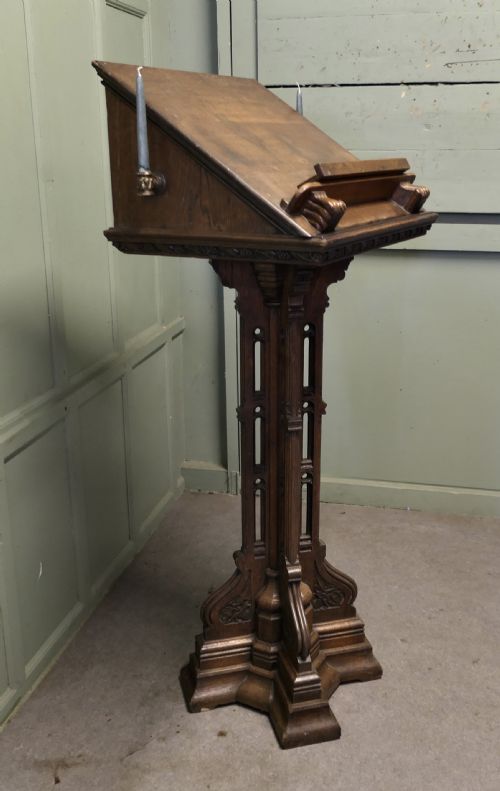
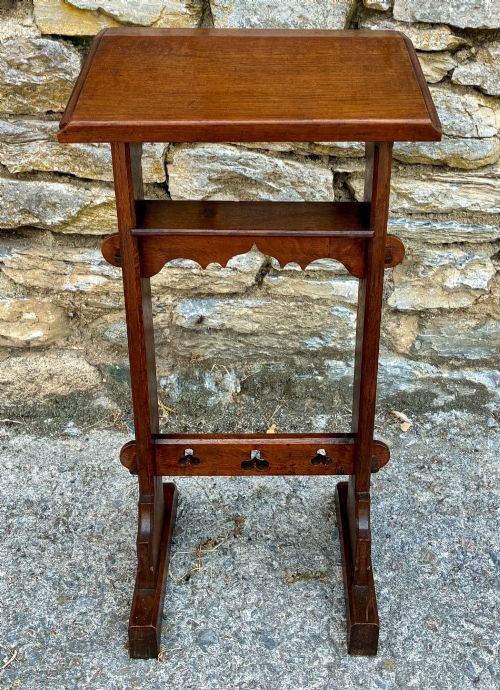
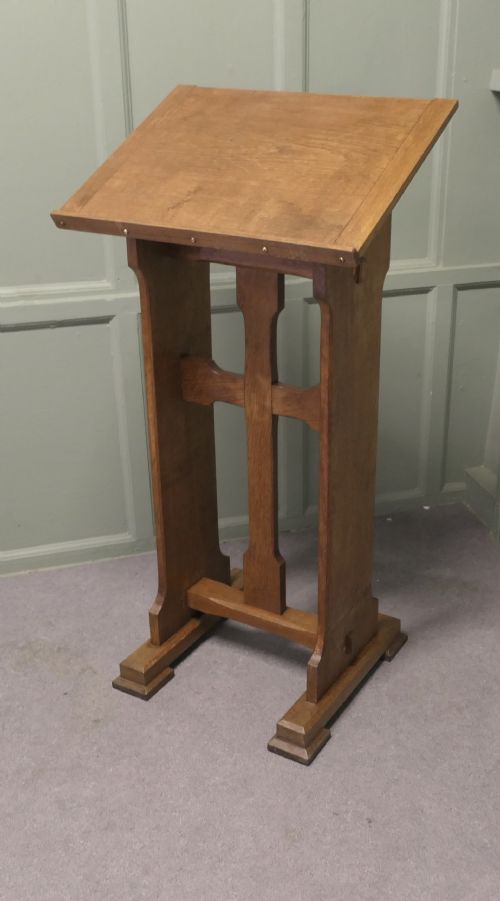
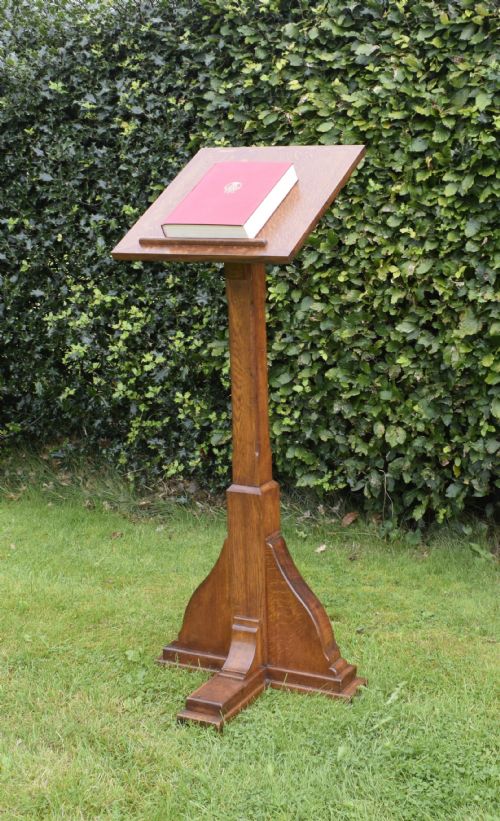
An oak church lectern is a sturdy reading stand designed originally to hold heavy service books in religious spaces, now frequently adapted for domestic or commercial reading use. When you search for an oak church lectern, you encounter substantial liturgical furniture shaped by periods ranging from the eighteenth century through to the early twentieth century.
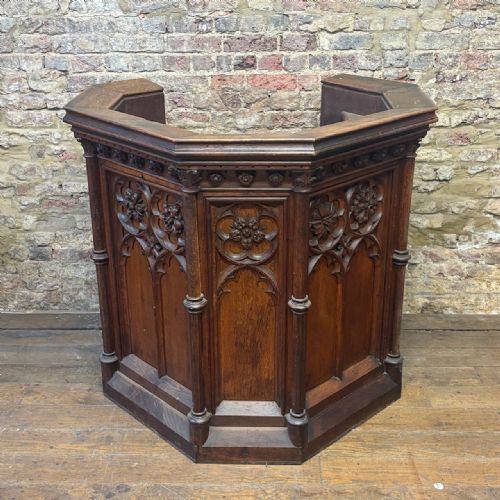
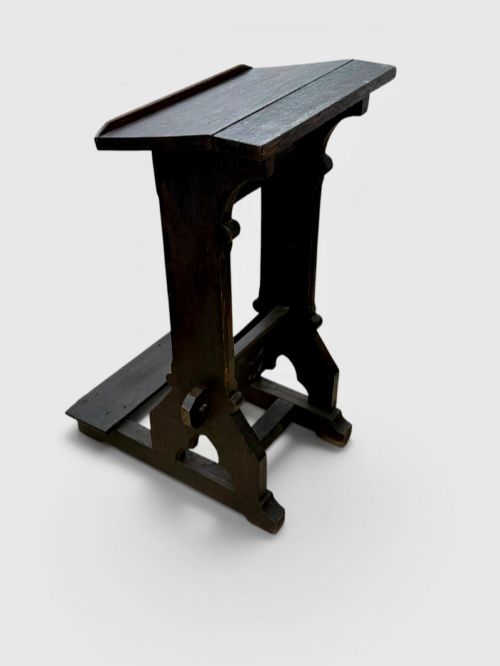
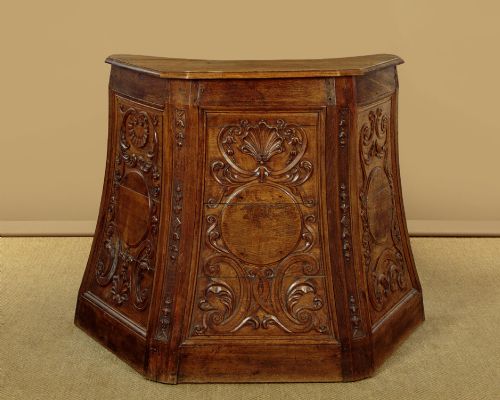
The pieces appearing in this collection span several distinct forms, including freestanding stands, reading desks, and elaborate eagle carvings with outstretched wings. Alongside traditional church furniture, the inventory also reveals related ecclesiastical and secular adaptations such as prayer desks, pulpits, and reception greeter stations.
Gothic Revival and Arts and Crafts styles dominate the design vocabulary, often featuring pointed arches, tracery, and straightforward timber construction. The materials are primarily oak supplemented by occasional brass work, gilt, and pine sections, reflecting the earnest craftsmanship of ecclesiastical workshops.
Construction and Materials
Makers relied heavily on solid oak for its durability and inherent gravitas, selecting boards that could endure decades of heavy use in damp or drafty ecclesiastical interiors. This primary timber is frequently joined with traditional carpentry methods, resulting in robust frames designed to support massive bound volumes.
Metal elements appear selectively, with brass work providing functional hinges, brackets, or decorative mounts that contrast against the dark or honey-toned timber. Gilt highlights occasionally accentuate carved details, while secondary woods like pine appear in hidden structural areas or internal panels.
Assessing Quality
The distinction between ordinary utility pieces and exceptional examples rests primarily in the ambition and execution of the carving. Finely rendered details, such as feathered wings on eagle lecterns or crisp tracery in the Gothic Revival manner, separate standard church furniture from masterworks.
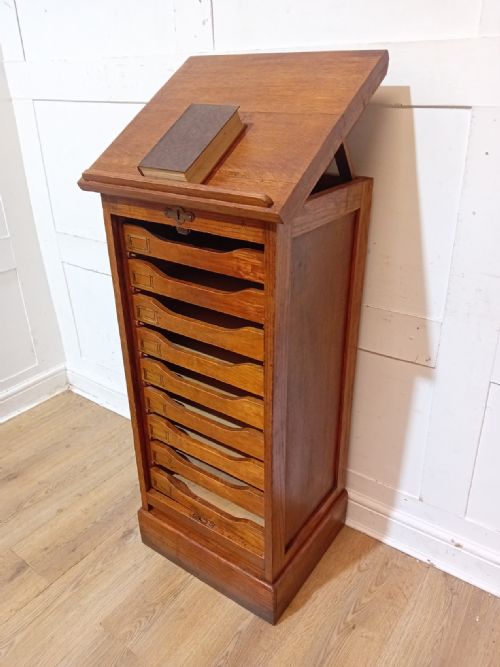
Proportion and structural integrity also dictate the standing of a piece, with well-balanced proportions and untouched original surfaces commanding greater appreciation. Alterations, whether from conversion into a home bar or filing cabinet, alter the character and historical continuity of the object.
The Oak Church Lectern Glossary
- Gothic Revival
- A nineteenth-century architectural and decorative movement that revives medieval forms. It manifests in pointed arches, trefoils, and heavy timber mouldings.
- Arts and Crafts
- A design movement valuing traditional craftsmanship and simple forms. Pieces from this period often display honest joinery and golden oak finishes.
- Ecclesiastical
- Relating to the Christian Church or its clergy. This term describes items originally commissioned for worship spaces rather than domestic settings.
- Pulpit
- A raised enclosed platform in a church from which the minister delivers sermons. Surviving examples are sometimes repurposed as reception stands or bars.
Oak Church Lectern: Frequently Asked Questions
How do I use a lectern at home?
An oak church lectern serves naturally as a striking book stand for heavy volumes, atlases, or family bibles in a study or hallway.
Many people also utilise them as standing desks for reading or as reception podiums in commercial spaces like restaurants.
Are these lecterns solid oak?
The listings predominantly feature solid oak construction, chosen for its strength and ability to hold heavy carved forms over centuries of use.
Secondary woods such as pine occasionally appear in hidden structural components or internal backing boards.
How do I distinguish Gothic Revival styles?
Gothic Revival pieces display architectural motifs borrowed from medieval cathedrals, including pointed arches, quatrefoils, and heavy tracery carved into the timber.
This style gained immense popularity during the Victorian era for both church furnishings and grand domestic interiors.