
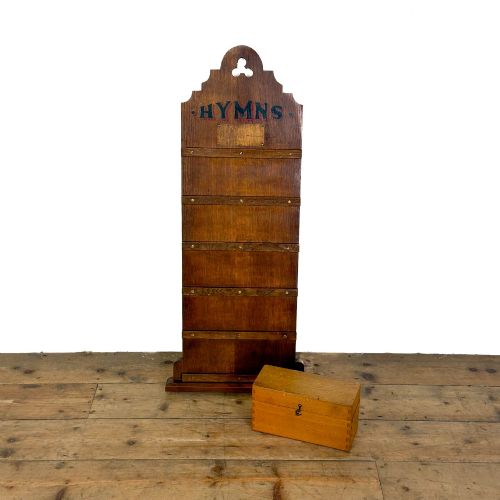
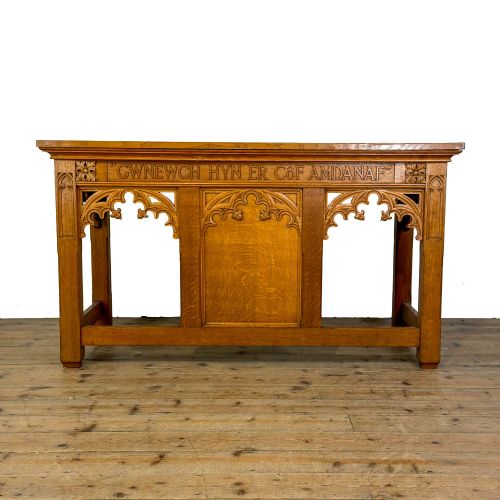
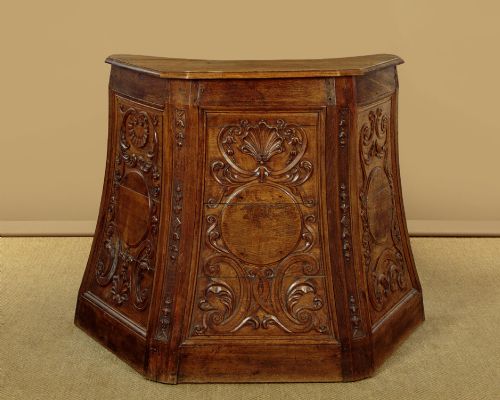
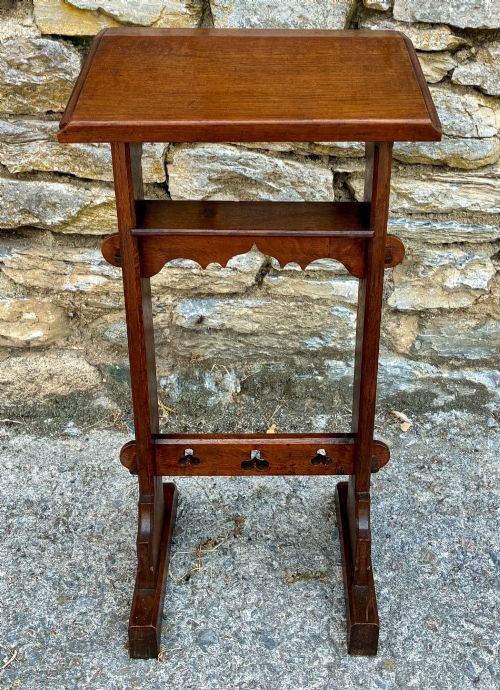
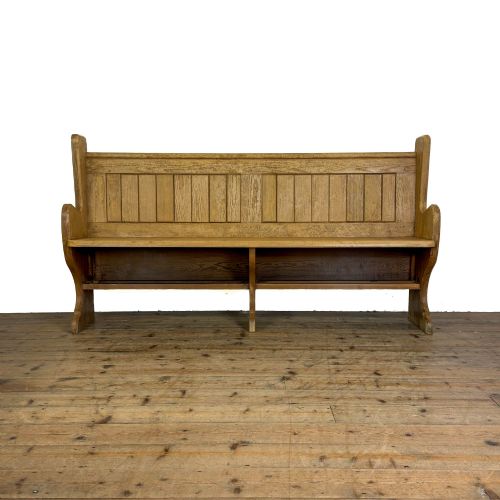
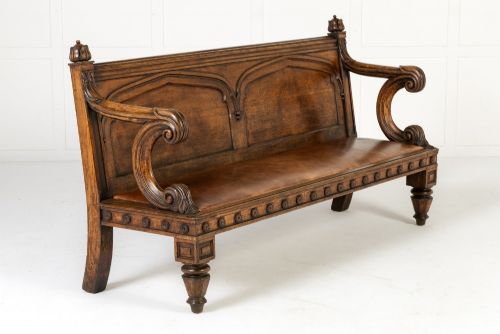
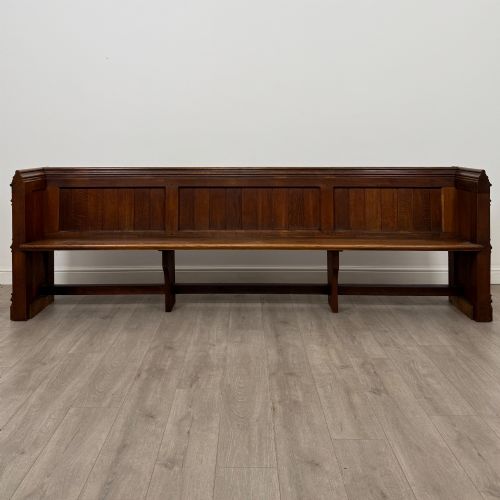
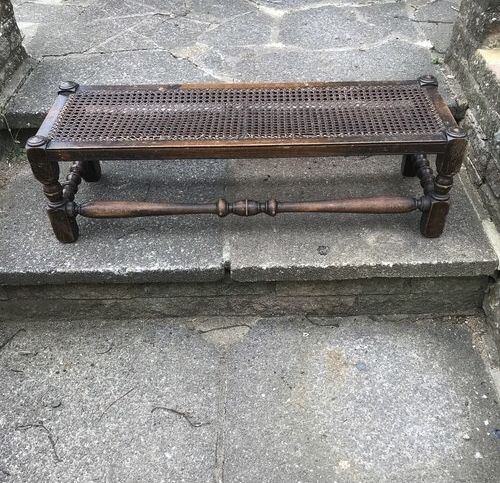

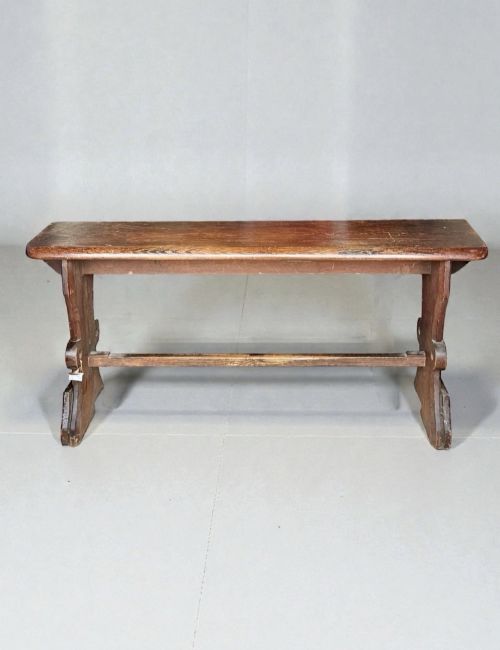


Gothic Church Furniture
These gothic church furniture pieces bring ecclesiastical history into domestic and public interiors through solid timber construction and pointed arch motifs.
Gothic Church Furniture
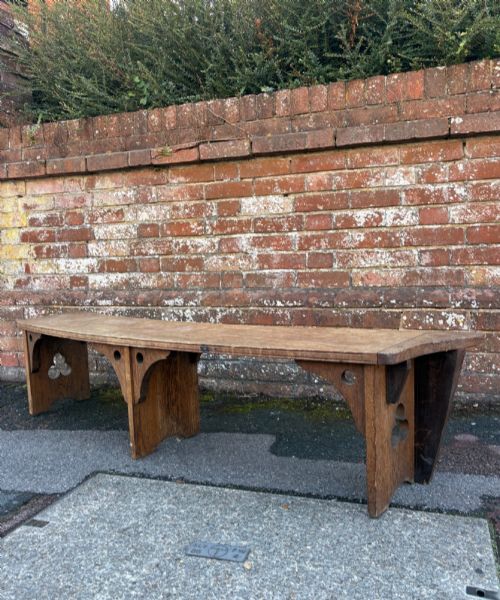
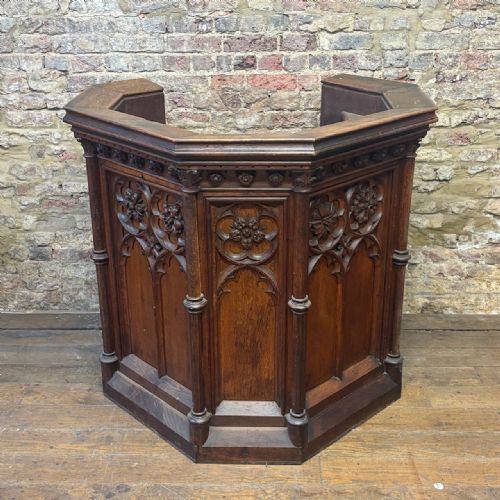
When you search for gothic church furniture, you encounter pieces designed for sacred spaces, ranging from heavy oak pews and prayer desks to carved pulpits and architectural elements. The domestic interior adapts these forms easily, as pews and benches serve as seating while smaller items like prayer stools function as side tables.
Nineteenth-century revival examples dominate the selection, heavily influenced by Victorian Gothic tastes and the Arts and Crafts movement. Oak and pitch pine provide the primary structure for these items, shaped by trefoil carvings, turned legs, and pointed arch details.
Earlier survivals appear occasionally, offering a glimpse into pre-Reformation craftsmanship through heavy timber thrones and carved finials. Chapel pews and lecterns represent the most common encounters on this page, reflecting the widespread dispersal of ecclesiastical furnishings from British parishes.
Materials and construction
Makers relied primarily on solid oak and pitch pine, selecting dense timbers capable of enduring centuries of heavy congregational use. Joinery techniques prioritized structural rigidity, utilising pegged mortise and tenon joints to secure uprights and heavy seat planks.
Carving was executed by hand directly into the dense grain, producing trefoils, blind arcading, and cusped tracery without the aid of modern machinery. Brass hardware, including barleytwist pew end rails and hinges, added metallic contrast to the sombre timber surfaces.
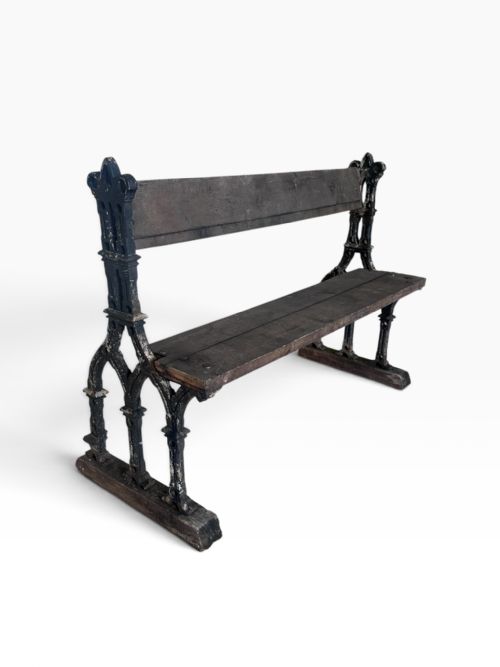
Secondary timbers such as pine appeared in utilitarian components, while cast iron supported outdoor garden benches built in the gothic taste. Finishes remained minimal, relying on wax or oil to preserve the natural grain of the wood against daily wear.
Listings feature oak and pitch pine predominantly, spanning the 18th, 19th, and early 20th centuries within Gothic Revival styles.
Judging the quality
The distinction between ordinary utility items and superior examples lies in the depth and execution of the timber carving. Crisp, undercut tracery and well-proportioned trefoil supports indicate a workshop with genuine ecclesiastical training, whereas flat or mechanical incisions suggest mass production.
Timber selection and grain matching separate standard pews from fine boardroom or chancel seating. Well-figured oak with minimal sapwood retention commands greater appreciation than heavily knotted or split pine alternatives.
Original provenance enhances the standing of a piece, particularly when linked to specific architects or documented church commissions. Alterations made to shorten pews or reconfigure altars diminish historical integrity, favouring untouched proportions.
The Gothic Church Furniture Glossary
- Prie-dieu
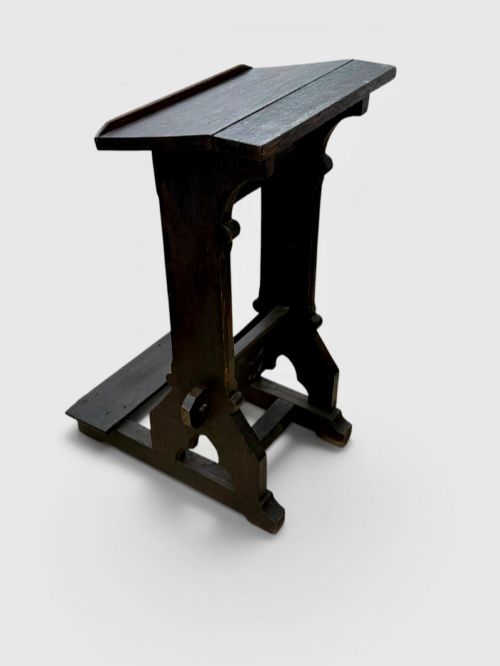
- A devotional desk designed for kneeling during prayer, typically fitted with an upper sloping shelf for books and a lower padded platform.
- Trefoil
- A graphic ornament composed of three rounded lobes arranged in a cloverleaf pattern, frequently pierced through wooden bench backs or carved into supports.
- Pew
- A long wooden bench with a high back and integrated seating, historically built fixed to church floors for congregational use.
- Lectern
- A raised stand with a slanted top used to hold books for reading aloud during services.
- Finial
- A decorative carved element marking the topmost point of a bench end, spire, or architectural screen.
Gothic Church Furniture: Frequently Asked Questions
How do I fit a church pew into a home?
Church pews suit hallways, dining tables, and long living room walls because their narrow depth preserves floor space. Many examples are trimmed in length to domestic proportions.
Ensure you measure your available wall space accurately before purchase, as historical seating lengths rarely conform to modern modular furniture standards.
What is a prie-dieu used for?
A prie-dieu provides a dedicated space for private prayer, combining a kneeling board with an upper ledge for devotional texts.
In modern rooms, these compact pieces function effectively as hallway desks or decorative display stands due to their narrow footprint.
How can I tell Victorian Gothic from older work?
Victorian Gothic pieces often display machine-sawn timber marks, standardised iron brackets, and the bright yellow tones of pitch pine. Nineteenth-century revivals also borrow heavily from medieval motifs without employing true medieval framing methods.
Pre-reformation and 18th-century items exhibit hand- adzed surfaces, irregular pegged joints, and heavy native oak that shows deeper oxidation over time.
Are pitch pine and oak cared for differently?
Both timbers require simple maintenance using breathable beeswaxes rather than glossy modern varnishes that trap moisture beneath the surface.
Keep ecclesiastical wood away from direct heat sources and radiators to prevent the dense pine and oak planks from splitting along historical grain lines.