

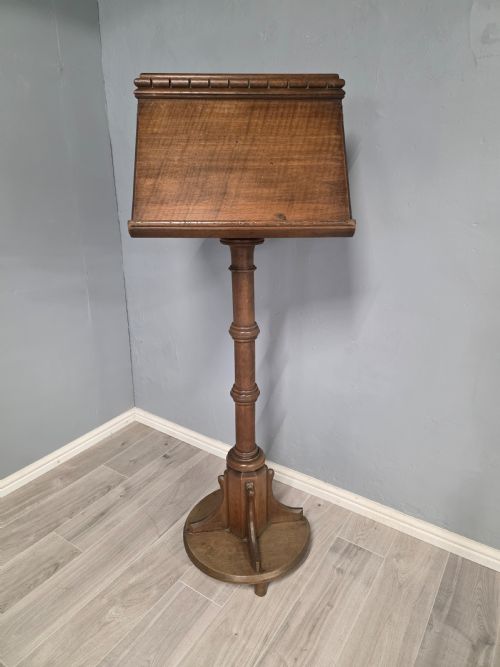
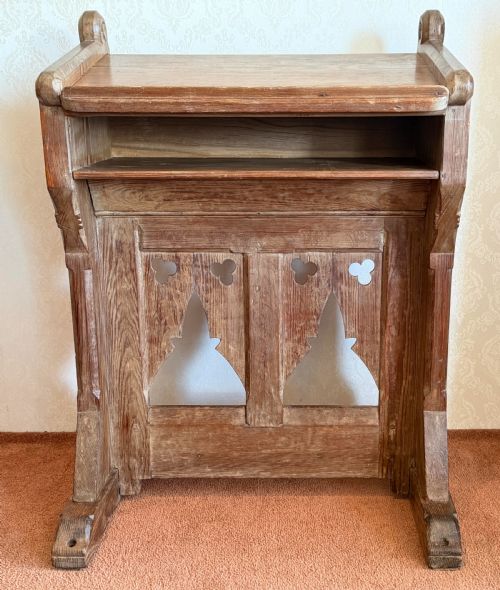


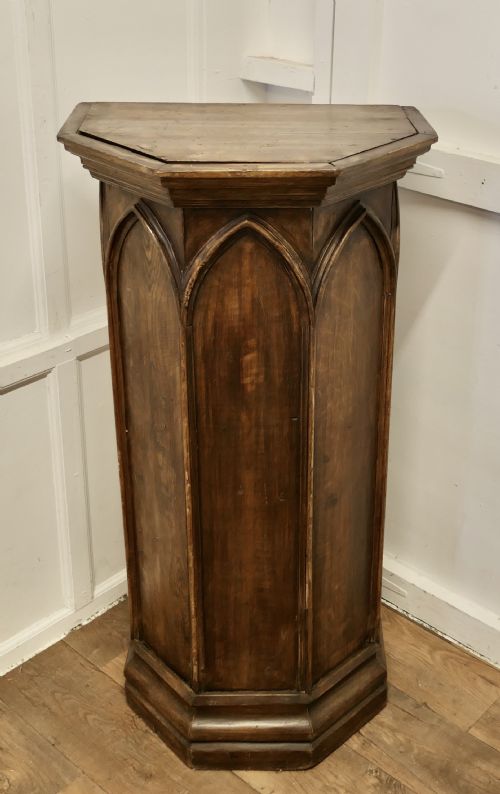


Church Reading Desk
A church reading desk brings ecclesiastical history into a room, offering a sturdy wooden or iron stand designed for holding heavy volumes.
Church Reading Desk
When you search for a church reading desk, you encounter pieces originating primarily from the nineteenth and early twentieth centuries, including the Victorian and Edwardian eras. These items serve as functional book rests, music stands, menu holders, and podiums.
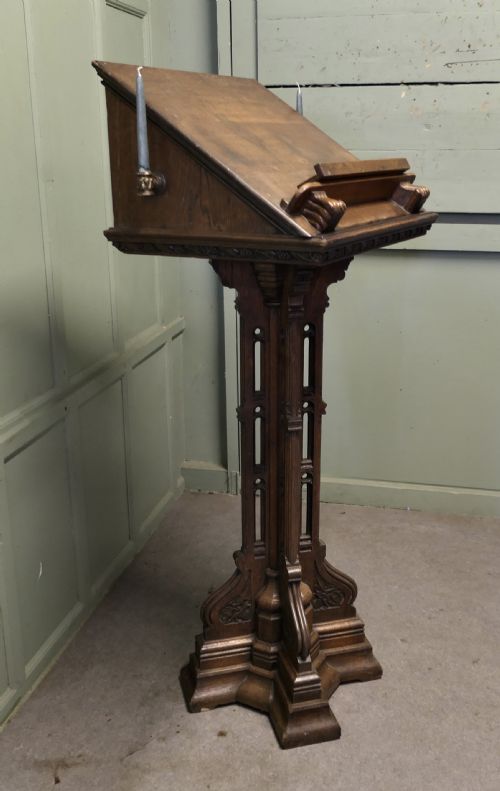
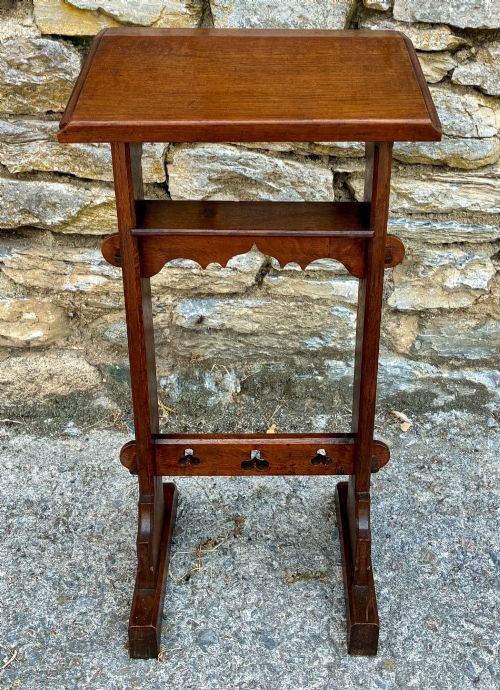
The selections available here lean heavily into Gothic Revival and Victorian Gothic styles, reflecting their original ecclesiastical purpose. You are most likely to meet solid oak and pine variants, alongside occasional cast iron and brass configurations.
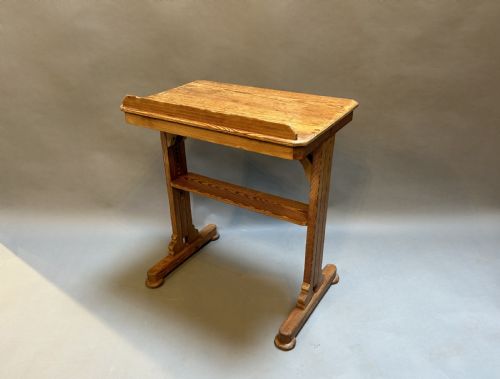
Forms range from small table models to tall standing lecterns, some featuring carved wooden eagles or detailed brass work. These stands bridge the gap between religious heritage and practical interior display.
Materials and construction
Carpenters and metalworkers relied primarily on timber and cast iron to build these sturdy ecclesiastical pieces. Oak and pine dominate the construction, providing the necessary weight and durability to support large books.
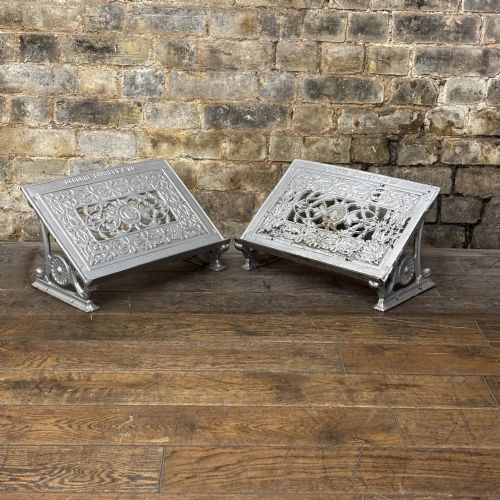
Craftsmen applied carving techniques to create the prominent Gothic Revival ornamentation seen on many oak examples. Metal elements, including brass components and cast iron frames, were integrated to add structural support and decorative contrast.
Several wooden birds have quietly watched over generations of quiet reading rooms without ever migrating.
Assessing quality and craftsmanship
Quality in a church reading desk rests largely on the depth and precision of the carved woodwork. Pieces featuring intricate hand-carved details, such as wooden eagles or sophisticated tracery, represent a higher tier of workmanship than plain utility items.
The choice of primary material also dictates the character of the piece, with dense mature oak commanding greater attention than simpler pine or composite wood and iron builds. The integration of brass work and the stability of the overall frame distinguish superior examples.
Osborne Garrett & Co
The Church Reading Desk Glossary
- Lectern
- A tall stand with a slanted top designed to hold a book for a speaker to read from. These often take the form of freestanding floor models.
- Gothic Revival
- An architectural and design style popular in the nineteenth century that revived medieval forms, pointed arches, and heavy ornamentation. This style defines the visual language of most ecclesiastical furniture.
- Cast Iron
- A strong, hard iron alloy poured into a mould to create complex shapes. It appears in utilitarian and decorative book rests.
- Book Rest
- A small desk accessory or stand specifically angled to support an open book at a comfortable reading angle. They range in size from portable table units to large church fixtures.
Church Reading Desk: Frequently Asked Questions
What is a church reading desk used for today?
These stands function well as recipe book holders in kitchens, music stands for musicians, or podiums for public speaking events.
They also serve as statement furniture pieces in studies or hallways for displaying large decorative art books.
How do I date a church reading desk?
Dating relies on identifying stylistic markers such as Victorian Gothic Revival motifs, Edwardian utility designs, or nineteenth-century vernacular woodworking traits.
Material choices, including the presence of cast iron or specific types of oak and pine, offer further clues to the manufacturing era.
Are all church reading desks made of solid wood?
While oak and pine are the most common materials used across the inventory, not every piece relies solely on timber.
Some examples incorporate cast iron frames and brass work to provide extra structural support and distinct decorative contrast.