
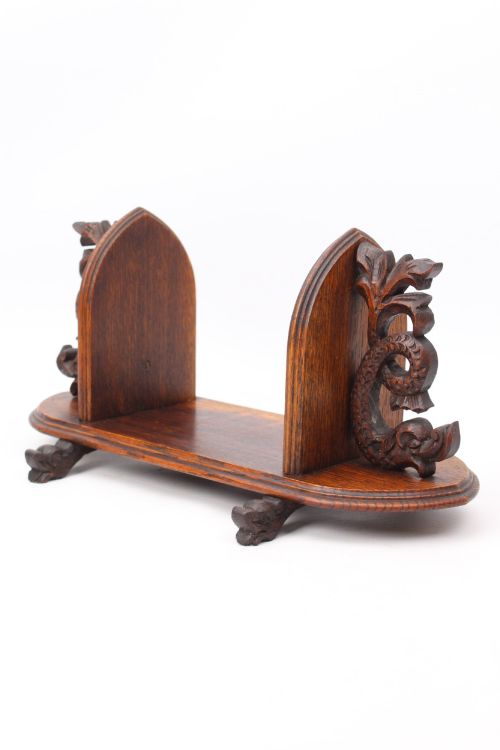
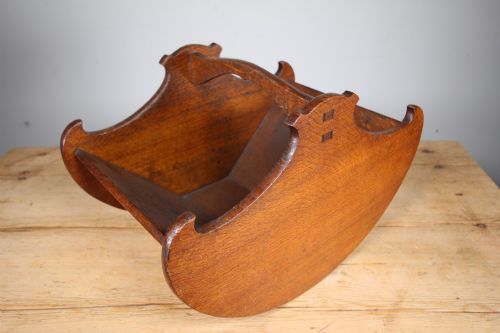
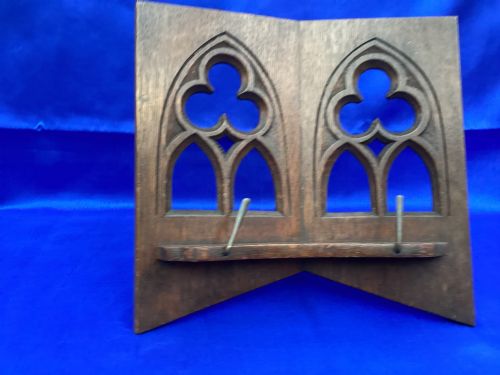


Standing Oak Book Holder
These standing oak book holder pieces are sturdy library furniture and reading accessories crafted to keep heavy volumes and periodicals close at hand.
Standing Oak Book Holder
A standing oak book holder encompasses functional reading furniture designed for homes, studies, and ecclesiastical interiors. When searching for this phrase, buyers encounter formats ranging from desktop slides to floor-standing lecterns and revolving bookcases.
The pieces listed on this page originate predominantly from the Victorian and Edwardian eras, alongside items from the 1890s up to the 1930s. Forms include book troughs, magazine racks, duet stands, and slope-shelf fireside pieces.
Makers and workshops of the Arts and Crafts movement also contribute to this selection, alongside Gothic Revival designs. Buyers are most likely to meet practical oak reading stands built for domestic libraries and studies.
How they were made
Construction relies primarily on solid oak, frequently paired with secondary timbers like pine and accented with brass hardware. Artisans shaped these materials using traditional joinery methods suited to holding heavy volumes.
Decoration often includes carved motifs, sloping shelves, extending mechanisms, and revolving tiers. Pieces associated with the Gothic Revival and Arts and Crafts styles display architectural details and labelled craftsmanship.
The listings on this page span the Victorian and Edwardian periods, featuring materials primarily of oak and brass.
What varies in quality
Quality separates mass-produced items from pieces bearing maker labels, such as those by Arthur Simpson. The sophistication of the carving, the smoothness of revolving mechanisms, and the cleverness of extending slides distinguish finer examples.
The integrity of the timber and the robustness of the structural joints dictate longevity. Pieces executed in a distinct Gothic Revival or Arts and Crafts idiom command greater attention for their design conviction.
Arthur Simpson
The Standing Oak Book Holder Glossary
- Book trough
- An open rectangular receptacle designed to hold volumes upright on a desk or floor. These items provide accessible storage for everyday reading.
- Lectern
- A stand with a slanted top designed to hold a book at an angle for reading aloud. They appear in domestic libraries and ecclesiastical settings.
- Revolving bookcase
- A tier of shelving mounted on a rotating base that spins for easy access. This form allows multiple books to be consulted from a single stationary position.
- Extending book slide
- A portable shelf fitted with expanding ends to hold a varying number of volumes together. They sit neatly on desks and tables.
- Canterbury
- A partitioned stand originally built for sheet music or folios, often incorporating a drawer. These versatile pieces adapt easily to holding magazines and periodicals.
Standing Oak Book Holder: Frequently Asked Questions
What is a standing oak book holder?
A standing oak book holder is a piece of furniture designed to support and display books, magazines, or music sheets in an upright or sloped position. They range from floor-standing lecterns to revolving bookcases and fireside troughs.
These items were historically used in studies, home libraries, and churches to keep reference volumes accessible. Their solid oak construction ensured they could bear the weight of heavy bound folios.
How do I date an oak book stand?
Dating relies on stylistic clues, construction methods, and materials associated with specific periods like the Victorian era or Edwardian period. Gothic Revival and Arts and Crafts characteristics often point to specific late nineteenth or early twentieth-century design movements.
Makers' marks, labels, or patent stamps can also provide precise chronological markers. Examining the hardware, such as brass screws or hinges, helps confirm the age of the piece.
Where were these pieces used?
These pieces found places in domestic drawing rooms, home libraries, studies, and churches. Floor-standing lecterns and church stands served ecclesiastical purposes, while book troughs and magazine racks suited fireside reading.
Revolving bookcases sat beside armchairs for easy selection of multiple volumes. Extending slides rested upon desks to keep working reference books tidy.
How do I care for antique oak furniture?
Antique oak benefits from stable indoor humidity levels away from direct heat sources and strong sunlight. Regular dusting with a soft, dry cloth preserves the finish of the wood.
Applying a traditional beeswax polish occasionally helps nourish the timber and maintain its natural lustre. Avoid synthetic sprays and harsh chemical cleaners.