




Carved Oak Lectern Stand
A carved oak lectern stand brings substantial architectural presence and rich ecclesiastical history directly into a room.
Carved Oak Lectern Stand
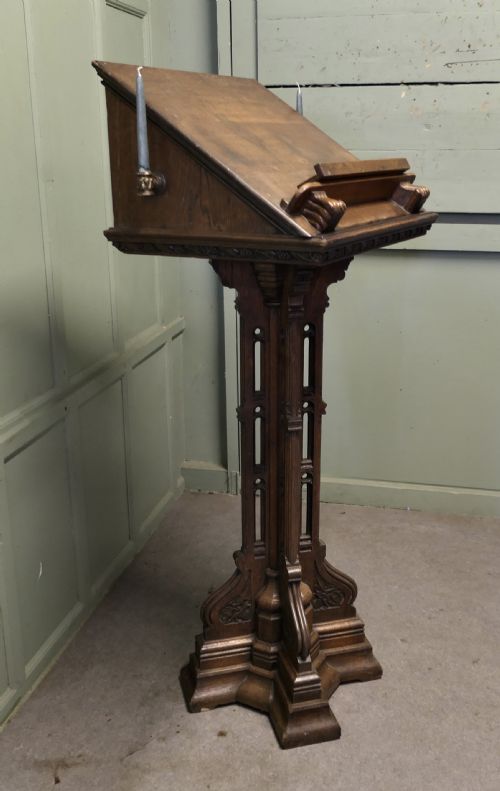
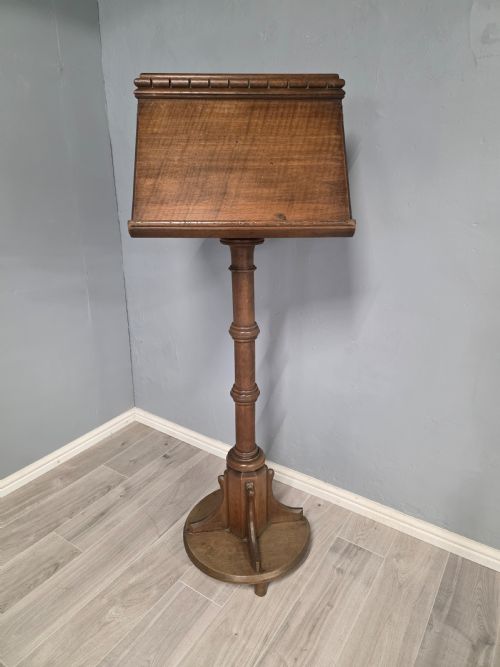
When you search for a carved oak lectern stand, you encounter heavy church furniture, reading desks, and architectural pedestals dating from the eighteenth century through to the twentieth century. These pieces serve primarily to hold books, menus, or papers at a convenient angle for reading.
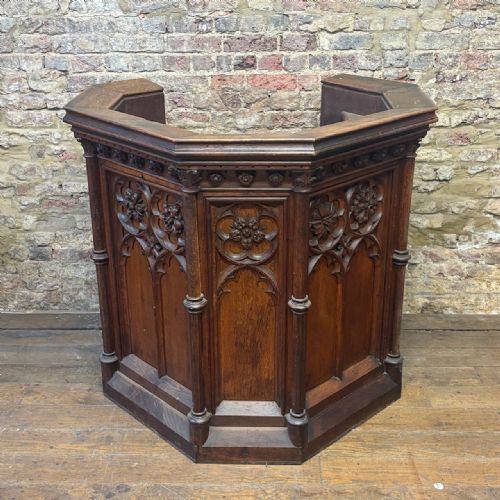
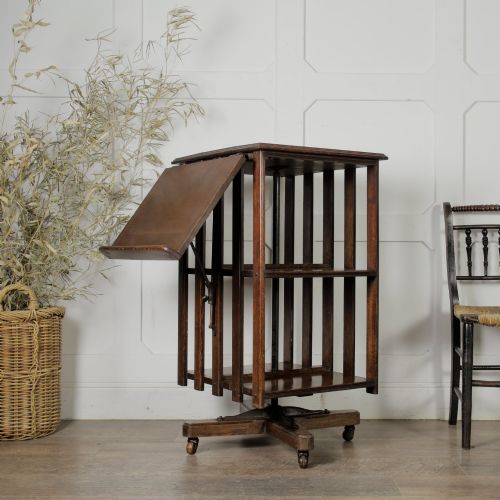
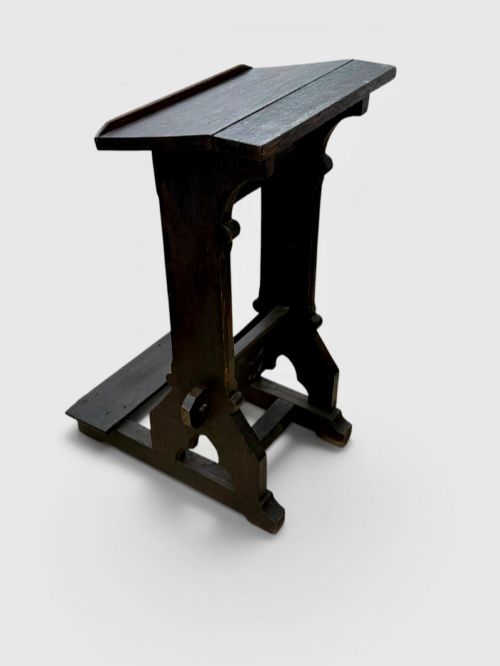
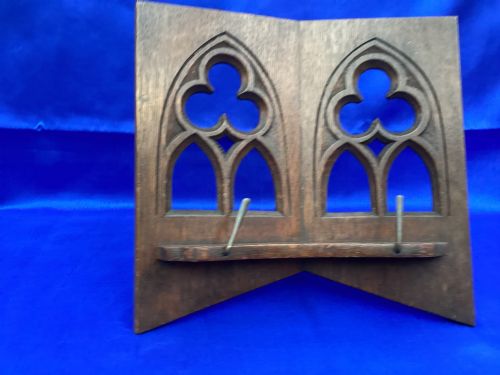
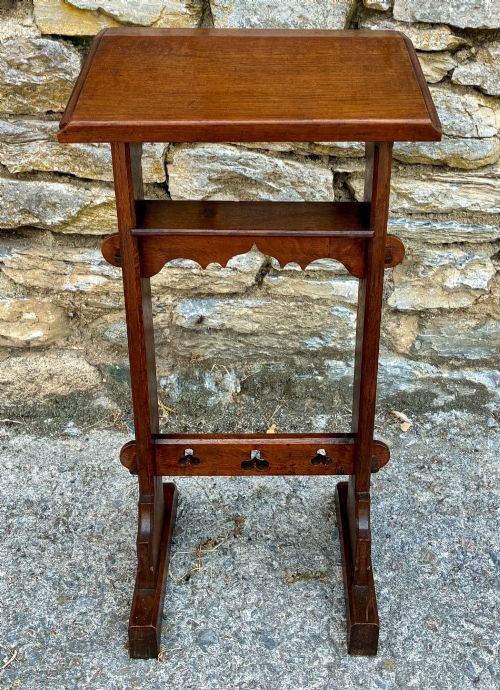
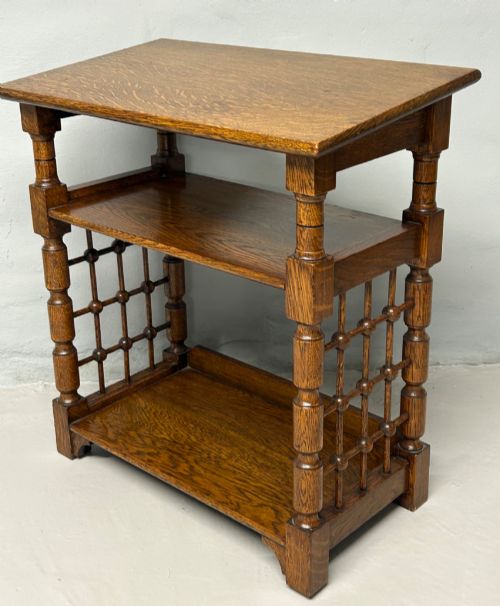
The versions you are most likely to meet on this page lean heavily towards Victorian and Edwardian Gothic Revival styles, alongside simpler Arts and Crafts interpretations. They appear as small tabletop book stands, revolving bookcases, prayer desks, and full-height church pulpits.
Origins range from domestic reception stations and reading pods to ecclesiastical furnishings designed for communal spaces. Many examples incorporate specific motifs such as carved eagles with outstretched wings, adding a sculptural quality to the functional timber frame.
Materials and construction
Construction relies predominantly on solid oak, selected for its durability and deep grain, which accepts intricate hand-carving with crisp precision. This heavy timber is often joined using traditional methods to support the significant weight of large liturgical books and pulpits.
Metal components frequently complement the timber framework, utilising brass for hinges, adjustable brackets, and reading ledges, alongside occasional cast iron elements for structural support. Gilt highlights occasionally accent the carved details, providing contrast against the dark patination of aged oak.
Some oak reading stands feature fierce carved eagles ready to take flight with your dictionary.
Assessing quality and craftsmanship
Quality rests in the depth and sharpness of the hand-carving, particularly on sculptural elements like figural eagles or Gothic tracery panels where lesser examples appear soft and mechanical. The integrity of the timber also dictates value, with well-figured solid oak showing superior grain pattern and stable construction compared to assembled utility pieces.
Mechanical complexity separates simple stands from superior examples, such as smoothly functioning revolving bookcases or adjustable reading podiums with intact brass mechanisms. The overall proportion and architectural harmony of the base to the upper bookrest define the visual success of each individual piece.
The Carved Oak Lectern Stand Glossary
- Gothic Revival
- An architectural and decorative style drawing inspiration from medieval forms, featuring pointed arches and trefoils. This aesthetic dominates ecclesiastical furniture of the nineteenth century.
- Arts and Crafts
- A design movement prioritising traditional craftsmanship and simple forms over mass production. Pieces from this tradition show plain timber surfaces with minimal, honest ornamentation.
- Lectern
- A slanted reading stand designed to support books or notes for a speaker. Larger forms often take pedestal or pulpit configurations.
- Ecclesiastical
- Relating to the Christian Church or its clergy. Items described thus originate from places of worship and carry distinct liturgical motifs.
- Pedestal
- A structural support or base that elevates a reading desk or stand. It provides stability for heavy bookrests.
Carved Oak Lectern Stand: Frequently Asked Questions
How do I date a lectern?
Dating relies on examining the style of the carving, construction joints, and accompanying materials like brasswork. Victorian and Edwardian pieces often display distinct Gothic Revival motifs.
Earlier eighteenth-century examples exhibit heavier hand-tooling and deeper patination on the oak surfaces.
Can I use one as a book stand?
These stands function exceptionally well for holding large heavy volumes, cookbooks, or displayed art books in a domestic setting. The slanted ledge supports the spine securely at a comfortable reading angle.
Smaller revolving bookcases and tabletop stands adapt easily to everyday modern living spaces.
Where should I place a church lectern?
A full-height floor standing lectern requires adequate floor space and functions best as a focal point in a study, library, or hallway. Smaller desk versions sit comfortably on tables or heavy sideboards.
Ensure the piece is positioned away from direct heat sources to protect the aged oak.