


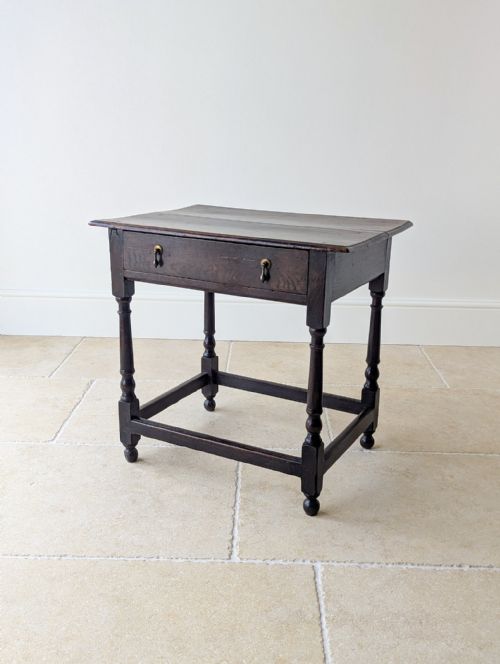
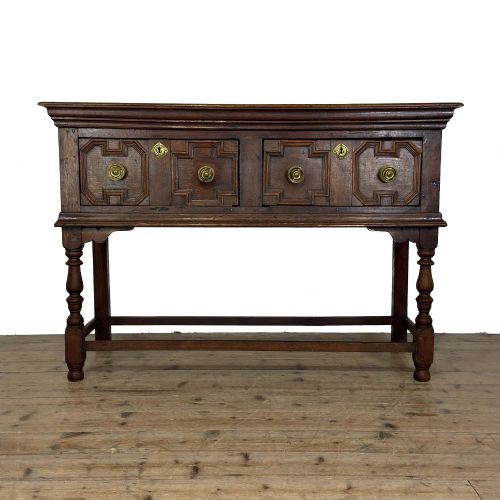
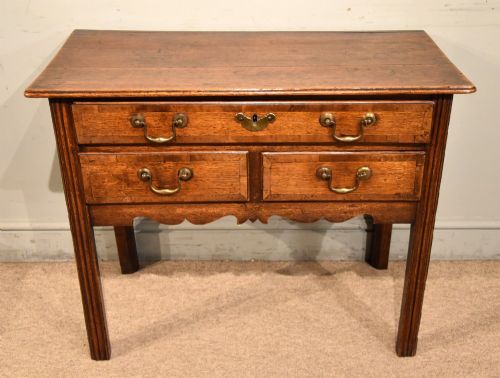
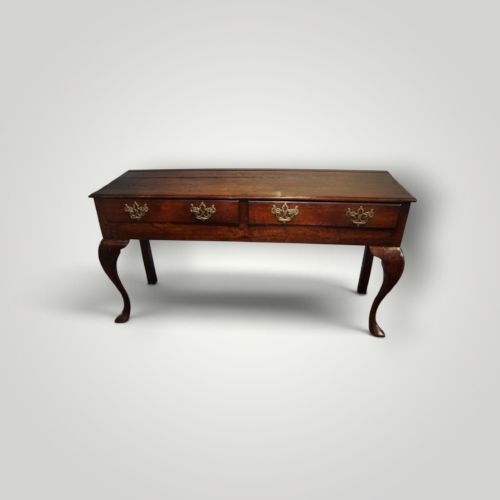
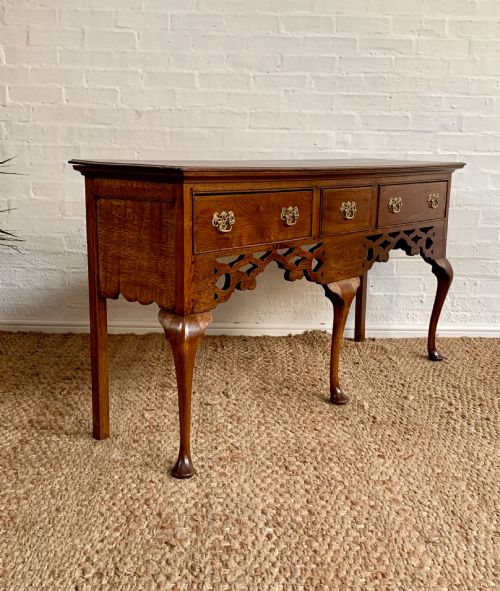
Carved Oak Drawer Table
A carved oak drawer table brings robust timber and historic ornament into a room, offering practical storage beneath a durable surface.
Carved Oak Drawer Table
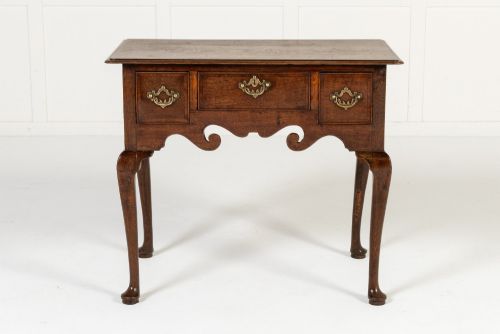
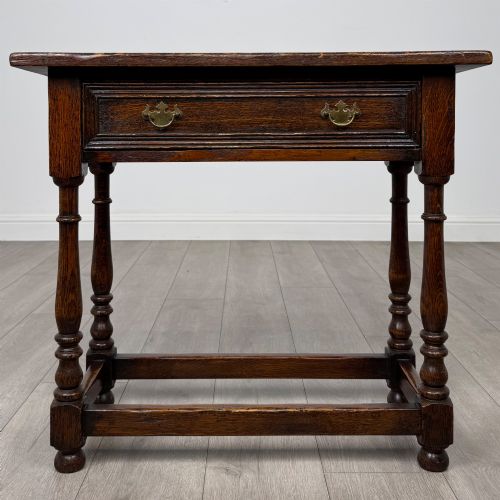
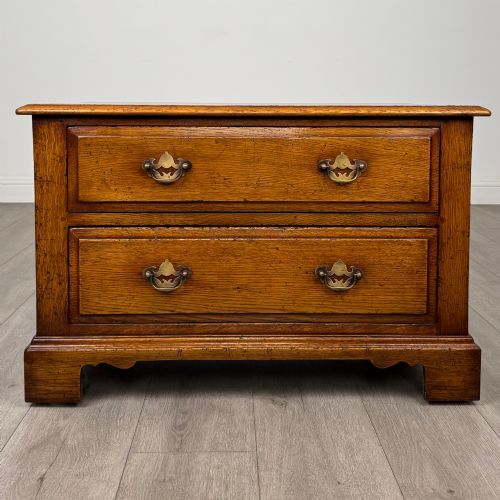
A carved oak drawer table is a utilitarian surface fitted with one or more storage compartments beneath the top, originating across multiple centuries from the seventeenth onwards. When you search for a carved oak drawer table, you encounter forms ranging from compact side tables and lowboys to larger dresser bases and writing desks.
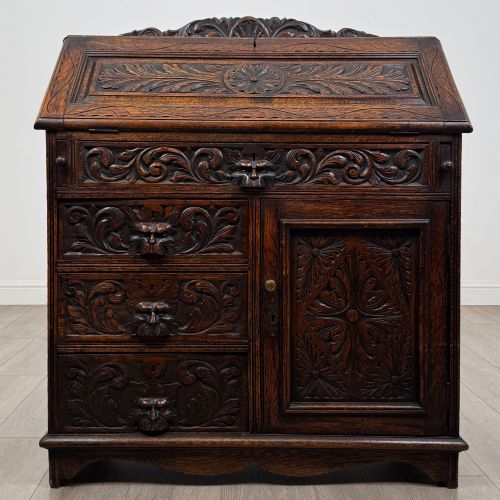
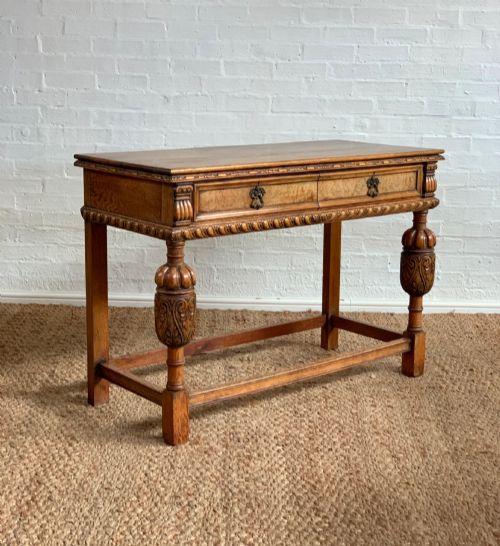
The versions most commonly met on this page span the Victorian era, the Edwardian period, and the early twentieth century, frequently displaying revivalist ornamentation such as Jacobean carving or Green Man motifs. Earlier seventeenth-century examples also appear alongside eighteenth-century Georgian lowboys, showing how domestic tables evolved from simple joined boards to decorated, multi-drawer furniture.
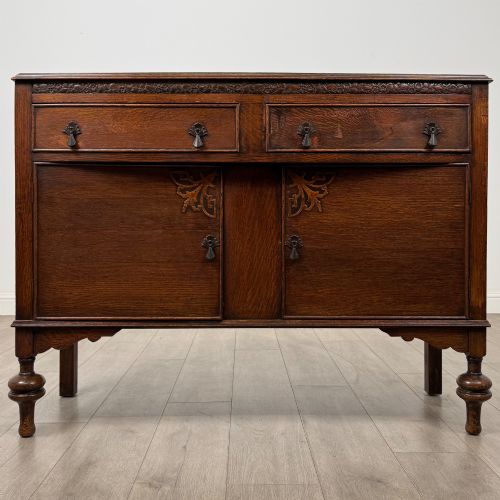
These pieces served various domestic functions, acting as serving tables in dining rooms, writing surfaces in libraries, and hallway consoles for everyday items. The integration of drawers distinguishes them from plain benches or trestles, making them enduringly useful for contemporary storage while retaining historical character.
What varies in quality
Quality in a carved oak drawer table rests on the crispness of the timber carving and the integrity of the structural joinery. Finer pieces display deeply undercut, fluid ornamentation executed by skilled hands, whereas lower-tier examples often feature shallow, mechanical stamping or later applied decoration.
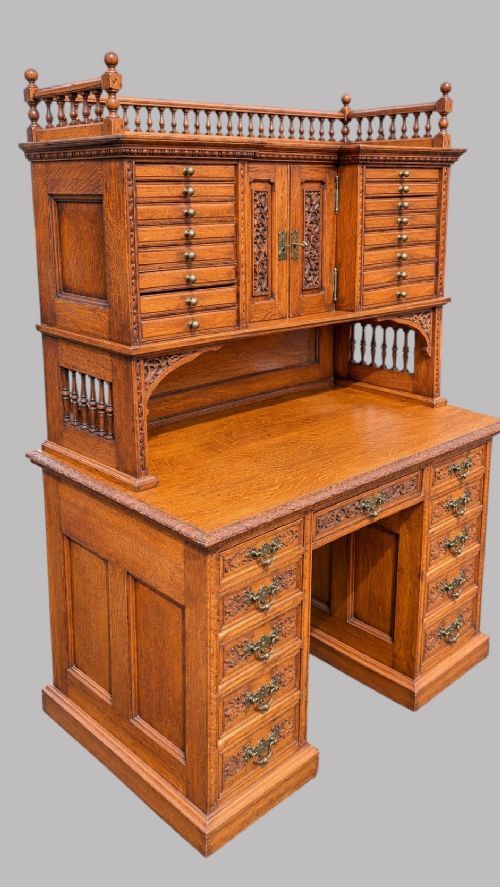
The selection of the oak itself creates a distinct division, with quartersawn timber revealing striking medullary rays that elevate the appearance of the top and drawer fronts. Original hardware, smooth drawer action without excessive timber shrinkage, and the preservation of a rich, undisturbed patina further separate exceptional survivals from heavily restored or assembled items.
Carved Oak Drawer Table Retail Price Guide 2026
Typical asking prices for carved oak drawer table among the pieces listed under this phrase on Sellingantiques today, from the lower quarter to the upper quarter. They describe what is for sale here now, not the wider market.
Listings feature oak tables spanning the seventeenth, eighteenth, nineteenth, and twentieth centuries, alongside styles from Jacobean Revival to French Provincial.
Beresford and Hicks London
The Carved Oak Drawer Table Glossary
- Lowboy
- A small oak or walnut table with one or more drawers, originating in the late seventeenth century and frequently used as a dressing table or side table.
- Green Man
- A sculptural architectural ornament depicting a human face surrounded by or entwined with foliage and vines, popular in Victorian revivalist carving.
- Dresser base
- A heavy lower sideboard or table featuring multiple frieze drawers, often designed for food preparation or serving in country houses.
- Frieze
- The central horizontal band of a table situated directly beneath the top surface, frequently containing the drawer housing.
- Barley twist
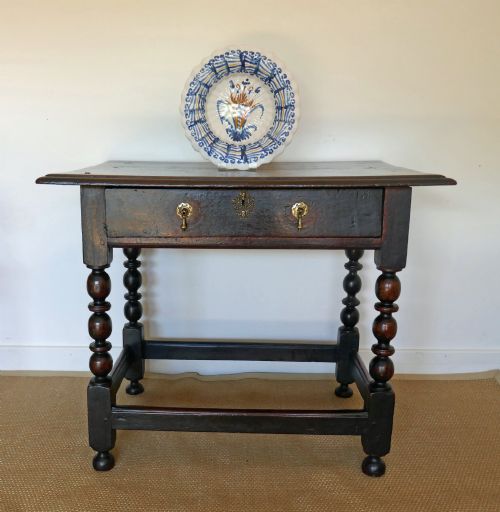
- A turned wooden furniture leg or stretcher carved in a helical spiral resembling a twisted rope, common in seventeenth-century and nineteenth-century revival furniture.
Carved Oak Drawer Table: Frequently Asked Questions
What is a carved oak drawer table?
A carved oak drawer table is a functional wooden surface equipped with integrated storage drawers beneath the top. These pieces feature decorative chiselled ornamentation ranging from geometric strapwork to figural motifs.
They appear in various forms throughout British furniture history, serving as practical tables for dining rooms, halls, and studies. The combination of sturdy timber and built-in compartments makes them enduringly functional.
How do I date a carved oak table?
Dating relies on examining the construction methods, timber selection, and hardware style. Earlier pieces from the seventeenth century typically feature hand-pegged joinery and dense, dark oak with heavy grain movement.
Victorian and Edwardian revival pieces often display machine-sawn elements, lighter golden or bleached finishes, and crisply carved details influenced by earlier historic styles. Drawer linings and handles provide further clues to the period of manufacture.
Where were these tables used?
Historically, these tables functioned in multiple rooms depending on their size and drawer configuration. Smaller side tables and lowboys sat in hallways or bedrooms for storage and personal grooming.
Larger dresser bases and serving tables stood in dining rooms and kitchens to hold utensils and display provisions. Today, they easily adapt to modern living spaces as console tables, desks, or accent furniture.
Are the drawers original?
Original drawers share the same timber species, patination, and wear patterns as the rest of the table frame. Closer inspection of the interior sides and drawer bottoms reveals consistent ageing and appropriate construction techniques for the stated period.
Replacements or later additions often show mismatched wood tones, modern fixings, or clean cut edges that differ from the surrounding antique structure.