

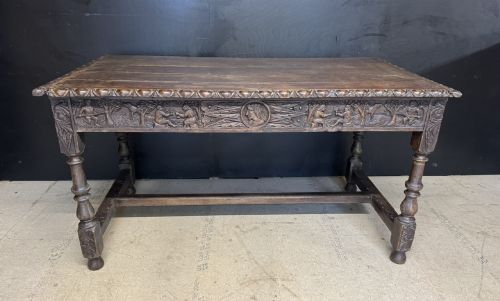


Gothic Revival Serving Table
A gothic revival serving table brings serious architectural presence to a room, using deep timber carving and medieval motifs to anchor a dining space or hallway.
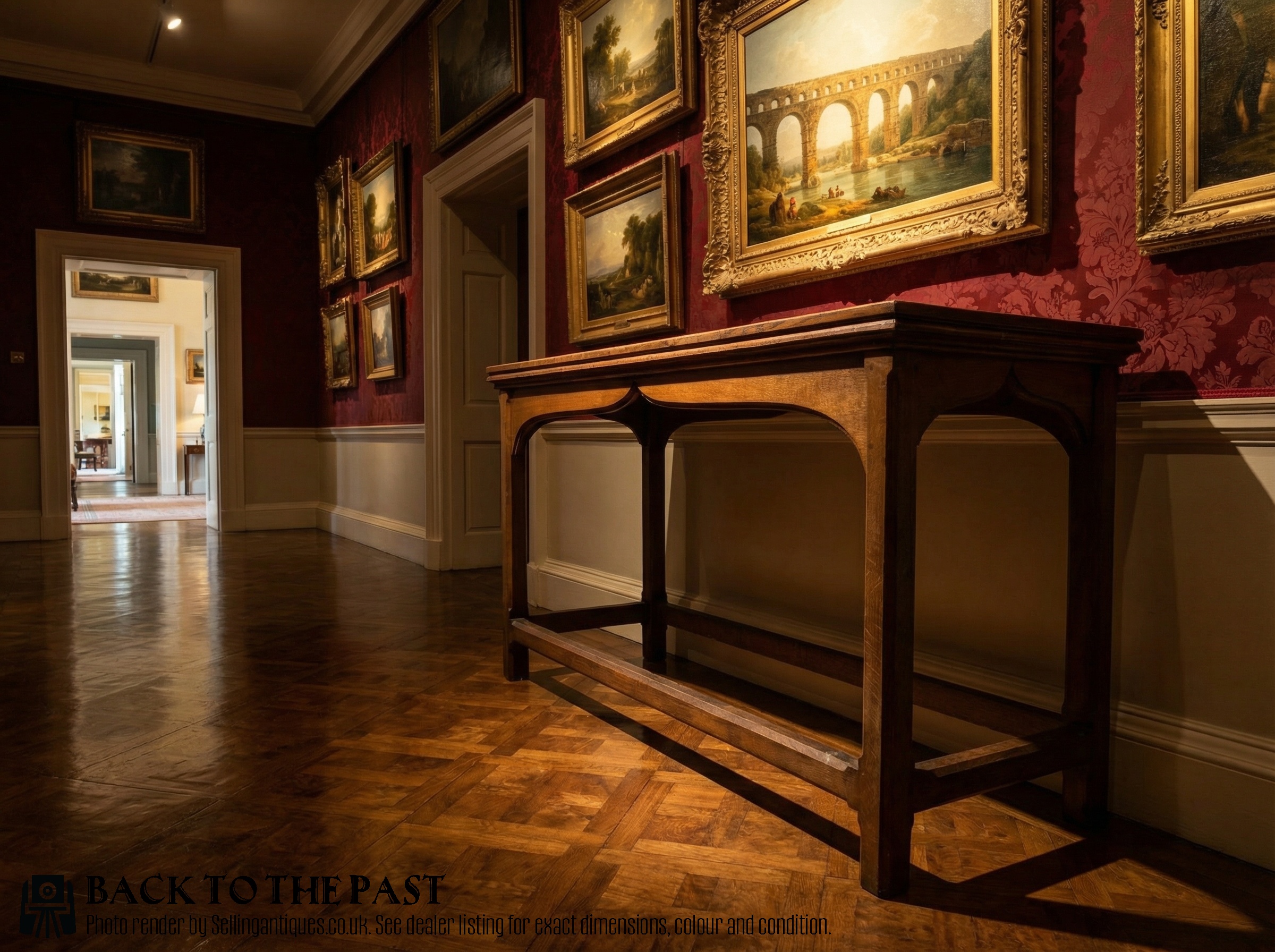
Gothic Revival Serving Table
A gothic revival serving table draws upon medieval ecclesiastical architecture, translating pointed arches, tracery, and heavy mouldings into functional domestic furniture. The pieces seen here span the nineteenth century, including specific dates from eighteen seventy to nineteen hundred alongside broader Victorian periods.
Most examples encountered on this page are constructed from oak, though walnut, mahogany, and pitch pine also appear. Alongside serving tables, related forms such as hall tables, sideboards, buffets, and writing desks share the same heavy architectural vocabulary.
The aesthetic merges strict Victorian Gothic Revival with Renaissance Revival and Reformed Gothic variations, sometimes channelling the design principles associated with Pugin. These heavy wooden items were built to command attention in large dining rooms or entrance halls.
Materials and construction methods
Construction techniques centre on robust joinery designed to support heavy tabletops and lower shelves. Carved details such as Green Man motifs, applied tracery, and geometric panels are worked directly into the solid wood rather than applied as thin veneers.
Gothic Revival Serving Table Retail Price Guide 2026
Typical asking prices for gothic revival serving table among the pieces listed under this phrase on Sellingantiques today, from the lower quarter to the upper quarter. They describe what is for sale here now, not the wider market.
Listings feature items primarily in oak, alongside walnut, mahogany, and pitch pine, spanning dates from eighteen seventy to nineteen hundred.
Distinctions in quality and execution
Quality in these pieces rests upon the crispness and depth of the timber carving, where sharp, deliberate chisel work separates superior workshop output from softer, more mechanical production. The choice of timber also dictates quality, with dense, well-figured oak commanding greater visual weight than simpler softwoods.
Structural integrity and the subtlety of architectural proportions define the upper tier of these tables. Better examples integrate linenfold panels, cusped arches, and original brass hardware harmoniously, maintaining balance across heavy frames.
Phillips Bristol·A W N Pugin
The Gothic Revival Serving Table Glossary
- Gothic Revival
- A nineteenth-century design movement reviving medieval architectural forms. It draws inspiration from medieval cathedrals, featuring pointed arches and heavy timber construction.
- Refeformed Gothic
- A later nineteenth-century iteration focusing on simplified, structural lines and honest construction. It reacts against excessive ornamentation while retaining medieval roots.
- Green Man
- A sculptural motif of a human face sprouting foliage or vines. It appears frequently in carved woodwork across ecclesiastical and domestic gothic pieces.
- Tracery
- Openwork stonework or woodwork patterns resembling intersecting ribs. On furniture, this translates into delicate pierced designs on panels and galleries.
Gothic Revival Serving Table: Frequently Asked Questions
What is a gothic revival serving table?
A gothic revival serving table is a nineteenth-century heavy timber table designed for dining rooms or halls, featuring architectural elements like pointed arches, heavy mouldings, and deep relief carving.
These pieces reflect the Victorian fascination with medieval design, often taking inspiration from ecclesiastical architecture and the Gothic Revival movement.
How were these tables used?
These tables served primarily for the presentation of food and drink during large Victorian meals, acting as a functional sideboard or buffet in formal dining spaces.
In grand entrance halls, they functioned as heavy side tables for dropping letters, keys, or displaying decorative objects.
What woods were used?
Oak is the predominant timber found in these nineteenth-century pieces, prized for its strength and suitability for deep carving.
Walnut, mahogany, and pitch pine also appear across various pieces from the period, each offering a different colour and grain.
How do I style a gothic serving table?
These pieces require space and solid walls to balance their heavy architectural presence and dark timber tones.
Pair them with complementary antique seating or let them stand alone as a focal point in a hallway or dining room.