





Antique Open Tier Buffet
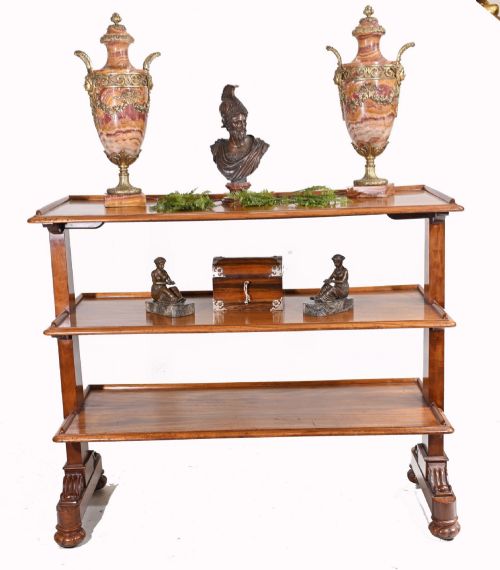
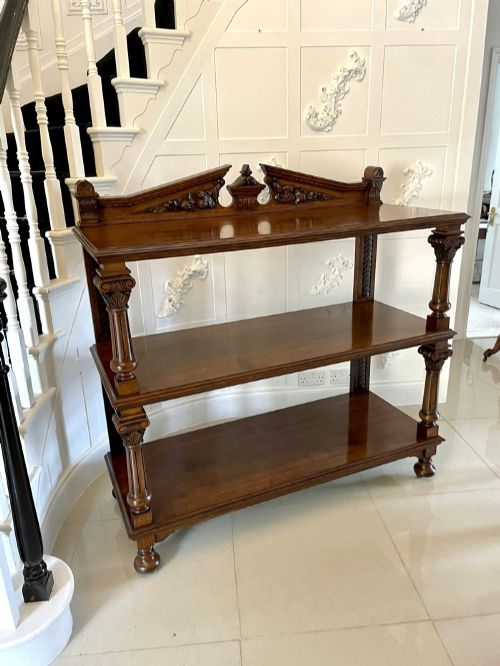
An antique open tier buffet serves practical storage and display with stepped shelves, offering multiple tiers of timber to anchor a dining room or hall.
Antique Open Tier Buffet
When you search for an antique open tier buffet, you are looking at multi-level shelving units designed for serving, display, and storage in dining rooms or parlours. These pieces bring vertical timber architecture to a room, combining the open stages of etageres and dumbwaiters with the heavy presence of traditional sideboards. You encounter forms spanning several periods, from Regency and Victorian eras through to the early twentieth century.
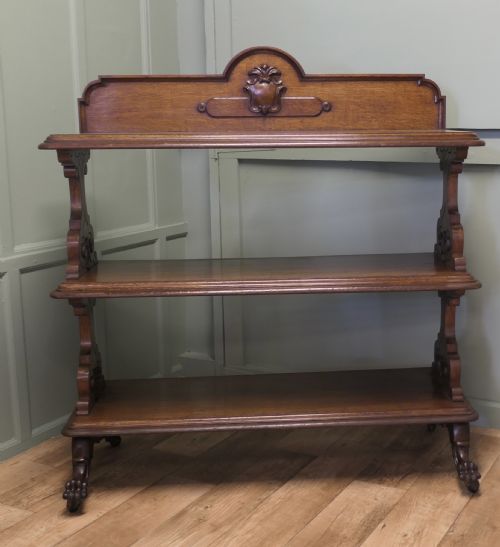
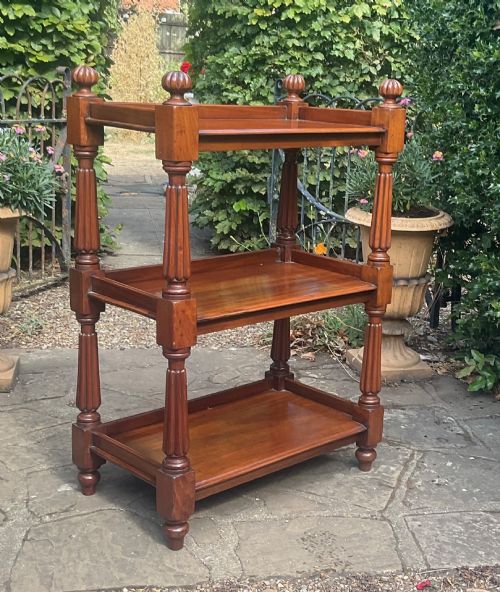
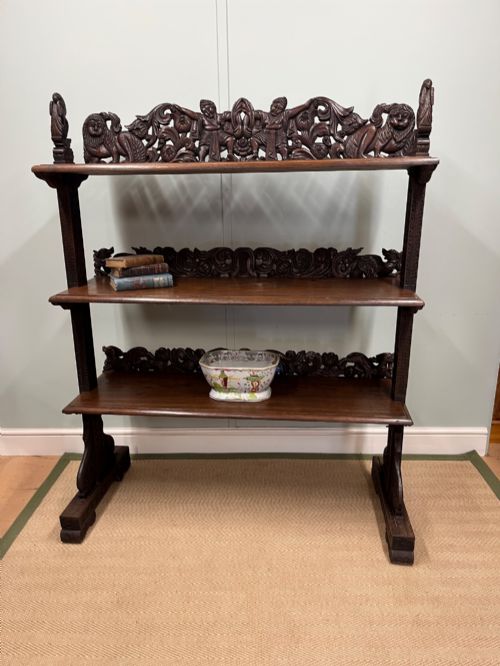
The versions most common on this page include mahogany three tier buffet designs from the mid nineteenth century alongside carved oak examples from the eighteen-eighties. You also find walnut, rosewood, teak, and ebonised wood configurations operating as central standing buffet shelves, serving tables, and tall etageres. Styles range from Gothic Revival and French Renaissance Revival to Anglo-Indian and Grand Regency.
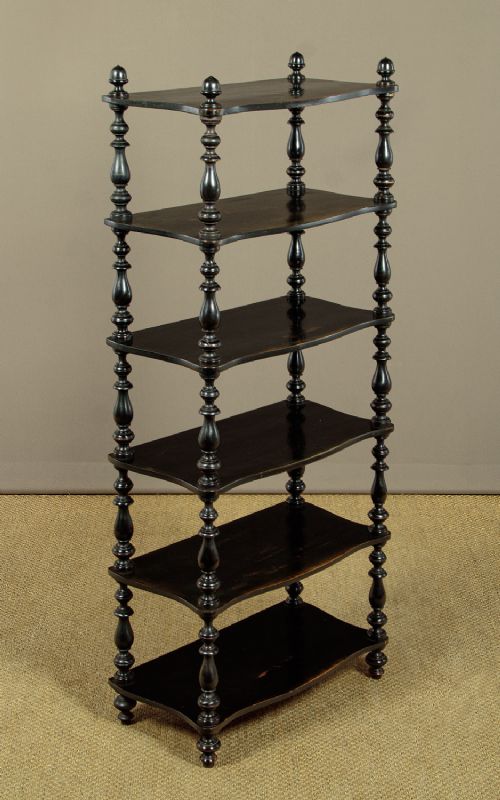
These items function equally well as display surfaces for silver and ceramics or as functional serving furniture during meals. The open structure differentiates them from closed cupboards, placing the focus entirely on the stacked tiers and the craftsmanship of the upright supports. Their forms vary from slim three tier profiles to towering six tier ebonised dumb waiters.
How they were made
Cabinet makers utilised dense hardwoods such as mahogany, oak, walnut, teak, and rosewood to construct these tiered pieces, often selecting burr veneers for decorative grain patterns. Ebonised wood and specialised hardwoods appear alongside traditional timbers to achieve darker, formal finishes favoured during the Victorian period. Timber selection dictated both the load-bearing capacity of the shelves and the overall weight of the structure.
Construction relied on precise joinery to secure multiple shelves between vertical columns or turned uprights, frequently mounted on original castors for mobility. Carving was executed by hand on oak, walnut, and mahogany surfaces, producing decorative panels, edgings, and structural supports in styles like Gothic Revival and French Chateau. Brass elements and castors provided functional hardware and subtle contrast against the dark polished woods.
Antique Open Tier Buffet Retail Price Guide 2026
Typical asking prices for open tier buffet among the pieces listed under this phrase on Sellingantiques today, from the lower quarter to the upper quarter. They describe what is for sale here now, not the wider market.
Some tall dumb waiters stretch across six tiered stages to hold your afternoon tea.
What varies in quality
The calibre of timber preparation and grain selection defines the upper tier of these pieces, where finely figured mahogany, burr walnut, or dense rosewood display superior depth under polish. Poorer examples utilise plain secondary woods or heavy, indiscriminate staining that obscures the natural character of the material. Hand-carved detailing exhibits distinct variations in crispness and depth, distinguishing workshop pieces from mass-produced furniture.
Structural integrity depends on the rigidity of the tier joints and the quality of the upright supports relative to the weight of the shelves. Superior constructions maintain straight, level tiers without sagging, while lesser items suffer from weakened joints or replacement hardware. The presence of original castors and intact brass details preserves the historical coherence of the piece.
The Antique Open Tier Buffet Glossary
- Etagere
- A piece of furniture consisting of a set of open shelves for displaying small objects. They appear in tall multi-tier formats including dumb waiters.
- Dumbwaiter
- A tiered freestanding piece of furniture traditionally used for holding food and tableware near a dining table. Nineteenth-century versions often feature three to six open shelves.
- Credenza
- A decorative buffet or sideboard used for serving food and displaying items. Victorian walnut examples frequently incorporate panelled doors alongside open surfaces.
- Castor
- A small wheel or revolving set of wheels mounted underneath furniture for ease of movement. Original brass castors are frequently found on mid-nineteenth-century mahogany buffet tiers.
- Gothic Revival
- An architectural and decorative style drawing inspiration from medieval forms. Pieces from this movement feature pointed arches, heavy carving, and dark carved oak or walnut.
Antique Open Tier Buffet: Frequently Asked Questions
What is an open tier buffet used for?
These tiered pieces functioned primarily as serving tables or display shelves for silver, glassware, and porcelain in dining rooms and grand hallways. Their open design kept dining accessories accessible during meals while presenting decorative objects at multiple levels.
Today, they serve similar purposes in modern interiors, acting as display furniture for collections or as functional storage surfaces in living spaces and kitchens.
How do I date an antique buffet?
Dating relies on identifying the timber species, construction methods, and stylistic cues characteristic of specific nineteenth-century periods. For instance, heavy carved oak often points towards eighteen-eighty pieces, while slim mahogany three-tier designs frequently date around eighteen-fifty.
Hardware details such as original brass castors and the presence of specific revival styles like Gothic or French Renaissance further narrow the manufacturing window.
What is the difference between a buffet and an etagere?
A buffet traditionally provides surface space and storage for dining provisions, whereas an etagere is built explicitly as an open shelving unit for display. Many nineteenth-century forms overlap, combining the heavy proportions of a buffet with the stacked open stages of an etagere.
This hybrid form accounts for listings described interchangeably as etagere buffets or tiered serving tables.
Are these pieces sturdy enough for daily use?
Built from dense hardwoods like mahogany, oak, walnut, and rosewood, these items possess robust structural frames designed to hold heavy tableware and serving dishes. Their stability depends on the soundness of the vertical supports and the original joinery securing each tier.
Properly maintained pieces handle everyday display and placement of moderately heavy objects without difficulty.