




Gothic Revival Buffet
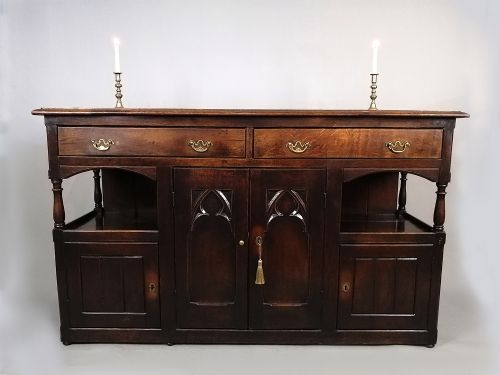
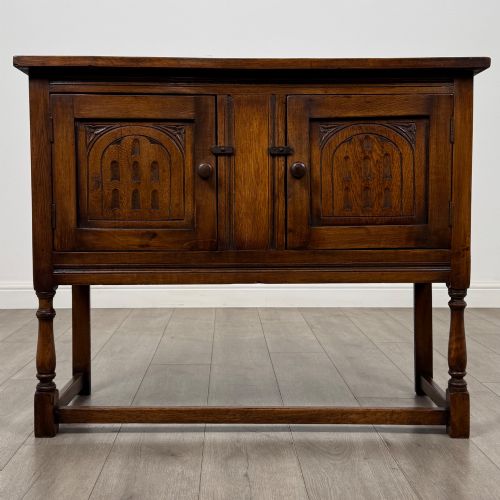
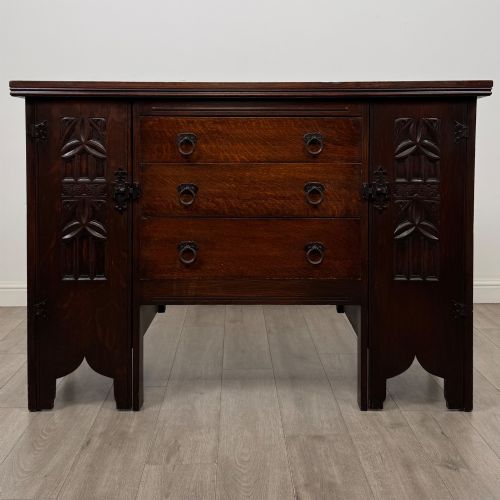
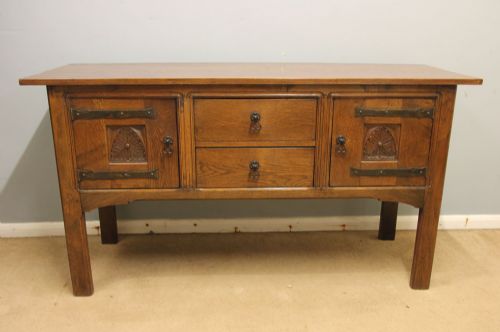
These gothic revival buffet pieces deliver heavy architectural timber and mediaeval tracery to a dining room or hall.
Gothic Revival Buffet
A gothic revival buffet combines heavy storage with the pointed arches, linenfold panelling and mediaeval motifs revived during the nineteenth century. Buyers examine sturdy sideboards, dresser bases, serving tables and large cupboards designed for domestic dining spaces.
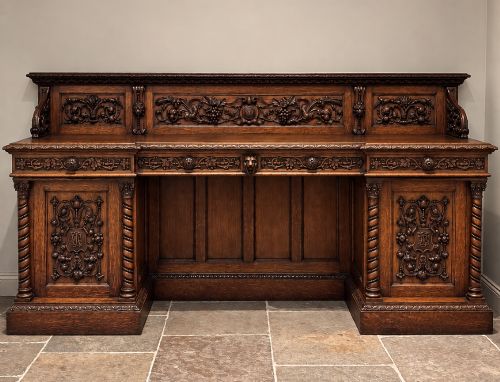
The pieces appearing most frequently on this page date from the Victorian era, particularly the middle and late nineteenth century, executed predominantly in solid oak with carved ornamentation. Examples range from narrow proportions to grand mirror-backed sideboards intended for imposing interiors.
Materials and construction
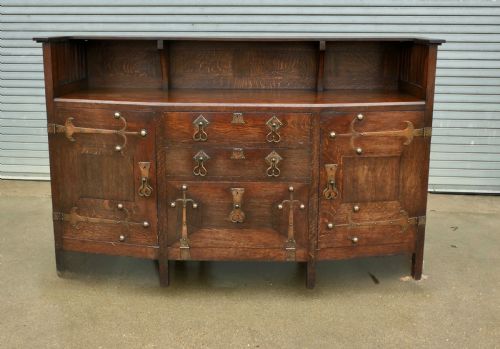
Makers relied heavily on solid oak, walnut and occasional pollard oak, assembling carcasses with traditional pegged joinery to support the substantial weight of topboards and shelves. Metal hardware typically consists of wrought iron or brass drop handles and hinges fashioned to complement the mediaeval aesthetic.
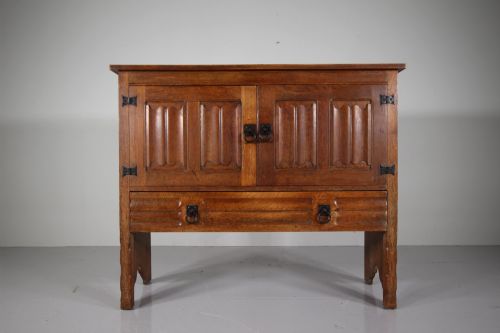
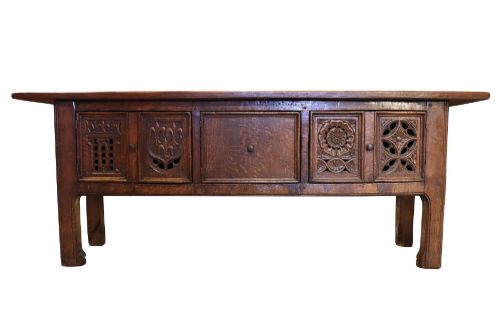
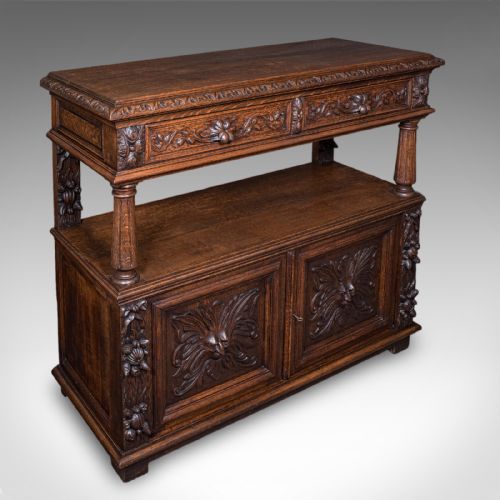
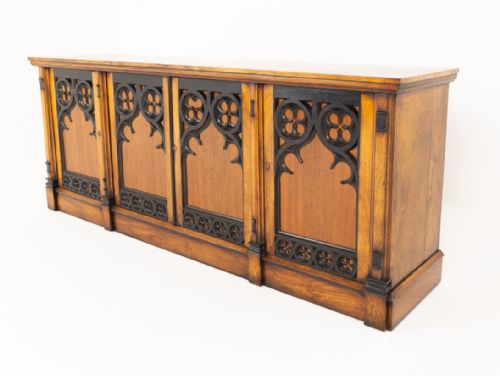
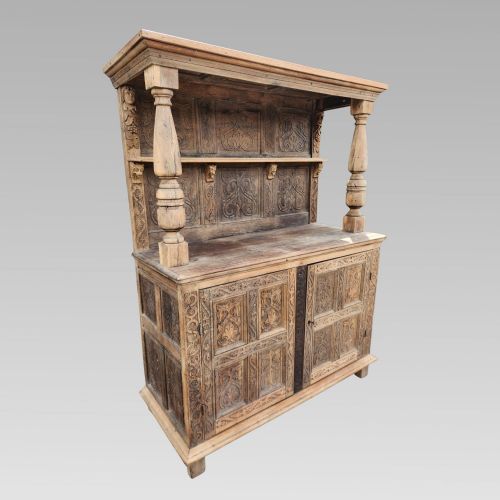
Carving represents the primary decorative technique, with craftsmen chiselling deep relief panels featuring Green Man masks, tracery, flora and architectural blind arcading directly into the timber. Surface finishes range from natural waxed grain to ebonised treatments designed to emulate much older ecclesiastical furniture.
Listings feature oak as the dominant timber, accompanied by walnut, ebonised wood and iron details across Victorian and Edwardian periods.
Distinctions in standard
Quality rests upon the depth and crispness of the hand-carved ornamentation, where sharp undercutting and spirited relief work separate superior cabinet work from mechanical factory output. The choice of timber also dictates grade, with figured pollard oak or dense prime English oak marking out pieces intended for high status commissions.
Structural integrity depends on the retention of original panel work, heavy brass or iron hardware, and unaltered bases that have not suffered from later height reductions. Maker attribution, such as documented designs associated with Liberty or regional firms like Phillips of Bristol, elevates the standing of an individual piece.
Leonard Wyburd·Phillips Bristol
The Gothic Revival Buffet Glossary
- Buffet
- A sideboard or serving table used for food storage and display in dining rooms. These pieces often feature tiered shelving or enclosed cupboards below a flat top.
- Green Man
- A sculptural architectural motif depicting a human face emerging from or entwined with foliage. It symbolises rebirth and appears frequently in mediaeval and revival woodcarving.
- Linenfold
- A style of woodcarving used on panels to imitate vertical folds of fabric. It forms a staple decorative element on cupboard doors across this category.
- Strawberry Hill Gothic
- An early, playful phase of Gothic Revival architecture and furniture inspired by Horace Walpole's Thames-side villa. Pieces display lighter, more fanciful tracery than later Victorian interpretations.
- Tracery
- Openwork stonework patterns translated into wooden furniture woodwork, particularly on cabinet doors and gallery backs. It mimics the pointed window designs of gothic cathedrals.
Gothic Revival Buffet: Frequently Asked Questions
How do I care for a carved oak buffet?
Feed the timber periodically with a traditional beeswax polish to prevent the grain from drying out in centrally heated rooms. Avoid placing the sideboard near direct heat sources that might cause the heavy oak panels to split.
Dust intricate carvings gently with a soft bristle brush to prevent dirt accumulation in the recesses of Green Man masks and linenfold panels.
What is the difference between a buffet and a sideboard?
Historically, a buffet served primarily for holding food dishes during meals, whereas a sideboard evolved to display silver and ceramics alongside storage. In nineteenth-century domestic interiors, the terms often overlapped for heavy dining room furniture.
Both forms utilise robust timber construction and comparable cupboard layouts, though buffets occasionally incorporate tiered serving surfaces.
How do I identify a Victorian gothic revival piece?
Look for characteristic architectural elements such as pointed lancet arches, chamfered framing, quatrefoils and heavy iron strap hinges. The timber is almost invariably dark carved oak with deep relief mouldings.
Construction methods, including hand-cut dovetails and pegged joints, help distinguish genuine nineteenth-century work from later twentieth-century reproductions.
Will a large oak sideboard fit in a modern room?
Measure ceiling height carefully, particularly if considering grand mirror-backed sideboards or tall dresser bases that demand generous vertical clearance. Floor space must accommodate both the deep footprint and the swing clearance of heavy cupboard doors.
These substantial pieces anchor a dining room or large hallway effectively when balanced against plain walls and simple surrounding decor.