




Victorian Gothic Server
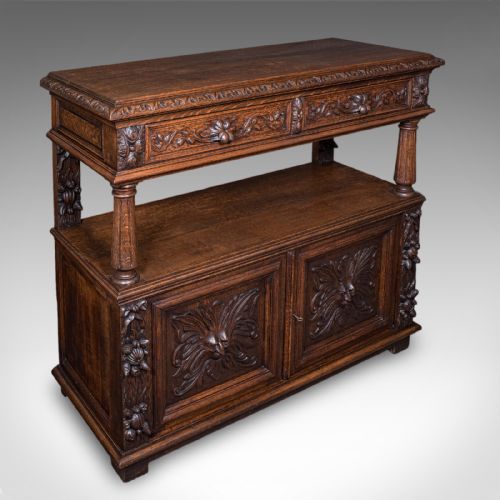
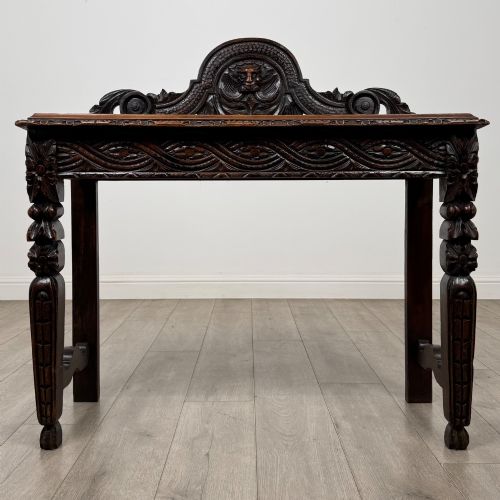
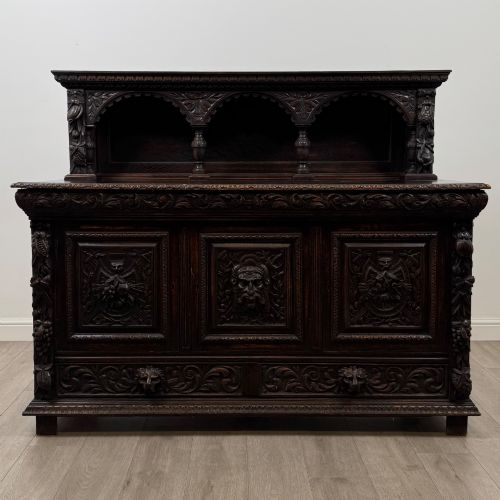
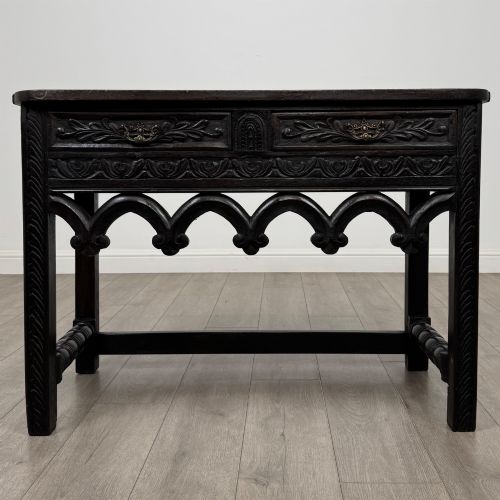
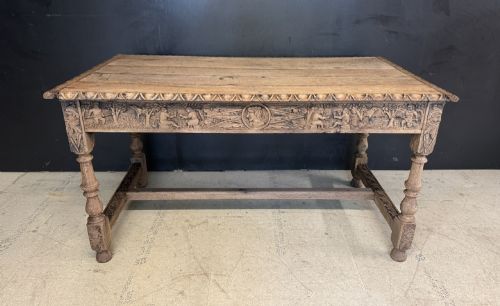
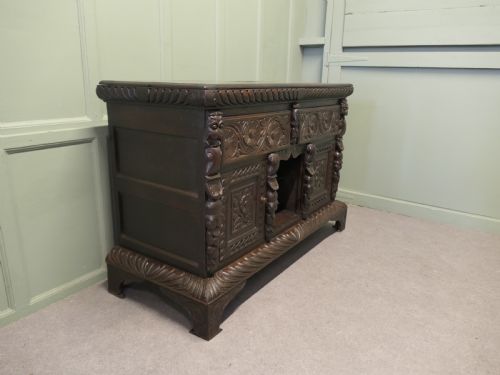
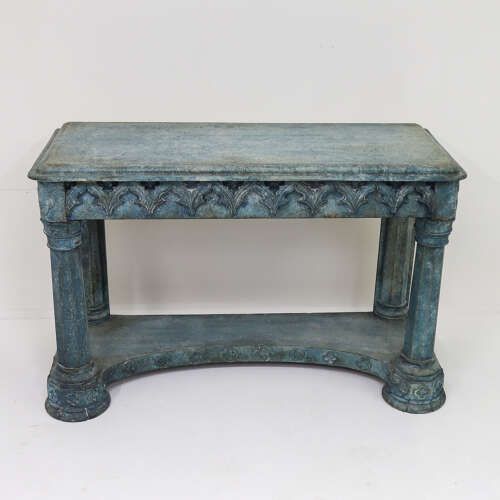
A victorian gothic server brings dramatic architectural presence to a dining room through dark timber, pointed arches, and heavy carved detail.
Victorian Gothic Server
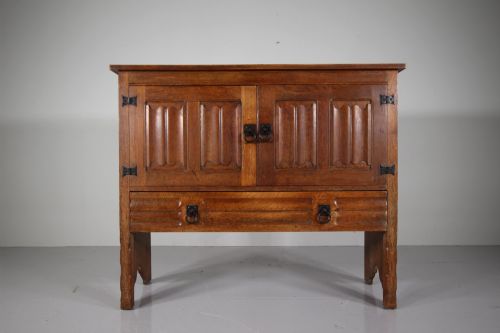
A victorian gothic server encompasses large dining room sideboards, serving tables, and compact side pieces dating across the nineteenth century. These forms draw heavily on medieval architectural motifs, featuring heavy timber construction and assertive vertical lines.
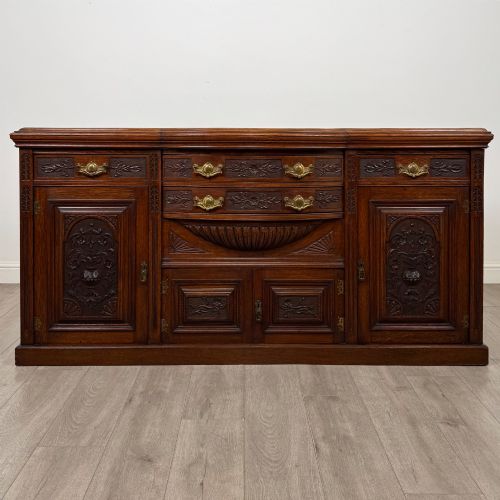
The version most commonly met on this page is the carved oak sideboard or serving table reflecting the Gothic Revival and Jacobean Revival styles. Many pieces originate from nineteenth-century English and Scottish country houses, designed to anchor formal dining spaces.
How they were made
Makers relied principally on solid oak, pitch pine, and walnut, often accented with brass hardware and glass inserts. Timber was selected for durability and deep natural grain before undergoing extensive hand-carving.
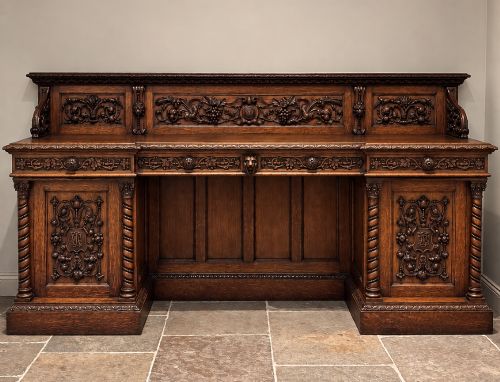
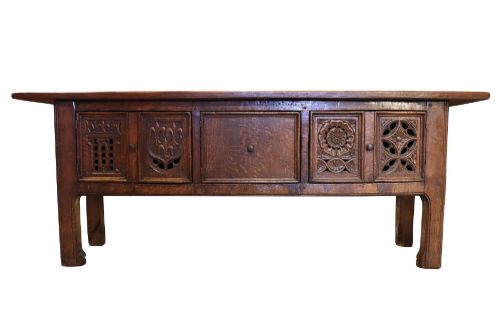
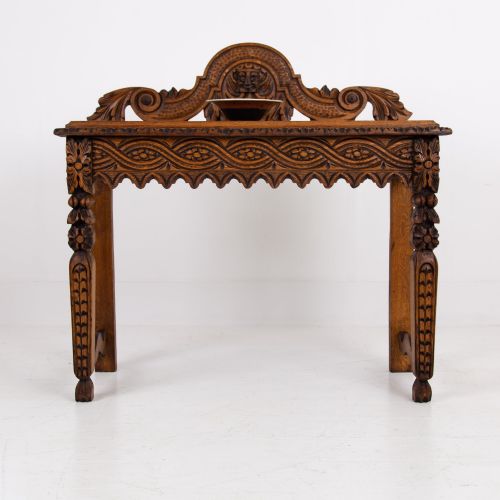
Joinery techniques combined pegged mortise and tenon frames with heavy panel construction to support the massive weight of stone or timber tops. Surfaces were finished to highlight deep relief carving, including Green Man motifs and pointed arch panels.
Several heavy sideboards feature watchful Green Man carvings peering out from the foliage to guard the dining room.
What varies in quality
The distinction between standard examples and top-tier pieces rests on the depth and crispness of the hand-carving. Superior items display intricate, deeply undercut relief work on the panels and structural mouldings rather than shallow machine stamping.
Proportion and material selection also dictate standing, with finer items utilising pollard oak, specimen wood inlays, or exceptionally narrow proportions tailored for specific hallway and dining room spaces.
PHILLIPS BRISTOL
The Victorian Gothic Server Glossary
- Gothic Revival
- An architectural and decorative style popular in the nineteenth century that revived medieval forms such as pointed arches, tracery, and heavy buttresses.
- Green Man
- A sculptural motif showing a human face emerging from or entwined with foliage and vines, frequently found carved on nineteenth-century woodwork.
- Dresser Base
- A low sideboard or serving table featuring cupboards or drawers beneath a flat top, historically used for food preparation and service.
- Sideboard
- A large dining room furniture form used for storing tableware and serving food, appearing in numerous nineteenth-century revival styles.
- Pitch Pine
- A resinous softwood utilised in nineteenth-century furniture making for its striking grain pattern and robust structural qualities.
Victorian Gothic Server: Frequently Asked Questions
What is a victorian gothic server used for?
These pieces served primarily in nineteenth-century dining rooms for displaying silver, holding dishes during meals, and storing household linens.
Today, they function as substantial sideboards or console tables in large hallways and living spaces, providing both surface area and deep cupboard storage.
How do I care for a carved oak sideboard?
Maintain the wood by applying natural beeswax periodically to nourish the dry nineteenth-century timber and preserve the matte finish.
Keep the piece away from direct heat sources and strong sunlight to prevent the solid oak panels from splitting or warping over time.
How do I identify a genuine nineteenth-century piece?
Examine the construction methods underneath and inside the piece for hand-cut joints, pegged tenons, and naturally aged timber patination.
Look for tool marks and structural inconsistencies typical of nineteenth-century cabinet making before mass production standardisation.