


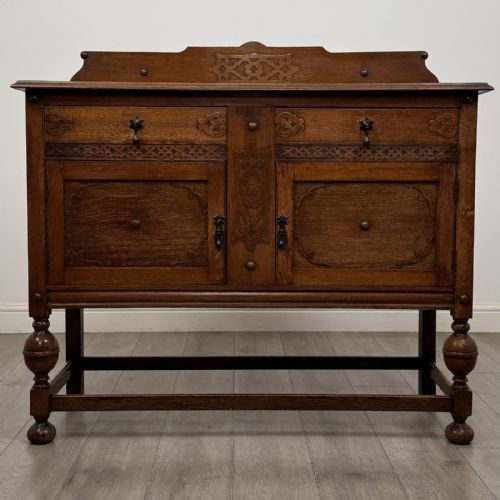
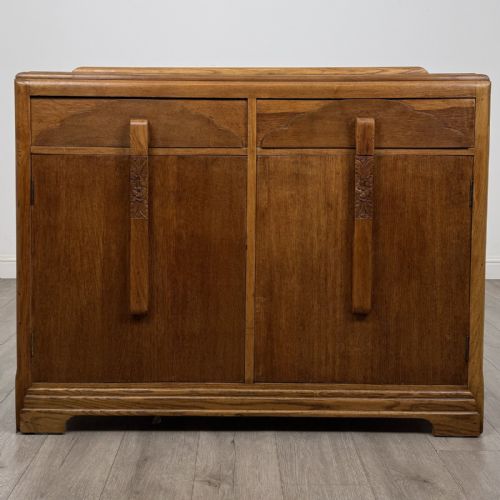
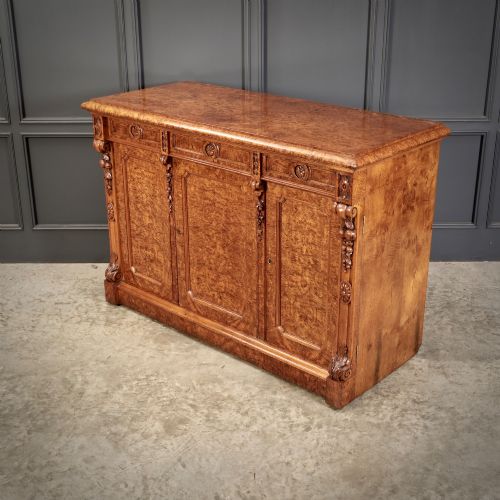
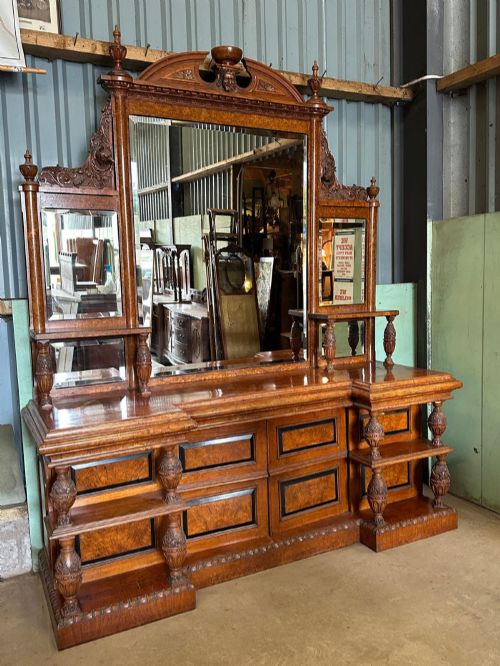
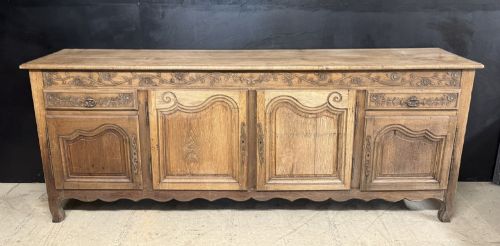
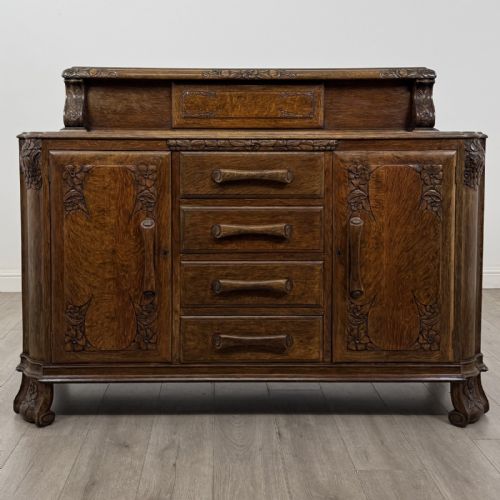
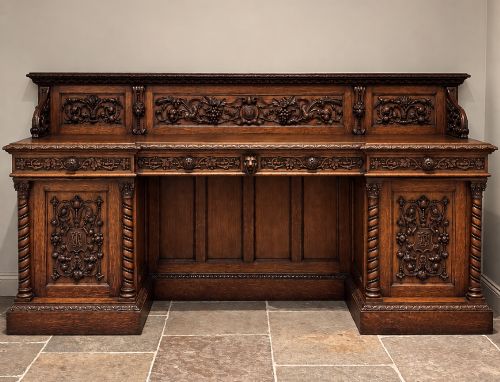
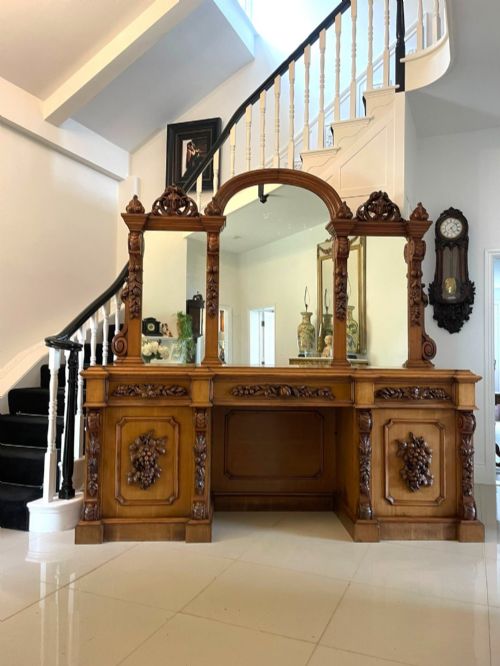
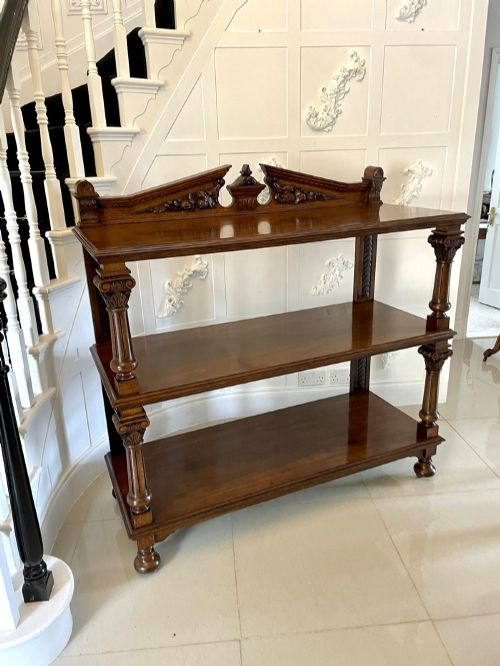
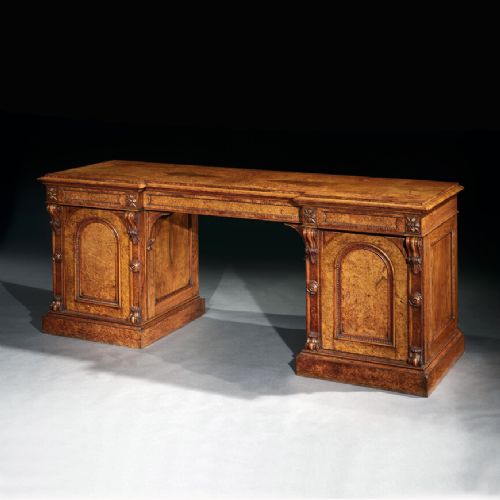
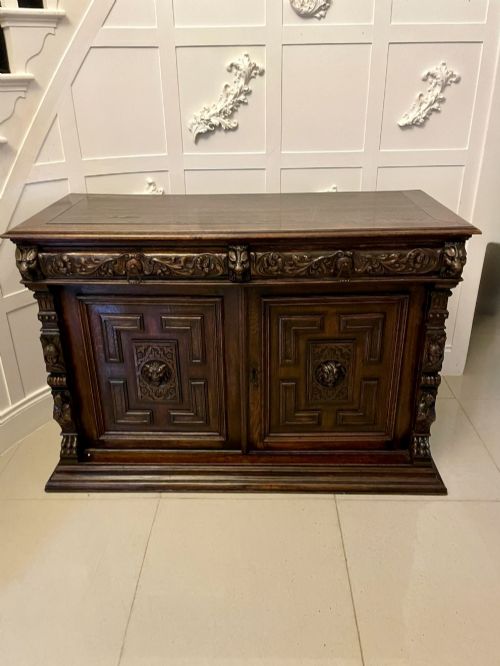
Carved Oak Dining Sideboard
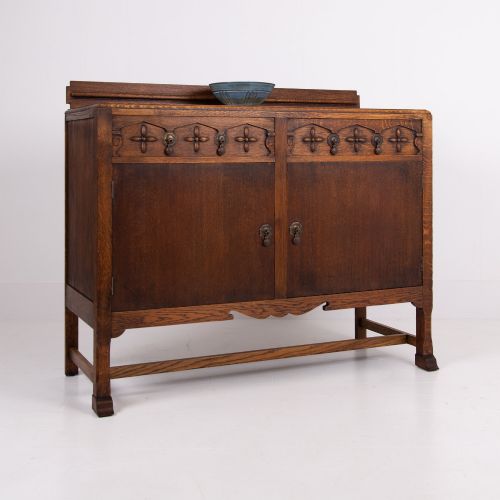
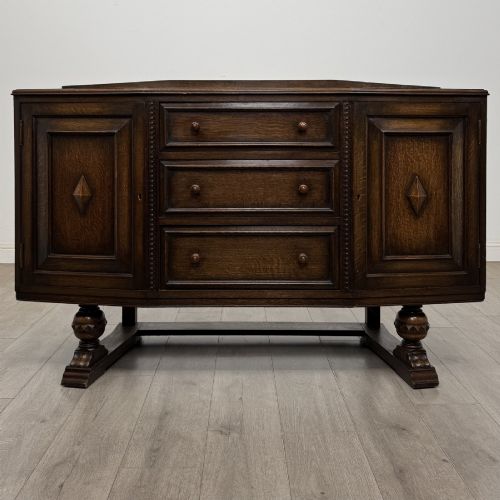
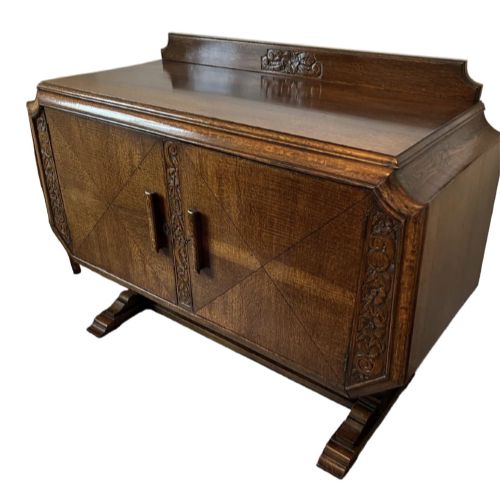
A carved oak dining sideboard anchors a room with heavy timber, deep panel work and generations of domestic service.
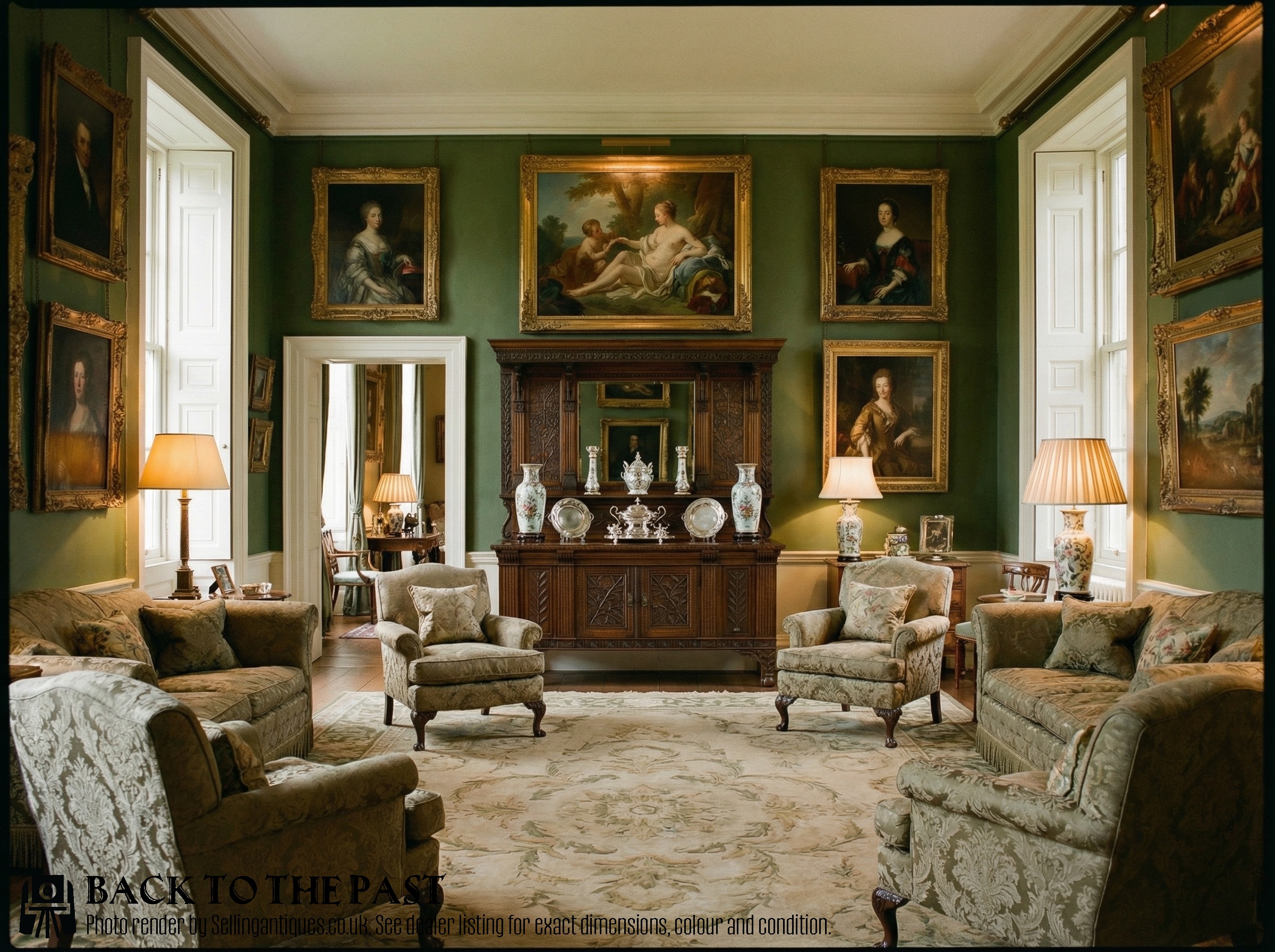
Carved Oak Dining Sideboard
A carved oak dining sideboard serves as a substantial storage piece and serving surface for the dining room. When searching for a carved oak dining sideboard, buyers encounter heavy timber forms designed to hold china, linen and dining silver.
The pieces listed span the eighteenth century through to the 1930s, encompassing Victorian, Edwardian and revival aesthetics. The most frequent examples met on this page belong to the nineteenth century and the Edwardian era, often displaying deep relief carving and brass hardware.
Forms vary from monumental mirror-back cabinets and court cupboards to simpler dresser bases and servers. These pieces reflect the changing demands of British and European dining rooms over two centuries of interior design.

What varies in quality
Quality rests upon the crispness of the hand carving and the selection of the timber. Dense, well-figured oak and deeply undercut relief work distinguish the finer examples from simpler commercial production.
Structural integrity and the retention of original hardware also define the standard. Pieces that retain their original brass handles, mirror glass and fitted interior shelving command greater attention from collectors.
Carved Oak Dining Sideboard Retail Price Guide 2026
Typical asking prices for carved oak dining sideboard among the pieces listed under this phrase on Sellingantiques today, from the lower quarter to the upper quarter. They describe what is for sale here now, not the wider market.
Listings span from the eighteenth century to the 1930s, featuring oak alongside brass, glass, iron and walnut.
The Carved Oak Dining Sideboard Glossary
- Barley-twist
- A turned wooden column resembling a twisted rope, commonly found on supports and legs during the Victorian and Edwardian periods.
- Court cupboard
- A short, enclosed antique cupboard used for storing food and utensils, often featuring tiered shelves.
- Pollard oak
- Oak timber taken from pollarded trees, exhibiting dense and highly decorative circular grain patterns.
- Breakfront
- A piece of furniture with a central section that projects forward from the flanking outer sections.
- Green Man
- A sculptural architectural motif consisting of a human face surrounded by or entwined with leaves and foliage.
Carved Oak Dining Sideboard: Frequently Asked Questions
What is a carved oak dining sideboard used for?
These large timber units provide ample surface area for serving food and drinks during dinner parties. Below the top surface, deep cupboards and drawers house heavy tableware, table linen and silver.
Historically, they sat against the dining room wall as both a practical workstation for servants and a display piece for the household's best china.
How do I date a carved oak sideboard?
Dating relies upon stylistic clues and construction methods visible in the timber and hardware. Victorian pieces often display heavy relief carving and Gothic or Renaissance revival motifs.
Edwardian and later examples introduce brighter golden oak finishes, simpler geometric lines, or Arts and Crafts simplicity alongside barley-twist supports.
Are these sideboards heavy?
Solid oak construction and large formats make these pieces extremely heavy and solid. Most require multiple people and careful planning to move safely into position.
The weight comes from thick timber panels, heavy drawers and internal shelving built to last through centuries of domestic use.
How do I care for antique oak furniture?
Maintain the timber by keeping it away from direct heat sources and sudden humidity changes. Regular dusting with a soft cloth preserves the natural finish without building up heavy wax layers.
Applying a traditional beeswax polish occasionally helps nourish the dry grain of older oak surfaces.