
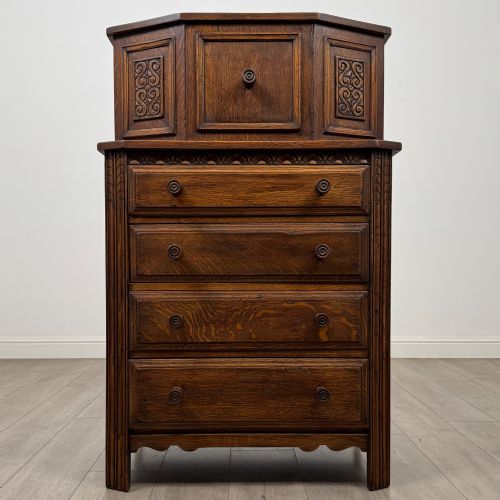
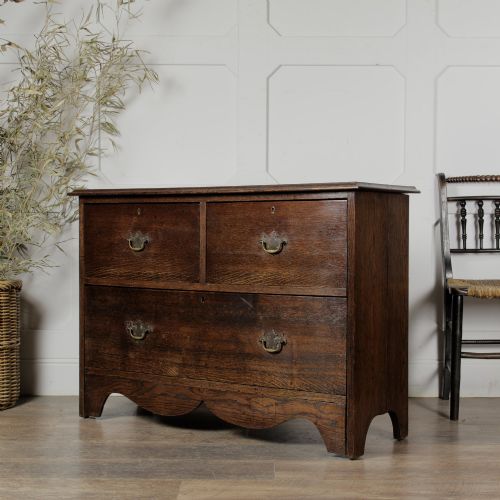

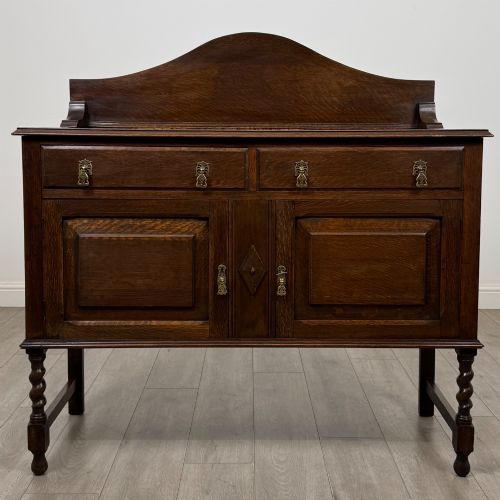
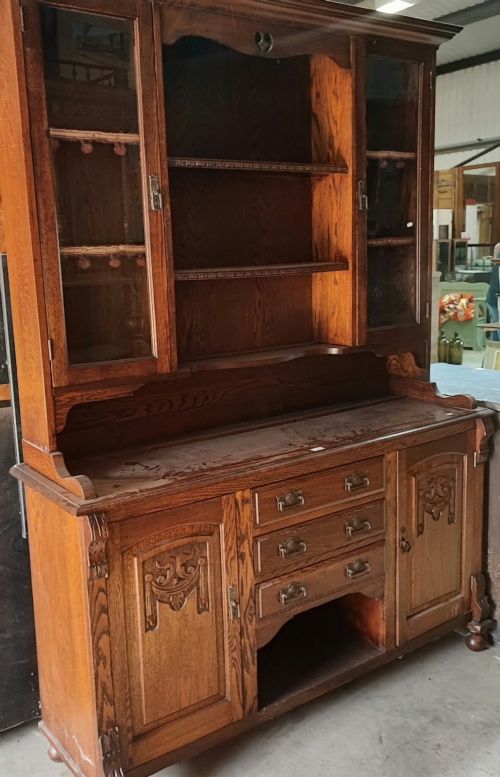
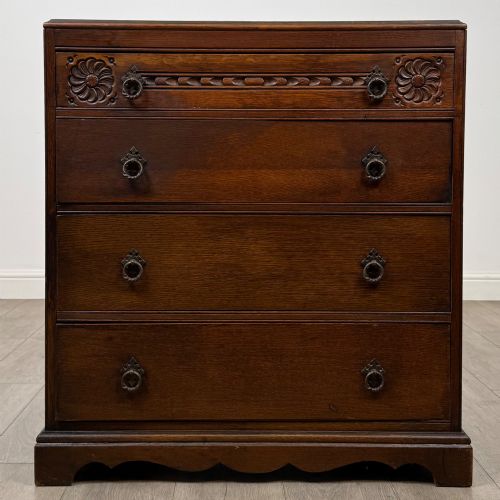
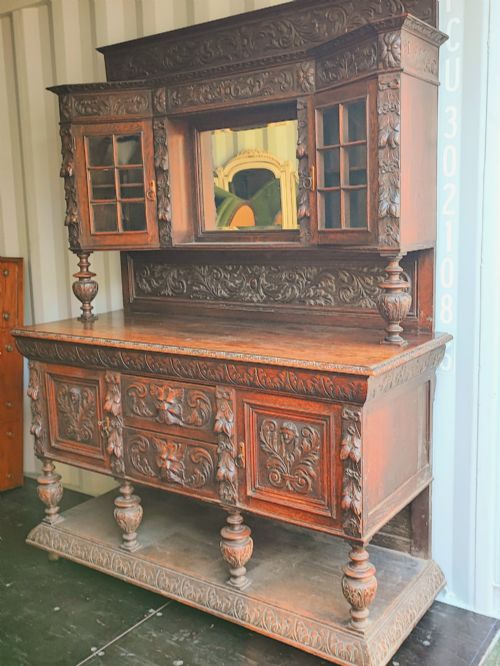
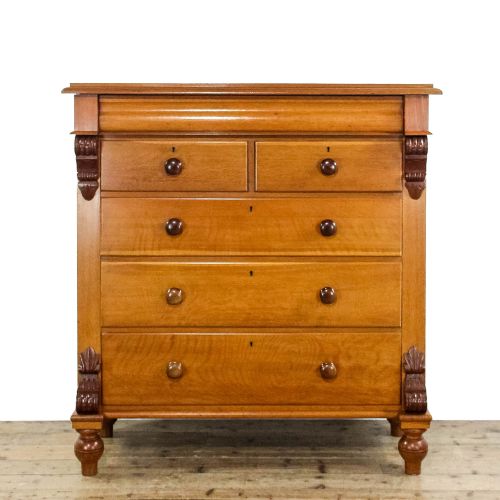
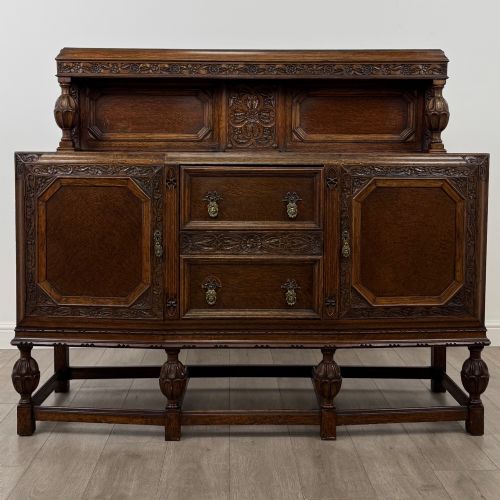
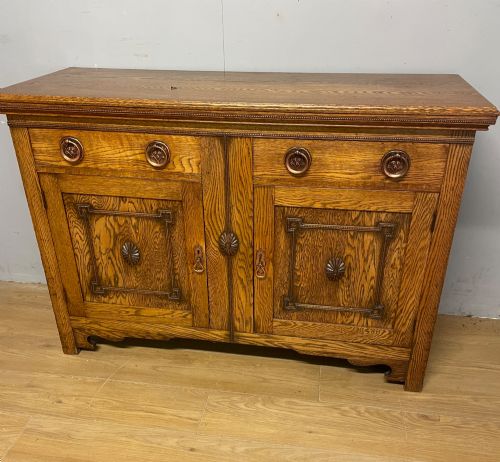
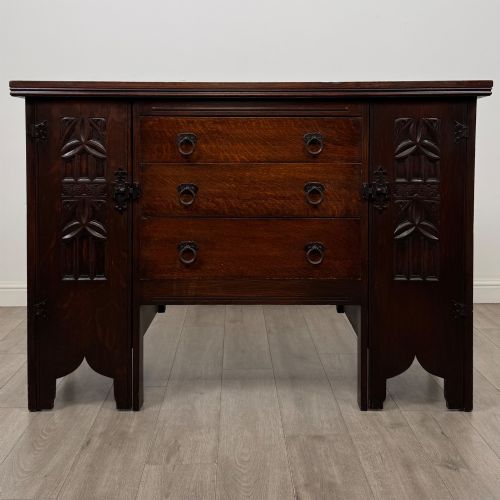
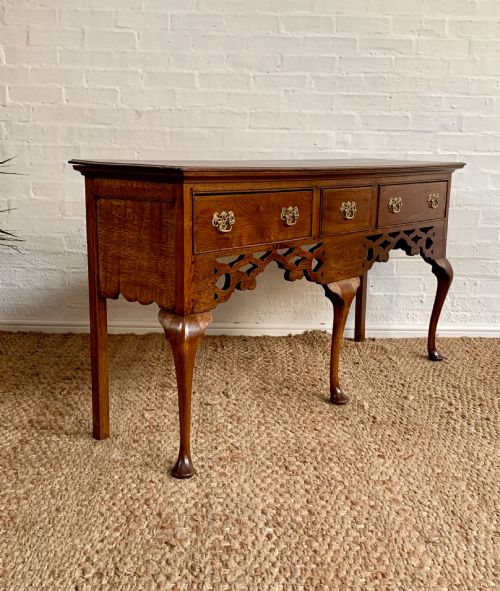
Edwardian Carved Oak Dresser
An Edwardian carved oak dresser brings substantial timber storage and display to a room, grounding the interior with period weight and craft.
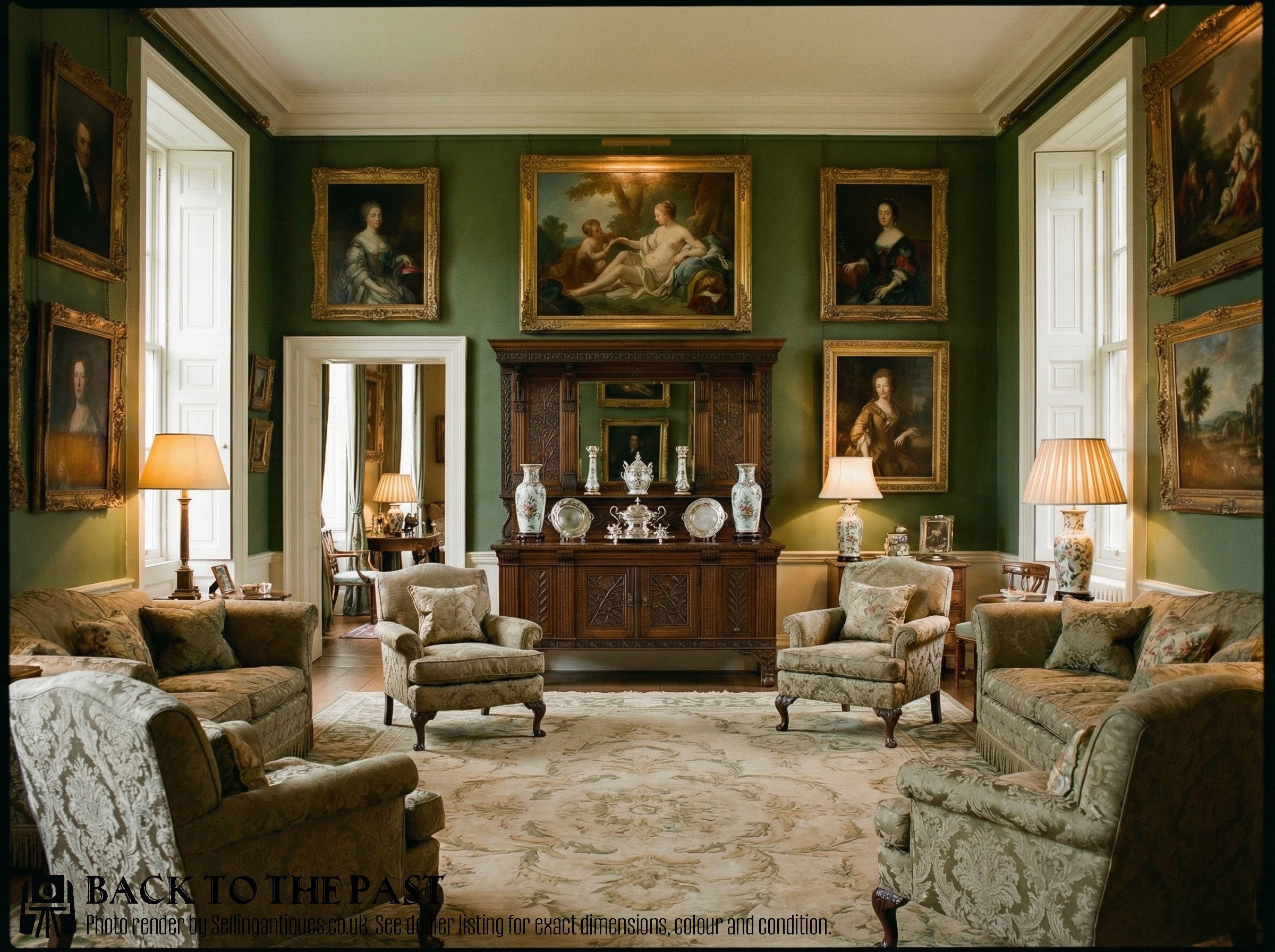
Edwardian Carved Oak Dresser
An edwardian carved oak dresser spans various practical dining and living room forms, including sideboards, dresser bases with plate racks, and buffet tables. These pieces originate predominantly from the Edwardian period and the early twentieth century, alongside nineteenth-century Victorian examples.
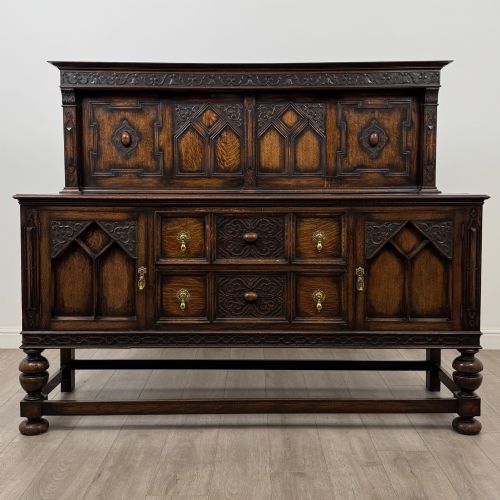
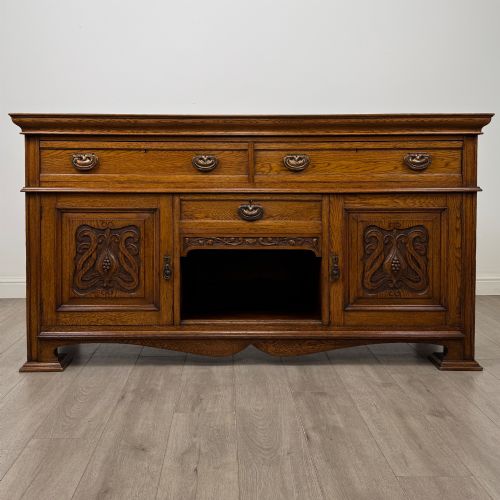
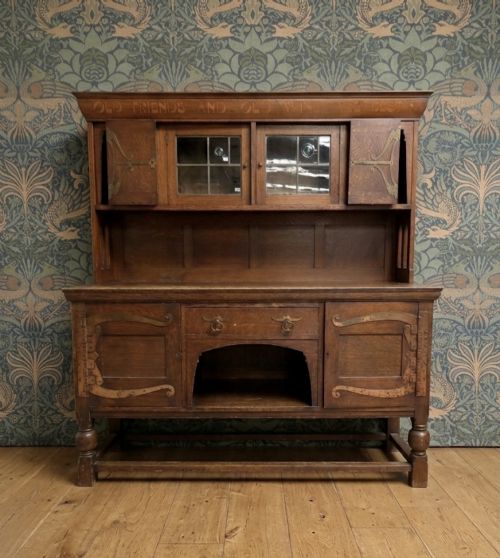
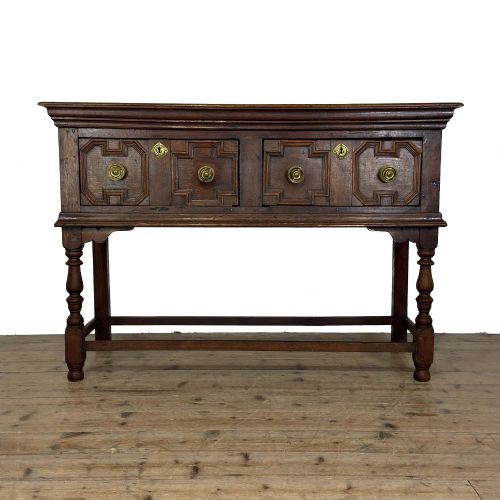
The aesthetic vocabulary encompasses Arts and Crafts simplicity, Jacobean Revival and Gothic Revival carving, and Art Nouveau line. Buyers frequently encounter sideboards and drawer units featuring panelled doors, pot boards, or raised plate display racks.
Materials and Construction
Solid oak serves as the primary structural material, sometimes enhanced by tiger oak figure or golden tones, and occasionally finished with liming techniques. Metal hardware typically consists of brass handles, copper details, and iron fixtures.
Joinery methods rely on traditional framing for panelled doors and robust drawer construction. Carved ornamentation, applied mouldings, and turned elements such as barley twist legs define the surface decoration.
Listings span multiple decades, incorporating Victorian roots, Edwardian production, and early twentieth-century Arts and Crafts design.
Standards of Execution
The division between standard workshop output and superior production rests on the depth and crispness of the carved details and the selection of timber figure. Pieces attributed to notable makers display more deliberate proportion and integrated design.
Hardware selection and the integration of functional elements like plate racks or mirror backs also mark the distinction between utility pieces and more ambitious decorative items.
Ambrose Heal for Heal & Son·Leonard Wyburd for Liberty·John Moyr Smith
The Edwardian Carved Oak Dresser Glossary
- Pot board
- A low open shelf situated near the floor beneath a dresser base, originally intended for storing earthenware pots and heavy kitchen utensils.
- Plate rack
- A tiered wooden superstructure mounted to the top of a dresser for displaying plates and platters upright.
- Tiger oak
- Quarter-sawn oak timber exhibiting a prominent, distinctive medullary ray figuring that resembles tiger stripes.
- Barley twist
- A turned wooden furniture leg or column carved in a spiral shape resembling a twist of barley sugar.
- Green Man
- A sculptural architectural ornament depicting a human face surrounded by or sprouting from foliage and vines.
Edwardian Carved Oak Dresser: Frequently Asked Questions
What is an edwardian carved oak dresser?
It is a heavy wooden storage and display unit combining cupboards, drawers, and often a plate rack.
These pieces reflect the domestic revival styles of the early twentieth century, drawing on earlier traditions like Jacobean and Arts and Crafts design.
How do I use a dresser in a modern home?
A dresser base serves well as a sideboard in a dining room or a console in a hallway for storage.
The upper plate rack allows for the display of ceramics, glassware, or books while keeping everyday items organised.
How do I tell Arts and Crafts from Jacobean Revival?
Arts and Crafts pieces focus on honest construction, subtle grain, and simple bracketed or copper hardware.
Jacobean Revival pieces rely heavily on dense geometric mouldings, heavy turned legs, and deep strapwork carving.
What is golden oak?
Golden oak refers to a warm, honey-toned timber finish applied to highlight the natural grain of the wood.
This finish became popular during the late nineteenth and early twentieth centuries in domestic dining furniture.