
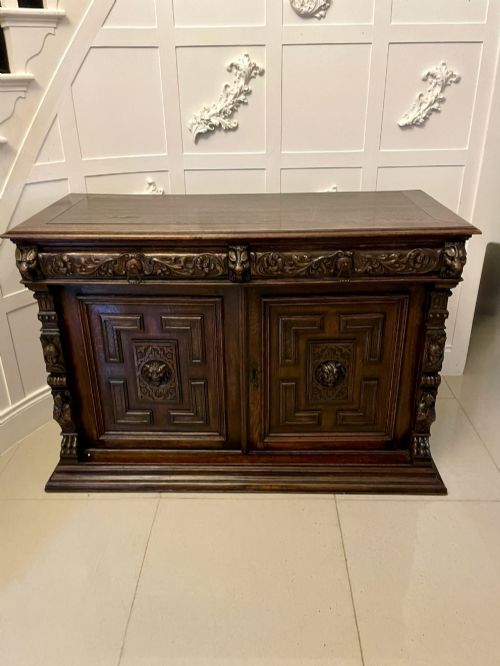
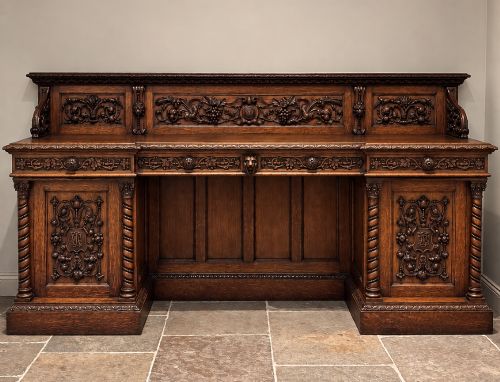
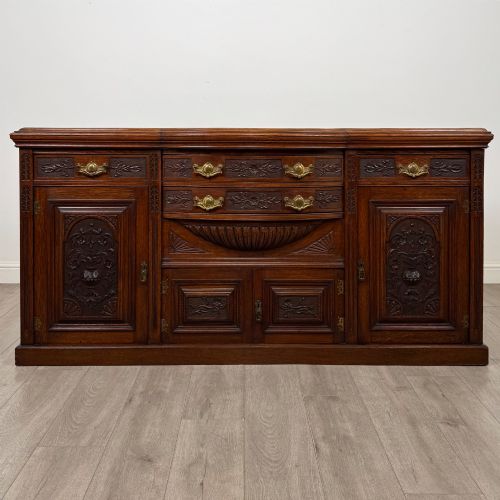
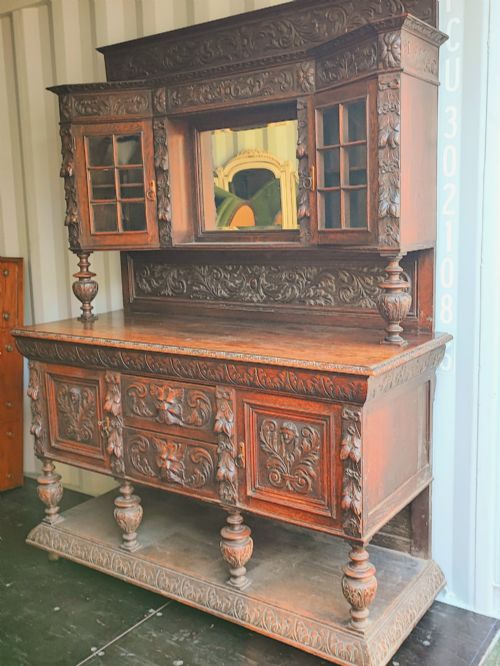


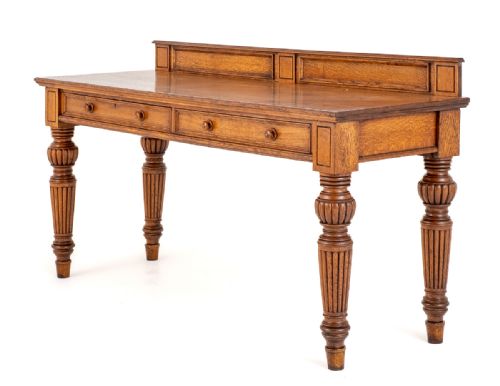


Heavy Oak Dining Sideboard
These heavy oak dining sideboard pieces offer sturdy timber storage and grand carved presence, bringing robust utility and distinct period character directly into your dining room.
Heavy Oak Dining Sideboard
A heavy oak dining sideboard is a substantial timber storage piece designed for the dining room, utilised for serving food and housing tableware. The listings here present items predominantly shaped by Victorian tastes alongside Jacobean Revival and Renaissance Revival movements.
Most examples you encounter on this page date from the Victorian era and the latter half of the nineteenth century, stretching from the eighteen-fifties through to the nineteen-thirties. Forms range from large buffets and serving tables to grand mirrored sideboard cabinets featuring carved oak construction.
How they were made
These items rely fundamentally on solid oak timber, frequently accented with pollard oak veneers to create rich grain patterns across large surfaces. Carving forms a central part of their construction, with intricate detail worked directly into the heavy wood.
Many examples incorporate glass and bevelled mirror glass within upper back sections, supported by metal hardware and brass fittings. Construction methods reflect the heavy proportions of the period, resulting in massive furniture built to endure.
Some heavy oak sideboards include carved Green Man faces staring out from the foliage to watch over your dining room.
What varies in quality
Quality in a heavy oak dining sideboard rests upon the depth and execution of the carved ornamentation. Pieces displaying crisp, deeply undercut carving stand apart from simpler work.
The choice of secondary timbers and the integration of specialised elements like pollard oak or bevelled mirror glass determine the overall refinement. Grand proportions and balanced architectural styling elevate certain examples above standard utility pieces.
The Heavy Oak Dining Sideboard Glossary
- Sideboard
- A dining room storage cabinet used for serving and holding tableware. These pieces often feature extensive carving and large proportions.
- Pollard Oak
- Timber taken from trees that have been pollarded, producing a highly figured, mottled grain pattern. It is utilised for decorative veneer panels.
- Jacobean Revival
- A nineteenth-century revival style mimicking seventeenth-century English architecture and furniture. It is characterised by heavy rectilinear forms and geometric panelling.
- Bevelled Glass
- Glass with an edge ground and polished to an angle. It is commonly found on the mirror backs of nineteenth-century cabinets.
- Buffet
- A sideboard or serving table designed for food preparation and display. In nineteenth-century forms, these often include upper tiers and mirrored backs.
Heavy Oak Dining Sideboard: Frequently Asked Questions
Where should I place a heavy oak dining sideboard?
These substantial pieces demand a generous dining room or hallway with sufficient floor space to accommodate their grand proportions. Positioning them against a solid wall ensures adequate support for their considerable weight.
Keep them away from direct heat sources and strong sunlight to protect the timber and any incorporated mirror glass.
How do I date these sideboards?
Dating relies on stylistic clues, construction methods, and recorded dates within the nineteenth and early twentieth centuries. Victorian and revival designs often feature distinct decorative motifs such as Green Man carvings or Renaissance details.
Examining the backboards and interior construction provides further evidence of the manufacturing period.
How do I maintain the wood?
Regular dusting with a soft, dry cloth keeps the carved surfaces clean and prevents dust accumulation in deep recesses. Occasional application of suitable beeswax helps nourish the oak without building up heavy residues.
Avoid liquid cleaners and excessive moisture, which can damage the timber and affect mirror glass.