
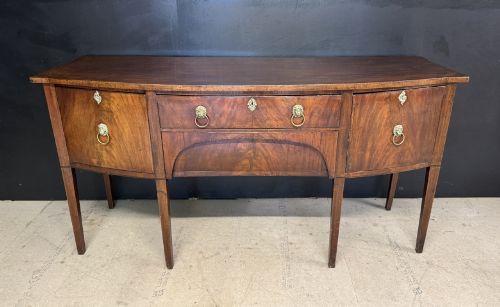
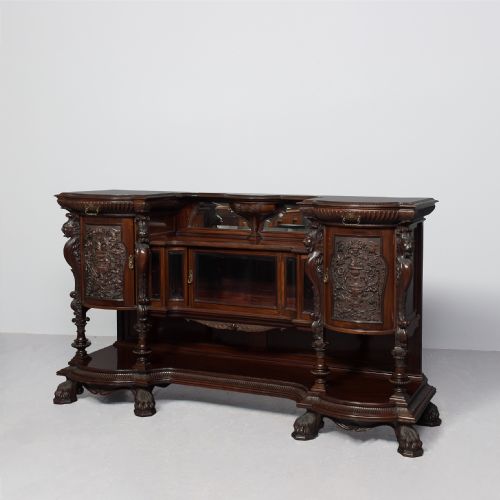
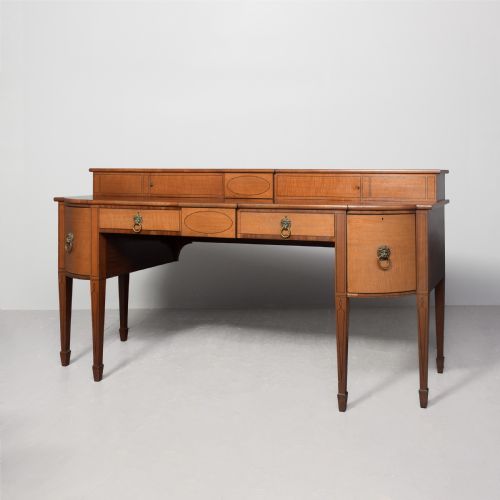


Antique Lion Head Sideboard
An antique lion head sideboard anchors a dining room with carved authority, offering substantial timber storage and period presence.
Antique Lion Head Sideboard
An antique lion head sideboard provides substantial serving and storage space in a dining room through robust timber construction and formal arrangement. These large serving pieces originate primarily across the Georgian, Victorian, and Regency periods, utilising heavy proportions and architectural timber design.
The current selection encompasses diverse regional variations, including large Scottish George III stage-back examples alongside serpentine-shaped dining pieces and carved oak court cupboards. Cabinets incorporate mirror-backs, cupboards, and brass galleries to fulfil domestic storage requirements.
Makers shaped these heavy serving units from dense hardwoods to withstand domestic service, employing traditional joinery and carved ornamentation. Pieces range from straightforward mahogany serving surfaces to elaborate revival forms displaying intense surface carving.
How they were made
Cabinet makers built these substantial dining pieces using dense hardwoods including mahogany, pollard oak, walnut, and plain oak. Timber selection determined the structural integrity of large serving units and allowed for sharp edge-working on mouldings and framing.
Surfaces received decorative treatment through flame mahogany veneers, satinwood inlay, and hand-carved ornamentation. Workshops integrated functional hardware such as brass galleries, bevelled glass panels, and mirror-backs into the heavy timber framework.
Materials documented across the inventory include mahogany, oak, walnut, pollard oak, satinwood, brass, and bevelled glass.
What varies in quality
Quality separates standard utility pieces from exceptional cabinet work through the precision of timber selection and depth of carving. Master cabinet makers chose figured grain patterns like flame mahogany and pollard oak specifically to create dramatic visual contrast across wide expanses.
The sophistication of decorative enrichment defines the upper tier of these dining units, where hand-carved details and inlaid satinwood demonstrate superior workshop execution. Structural soundness relies upon sound joinery within heavy frames, mirror-backs, and stage-backs.
The Antique Lion Head Sideboard Glossary
- Serpentine
- A furniture front curving outward at the centre and inward at the sides in a continuous serpentine line. This contour requires skilled timber shaping and edge matching.
- Flame mahogany
- A veneer cut from the fork of the mahogany tree where branches join the trunk, producing a distinctive flame-like grain pattern. Cabinet makers used this figure on prominent drawer fronts and doors.
- Brass gallery
- A low metal rail mounted on the rear upper surface of a sideboard or buffet to prevent serving dishes from sliding off. These fixtures add metallic contrast to the dark timber.
- Stage-back
- A stepped superstructure rising above the main serving surface of a sideboard. This architectural addition provides display shelving and extra height.
Antique Lion Head Sideboard: Frequently Asked Questions
Where did these sideboards stand?
These large pieces stood against the dining room wall to hold silver, serving dishes, and linen during large meals.
Their substantial weight and length required dedicated floor space behind the dining table.
How do I care for the wood?
Maintain the timber surfaces by applying traditional beeswax polish and keeping the furniture away from direct heat sources.
Avoid excessive moisture on polished mahogany and oak surfaces to preserve the original finish.
What is a stage-back sideboard?
A stage-back sideboard incorporates a stepped upper tier behind the main serving surface for display and storage.
This architectural feature adds considerable height and presence to Georgian and Victorian dining furniture.
How do I date a sideboard?
Examine the secondary timbers, construction methods, and overall style to establish the period of manufacture.
Georgian and Regency pieces display different proportioning and veneer work compared to later Victorian revivals.