
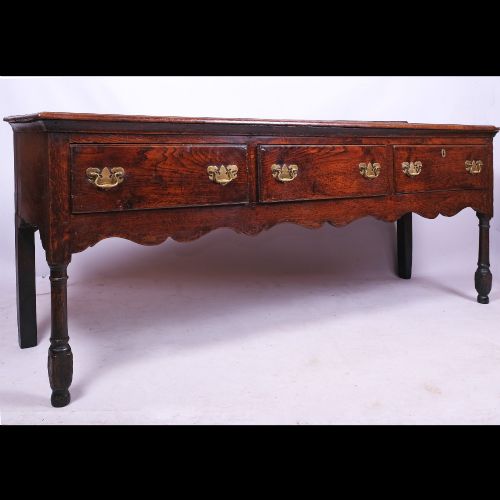
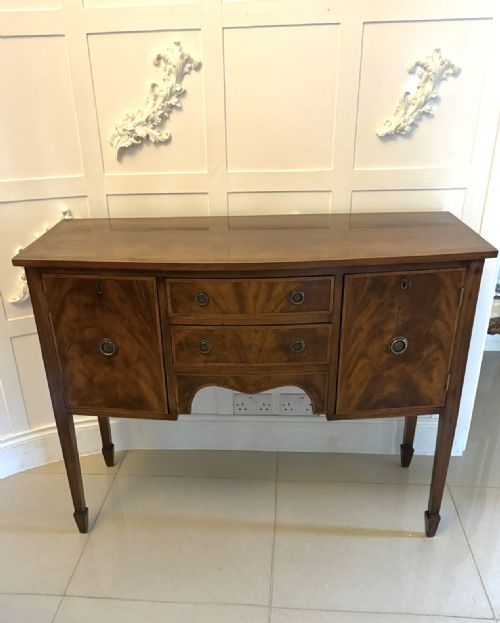

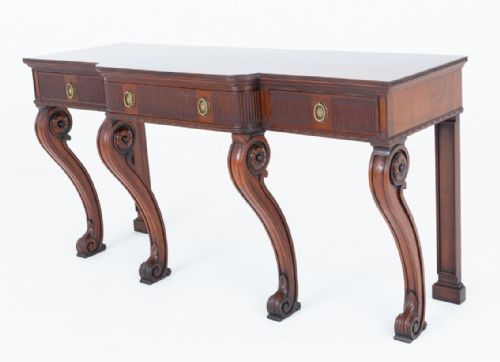


Traditional Dining Room Sideboard
Traditional dining room sideboards are heavy timber servers designed for formal spaces, offering deep drawers and cupboards that anchor the room.
Traditional Dining Room Sideboard
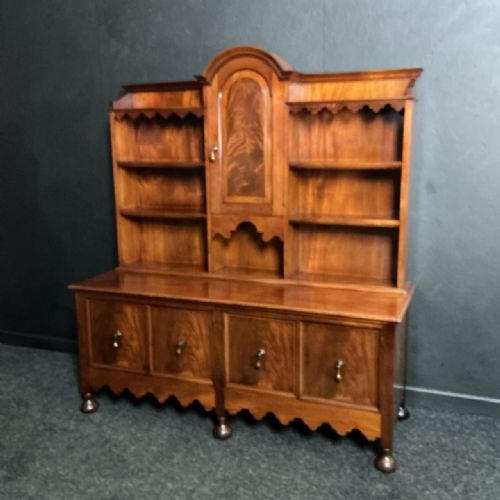
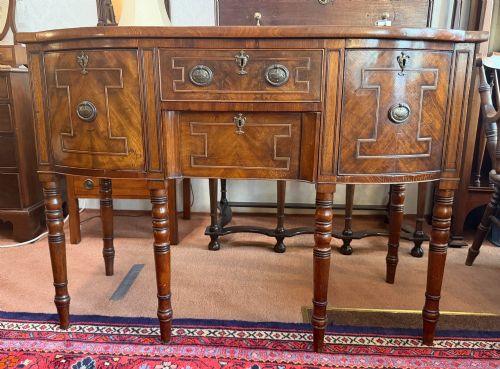
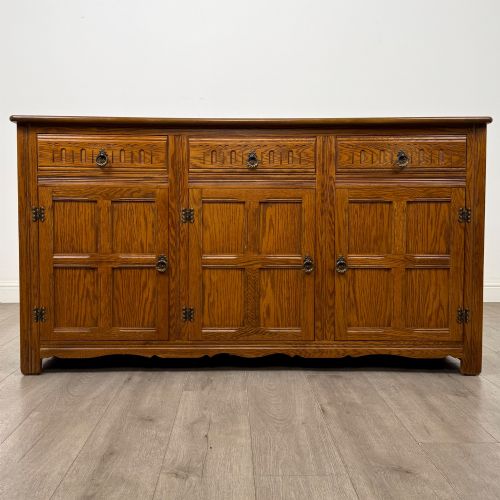
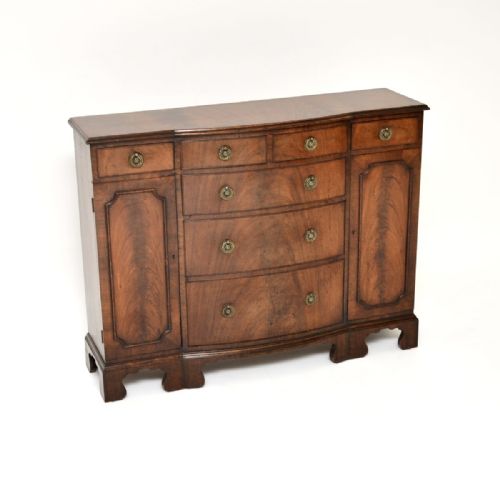
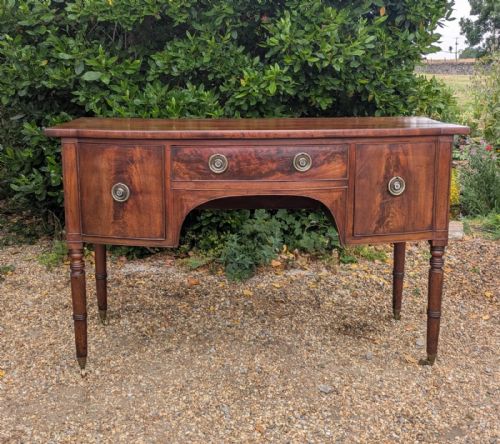
A traditional dining room sideboard sits against the wall to hold tableware, linen, and serving dishes during meals. These pieces appear in forms such as breakfront cabinets, bow-front servers, chiffoniers, and dresser bases.
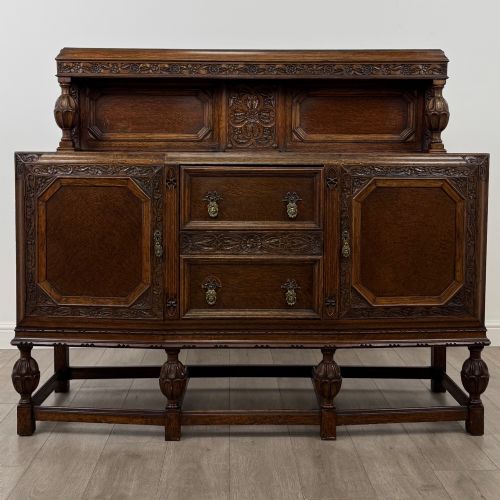
The selection ranges from eighteenth-century Georgian and Regency designs to Victorian and Edwardian iterations in mahogany and oak. Buyers encounter everything from compact pedestal sideboards to large mirror-backed display cabinets.
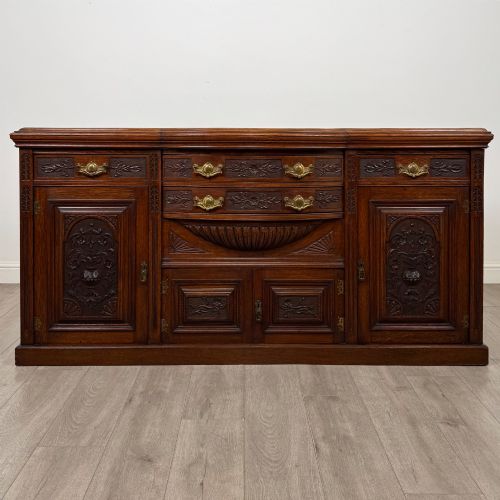
Earlier examples favour clean architectural lines and figured timbers, while later Victorian and Edwardian pieces often incorporate carved panels and inlaid details. Each form reflects the changing storage needs of the dining room across different periods.
How they were made
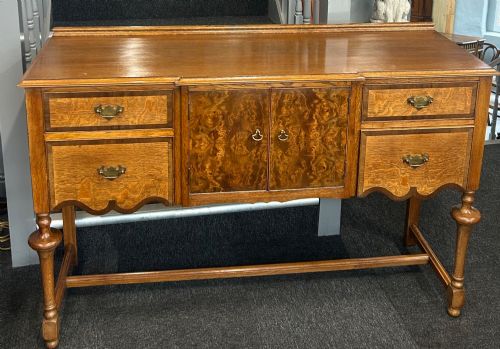
Cabinetmakers constructed these sideboards using solid timbers like mahogany and oak, frequently applying flame mahogany veneer or burr walnut to create striking grain patterns on drawer fronts and doors. Brass hardware, including handles and backplates, provides functional contrast to the dark wood.
Joinery techniques such as dovetailed drawers and panelled doors ensured durability for heavy daily use in the dining room. Carved motifs, inlay, and glass elements appeared on specific revival and Edwardian styles to add decorative refinement.
Some Edwardian sideboards thoughtfully include built-in cellarette drawers lined to keep your vintage port at the proper resting angle.
What varies in quality
The selection of timber dictates much of the visual hierarchy, with figured mahogany and burr walnut commanding attention through rich, active grain patterns rather than plain surfaces. Cabinetmakers who matched veneer across multiple drawers demonstrated a higher level of skill.
Proportion and execution of carved details separate standard utility pieces from finer architectural server designs. Well-executed brass mounts and tight joinery in the drawers indicate superior workshop standards during construction.
The Traditional Dining Room Sideboard Glossary
- Bow-front
- A convex curved front on a cabinet or sideboard that projects outward in the centre. This shape softens the room's angles and appeared frequently on nineteenth-century servers.
- Breakfront
- A piece of furniture where the central section projects forward from the flanking cupboards or drawers. It creates a defined architectural rhythm across the front.
- Chiffonier
- A compact sideboard or low cabinet, often fitted with a small shelf or mirror back. It gained popularity during the Victorian era for storing china and glassware.
- Pedestal sideboard
- A heavy dining room form featuring two independent pedestals or cupboards flanking a central section. These substantial pieces belong mainly to the Regency and Victorian periods.
- Dresser base
- An open or panelled low wooden cabinet originally used in kitchens and dining rooms for food preparation and storage. They typically feature a row of deep drawers above cupboard doors.
Traditional Dining Room Sideboard: Frequently Asked Questions
What is a traditional dining room sideboard used for?
These pieces provide substantial storage within the dining room for serving dishes, cutlery, table linen, and glassware. The flat top surface functions as a serving area during meals.
Historically, they also displayed silver and ceramic pieces to demonstrate household standing.
How do I identify a Victorian sideboard?
Victorian examples often use heavy figured mahogany or oak, frequently featuring carved panels, robust pedestal bases, or mirror backs. Their proportions tend to be substantial and imposing.
Earlier Georgian pieces lean toward refined lines and lighter mahogany or satinwood veneers, while Victorian makers favoured denser ornamentation.
What is the difference between a sideboard and a server?
A server is generally a lighter, more compact version of a dining room sideboard, designed primarily for holding food and dishes during a meal. Sideboards often incorporate larger cupboards and multiple drawers for permanent storage.
Both forms share the role of anchoring the dining room furniture arrangement.
How do I fit a large sideboard into a modern room?
Large breakfront and pedestal sideboards require a dedicated wall with sufficient clearance from dining chairs and walkways. Pairing their dark timber tones with neutral walls helps balance their visual weight in the room.
Consider the depth of bow-front and breakfront models before placing them in narrow spaces.