
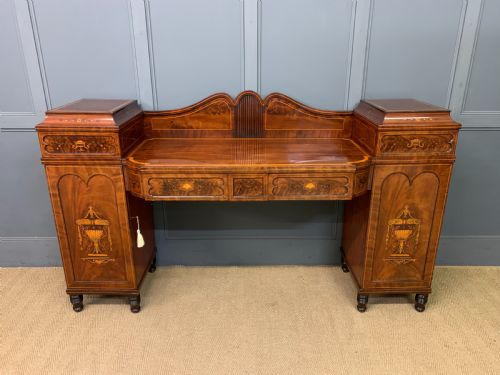


Antique Inlaid Serving Table
An antique inlaid serving table brings formal dining presence and rich cabinet timbers to a room, ranging from grand Georgian proportions down to Edwardian refinements.
Antique Inlaid Serving Table
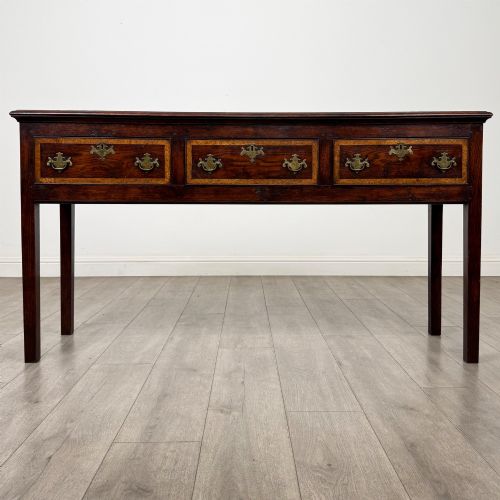
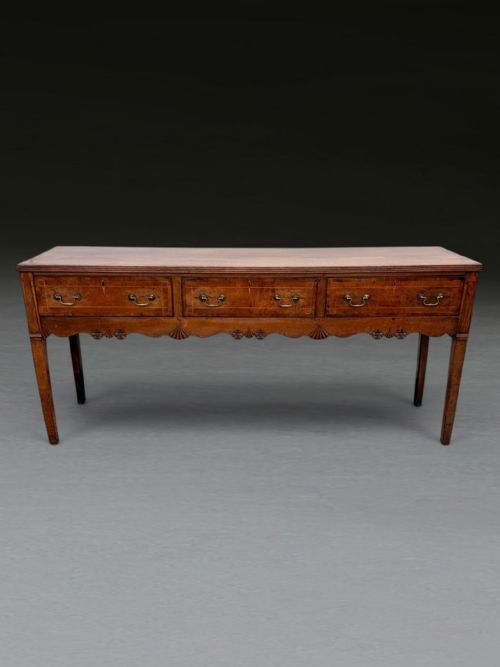
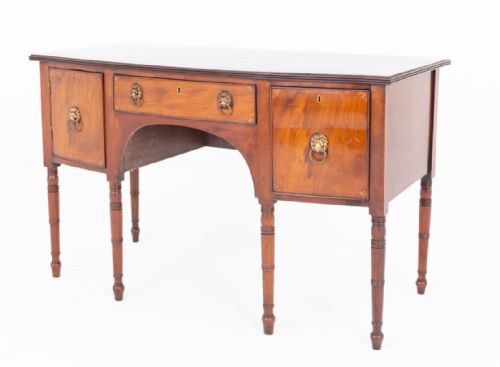
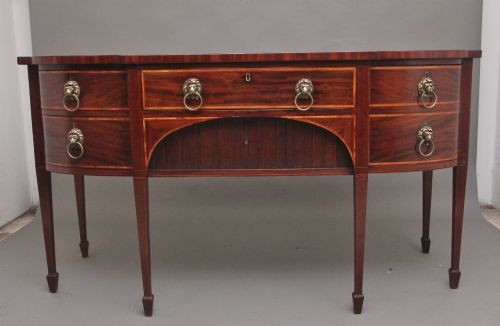
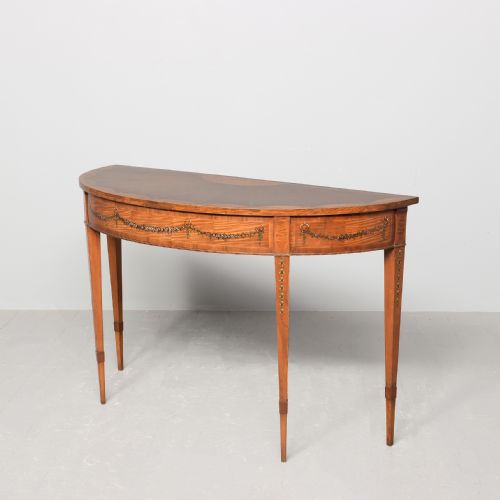
When you search for an antique inlaid serving table, you encounter formal dining furniture designed for serving food and displaying silver during the eighteenth and nineteenth centuries. The pieces on this page span Georgian, Regency, and Edwardian periods, appearing as serving tables, sideboards, and servers.
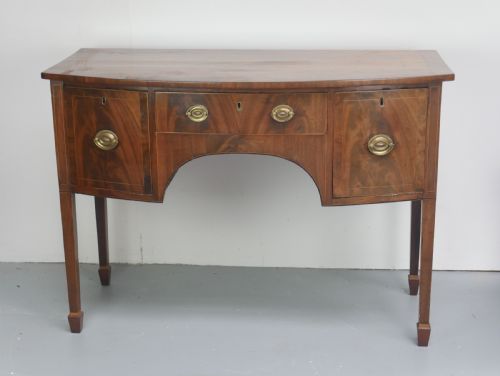
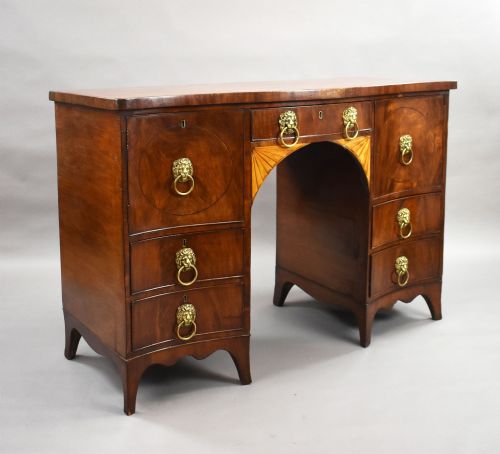
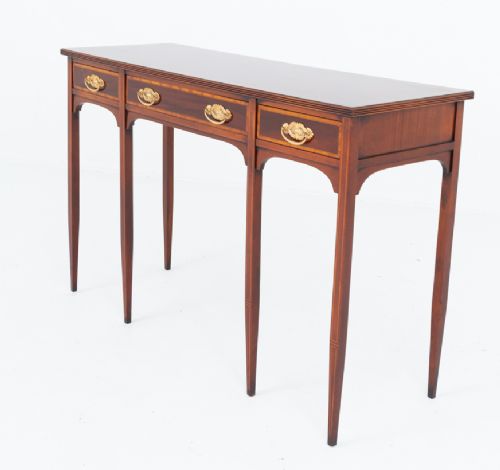
You are most likely to meet mahogany examples featuring contrasting boxwood or satinwood inlay, built with bow fronts, serpentine shapes, or straight lines. Alongside traditional serving tables, the selection includes related forms such as sideboards, console tables, and dresser bases in oak and mahogany.
The origins stretch from provincial English country workshops to refined urban cabinet makers working in Sheraton Revival and George III Neoclassical styles. These variations show how the form adapted from a pure serving surface into sophisticated cabinetry with drawers and pedestals.
Factors determining quality
The distinction between standard domestic pieces and the finest examples lies in the crispness of the cabinet work and the ambition of the design. Serpentine fronts and complex bow-front profiles require superior timber selection and advanced carpentry to maintain structural integrity over centuries.
Quality also shows in the precision and restraint of the inlay work, where fine boxwood and satinwood lines follow curves without chipping or lifting. The choice of well-figured mahogany grain and original brass fittings elevates a utilitarian serving table to a high-status decorative object.
Several pieces combine mahogany, oak, and brass with drop sides, serving equally for tea, cake, or formal dining.
The Antique Inlaid Serving Table Glossary
- Serving table
- A large freestanding table designed for a dining room to hold dishes before service. These pieces predate the fully developed sideboard with built-in drawers and cupboards.
- Serpentine
- A front profile shaped with a convex centre flanked by concave curves. This line demands great skill from the cabinet maker.
- Bow front
- A convex curved front that projects outward from the corners. This shape softens the rectangular outline of dining furniture.
- Stringing
- Thin lines of contrasting timber inlaid into channels cut into the primary wood surface. It creates delicate geometric borders on tabletops and drawer fronts.
- Satinwood
- A lustrous yellow-gold timber native to the tropics, used extensively for contrasting inlay and veneering during the Georgian and Edwardian periods.
- Etagere
- A set of open shelves supported by columns used for displaying small objects. These tiered tables appear alongside standard servers in later periods.
Antique Inlaid Serving Table: Frequently Asked Questions
How were serving tables used?
Serving tables stood against dining room walls to hold heavy platters, tureens, and silver before servants placed them on the main dining table. They functioned purely as surface furniture during large meals.
Over time, designers added drawers and lower shelves to store linen and cutlery, transforming the open table into a more enclosed server or sideboard.
What is the difference between a sideboard and a serving table?
A traditional serving table is an open frame with legs and a top, designed purely for holding dishes during a meal. It lacks the built-in cupboards and numerous drawers found on a standard sideboard.
Sideboards evolved later to provide enclosed storage for dining accessories, though the terms often overlap in antique descriptions.
How do I date an antique serving table?
Dating relies on timber choice, construction techniques, and decorative styles. Georgian pieces often display solid mahogany and hand-cut dovetails, while Edwardian revivals show machine accuracy and lighter satinwood integration.
Hardware fixings, secondary woods inside drawers, and the complexity of the inlay also provide clear chronological markers.
Where should I place a serving table at home?
These tables fit naturally in a dining room or large hallway where their elongated proportions can anchor a wall space. They serve well for displaying lamps, ceramics, or serving drinks.
Because they are shallow compared to dining tables, they occupy minimal floor space while adding significant architectural presence.