
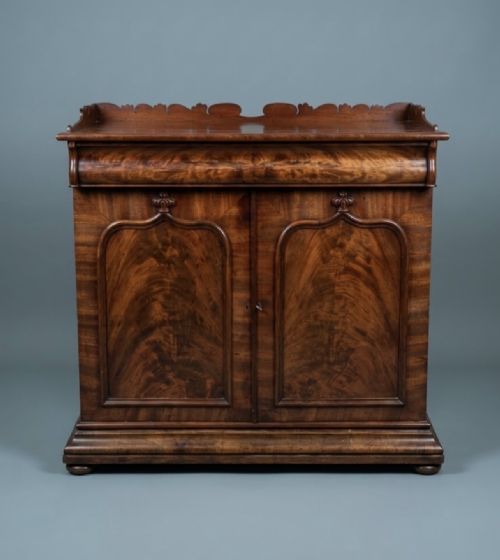
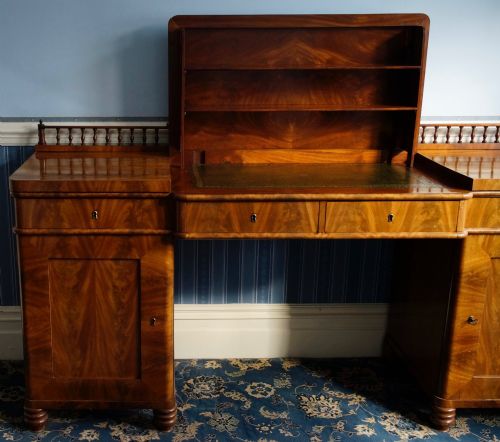
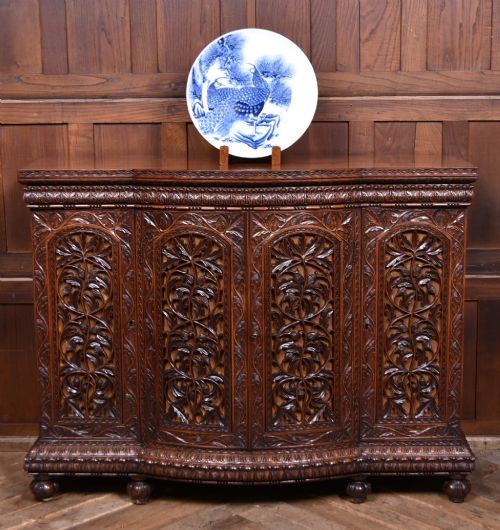
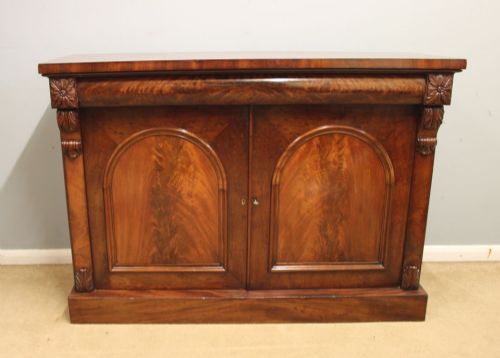
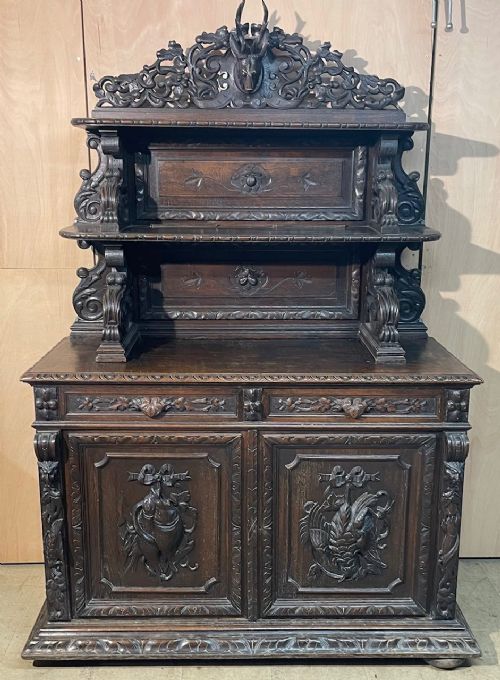

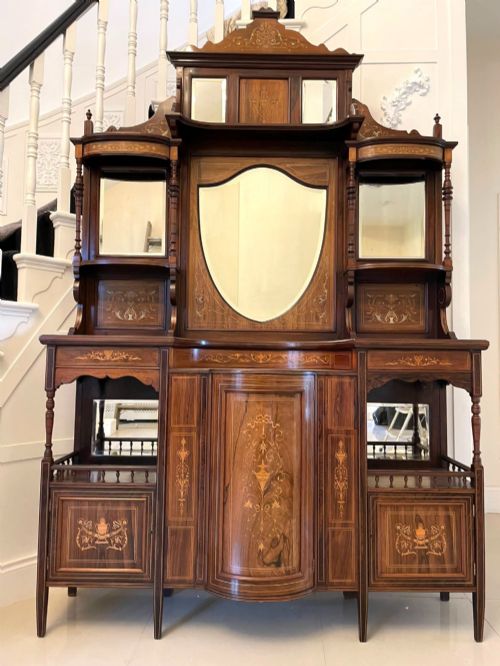
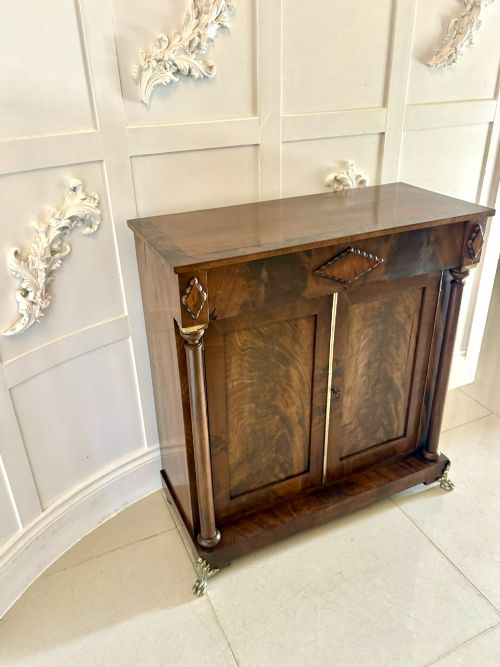
Dark Wood Sideboard Cabinet
These dark wood sideboard cabinet pieces bring rich timber tones and practical storage into dining spaces and hallways.
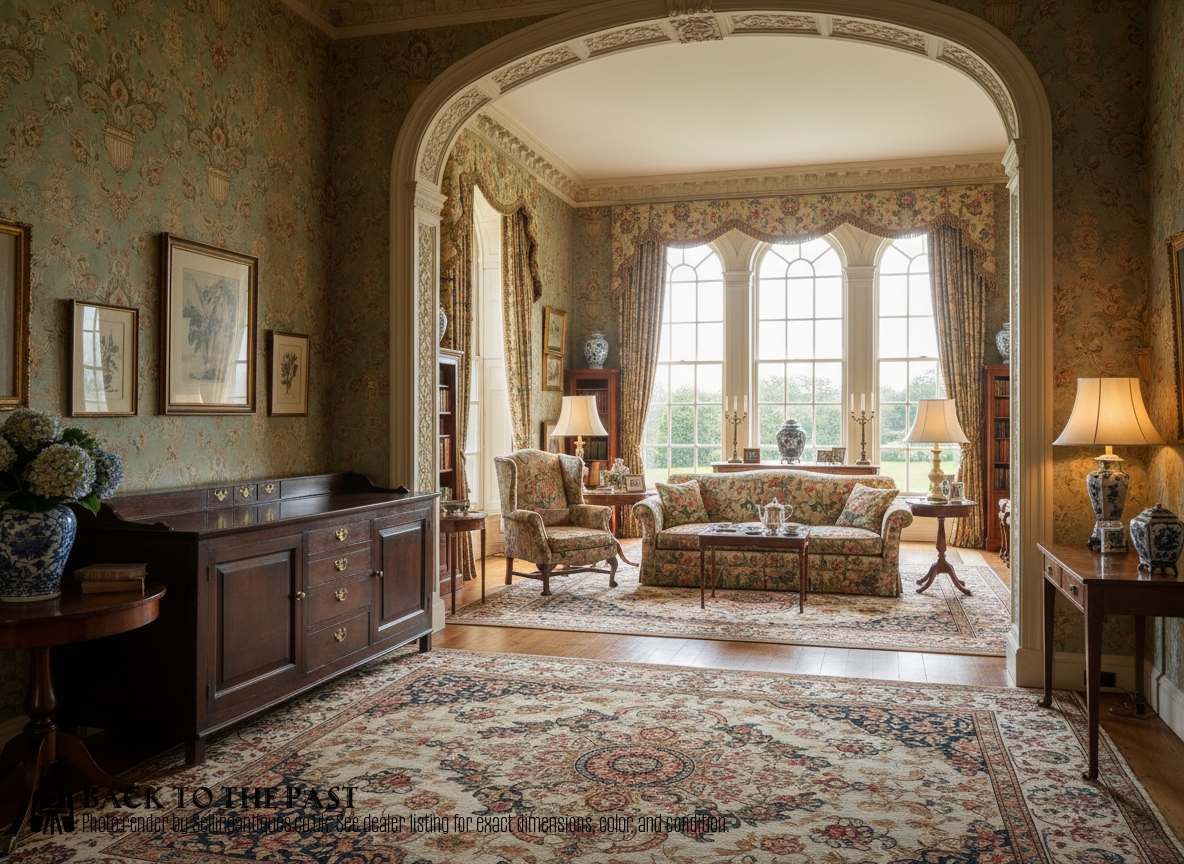
Dark Wood Sideboard Cabinet
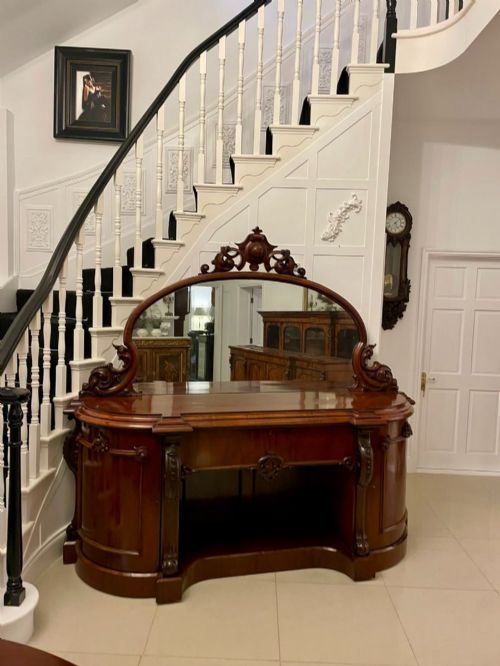
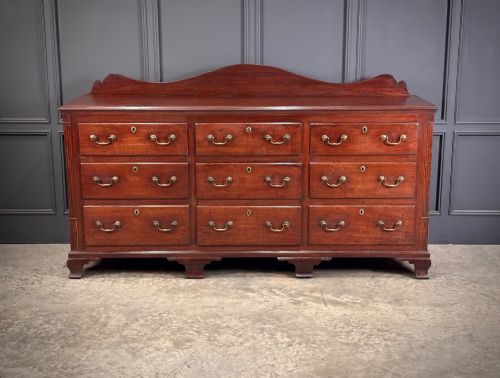
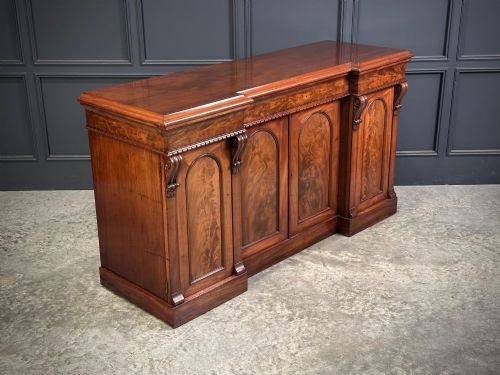
A dark wood sideboard cabinet bridges the gap between serving furniture and display storage, appearing in forms such as chiffoniers, dressers, and buffets. You will frequently encounter Victorian and Edwardian examples alongside pieces from the Regency and Georgian eras, reflecting the enduring utility of deep-toned timber in domestic interiors.
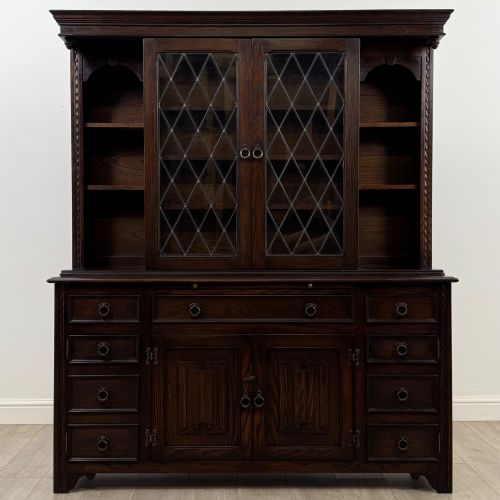
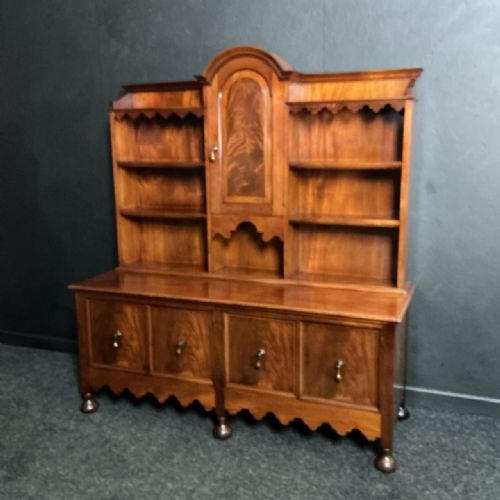
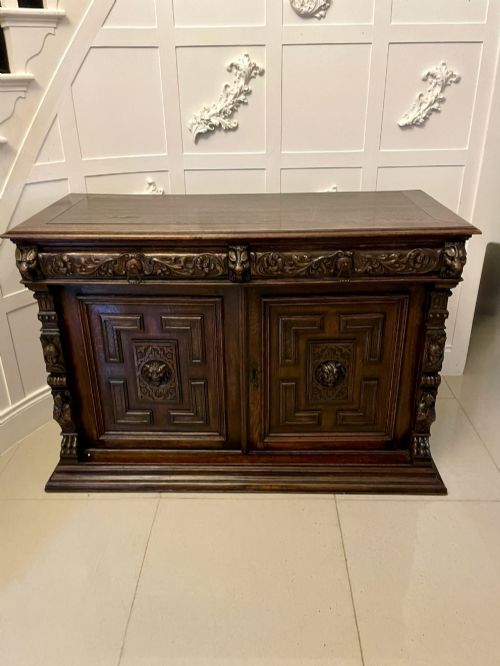
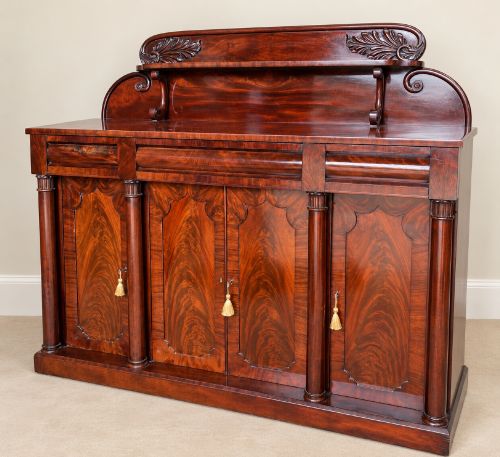
The construction ranges from compact two-door cupboards to large multi-door server units fitted with mirror backs, glazed sections, or open shelving. Mahogany and oak dominate the selection, often enriched with flame veneer or intricate carving suited to formal dining rooms.
Materials and technique
Cabinetmakers utilised dense hardwoods like mahogany, rosewood, and oak, often applying figured flame mahogany veneers to drawer fronts and door panels to create striking visual movement. Structural carcasses relied on solid timber framing, whilst secondary woods lined the interior drawers and backing boards.
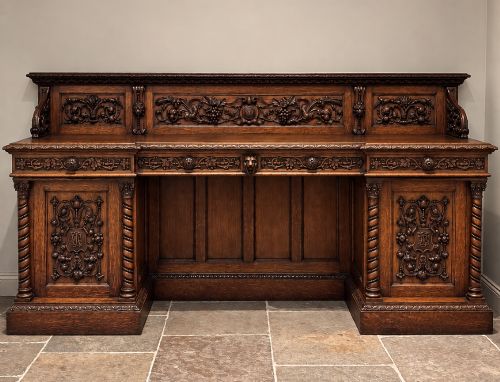
Decorative details involved hand carving, inlay work using contrasting woods, and turning techniques such as barley twist columns. Brass fittings, glass panels, and iron hardware secured the functional doors and drawers whilst adding subtle metallic contrast to the dark polished surfaces.
Dark Wood Sideboard Cabinet Retail Price Guide 2026
Typical asking prices for dark wood sideboard cabinet among the pieces listed under this phrase on Sellingantiques today, from the lower quarter to the upper quarter. They describe what is for sale here now, not the wider market.
The listings feature pieces spanning the 19th and early 20th centuries, predominantly constructed from mahogany and oak with occasional rosewood and brass accents.
Judgments of quality
The distinction between standard and superior pieces rests on the choice of timber and the precision of the cabinetmaker's joinery. Superior examples display carefully matched veneer grains across the entire front elevation and utilise solid timber drawer linings assembled with traditional dovetail joints.
Carving depth and sharpness separate routine production from exceptional craftsmanship, particularly on oak and rosewood surfaces where hand-chiselled detail defines the style. Furthermore, original hardware and integrated architectural elements like lion paw feet or brass gallery rails elevate the overall integrity of the piece.
Collinson and Lock
The Dark Wood Sideboard Cabinet Glossary
- Chiffonier
- A low sideboard or cabinet featuring enclosed shelving below, frequently topped with a small mirror or tier. This form gained popularity during the Regency and Victorian periods for drawing room storage.
- Flame mahogany
- A veneer cut from the fork of the mahogany tree where the branch meets the trunk. This method yields a dramatic, flickering grain pattern prized on formal cabinet doors.
- Gothic Revival
- An architectural and decorative style drawing inspiration from medieval design. Pieces often incorporate pointed arches, heavy linenfold or panelled doors, and vigorous carved detail.
- Serpentine
- A front profile characterised by a convex centre flanked by concave curves. This contour requires immense skill from the woodworker to shape accurately.
- Barley twist
- A decorative turning technique resembling a spiralling rope or barley sugar stick. It appears frequently on the upright supports and legs of Edwardian oak furniture.
Dark Wood Sideboard Cabinet: Frequently Asked Questions
How do I clean a dark wood surface?
Dust regularly with a soft, dry cloth to prevent particulate build-up on the polished finish. Avoid silicone-based sprays, opting instead for a traditional beeswax application periodically to nourish the timber.
Keep these cabinets away from direct sunlight and heat sources to prevent the wood from drying out or the veneer from lifting over time.
Where should I place a sideboard cabinet?
These pieces suit dining rooms, hallways, and living spaces where surface area and enclosed storage are both required. Ensure the floor is level so that the heavy doors and drawers align correctly within their frames.
Allow sufficient clearance around the doors and drawers to open them fully without striking adjacent walls or furniture.
What is the difference between a chiffonier and a sideboard?
A chiffonier is typically smaller and lower than a traditional sideboard, often including a raised shelf or mirror superstructure. They were designed principally for smaller parlours and sitting rooms during the nineteenth century.
Sideboards generally offer greater length and capacity, intended to serve dining rooms by holding heavy tableware, linen, and serving dishes.