

Antique Oak Buffet Server
These antique oak buffet server pieces bring enduring timber character and storage to a room.
What these pieces are
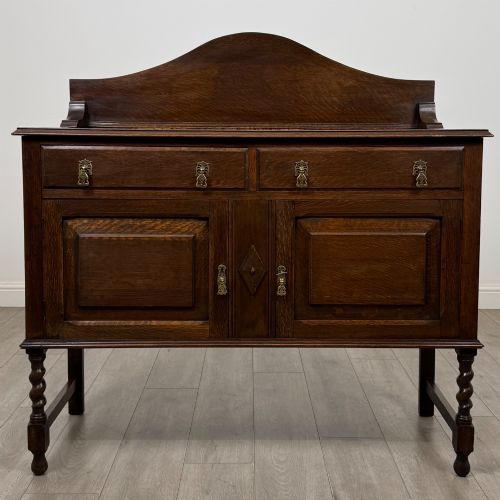
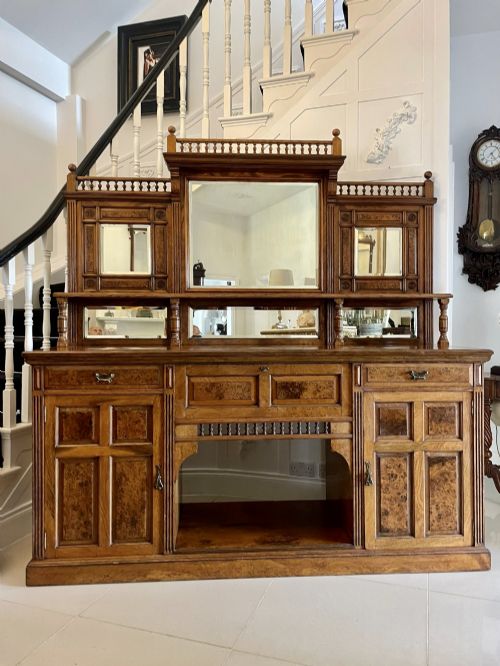
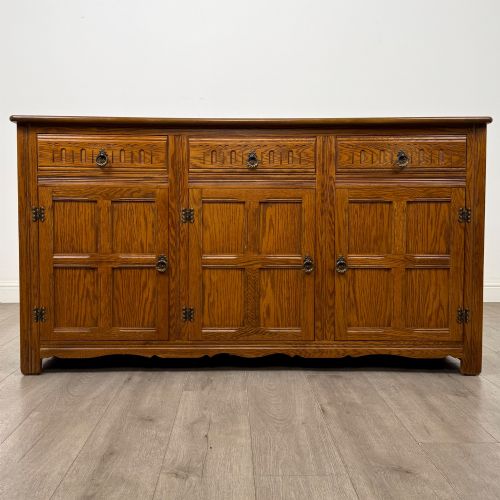
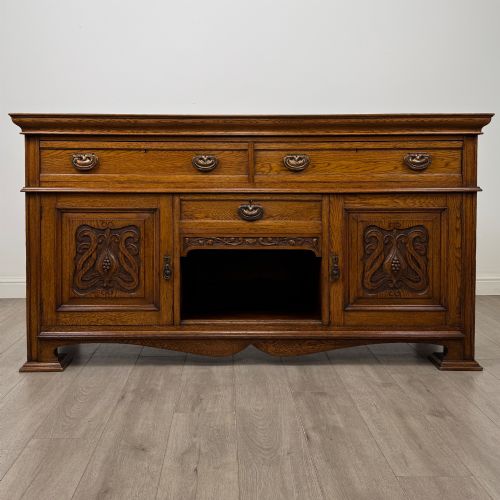
An antique oak buffet server encompasses sturdy sideboards, cabinets on stands, and dresser bases found across the seventeenth century, the eighteenth century, and the Victorian era. These pieces function primarily as serving surfaces and storage units within dining spaces or halls, executed in substantial timber.
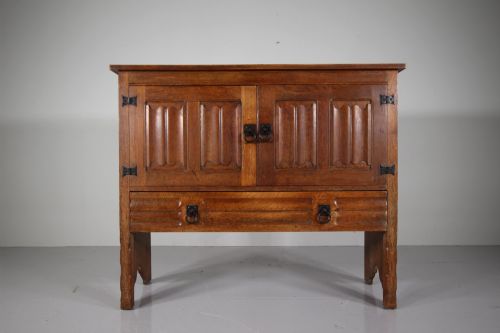
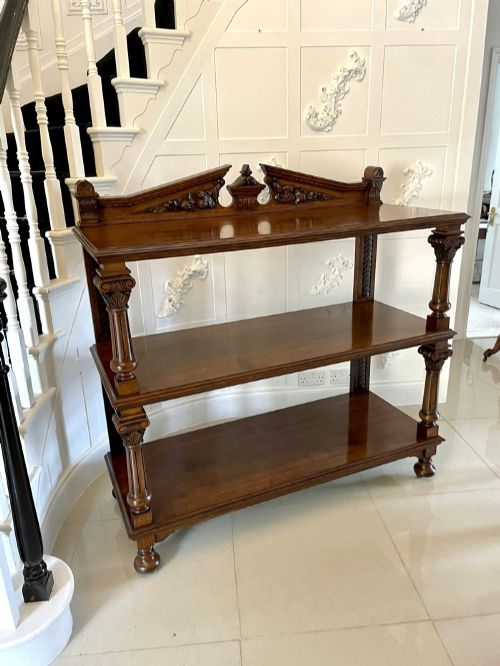
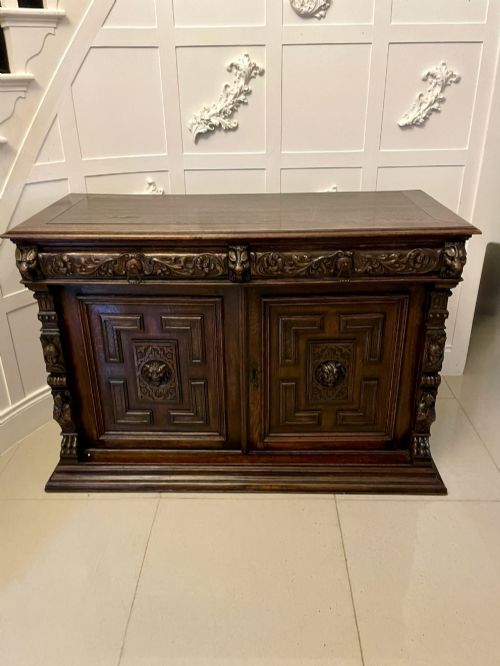
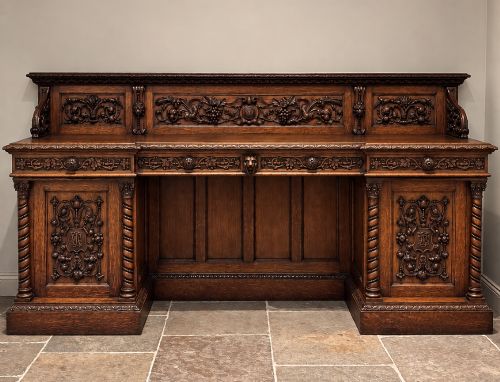
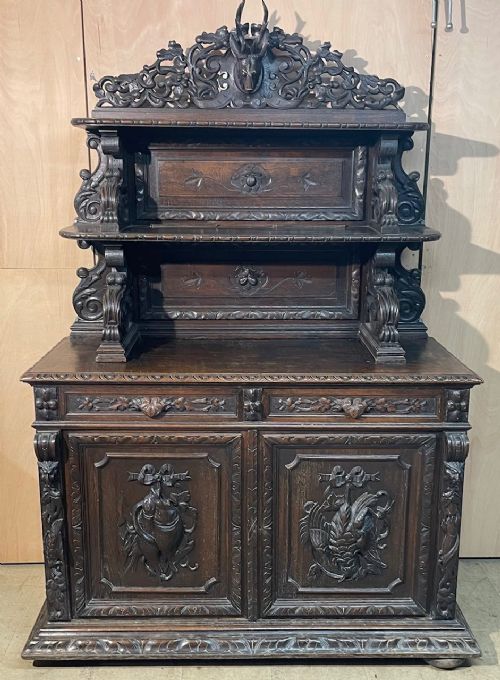
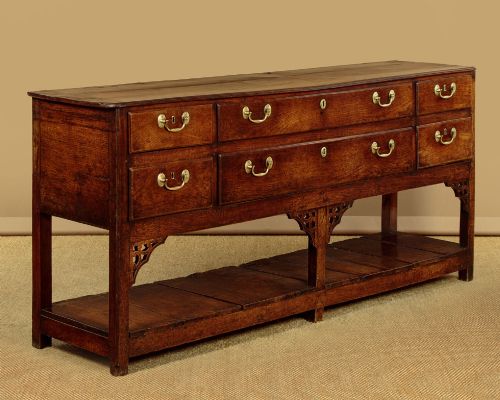
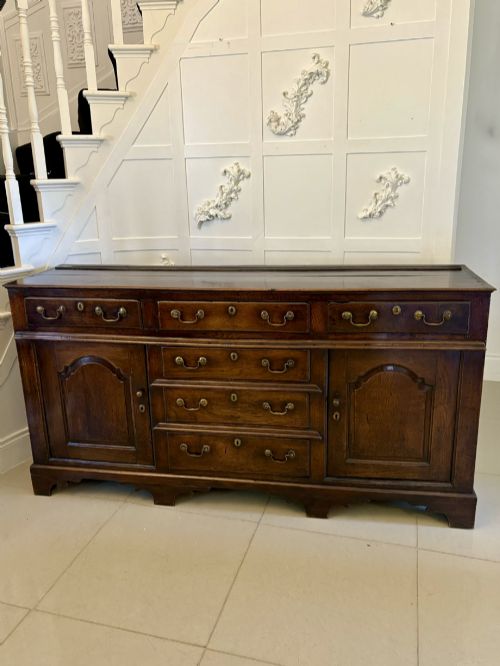
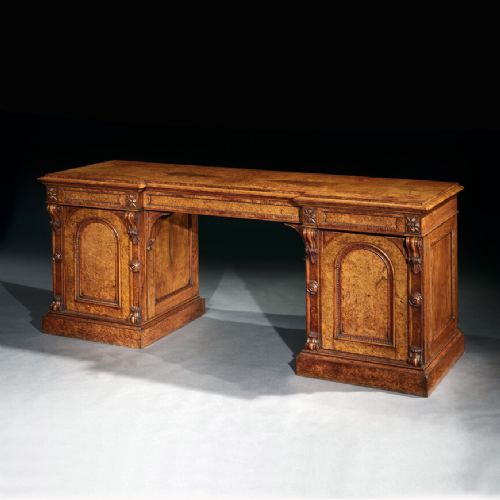
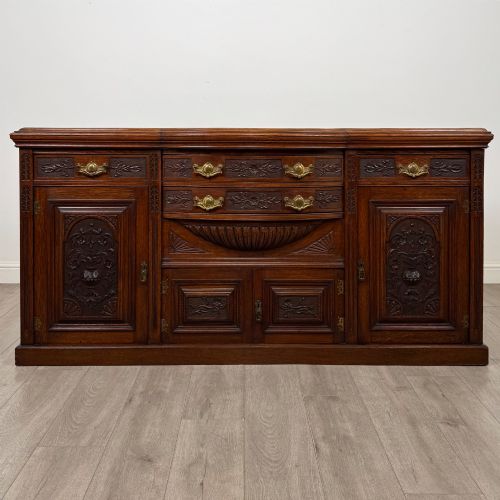
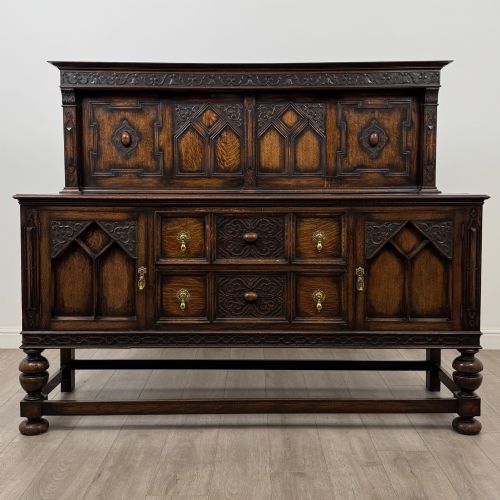
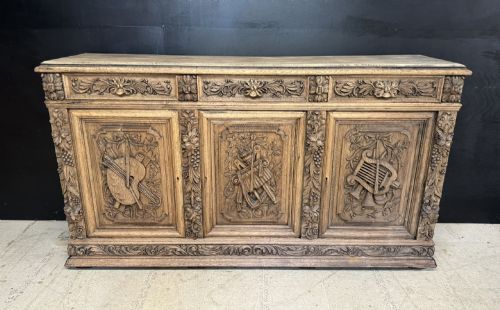
The varieties encountered on this page range from plain seventeenth century and Georgian country pieces to highly decorative Victorian Gothic revival and Flemish renaissance revival forms. Buyers frequently meet items displaying carved ornamentation, panelled doors, and tiered structures that reflect specific regional tastes and historical revival periods.
How they were made
Makers constructed these servers predominantly from solid oak, utilising its natural strength for heavy framing, board construction, and structural support. Metal elements such as brass and iron appear in functional hinges, drop handles, and escutcheons.
Joinery techniques involve traditional framing methods, pegged joints in earlier examples, and panelled construction. Carving, applied mouldings, and turned supports shape the decorative surface of Victorian and revival pieces.
Retail Price Guide 2026
Typical UK retail prices for oak buffet server, calculated from the Sellingantiques database of over a million retail prices indexed since 2003. This retail price guide relies exclusively on Sellingantiques data; no external sources or auction records are used, so the figures do not describe the wider market.
Some Victorian servers proudly introduce fierce carved lion masks to guard the dining room biscuits.
What varies in quality
The standard of carving and sculptural detail distinguishes finer examples from simpler vernacular pieces, with crisp lion masks, deep relief work, and balanced proportions elevating the design. The choice of timber figure, such as quarter-sawn oak showing rich medullary rays, also marks out superior material selection.
Structural integrity and the retention of original brass or iron hardware influence the standing of an item. Pieces demonstrating precise joinery, well-fitted drawers, and minimal later alterations hold greater architectural clarity.
The Antique Oak Buffet Server Glossary
- Dresser base
- A low cabinet or sideboard derived from kitchen furniture, featuring surface boards above drawers or cupboards. This form provides substantial baseline storage.
- Cabinet on stand
- An elevated storage compartment resting upon an independent supporting frame or legs. This configuration lifts the main body off the floor.
- Flemish Renaissance Revival
- A nineteenth-century decorative style drawing on sixteenth-century Flemish design motifs. It typically incorporates bold carving and architectural elements.
- Rise and fall
- A mechanical mechanism allowing sections of a sideboard or server to adjust in height. This feature provides adaptable tiers for display and service.
Frequently Asked Questions
What is an oak buffet server used for?
These items serve as dining room furniture designed for holding food, serving dishes, and tableware during meals. The surface acts as a staging area while lower cupboards and drawers store linens and dining accessories.
Beyond dining spaces, they function effectively in hallways or living rooms as display surfaces and storage cabinets. Their robust construction handles everyday placement of heavy items.
How do I date an antique oak server?
Dating relies on observing construction methods, hardware types, and stylistic details such as seventeenth-century panelling or Victorian Gothic carving. Tool marks and timber preparation methods offer clues to the period of manufacture.
Comparisons with documented examples from eras like the Georgian period or Arts and Crafts movement help establish a reliable timeframe. Secondary woods and fastener types further clarify the age of the piece.
Are these servers made of solid oak?
The primary visible surfaces and structural members consist of solid oak, selected for durability and grain pattern. Secondary timbers may appear in internal drawer linings and backboards.
Regional vernacular pieces and revival items both rely heavily on oak as the principal medium. This consistent material choice contributes to their survival over centuries.
How do I care for antique oak furniture?
Maintenance involves keeping the timber away from direct heat sources and extreme humidity fluctuations to prevent splitting. Regular dusting with a soft cloth preserves the finish without building up residues.
Applying occasional appropriate wax feeds the dry oak surface and maintains its natural sheen. Avoiding harsh chemical cleaners protects the historic patina built up over generations.