
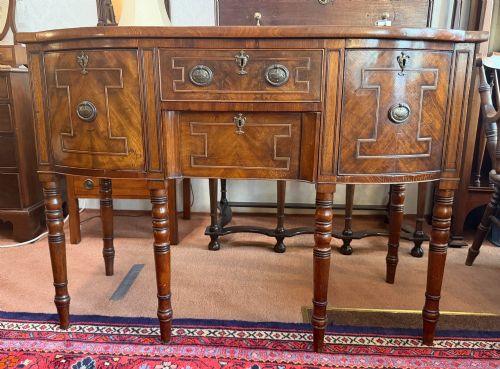
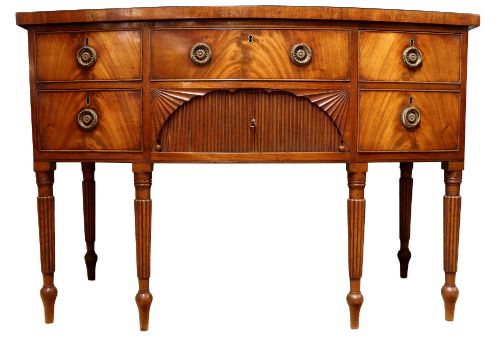
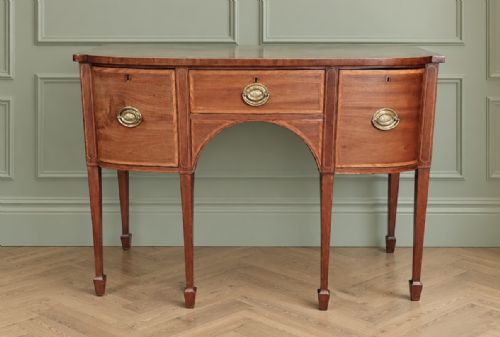
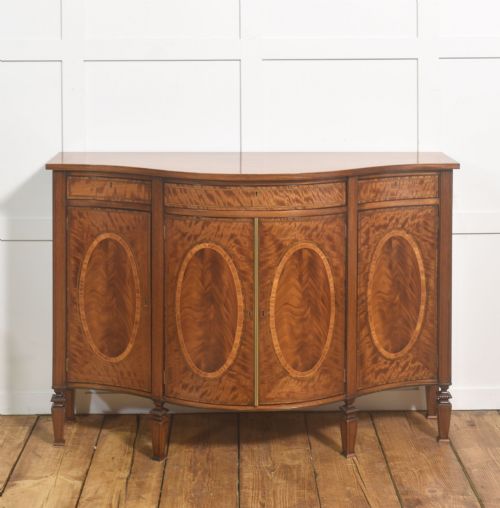
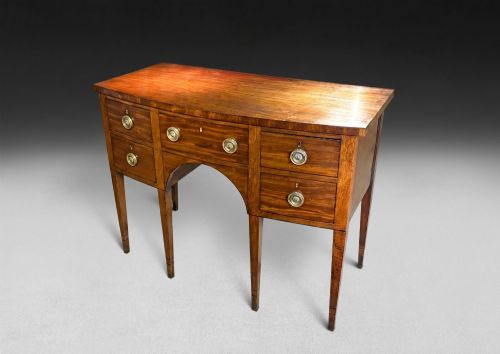
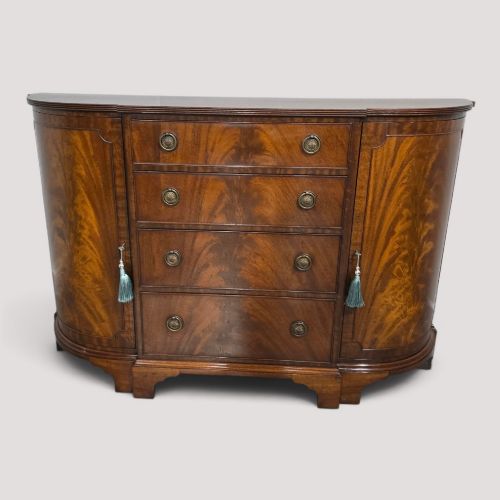
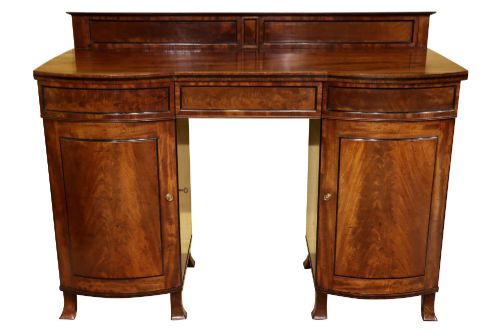
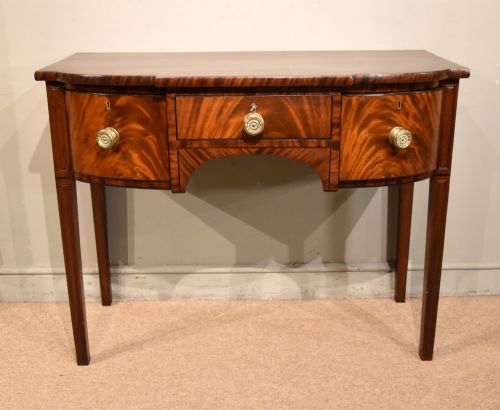
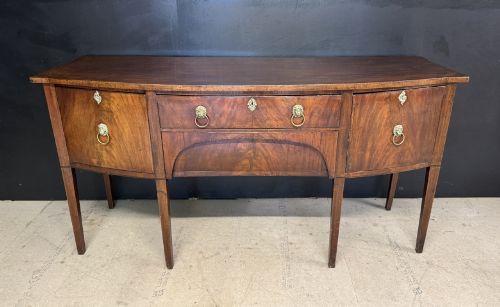
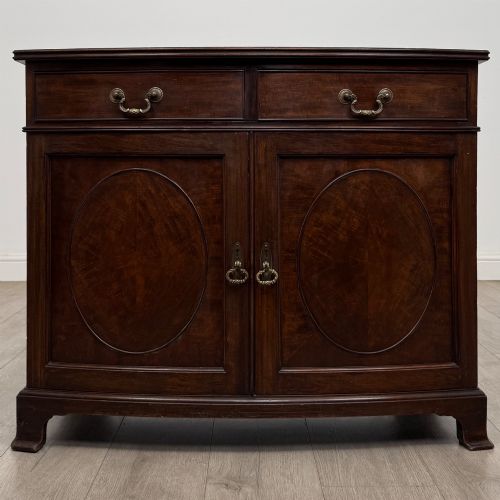
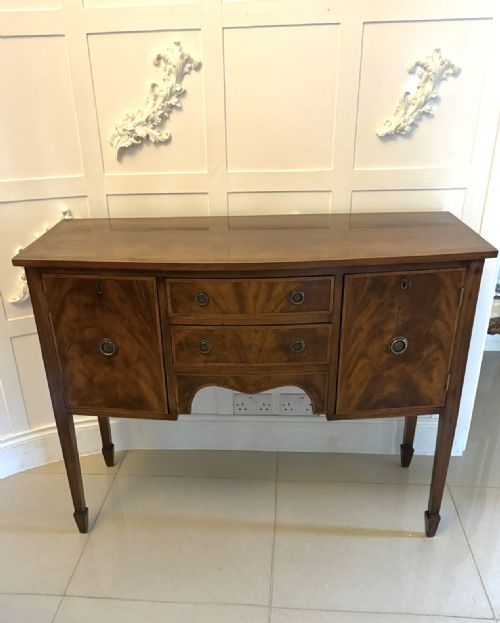
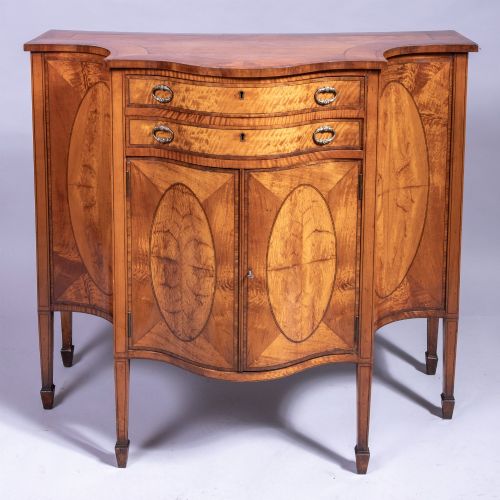
Bowfront Dining Sideboard
A bowfront dining sideboard offers curving frontage and generous storage, designed to anchor a traditional dining room with practical elegance.
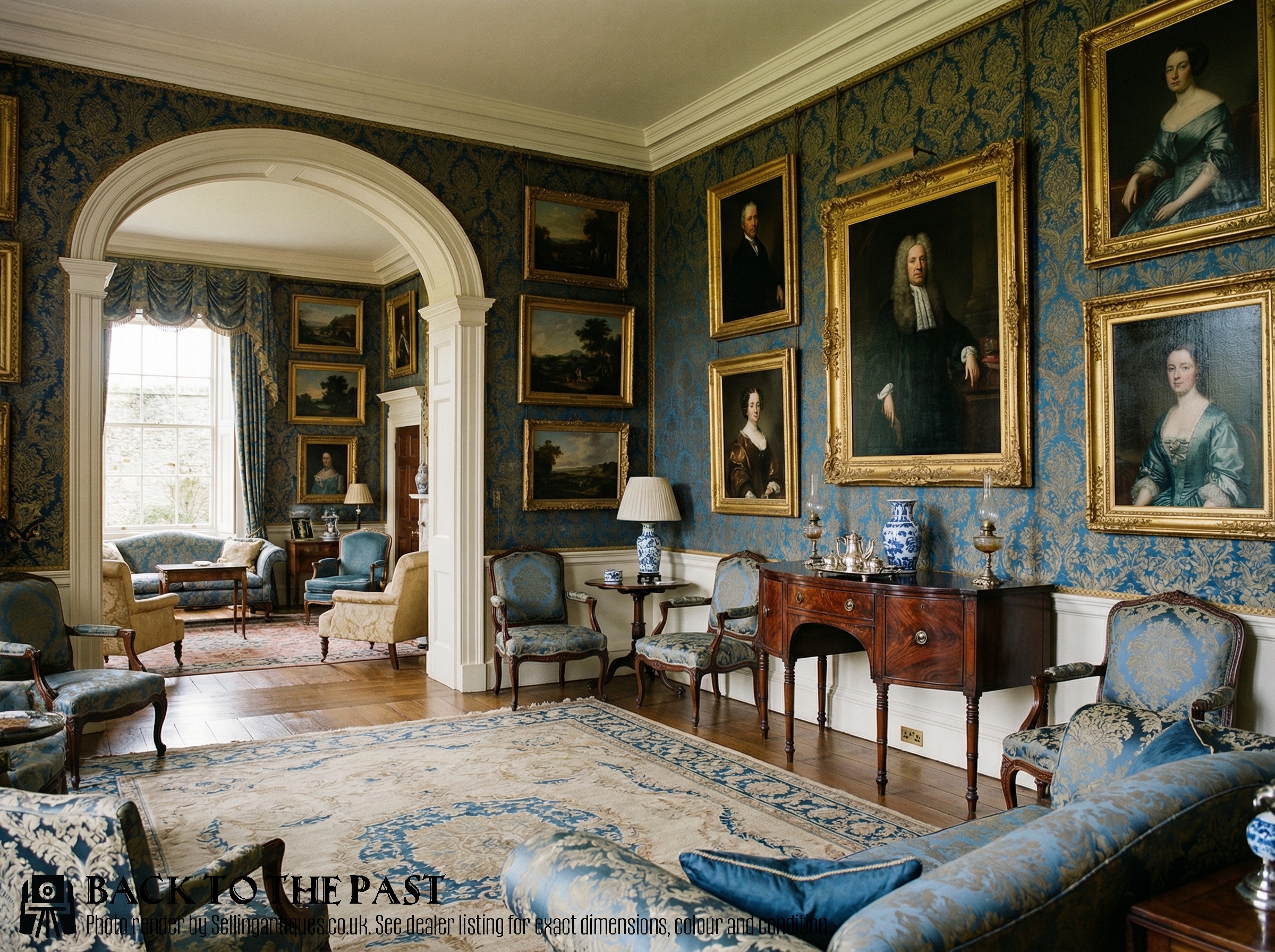
Materials and construction methods
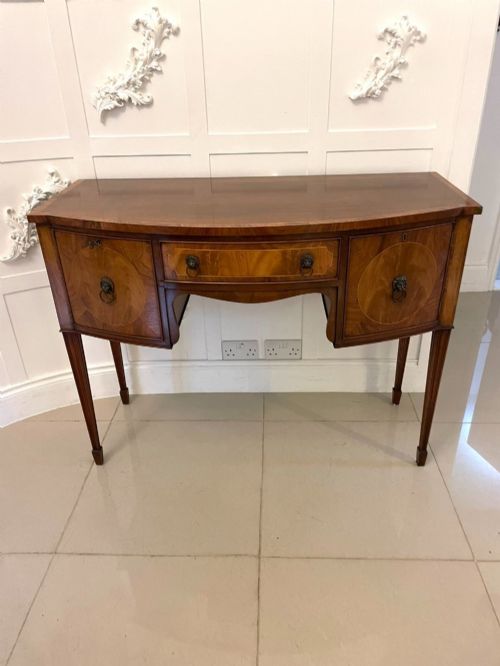
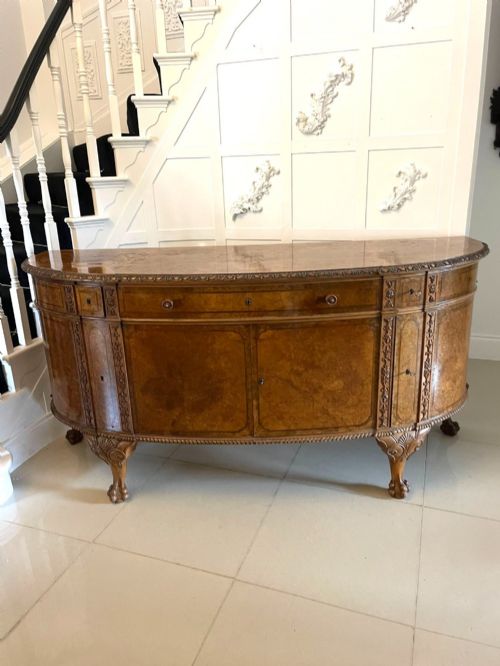
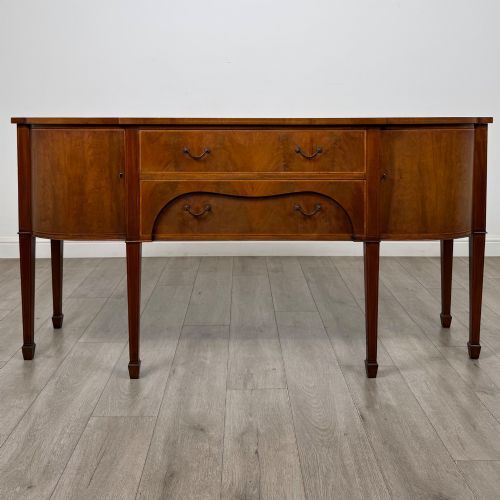
Cabinet makers relied heavily on solid mahogany and flame mahogany veneer to build the carcase, sometimes selecting burr walnut for later Edwardian iterations. These primary woods provided structural stability and a rich canvas for the distinctive curved fronts.
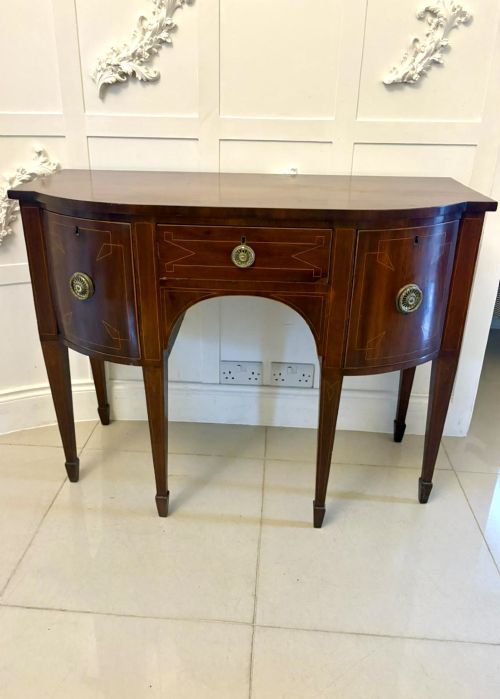
Decoration relied on contrasting timbers and metals, incorporating boxwood inlay, satinwood crossbanding, and delicate marquetry alongside cast brass handles and fittings. These inlays traced the sweeping curves of the bowfront, highlighting the craftsmanship of the period.
Distinctions in craftsmanship
Quality rests in the selection of timber veneers and the precision of the curved drawer fronts, where top-tier pieces utilise matched flame mahogany or intricate marquetry. Lesser examples display plain timber with minimal decorative banding.
The integration of original brass hardware and the tightness of drawer joints separate superior pieces from simpler workshop productions. Finer sideboards exhibit careful attention to internal secondary woods and symmetrical grain alignment across the bow.
Some nineteenth-century sideboards feature secret cellarette drawers designed to keep wine bottles cool and safely hidden from thirsty footmen.
The Bowfront Dining Sideboard Glossary
- Bowfront
- A convex, outwardly curved front profile characteristic of these dining sideboards. This curve softens the rectangular geometry typical of earlier dining furniture.
- Crossbanding
- A narrow strip of veneer applied perpendicularly to the surrounding grain along the edges of a top or drawer front. This technique frames the primary timber with a contrasting border.
- Marquetry
- Decorative patterns formed by fitting together small pieces of coloured wood veneers and other materials into a design. It appears frequently on Sheraton Revival pieces.
- Flame mahogany
- Timber cut from the branch junction of a mahogany tree to produce a dramatic, flickering grain pattern. Cabinet makers reserved this highly figured wood for prominent drawer and door faces.
- Pedestal sideboard
- A form featuring distinct outer pedestals or cupboards flanking a central section rather than a continuous long carcase. These versions often date from the Regency era.
Bowfront Dining Sideboard: Frequently Asked Questions
What is a bowfront dining sideboard?
A bowfront dining sideboard is a long, low storage cabinet featuring an outwardly curved front designed for dining rooms. It provides functional surface space and deep compartments for hosting tableware.
These pieces span multiple eras from the eighteenth century through the Edwardian period, uniting practical storage with decorative cabinet work.
How do I date a mahogany sideboard?
Dating relies on examining the timber selection, secondary woods, hardware styles, and overall construction methods. Georgian and Regency pieces show hand-cut joinery and period brasses.
Later Edwardian and revival pieces often incorporate machine-cut elements, lighter satinwood inlays, and specific decorative idioms associated with the turn of the twentieth century.
Where should I place a sideboard?
Sideboards traditionally stand against the main wall of a dining room, serving as a station for food presentation and storage. Their shallow depth allows them to fit comfortably without obstructing foot traffic.
In modern homes, they function equally well in large hallways or living spaces to store linens and display decorative objects.
What is the difference between Georgian and Regency styles?
Georgian furniture, including George III designs, frequently emphasises classical symmetry, fine mahogany, and understated boxwood stringing. Proportions remain balanced and restrained.
Regency pieces often introduce bolder architectural forms, pedestal bases, brass lion paw feet, and more striking contrasting veneers influenced by classical antiquity.