


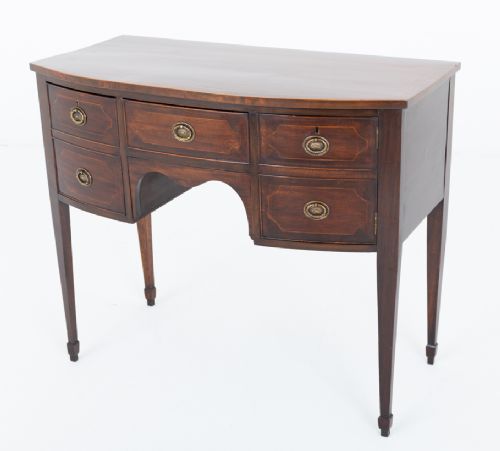
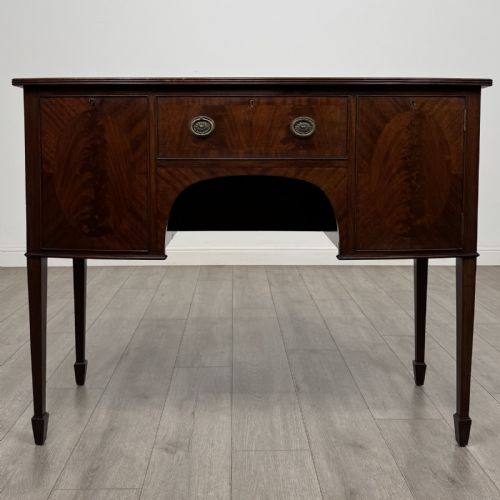
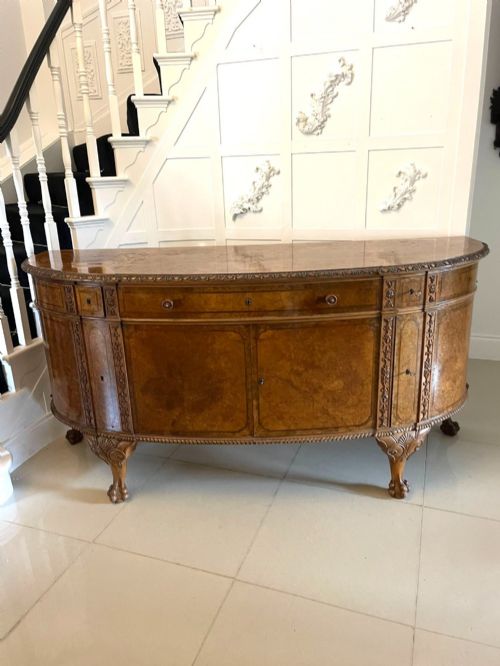
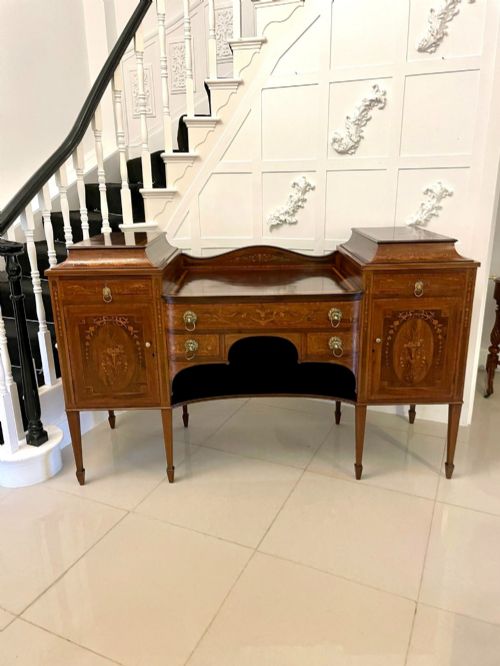
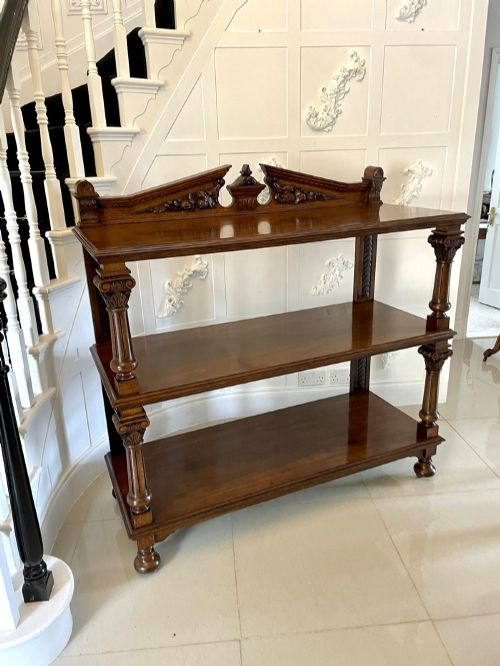
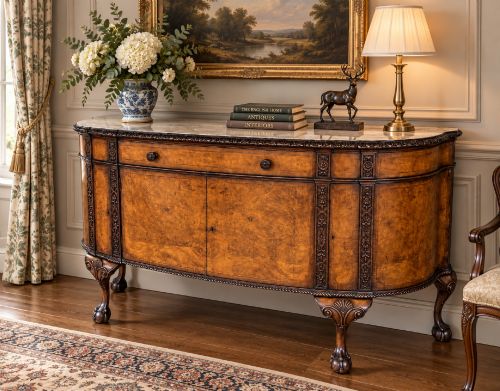
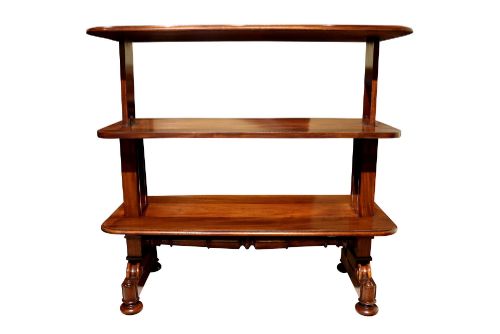
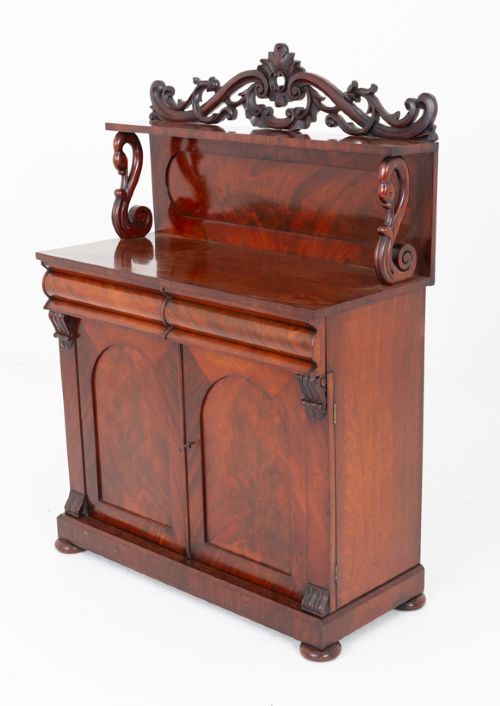
Edwardian Dining Room Server
An edwardian dining room server provides generous storage and a dedicated surface for food and drink during formal meals.
Edwardian Dining Room Server
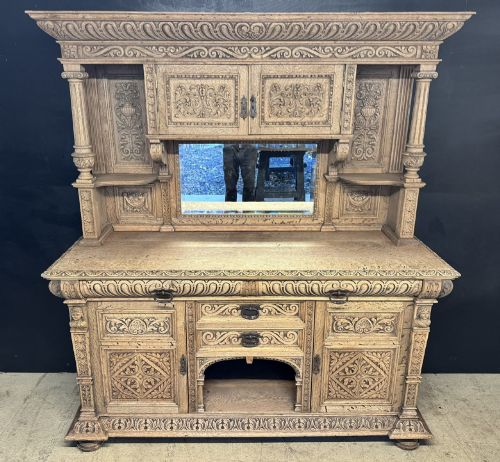
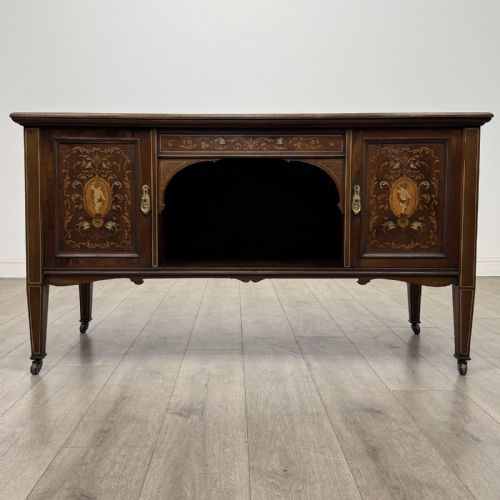
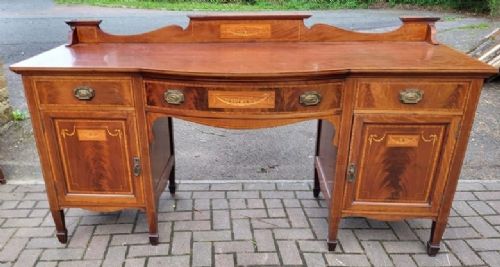
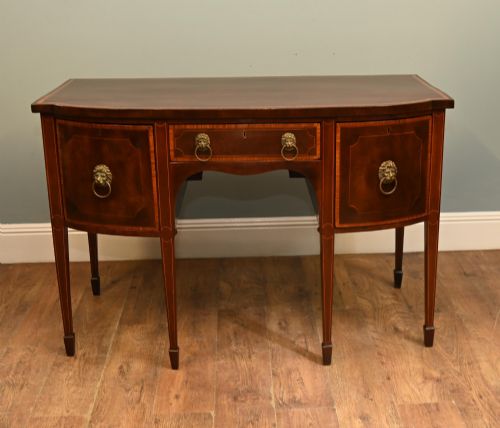
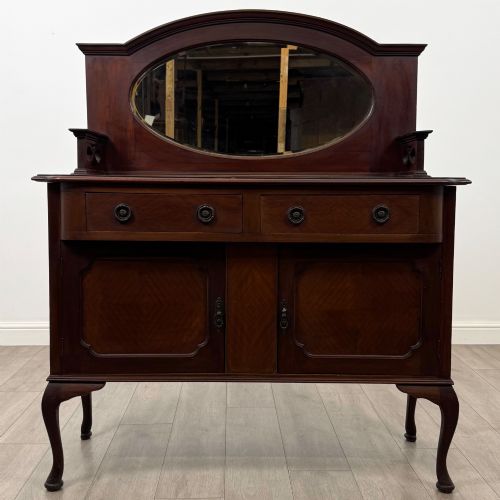
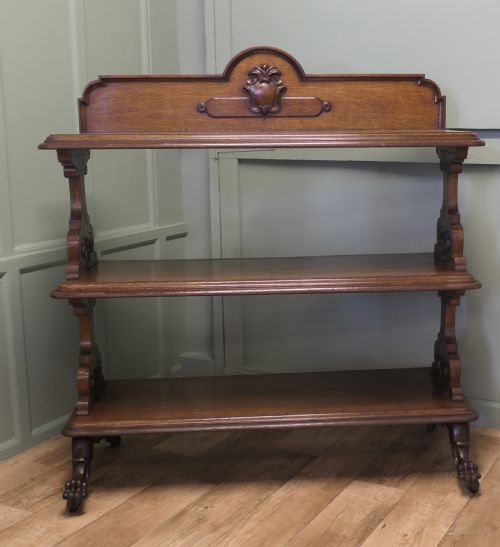
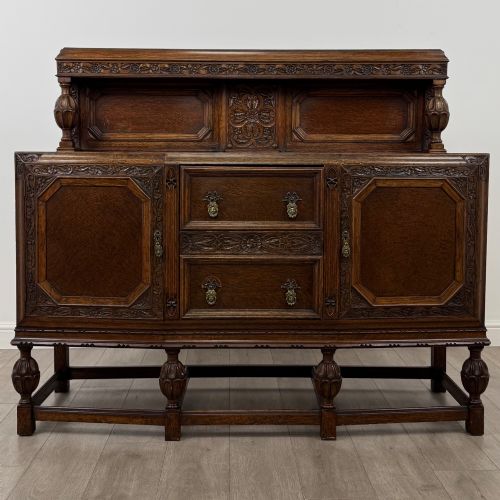
An edwardian dining room server encompasses a variety of large dining furniture forms, including sideboards, buffets, serving tables, and dumbwaiters designed to hold tableware and food. The pieces on this page span the Edwardian era, Victorian period, and several revival styles that borrow elements from earlier centuries.
Mahogany and oak dominate the selection, often finished with flame mahogany veneer, satinwood inlay, or burr walnut to create decorative surfaces. Buyers will frequently encounter bow front designs, mirror backs, and cupboard bases that reflect the period's preference for functional elegance in the dining room.
While many examples align strictly with the Edwardian period, others draw on Georgian, Sheraton Revival, and Arts and Crafts traditions. This variety allows collectors to find items ranging from straightforward oak storage units to intricately inlaid mahogany cabinets.
Materials and Construction Techniques
Cabinet makers utilised solid timbers such as mahogany and oak for the primary framework, ensuring structural stability for heavy dining items. Flame mahogany veneer and burr walnut were applied to drawer fronts and doors to showcase rich grain patterns.
Decorative details often included contrasting satinwood inlay, marquetry, and carved elements like barley twist legs, claw and ball feet, or brass face handles. Mirror backs and glass panels were integrated into select pieces to add depth and reflect light in formal dining spaces.
Edwardian Dining Room Server Retail Price Guide 2026
Typical asking prices for edwardian dining room server among the pieces listed under this phrase on Sellingantiques today, from the lower quarter to the upper quarter. They describe what is for sale here now, not the wider market.
One exceptional walnut server comes complete with a fitted twelve-piece cutlery set, ready for an impromptu Edwardian dinner party.
Assessing Craftsmanship and Materials
Quality in these servers rests upon the selection of timber and the precision of the cabinet work. Superior examples feature well-figured flame mahogany veneer or burr walnut matched carefully across doors and drawers, rather than plain boards.
The finesse of the secondary details distinguishes finer pieces from standard production. Crisp hand-carving on legs and panels, substantial brass hardware, and intricate satinwood stringing separate workshop pieces from simpler factory outputs.
Hewetsons London·M D Miller and Sons
The Edwardian Dining Room Server Glossary
- Bow front
- A cabinet front that curves outward in a convex shape. This profile became popular in the late eighteenth century and remained a favourite for servers.
- Dumbwaiter
- A piece of tiered furniture used for holding food and dishes without the need for a servant present. These typically feature multiple revolving or stationary circular trays.
- Marquetry
- The art of applying pieces of veneer to a structure to form decorative patterns and pictures. Craftsmen used various coloured woods to create floral or geometric designs.
- Flame mahogany veneer
- A thin slice of mahogany timber cut from the point where the branch meets the trunk. This produces a distinctive, fiery flame-like pattern.
- Sheraton Revival
- A late nineteenth and early twentieth-century style inspired by the furniture designs of Thomas Sheraton. It relies on graceful proportions, satinwood inlay, and tapered legs.
Edwardian Dining Room Server: Frequently Asked Questions
What is an edwardian dining room server used for?
An edwardian dining room server functioned as a practical surface for placing dishes, serving food, and pouring drinks during large meals. It also provided enclosed storage space within cupboards and drawers for cutlery, linens, and tableware.
In period homes, these pieces relieved pressure on the main dining table and kept essential items close at hand. They allowed hosts to manage dining service efficiently without constant trips to the kitchen.
How do I style a server in a modern dining room?
These pieces work well as focal points in contemporary dining spaces, offering useful surface area and concealed storage. Pair the warm wood tones with simple ceramics or glassware to balance the historical aesthetic.
Avoid cluttering the top surface so the grain of the mahogany or walnut remains visible. The internal cupboards are well-suited for storing modern dinnerware while maintaining a traditional backdrop.
How can I tell an Edwardian piece from a Victorian one?
Edwardian servers generally feature lighter proportions, brighter wood finishes, and refined inlay work influenced by Sheraton Revival designs. Victorian pieces tend to be heavier in construction, often utilising dark mahogany and elaborate carving.
Mirror backs and robust architectural mouldings appear frequently across both periods, but Edwardian items often display a simpler, more restrained elegance compared to mid-Victorian examples.
What is the difference between a sideboard and a server?
A sideboard traditionally refers to a larger storage cabinet with multiple cupboards and drawers designed for dining rooms. A server is often slightly smaller and lighter, originally intended specifically for serving food during meals rather than heavy storage.
In practice, antique dealers and makers often used the terms interchangeably. Many pieces listed under these names share similar proportions and internal layouts.