

Georgian Style Mahogany Buffet
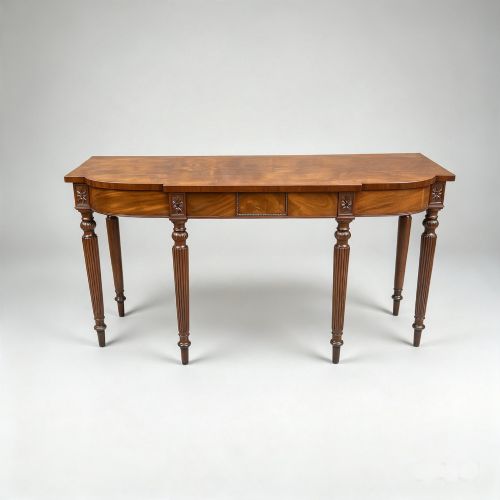
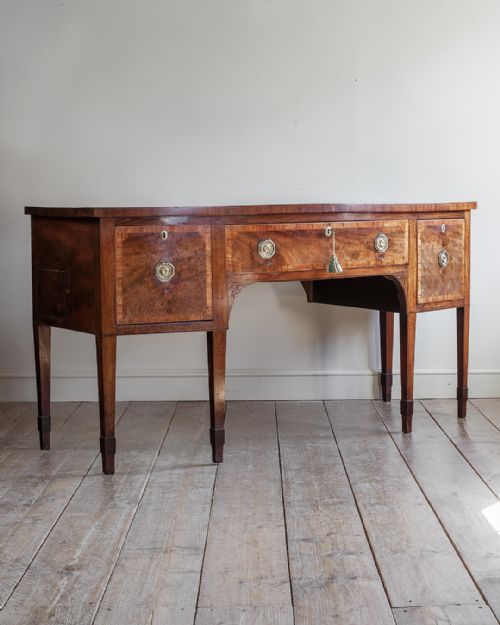
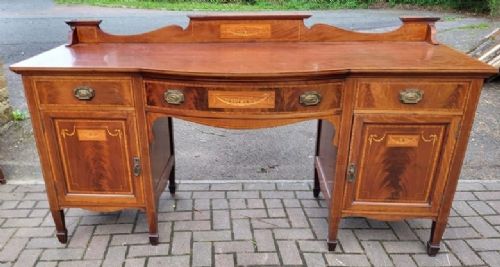
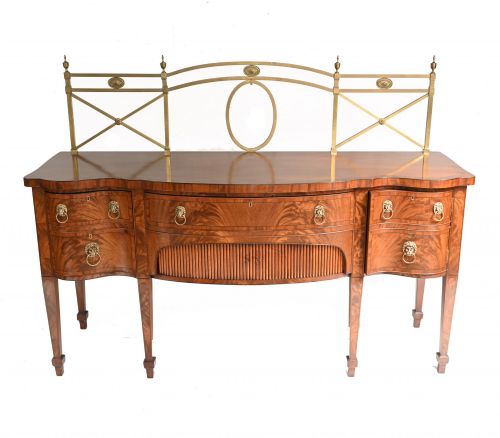
A georgian style mahogany buffet provides stately dining room storage, marrying rich timber tones with classic neoclassical proportions.
Georgian Style Mahogany Buffet
A georgian style mahogany buffet encompasses formal dining room server pieces, sideboards, and side cabinets designed with the architectural symmetry characteristic of the eighteenth century and subsequent revival periods.
Buyers searching for this phrase encounter pieces ranging from authentic late eighteenth century examples to Edwardian and early twentieth century revivals built in the same spirit.
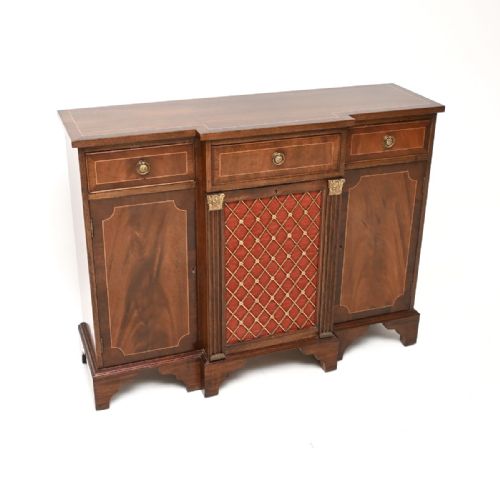
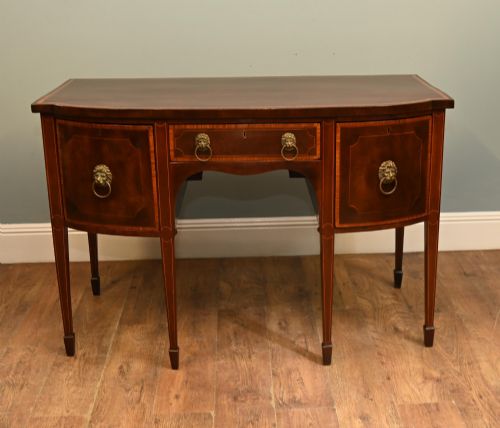
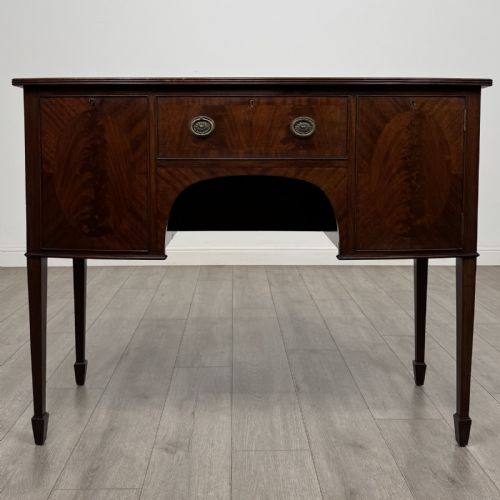
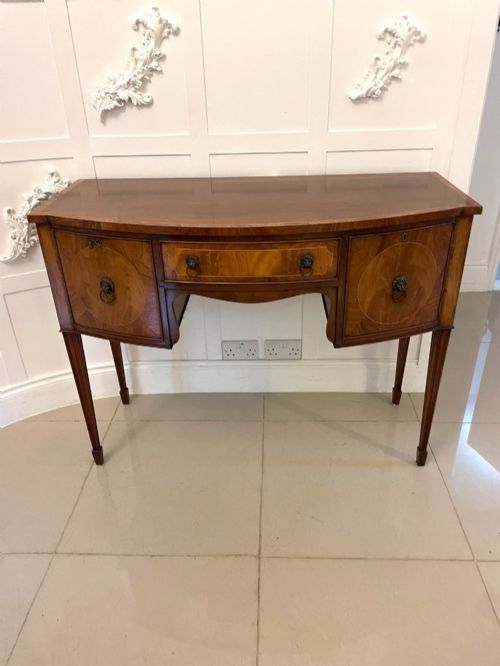
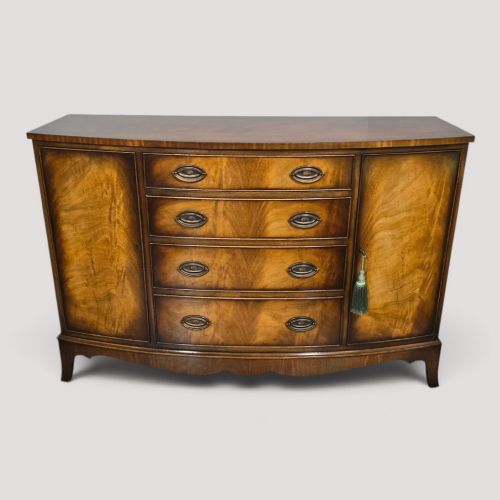
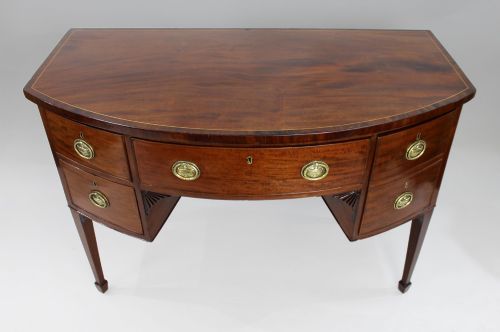
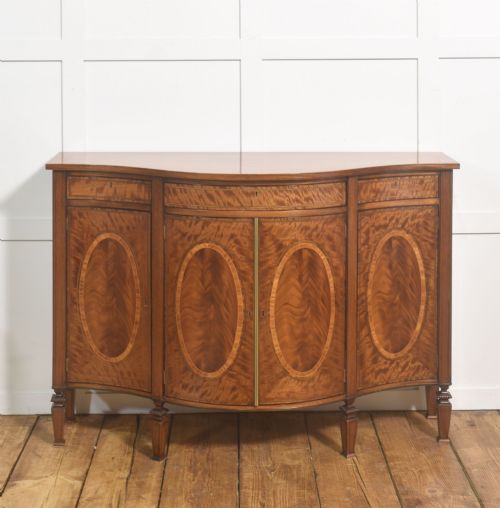
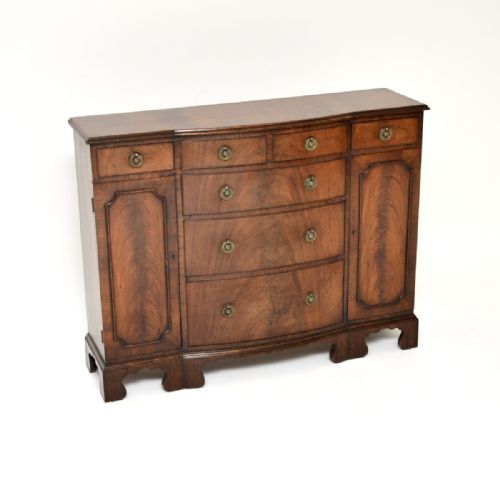
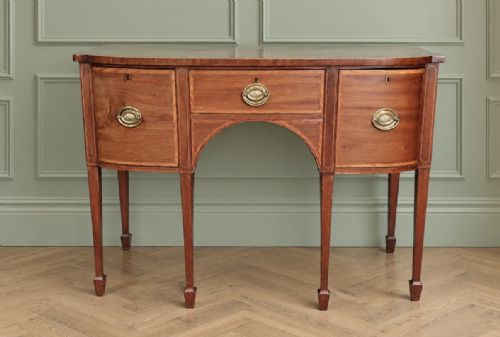
Common forms on this page include bow-fronted servers, breakfront sideboards, and serpentine shapes that provide generous surface and cupboard space for entertaining.
Materials and construction
Cabinet makers utilised solid mahogany and flame mahogany veneers over secondary timbers, often selecting figured boards to create striking visual movement across the broad drawer fronts and top surfaces.
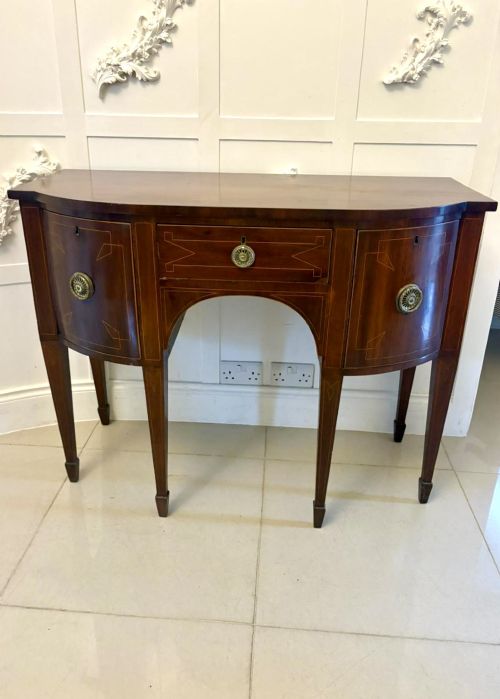
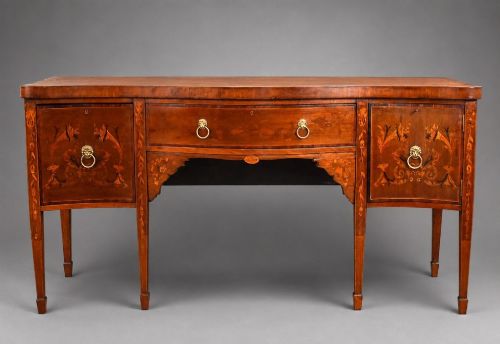
Fine linear detailing was achieved through contrasting wood inlay, incorporating boxwood and satinwood stringing alongside delicate crossbanding to frame the structural panels.
Functional hardware such as brass handles, gallery rails, and castors were integrated to complement the warm dark tones of the polished wood.
Georgian Style Mahogany Buffet Retail Price Guide 2026
Typical asking prices for georgian style mahogany buffet among the pieces listed under this phrase on Sellingantiques today, from the lower quarter to the upper quarter. They describe what is for sale here now, not the wider market.
Several pieces arrive with tiered circular trays that spin quietly, ready to host an impromptu tea party without a servant in sight.
Assessing quality and execution
The distinction between standard utility and superior craftsmanship rests in the selection of the timber, where heavily figured flame mahogany and crisp, hand-cut satinwood or boxwood inlay elevate the visual depth of the piece.
Structural integrity is evident in the handling of complex shapes, such as tightly curved bow-fronts and sweeping serpentine profiles that demand expert joinery to remain true over centuries.
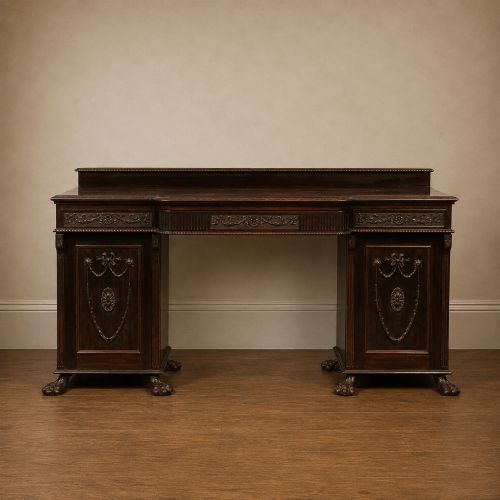
The refinement of carved details, from bracket feet to claw and ball terminals, separates workshop production intended for grand houses from routine commercial output.
M. D. Miller & Sons
The Georgian Style Mahogany Buffet Glossary
- Serpentine
- A front profile that curves outward in the centre and inward toward the ends, creating an undulating silhouette. This shape requires advanced woodworking skill to execute properly.
- Breakfront
- A cabinet design where the central section projects forward from the flanking wings. It adds architectural depth to large dining room furniture.
- Stringing
- Thin lines of contrasting timber inlaid into shallow channels on the surface of furniture. It creates delicate geometric borders around drawer fronts and tabletops.
- Flame mahogany
- A veneer cut from timber where the grain resembles flickering flames. Cabinet makers used this figure on prominent panels to catch the light.
- Dumb waiter
- A tiered stand with revolving circular trays used to serve meals without servants present. These pieces appear frequently alongside sideboards in dining room collections.
Georgian Style Mahogany Buffet: Frequently Asked Questions
What is a georgian style mahogany buffet used for?
These pieces function primarily as serving surfaces and storage cabinets in dining rooms. They provide deep drawers for cutlery and cupboards for glassware.
Historically, they held dishes before service and assisted hosts during large meals without requiring attendants in the room.
How do I date a mahogany buffet?
Dating relies on examining construction methods, timber choice, and revival markers within the listed eras. Eighteenth-century pieces display hand-cut joinery and native secondary woods.
Revival pieces from the Edwardian period or the early twentieth century often utilise machine-sawn elements and distinct hardware styles from their own decades.
How do I care for mahogany furniture?
Maintain the polished timber by keeping it away from direct sunlight and sudden temperature shifts that cause wood to crack. Dust regularly with a dry cloth.
Apply traditional beeswax polish sparingly to nourish the grain and preserve the deep reddish-brown colour over time.
What is the difference between a buffet and a sideboard?
The terms often overlap in modern usage, though traditional sideboards typically incorporate more extensive drawer configurations and cellarette compartments for wine. Buffets often lean toward serving meals directly from the top surface.
Both categories appear across Georgian, Regency, and Edwardian revival periods on this page.