

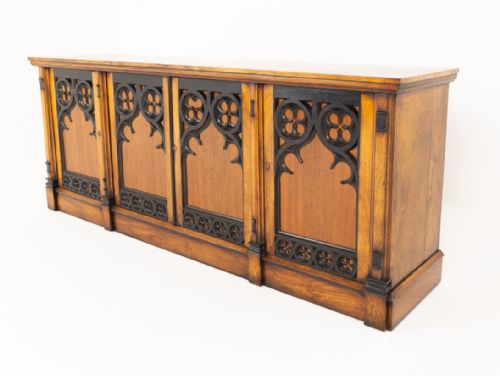

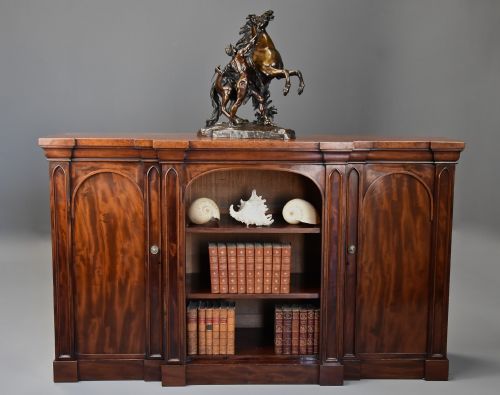
Gothic Revival Credenza
These substantial pieces embody the gothic revival credenza tradition, offering serious storage and dark architectural presence through pointed arches and heavy timber.
Gothic Revival Credenza
When buyers search for a gothic revival credenza, they encounter heavy timber cabinets, sideboards, and dresser bases spanning the nineteenth century alongside related Victorian and Edwardian examples. These pieces serve as commanding dining room or hallway storage, heavily influenced by medieval ecclesiastical architecture and secular revivalism.
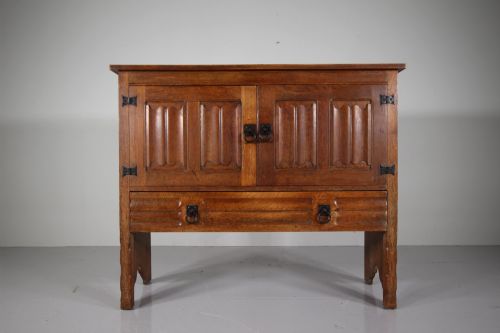
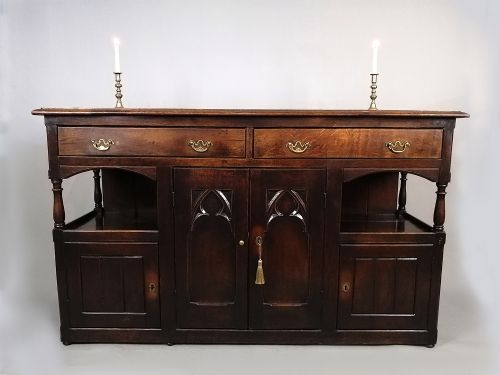
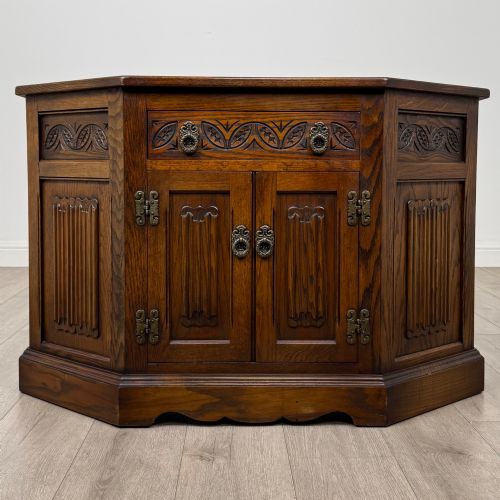
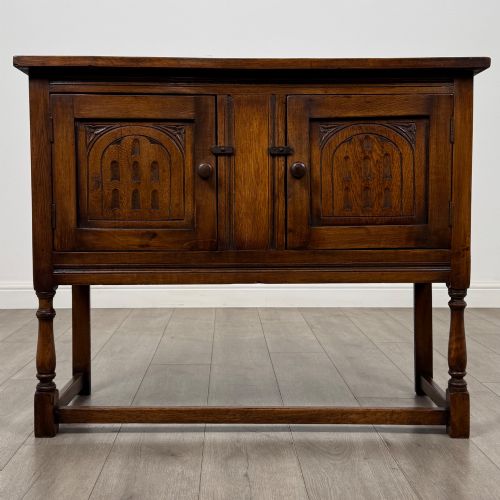
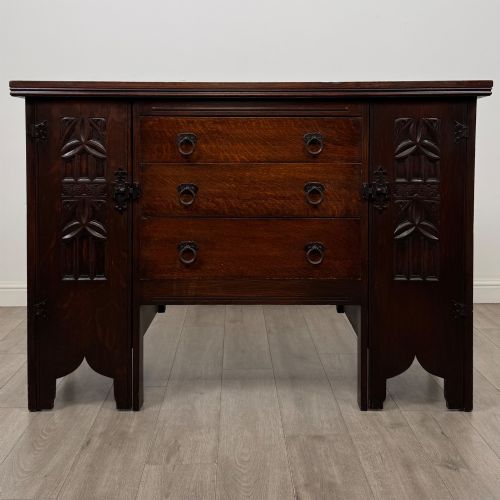
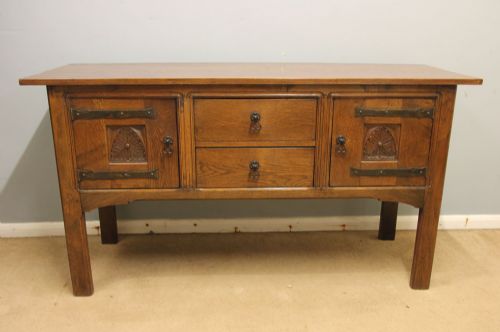
The pieces on this page lean heavily toward carved oak sideboards and cupboards from the Victorian period, often featuring linenfold panelling, pointed arch doors, and brass or iron hardware. Makers adapted these architectural idioms into functional domestic furniture for nineteenth-century homes desiring historical gravitas.
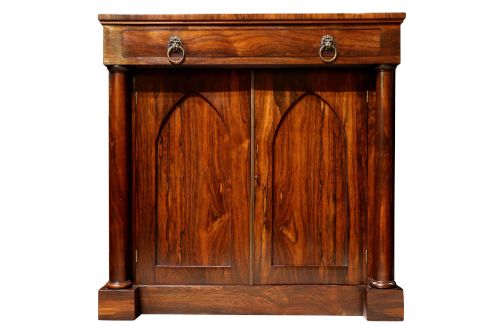
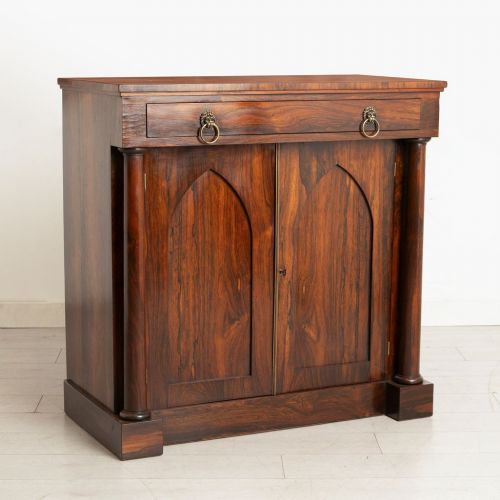
While true period pieces date from the mid-nineteenth century onward, variations extend from earlier Regency rosewood chiffoniers with gothic panelled doors to twentieth-century oak cupboards. The predominant form remains the substantial carved oak sideboard or cabinet suited to large living spaces.
Materials and construction
Carpenters relied predominantly on solid oak, selected for its strength and ability to hold deep relief carving, alongside secondary use of mahogany, rosewood, and walnut in specific pieces. Timber was seasoned, joined with traditional framing techniques, and shaped into panels, cornices, and structural uprights.
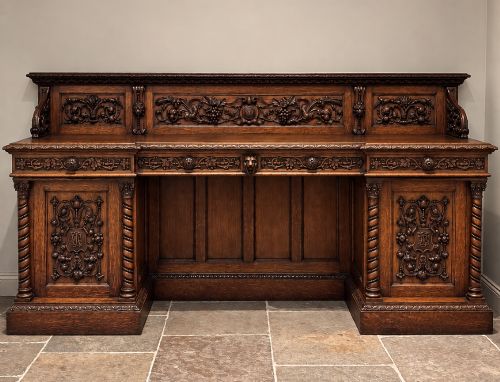
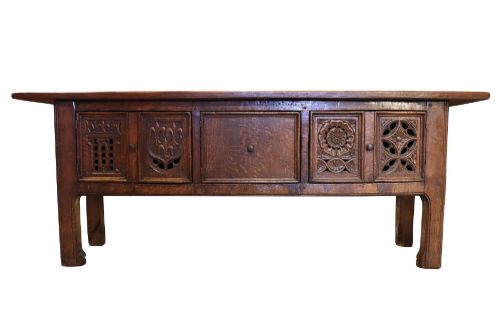
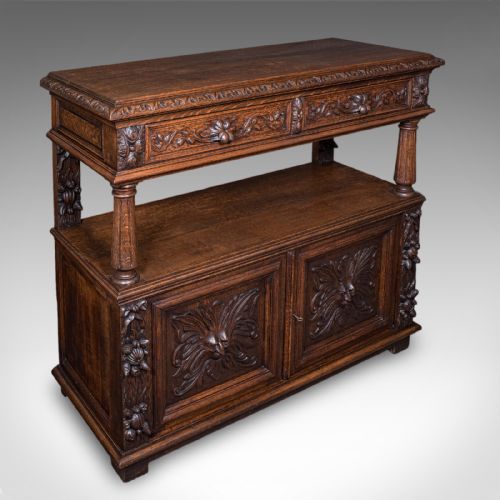
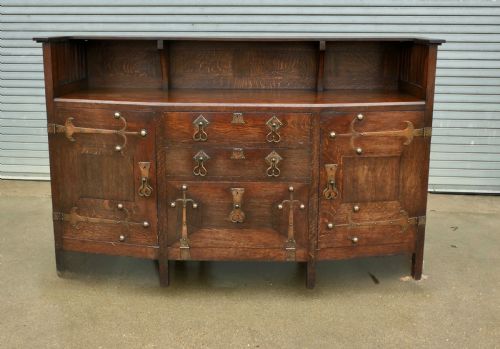
Surface ornamentation relied on hand-chisel carving, creating linenfold textures, tracery, and figurative motifs such as Green Man masks. Metalwork components, including strap hinges, escutcheons, and drop handles, utilised brass and wrought iron to reinforce the medieval aesthetic.
Glass panels appeared in cabinets and bookcases to display contents while maintaining dust protection, framed by timber mullions that echoed church window tracery. Finishes were typically darkened or waxed to accentuate the grain of the oak and walnut.
Gothic Revival Credenza Retail Price Guide 2026
Typical asking prices for gothic revival credenza among the pieces listed under this phrase on Sellingantiques today, from the lower quarter to the upper quarter. They describe what is for sale here now, not the wider market.
Several pieces on this page stare back at you through carved Green Man masks hiding amidst the foliage.
Distinctions in quality
The distinction between ordinary and superior pieces rests on the depth and crispness of the hand carving, where sharp undercutting and spirited relief work elevate the cabinetwork. Lesser items show shallow, mechanical stamping or simple applied mouldings rather than integrated joinery.
Proportion and timber selection drive the hierarchy, with dense, figured oak, golden oak, and richly toned rosewood commanding greater visual weight. Pieces maintaining balanced narrow or grand proportions without awkward alterations demonstrate superior design coherence from the outset.
Hardware integrity and interior secondary woods reflect the original maker's commitment, where heavy brass hinges and fitted interiors distinguish bespoke commissions from utilitarian workshop production.
Leonard Wyburd·Liberty
The Gothic Revival Credenza Glossary
- Credenza
- Originally a sideboard or buffet used for tasting food to detect poison, later applied to low cabinets with doors. These pieces provide enclosed shelving beneath a flat top surface.
- Linenfold
- A style of wood carving that imitates folded linen cloth. This motif appears frequently on the panels of sixteenth-century and revival cupboards.
- Green Man
- A sculptural architectural ornament depicting a human face disgorging foliage or vines. It symbolises rebirth and appears widely across carved oak furniture from the nineteenth century.
- Strawberry Hill Gothic
- An early, playful phase of gothic revival architecture and design inspired by Horace Walpole's villa. It predates the heavier Victorian interpretations found on this page.
- Chiffonier
- A low sideboard or cabinet featuring small drawers and doors beneath a shelf. Regency examples often incorporate gothic glazed or panelled doors.
Gothic Revival Credenza: Frequently Asked Questions
What is a gothic revival credenza?
A gothic revival credenza or sideboard is a heavy storage cabinet influenced by medieval architecture, featuring details like pointed arches, tracery, and deep wood carvings.
These items were built primarily in the nineteenth century for dining rooms and halls, combining domestic utility with the dramatic aesthetic of gothic cathedrals and castles.
How do I style a gothic credenza?
These commanding pieces work well against neutral walls where their dark timber and detailed carving can act as a focal point in a room.
Pair them with simple modern lighting or ceramics to create a contrast that highlights the age and texture of the wood without overwhelming the space.
Are these pieces made of solid oak?
The listings on this page are predominantly constructed from solid oak, though alternative timbers like rosewood, walnut, and mahogany also appear in specific pieces.
Carpenters utilised these dense hardwoods to support the heavy structural framing and deep relief carvings characteristic of the revival style.
How can I date a gothic cabinet?
Dating relies on examining the construction methods, secondary woods, hardware styles, and the specific nuance of the gothic revival motifs employed.
Victorian examples often display heavy machine-assisted or hand-finished oak carving with brass fittings, whereas earlier Regency pieces utilise rosewood with lighter architectural references.