


Open Shelf Oak Dresser
An open shelf oak dresser brings honest utility and timeless warmth to a room, offering display space above and deep storage below.
Open Shelf Oak Dresser
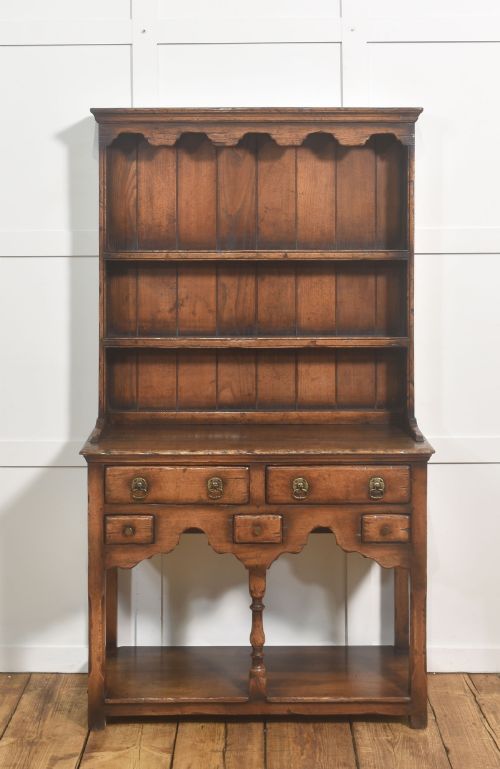
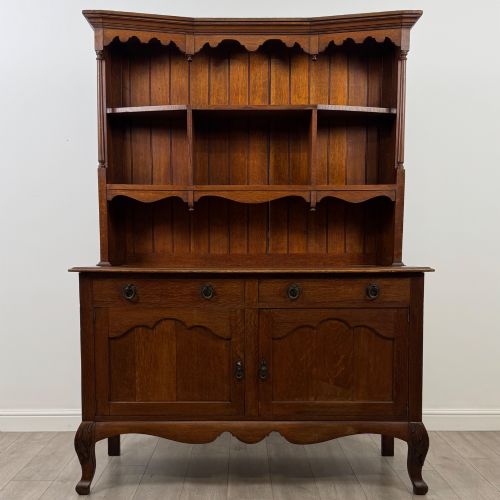
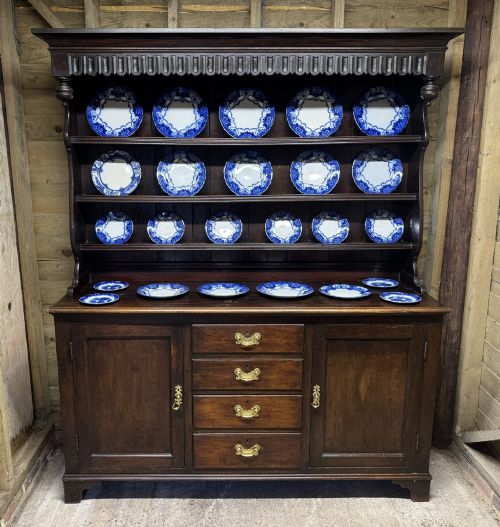
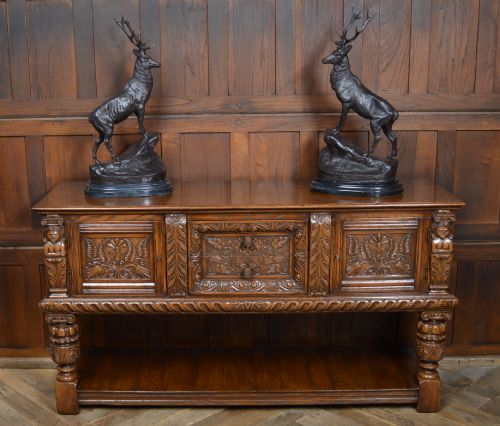
An open shelf oak dresser is a traditional domestic storage piece that combines lower cupboards or drawers with upper plate racks for display. When searching for an open shelf oak dresser, buyers encounter examples spanning the eighteenth, nineteenth, and early twentieth centuries, reflecting various regional and stylistic traditions. Country and provincial workshops produced many of these pieces, resulting in sturdy, practical furniture built for everyday household use.
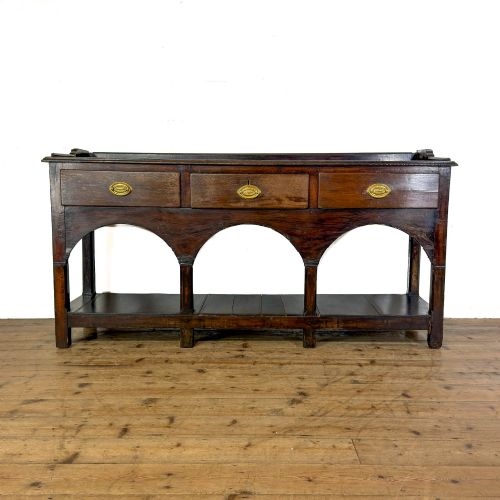
The versions most commonly met on this page include Welsh dressers with plate racks, pot board dresser bases, and cottage dressers. Pieces range from straightforward Georgian and Victorian utility items to more decorative Arts and Crafts and Gothic Revival interpretations. Materials extend beyond standard oak to encompass elm, pine, burr walnut, and bleached oak surfaces.
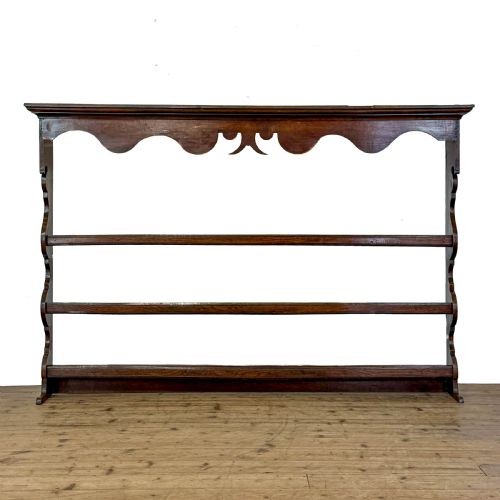
Forms vary from substantial multi-tiered Welsh dressers with carved details to slim cottage variations and wall-hanging shelves. The inclusion of open shelving distinguishes these designs from closed bookcases or standard sideboards, prioritizing both practical storage and visible curation of kitchenware or books.
Materials and Construction
Makers relied primarily on solid oak for the main body and structural framing of each open shelf oak dresser, frequently incorporating secondary timbers such as pine and elm for drawer linings and internal shelving. Brass and iron hardware, including drop handles, escutcheons, and hinges, fastened doors and secured compartments.
Construction techniques visible across the pieces include traditional joinery methods suited to provincial workshops and regional cabinetmakers. Surfaces display natural grain patterns, hand-planed finishes, and occasional carved embellishments or applied mouldings appropriate to periods from the eighteenth century onward.
Listings feature oak, elm, pine, and burr walnut across periods spanning the eighteenth century to the Edwardian era.
Distinctions in Quality
Quality in an open shelf oak dresser rests upon the integrity of the timber selection, the harmony of proportions, and the depth of natural patina accumulated over time. Superior examples demonstrate thoughtful grain matching, robust construction in the pot boards and bases, and well-integrated plate racks that complement the lower section.
The refinement of the joinery and the presence of period-appropriate brass or iron fittings distinguish higher-grade items from simpler utilitarian furniture. Finer carving, balanced proportions between the open upper shelves and the heavy dresser base, and the use of secondary woods like elm or burr walnut elevate particular pieces.
The Open Shelf Oak Dresser Glossary
- Pot Board Dresser
- A dresser base featuring a low open shelf near the floor, traditionally used for storing pots and heavy kitchen utensils. This lower platform provides structural stability to the base while offering additional open storage.
- Plate Rack
- The upper framework attached to a dresser featuring horizontal grooved shelves designed to hold plates upright for display and drying. These racks often include shaped sides and cornice moulding.
- Welsh Dresser
- A traditional regional form combining a deep-based storage unit with a tall multi-tiered plate rack above. These pieces typically display substantial proportions and regional timber characteristics.
- Pot Board
- The low ground-level shelf found on specific dresser bases, distinct from enclosed cupboards. It supports the legs and provides an open display tier near the floor.
- Patina
- The surface sheen and textural depth developed on wood over centuries through handling, polishing, and natural oxidation. It serves as an indicator of age and careful use.
Open Shelf Oak Dresser: Frequently Asked Questions
What is an open shelf oak dresser?
An open shelf oak dresser is a combination storage and display unit featuring lower cupboards or drawers paired with open upper shelves for plates and ceramics.
These pieces served as central furniture items in country houses and kitchens for centuries, storing tableware while displaying prized ceramics.
How do I date an oak dresser?
Dating relies on examining construction methods, tool marks, timber characteristics, and hardware styles across the piece. Georgian and eighteenth-century examples often show hand-planed surfaces and traditional joinery, while Victorian and Edwardian pieces exhibit different proportions and decorative details.
Comparing the style of the base cupboards and the construction of the plate rack helps narrow down the period of manufacture.
Where should I place a dresser?
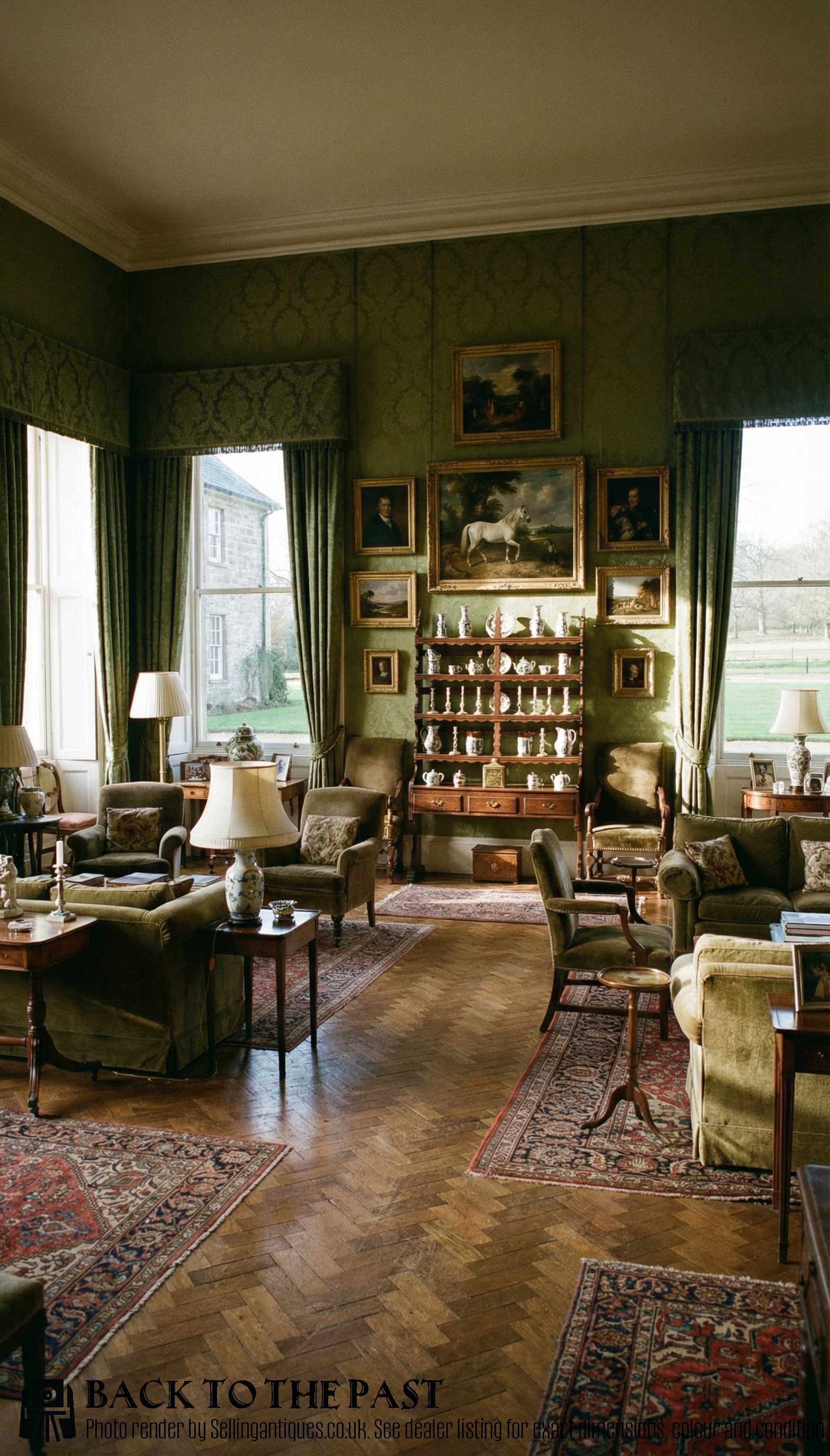
These dressers suit dining rooms, kitchens, and living spaces where their storage capacity and display shelving can be utilised effectively. Placing them against a sturdy wall allows the open shelves to hold heavy ceramic collections securely.
Sufficient clearance is necessary to accommodate the depth of the base and the height of the upper rack.
What wood types are used?
While solid oak forms the primary structure of these dressers, makers frequently incorporated secondary timbers. Elm, pine, burr walnut, and bleached oak appear across different periods and regional styles.
Hardware components typically consist of brass or iron fixtures.