
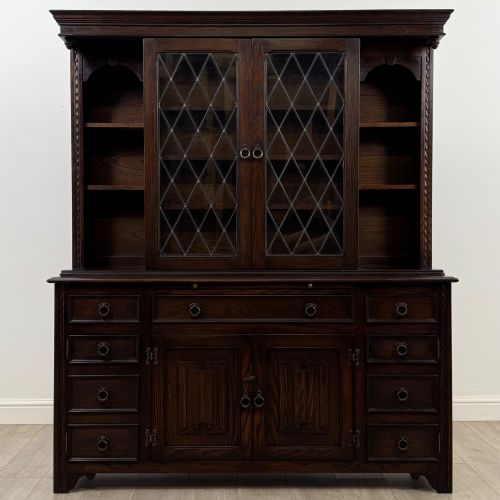
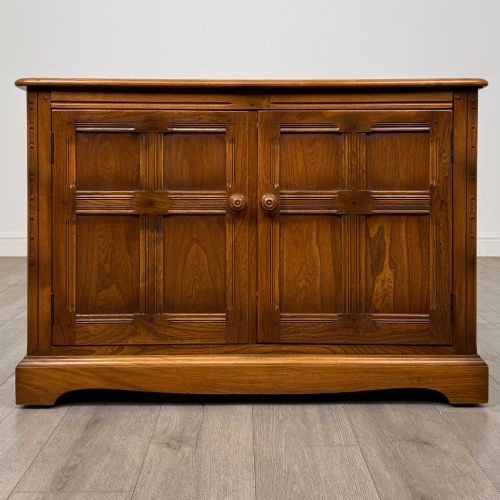
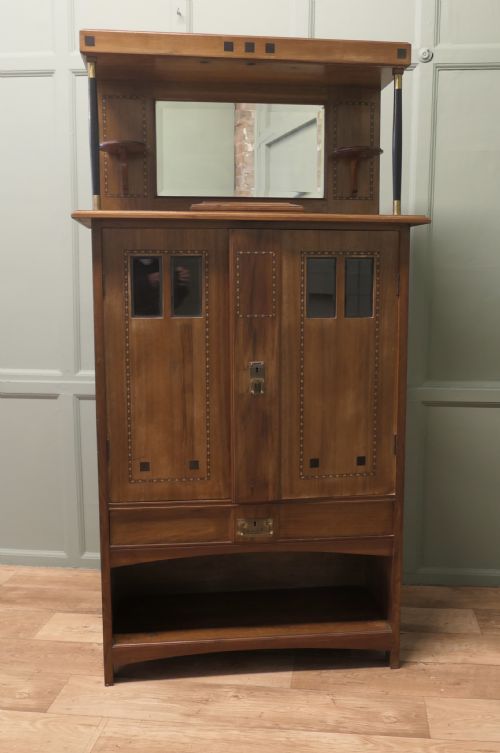
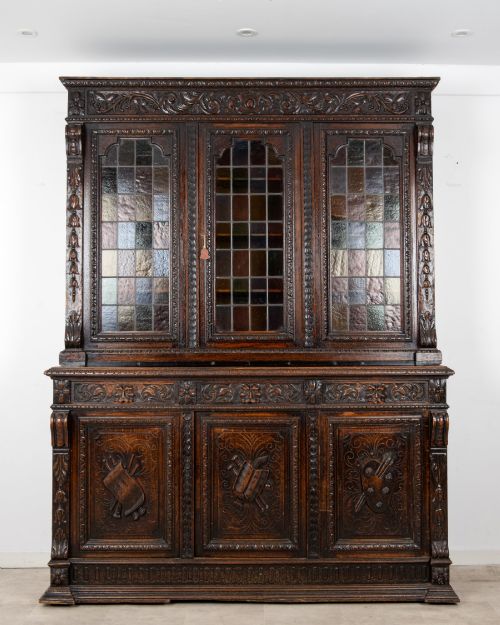
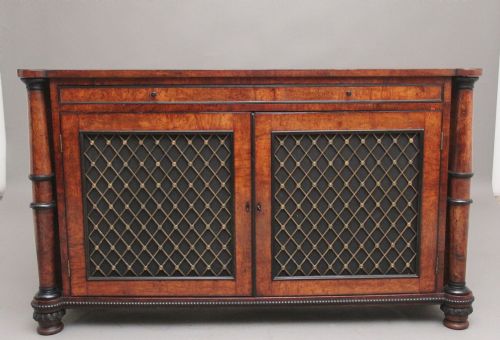
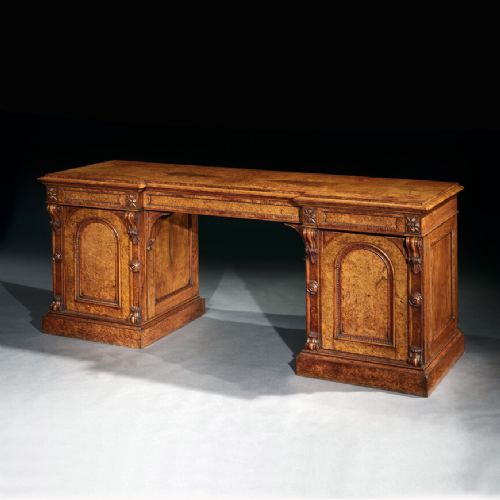
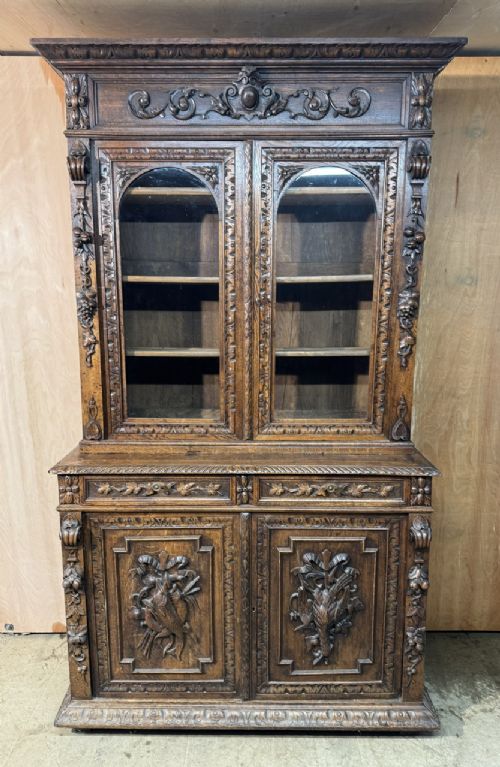
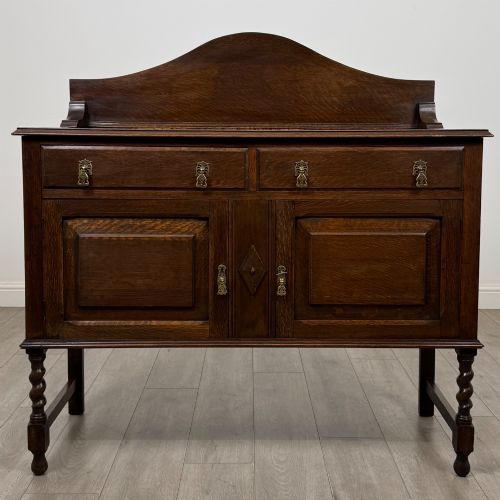
Antique Oak Sideboard Cabinet
An antique oak sideboard cabinet delivers solid timber presence and enduring storage, offering the practical utility every traditional dining room demands.

Identifying your antique oak sideboard cabinet
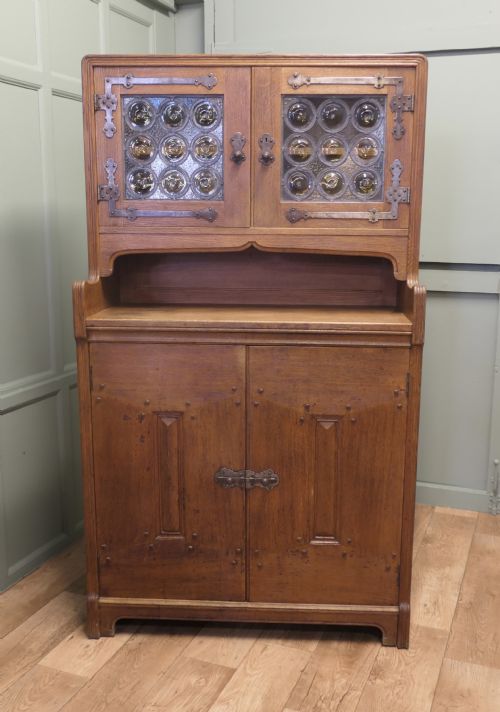
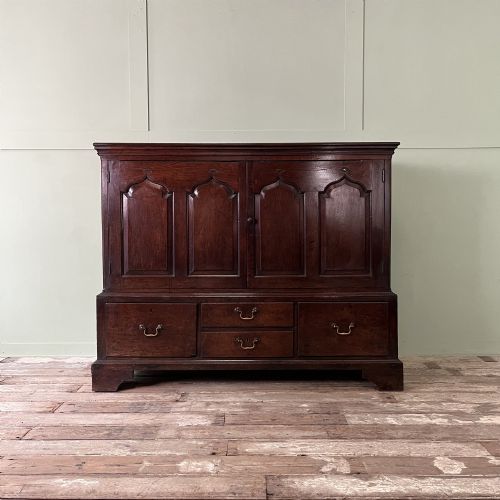
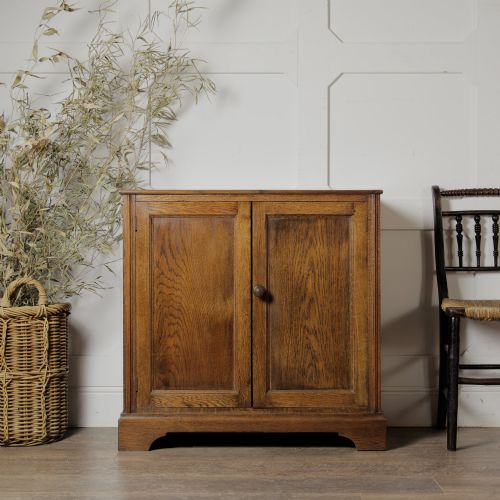
When searching for an antique oak sideboard cabinet, you encounter substantial serving furniture built for dining rooms and large hallways across Britain and continental Europe. These pieces combine heavy timber construction with generous surface space, designed specifically to display silver or serve food during large family meals.
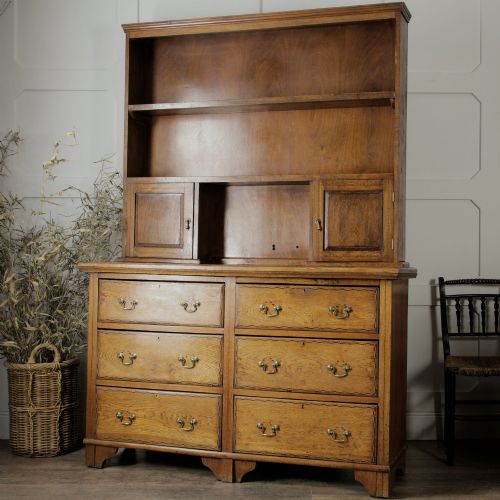
The selections span from seventeenth-century vernacular country furniture through to Victorian revival pieces and early twentieth-century Arts and Crafts designs. You are most likely to meet substantial nineteenth-century examples and robust dresser bases that retain deep patination and honest proportions.
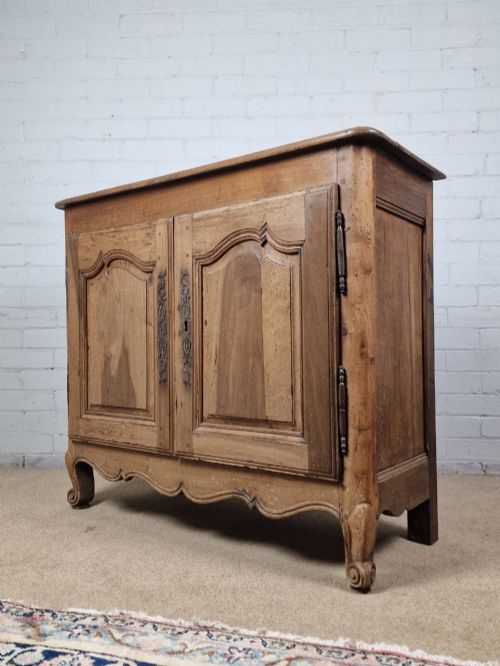
Regional variations appear frequently, ranging from Welsh court cupboards and Lancashire dresser bases to French provincial buffets and Scottish servers. Each origin brings distinct carving traditions and structural layouts to the category, reflecting the local tastes of their makers.
Materials and construction methods
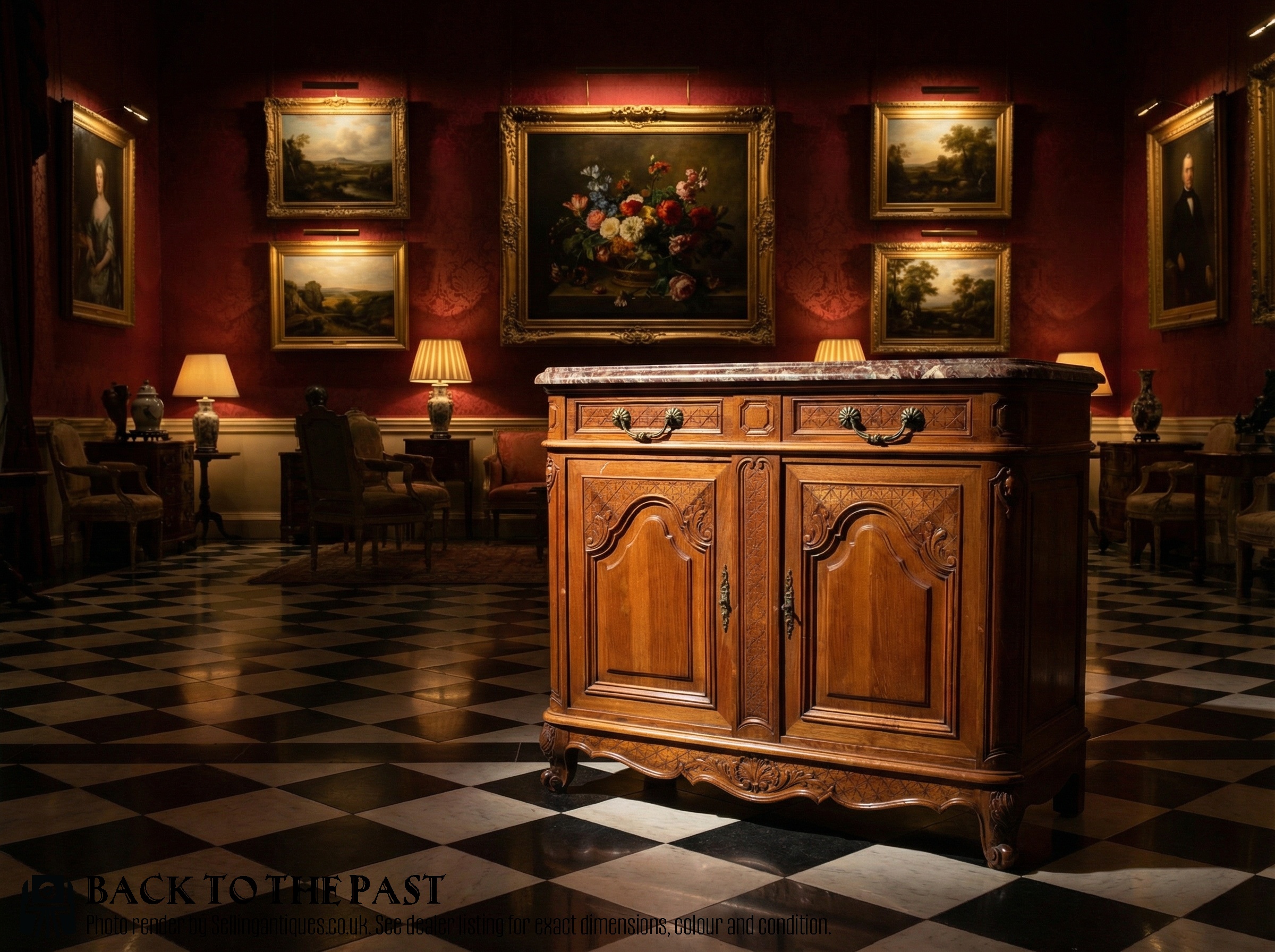
Makers relied primarily on native and European oak, sometimes incorporating secondary timbers like mahogany alongside brass hardware and occasional inset marble surfaces. Solid timber construction dominated the workshop, utilising pegged tenons, panelled doors, and heavy board tops to withstand decades of daily service.
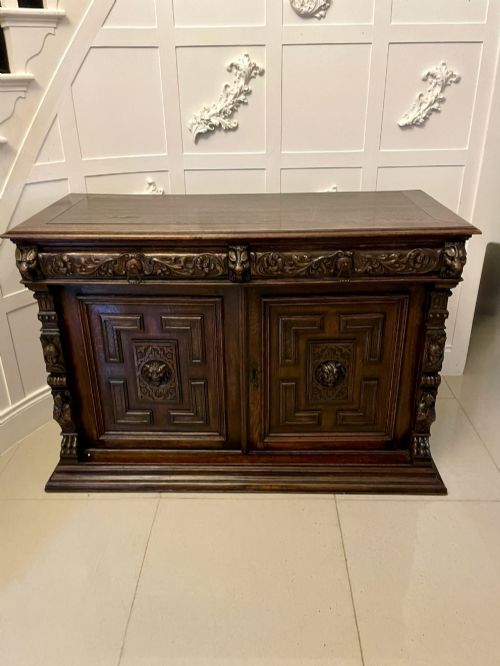
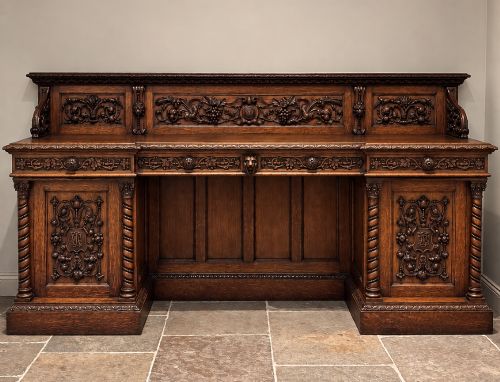
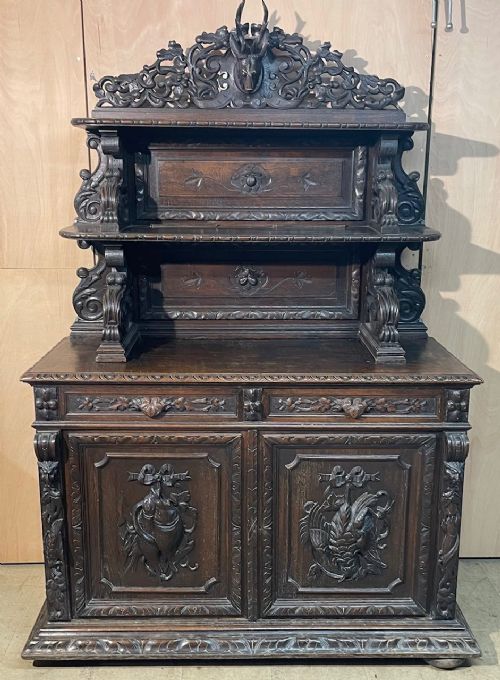
Carving was executed by hand, displaying deep relief work that ranged from geometric strapwork and Green Man motifs to regional floral panels. Surfaces were traditionally finished with wax or oil, allowing the natural grain and medullary rays of the oak to develop deep character over generations.
Retail Price Guide 2026
Typical UK retail prices for oak sideboard cabinet, calculated from the Sellingantiques database of over a million retail prices indexed since 2003. This retail price guide relies exclusively on Sellingantiques data; no external sources or auction records are used, so the figures do not describe the wider market.
Some cabinet doors secretly watch you dine through the watchful leafy grin of a carved Green Man.
Distinguishing the finer examples
Quality rests heavily on the depth and execution of the hand-carved detail, where crisp relief work and balanced proportions elevate a piece far above utilitarian workshop production. Superior examples maintain their original brass handles, hinges, and working locks rather than relying on modern replacements.
The choice of timber grain and the integrity of the original joints dictate structural longevity, separating heavily restored items from those that retain their untouched primary surfaces. Finer items demonstrate thoughtful integration of architectural elements like breakfront cornices or panelled cupboard doors.
Gillow and Co
The Antique Oak Sideboard Cabinet Glossary
- Court cupboard
- A heavy seventeenth-century storage piece featuring an enclosed upper section supported by heavy columns above a lower cabinet. These early forms provide impressive architectural presence in traditional interiors.
- Dresser base
- A long, low storage unit featuring drawers above cupboard doors, originally used in kitchens or dining rooms for food preparation and tableware storage. They offer generous surface length compared to standard cupboards.
- Chiffonier
- A compact sideboard or low cabinet developed in the nineteenth century, typically featuring a raised tier or shelf structure on the top surface. They function well in smaller reception rooms.
- Buffet
- A large serving sideboard designed for holding dishes and silverware during formal meals, often incorporating extensive carved decoration and generous lower cabinet space. They form the centerpiece of formal dining spaces.
- Green Man
- A sculptural architectural motif depicting a human face carved with leaves, vines, or foliage sprouting from the mouth. This ancient symbol appears frequently on revival furniture.
Frequently Asked Questions
How do I use a sideboard cabinet today?
These robust cabinets serve wonderfully in modern dining rooms or hallways as storage credenzas, holding tableware, linens, or daily household items. The wide top surfaces also provide ideal display space for lamps, ceramics, or framed artwork.
Their substantial timber construction ensures they handle modern family life easily while anchoring a room with historic character.
Are these cabinets difficult to maintain?
Maintaining an oak cabinet requires very little effort beyond occasional dusting with a dry cloth and feeding the timber with a quality beeswax twice a year. Keeping the wood away from direct heat sources and dramatic humidity swings prevents timber movement.
Gentle care allows the historic wax finish to retain its natural lustre without stripping the accumulated patina of generations.
How do I tell seventeenth-century pieces apart from Victorian revivals?
Seventeenth-century pieces display hand-riven timber, pegged joinery, and tool marks consistent with early pit-sawing and hand planing. Victorian revival pieces often incorporate machine-cut elements, standardised screws, and heavier applied mouldings.
Examining the interior timber boards and drawer construction usually reveals the true age of the piece.
Did regional styles change the design significantly?
Regional workshops developed distinct characteristics, such as the heavy geometric panels found on Welsh and Lancashire pieces compared to the more refined carved flourishes of French provincial buffets. Scottish servers often favoured bold proportions and simple, clean lines.
These local variations help historians trace the geographic origins of unmarked pieces accurately.