

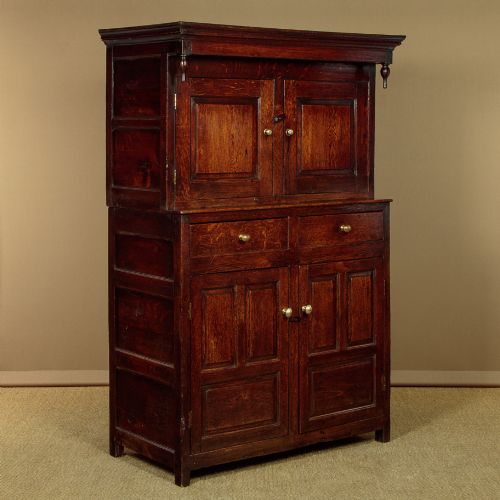
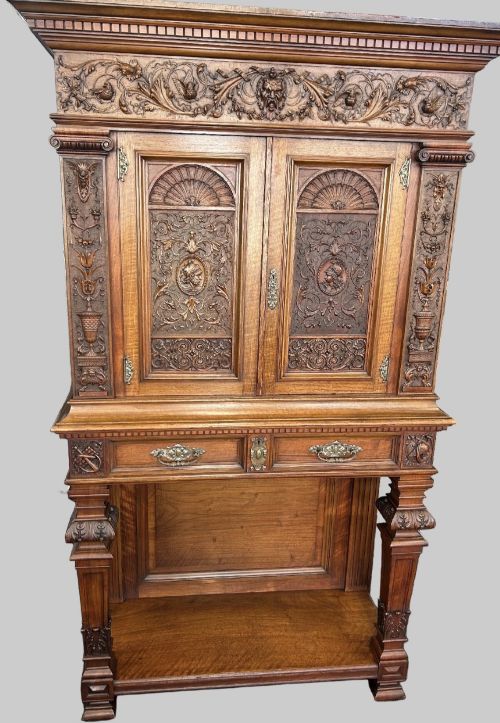
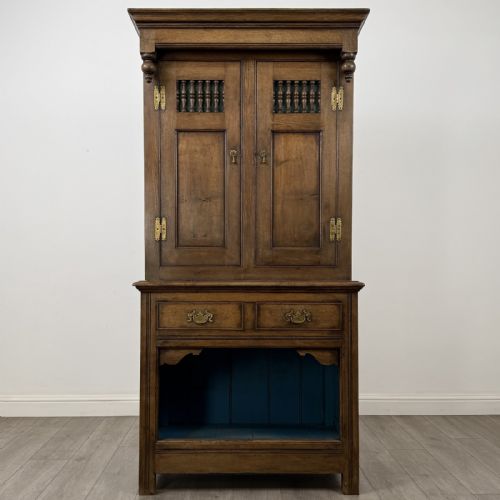
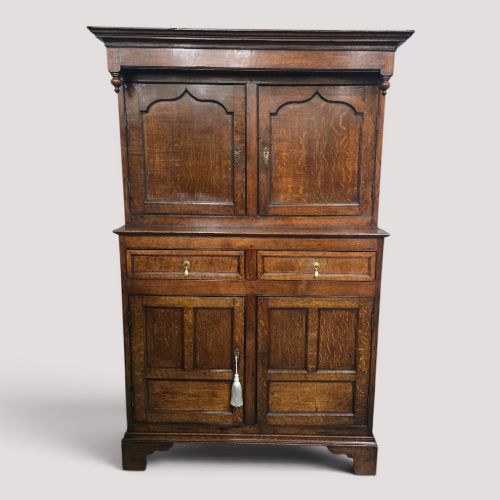
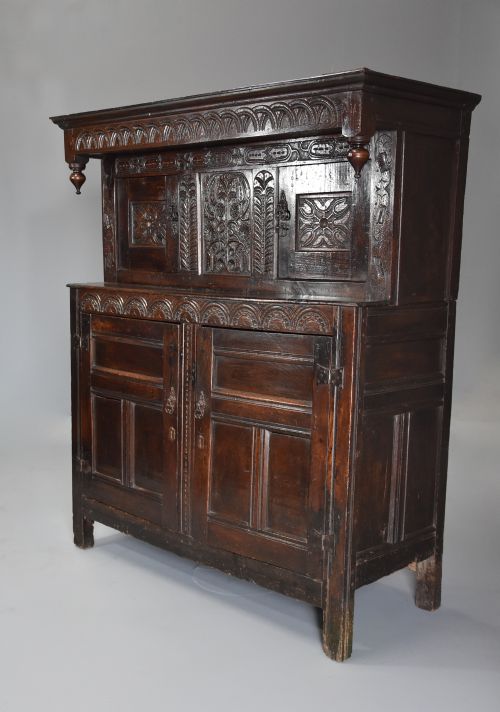
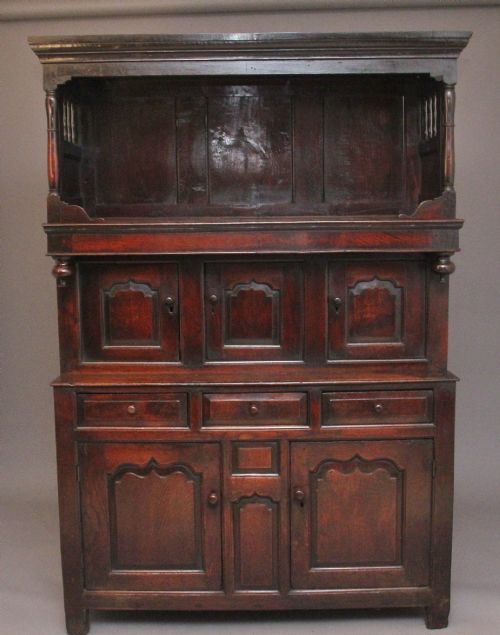


Brown Oak Court Cupboard
A brown oak court cupboard is a substantial storage piece built to display household standing and provisions, sought after for deep timber grain and historic character.
Brown Oak Court Cupboard
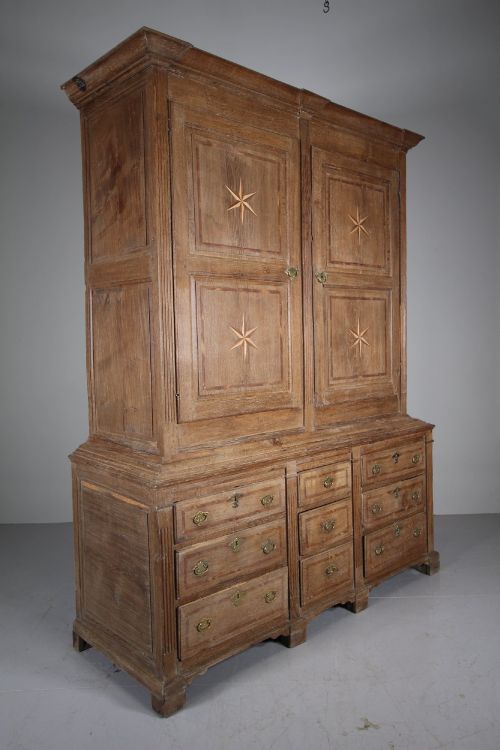
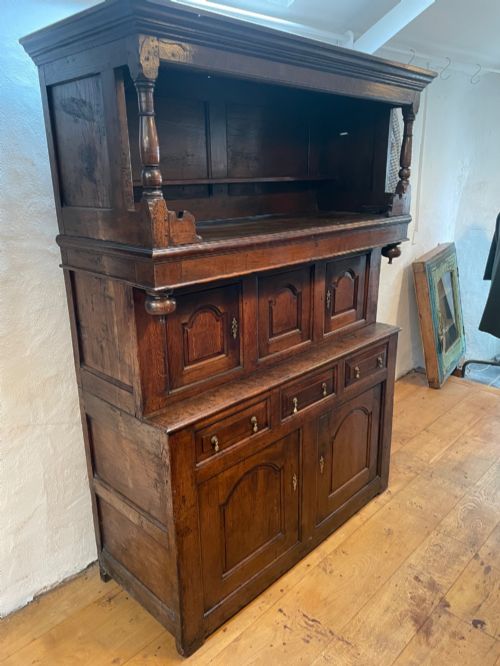
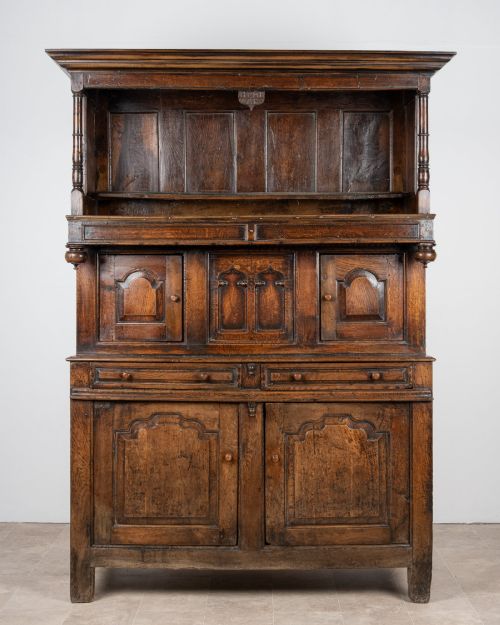
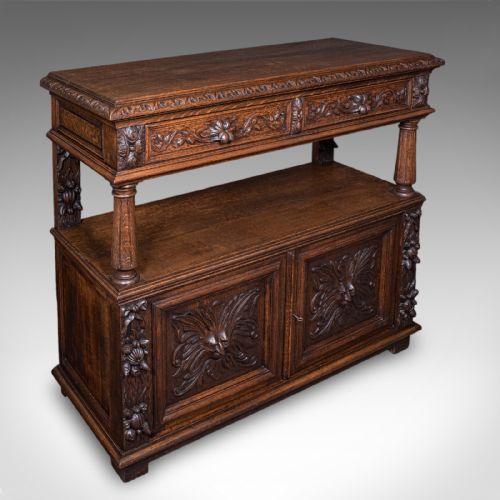
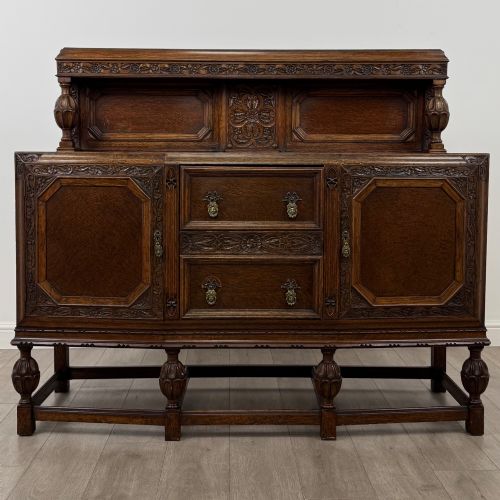
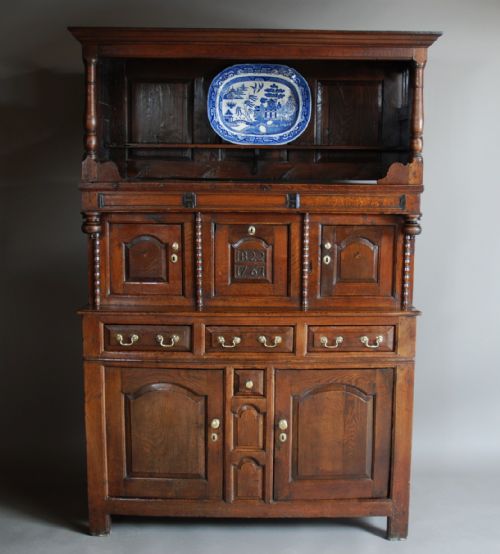
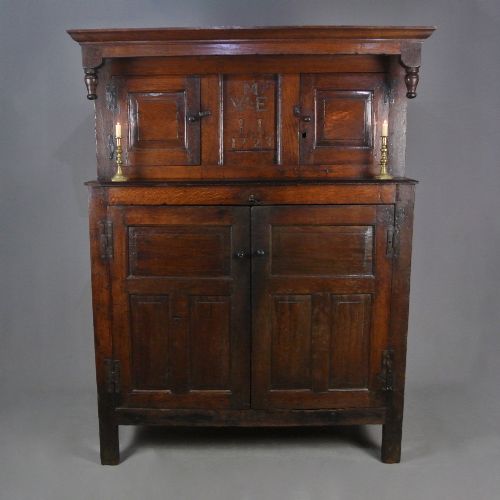
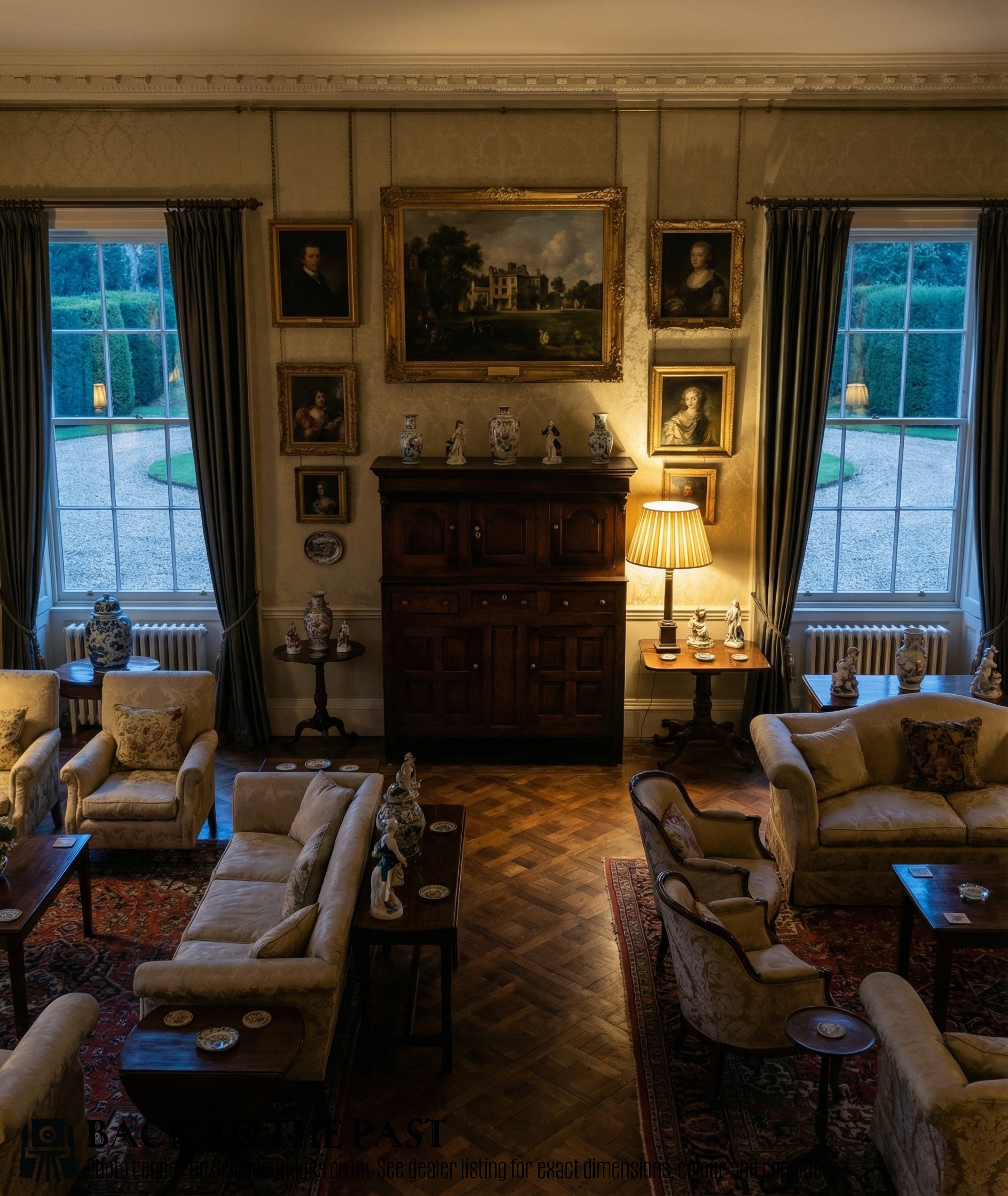
A brown oak court cupboard brings centuries of domestic history into a room, typically presenting as a multi-tiered storage unit with enclosed upper and lower sections. The pieces gathered here span from the seventeenth century through to Edwardian revivals, showing how regional British cabinet makers adapted traditional forms across generations. Buyers frequently encounter vernacular Welsh designs such as the cwpwrdd tridarn alongside English court and press cupboards.
Regional variations shape the selection, with Welsh vernacular examples sitting alongside English regional pieces and later revival works. The forms include miniature court cupboards, livery cupboards, and housekeepers cupboards, demonstrating diverse domestic uses from storing bread and cheese to displaying plate. These items emerge from periods ranging from the Jacobean era to the Arts and Crafts movement, reflecting changing interior tastes in oak furniture.
How They Were Made
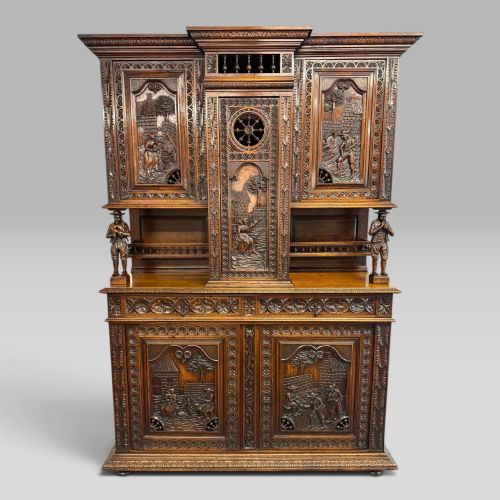
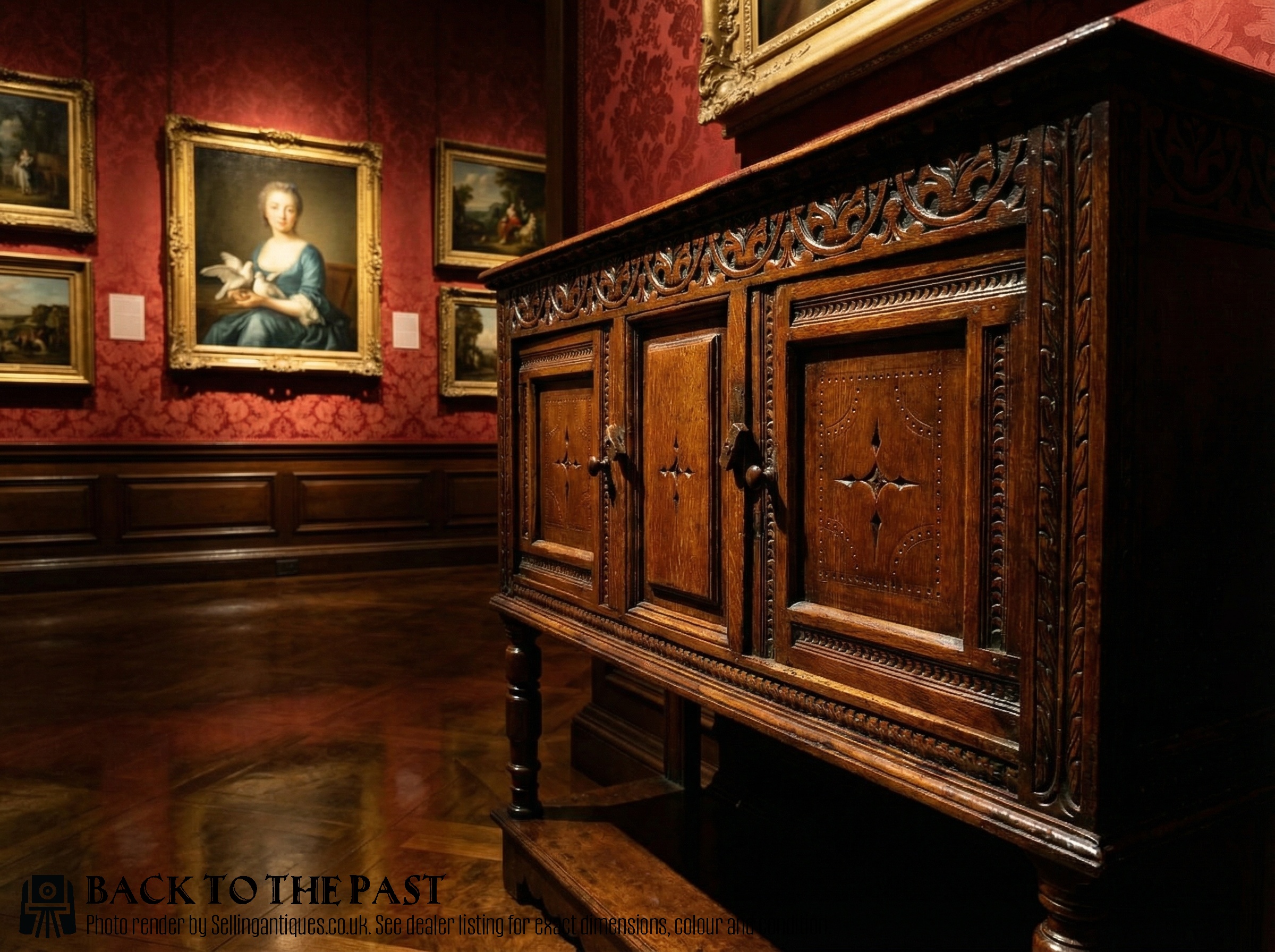
Makers constructed these cupboards primarily from solid oak, sometimes incorporating contrasting elements of ebony, holly, and elm. Workshops employed traditional frame and panel construction, often utilising pegged joints to accommodate the natural movement of timber over centuries. Surfaces frequently display intricate carved decoration, deep paneling, and inlaid details.
Metalwork played a structural and decorative role, with brass and iron used for hinges, handles, and locking mechanisms. Glazed sections in later or adapted pieces occasionally incorporate leaded glass, while interior surfaces rely on the natural warmth and figuring of the timber. Carpenters finished these storage units with wax or oil to nourish the brown oak grain.
Brown Oak Court Cupboard Retail Price Guide 2026
Typical asking prices for brown oak court cupboard among the pieces listed under this phrase on Sellingantiques today, from the lower quarter to the upper quarter. They describe what is for sale here now, not the wider market.
Listings span from the 16th century through to 1930, uniting early oak court cupboards with later Arts and Crafts and revival sideboards.
What Varies in Quality
The distinction between ordinary and exceptional pieces rests in the depth of the timber's patina and the crispness of the hand carving. Early seventeenth and eighteenth century examples often display a rich, mellow surface achieved through generations of handling and polishing, whereas revival pieces rely on the inherent quality of the oak selection. Proportion and regional character also dictate distinction, with vernacular Welsh pieces showing particular regional ingenuity in their tiering.
Structural integrity and the survival of original elements define the upper tier of these cupboards. Pieces retaining their original brass or iron hardware, uncompromised pegged joints, and untouched surfaces command greater attention from collectors. The complexity of the joinery, from simple paneling to elaborate figurative carving like Green Man motifs, separates standard utility pieces from masterworks of regional cabinet making.
The Brown Oak Court Cupboard Glossary
- Court cupboard
- An antique enclosed storage unit, typically featuring an recessed upper stage supported by pillars or columns above a larger base cabinet. These items were traditionally used for displaying plate and storing provisions.
- Cwpwrdd tridarn
- A traditional Welsh three-tier cupboard, incorporating an open or enclosed top section, a middle stage, and a lower base. This regional form provides substantial tiered storage.
- Livery cupboard
- A historic storage piece designed for food, candles, and night provisions in great houses, often ventilated with turned spindles rather than solid doors. These items date primarily from the seventeenth and eighteenth centuries.
- Press cupboard
- A heavy storage furniture item featuring an upper enclosed cupboard and a lower section with doors or drawers, traditionally used for linens and clothing. These pieces rely on robust frame and panel construction.
- Patina
- The lustrous surface sheen developed on timber over centuries through handling, waxing, and exposure to light. This quality indicates the age and historical depth of the oak.
Brown Oak Court Cupboard: Frequently Asked Questions
What is a brown oak court cupboard used for today?
These cupboards serve as substantial storage and display units in dining rooms, hallways, or living spaces, holding tableware, linens, or books.
Their architectural presence allows them to function as focal points in period or contemporary interiors alike.
How do I tell an 17th century cupboard from a revival piece?
Early pieces exhibit hand-cut peg joinery, adze marks, and timber shrinkage appropriate to age, along with deep historic patina.
Revival items from the Victorian or Edwardian periods often show mechanical tooling methods and different internal construction details.
How should I care for antique oak furniture?
Keep these items away from direct heat sources and sudden humidity changes to prevent the oak panels from splitting.
Apply a traditional beeswax polish sparingly to maintain the rich surface sheen and nourish the timber.