


Rustic Oak Kitchen Dresser
A rustic oak kitchen dresser anchors a room with undeniable presence, offering substantial storage and honest country character built to last.
What these dressers are
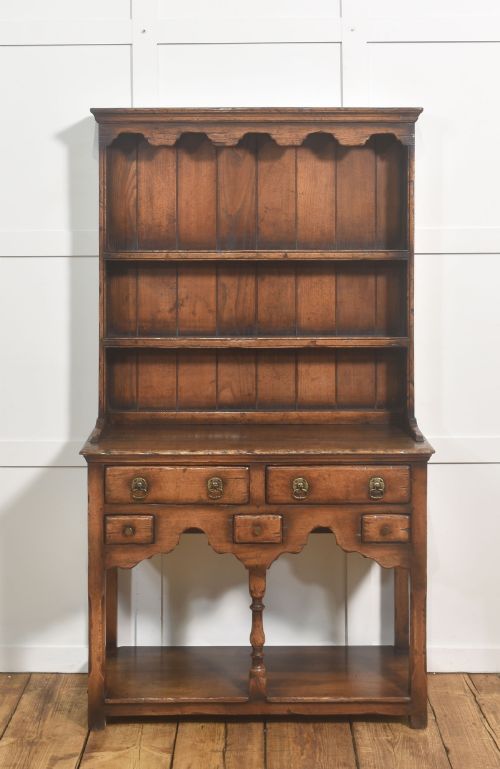
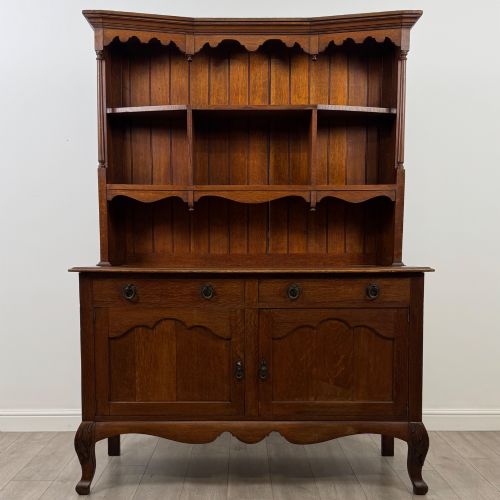
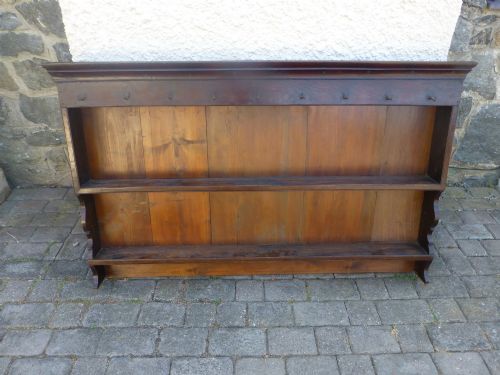
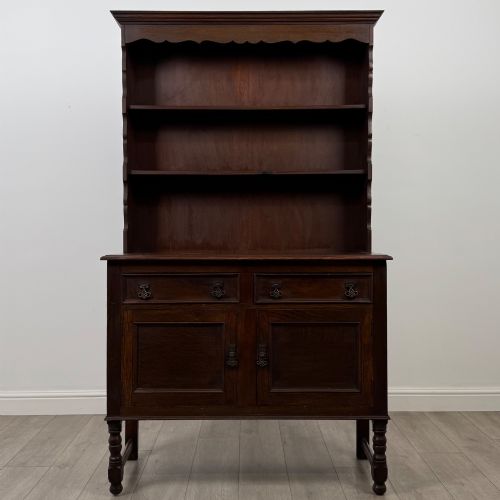
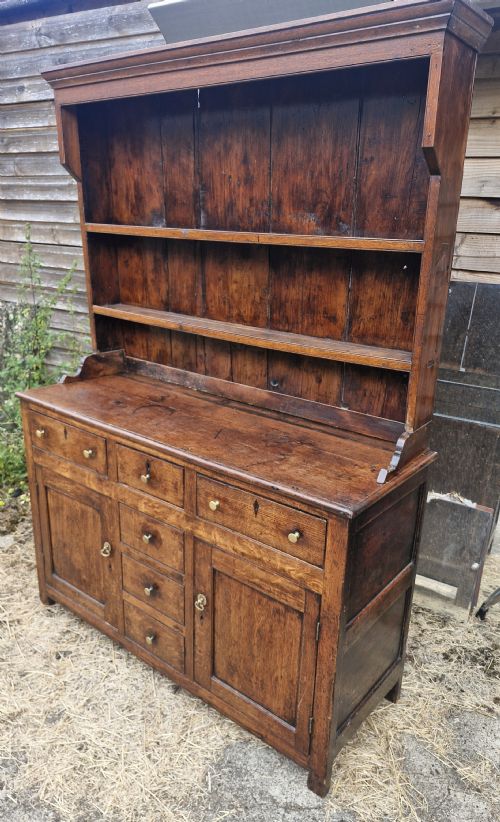
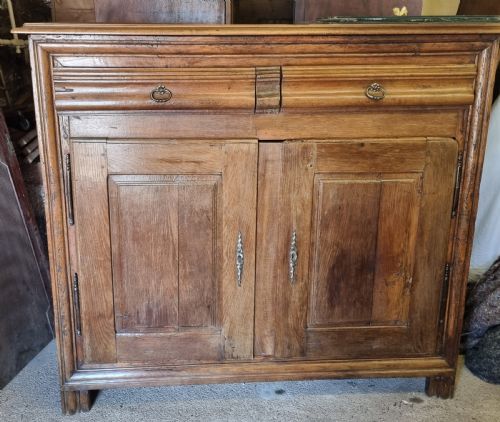
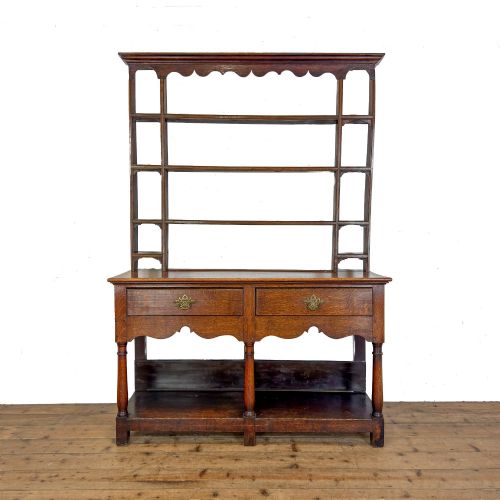
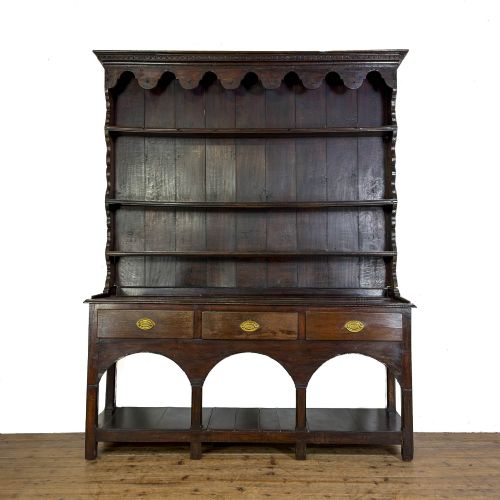
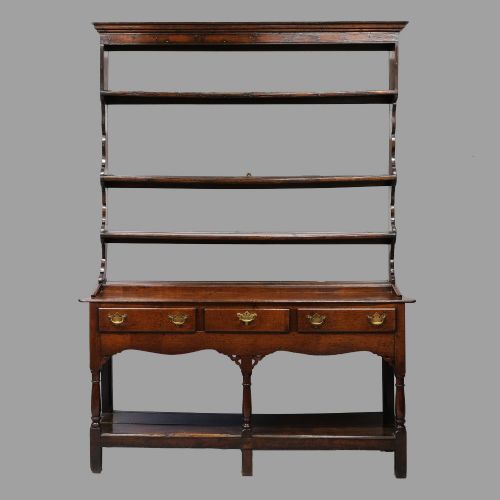
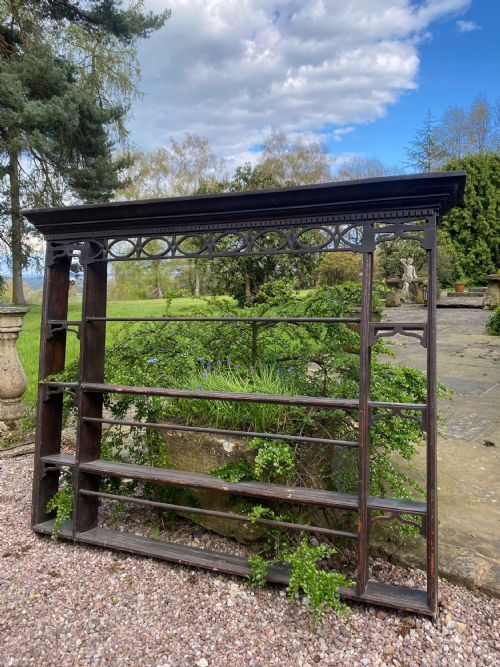
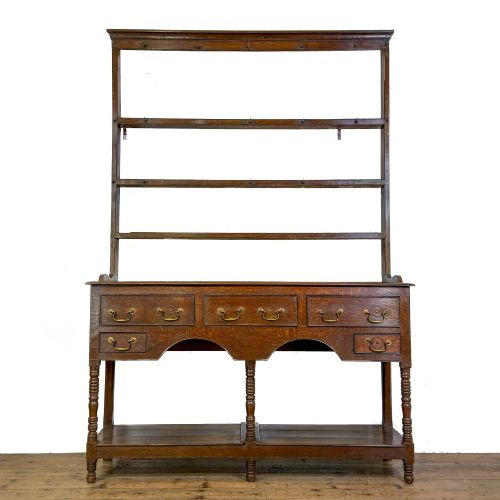
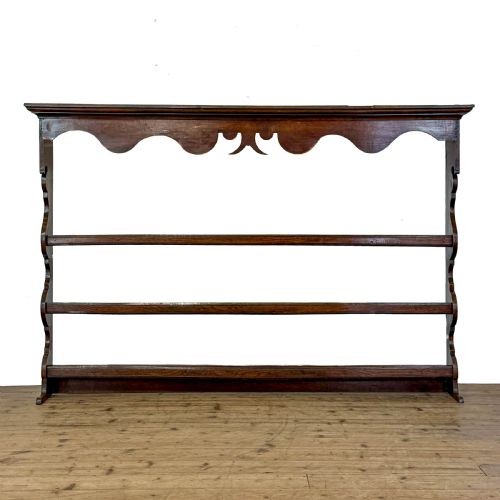
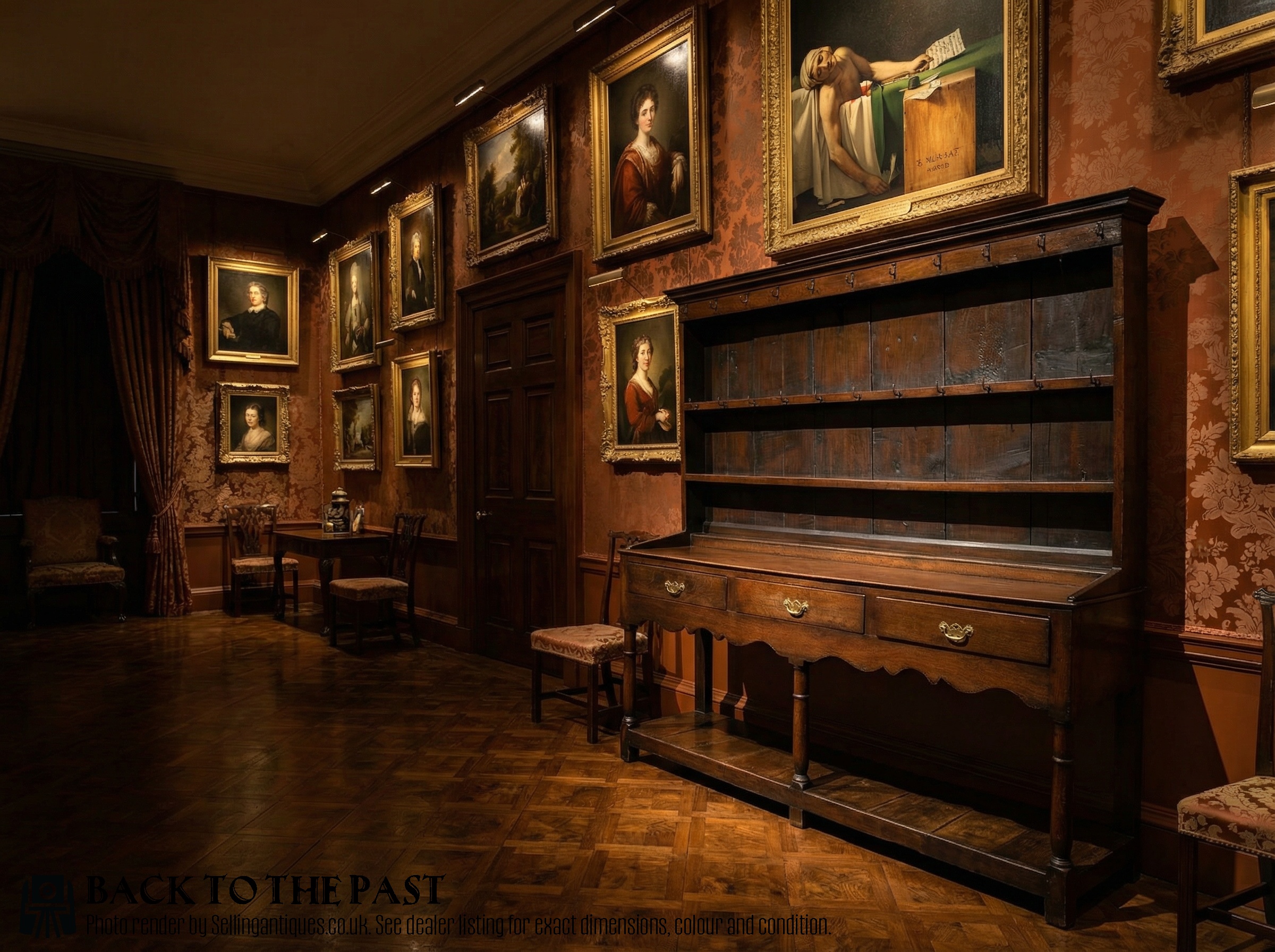
A rustic oak kitchen dresser combines a deep lower base of drawers and cupboards with an upper plate rack designed to display everyday crockery. These pieces serve as the practical heart of a country home, developed to hold utensils and provisions within easy reach.
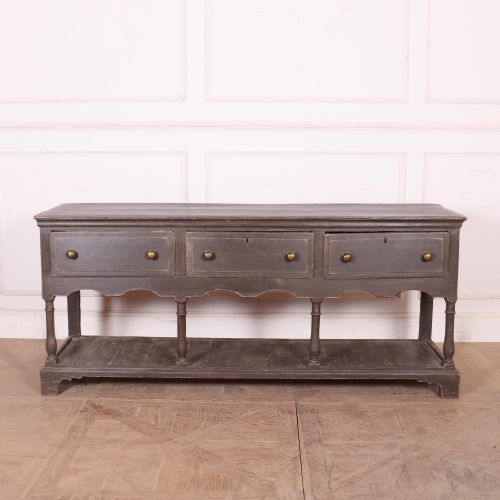
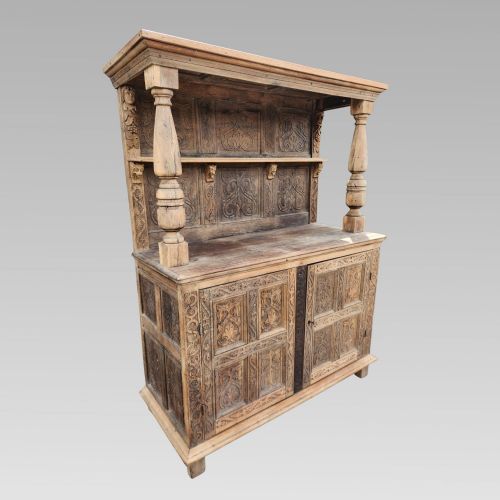
The examples gathered here span the eighteenth century and the Georgian period, alongside nineteenth-century interpretations. Visitors will encounter native Welsh vernacular designs and English country pieces, ranging from pot board bases to closed cupboards.
Form follows function closely in these sturdy items, where proportion is dictated by domestic utility rather than courtly fashion. The most common format on this page pairs an open rack with a heavy planked top and robust lower storage.
How they were made
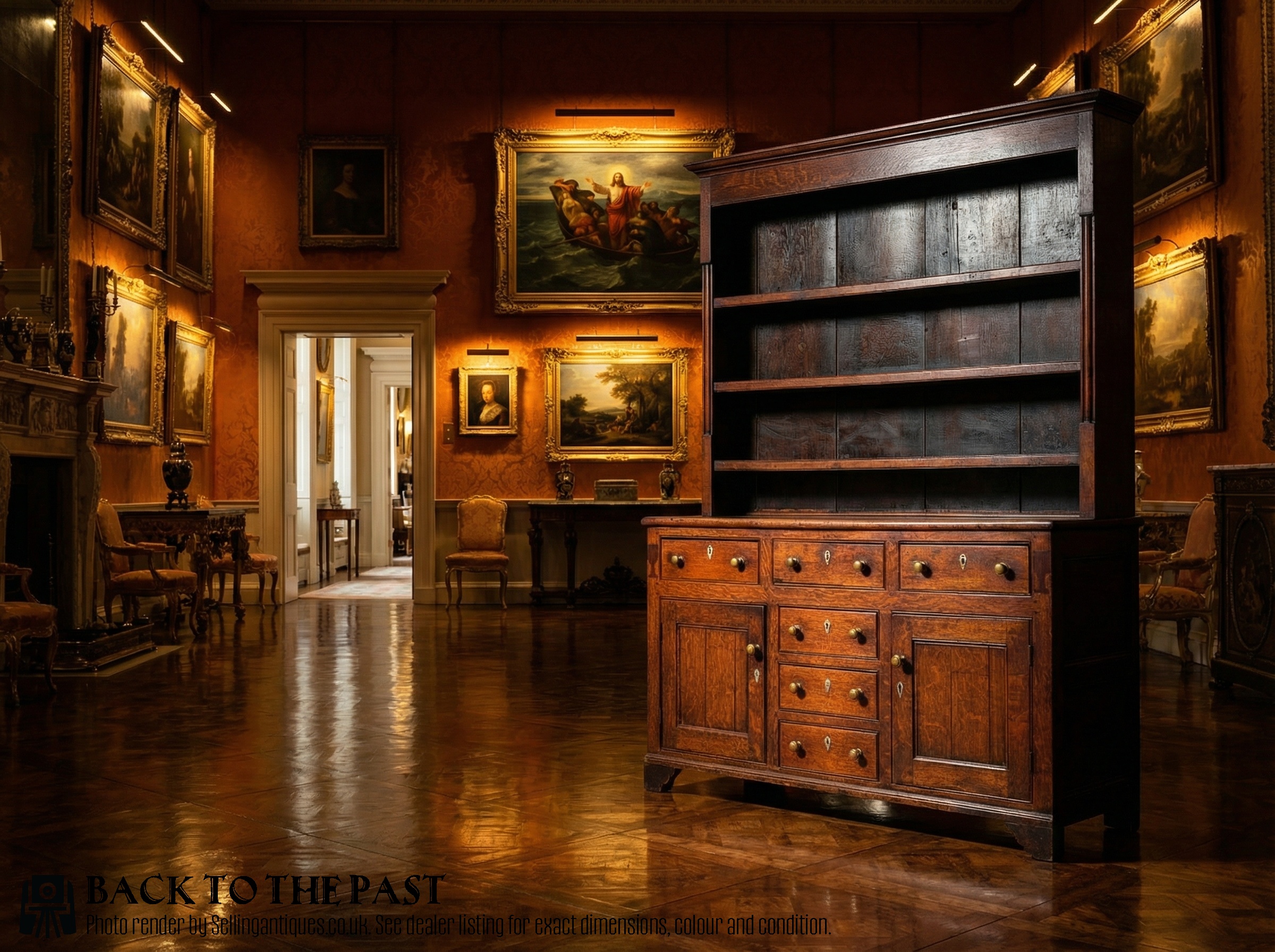
Makers built these pieces primarily from native oak, utilising heavy planks for the top boards, sides, and structural frames. Joinery relied on traditional pegged mortise and tenon construction to ensure the heavy timber withstood daily use in busy farmhouses and cottages.
Hardware details such as brass handles and iron fittings secure the doors and drawers, while occasional bone escutcheons accent keyholes. Carved elements appear on specific bases, showing hand-chiselled surface detail applied directly to the solid wood.
Retail Price Guide 2026
Typical UK retail prices for rustic oak kitchen dresser, calculated from the Sellingantiques database of over a million retail prices indexed since 2003. This retail price guide relies exclusively on Sellingantiques data; no external sources or auction records are used, so the figures do not describe the wider market.
The listings here feature oak construction combined with brass, iron, and bone details across eighteenth-century and Georgian periods.
What varies in quality
Quality in these dressers rests upon the selection of timber and the harmony of the overall proportions. Heavy native oak with rich grain patterns and deep patination elevates a piece far above simpler, later constructions.
The integrity of the construction, from the thickness of the pot board base to the retention of original brass hardware, defines the upper tier of these items. Pieces that retain their matched upper rack and lower base without extensive replacement timber represent the finest survivals.
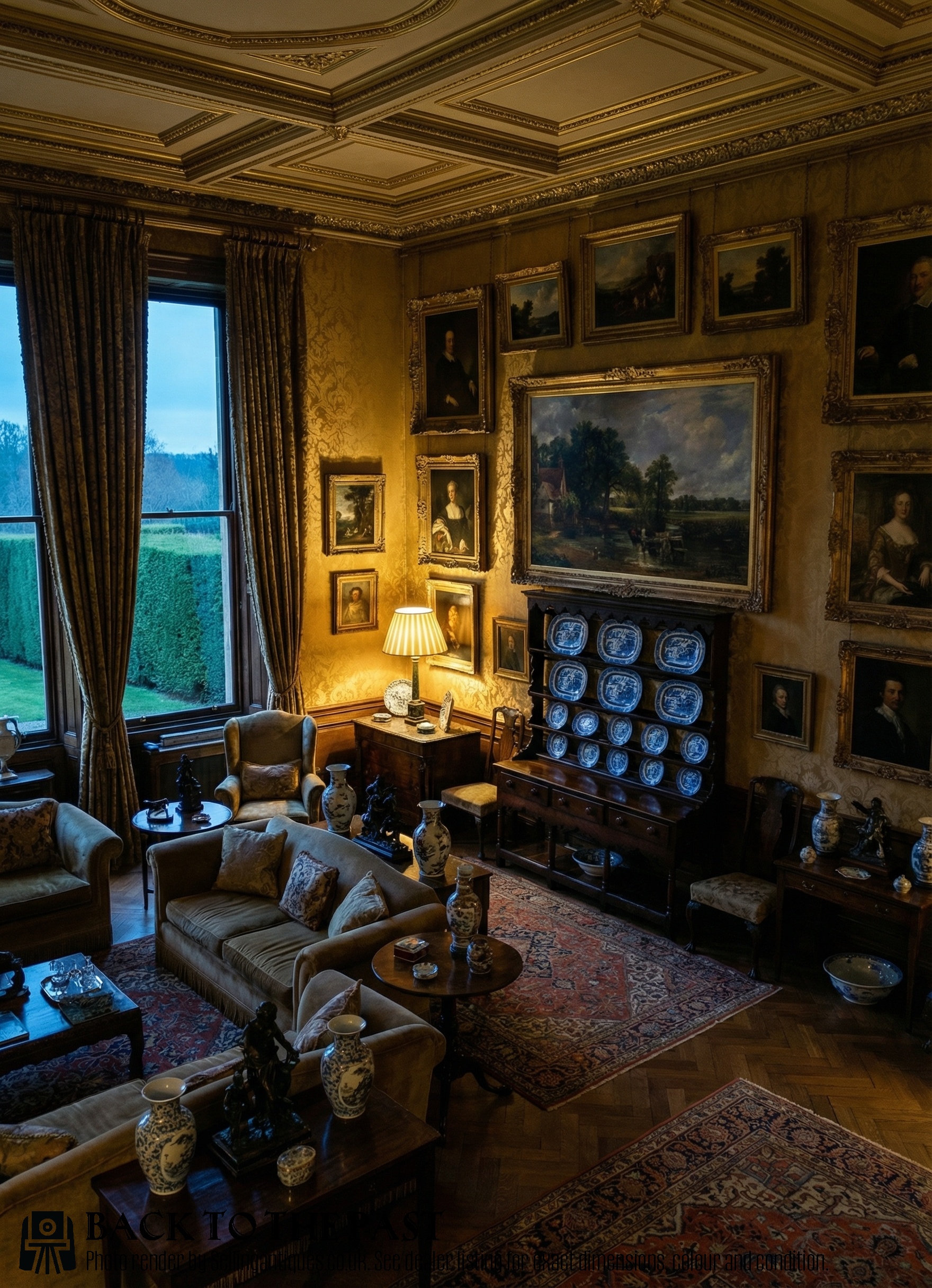
The Rustic Oak Kitchen Dresser Glossary
- Pot Board
- An open lower shelf beneath the main base of a dresser, traditionally used for storing large pots and pans. This lower platform sits raised above the floor on short feet or stile extensions.
- Rack
- The upper shelving unit attached to or hung above the dresser base, featuring plate grooves and vertical boards. It provides open display for ceramics and kitchenware.
- Welsh Vernacular
- A regional style of furniture making defined by local materials and traditional construction methods unique to Wales. These pieces often feature distinctive proportions and native timbers.
- Escutcheon
- A flat plate of brass, bone, or iron surrounding a keyhole to protect the surrounding wood from wear. They add subtle contrast against the dark oak surfaces.
- Pegged Construction
- A method of joining wooden components using tight-fitting wooden pins rather than modern metal fasteners. This allows the timber to expand and contract naturally with seasonal humidity changes.
Frequently Asked Questions
How do I date an oak dresser?
Dating relies on examining the construction methods, tool marks, and overall joinery style of the timber. Eighteenth-century examples often display hand-sawn board edges and pegged joints.
Later nineteenth-century pieces may incorporate machine-sawn timber or different hardware fixings. Comparing the wood patination across the base and the upper rack also offers clues to their age.
Are the upper racks always original?
Many country dressers survived centuries of domestic life separated from their original top racks. Finding a piece with a completely matching rack is a notable feature for collectors.
When evaluating a dresser, look for consistent timber ageing and compatible proportions between the top and bottom sections. Even married pieces offer wonderful utility and display space for modern homes.
How should I care for native oak?
Solid oak benefits from occasional treatment with traditional beeswax to nourish the dry timber and enhance the surface grain. Avoid placing the wood near direct heat sources to prevent splitting.
Gentle dusting with a soft cloth keeps the surface clean without damaging the historic patination. The hard-wearing nature of oak makes it well-suited for continued daily use in a modern kitchen.