

Antique Marble Sideboard
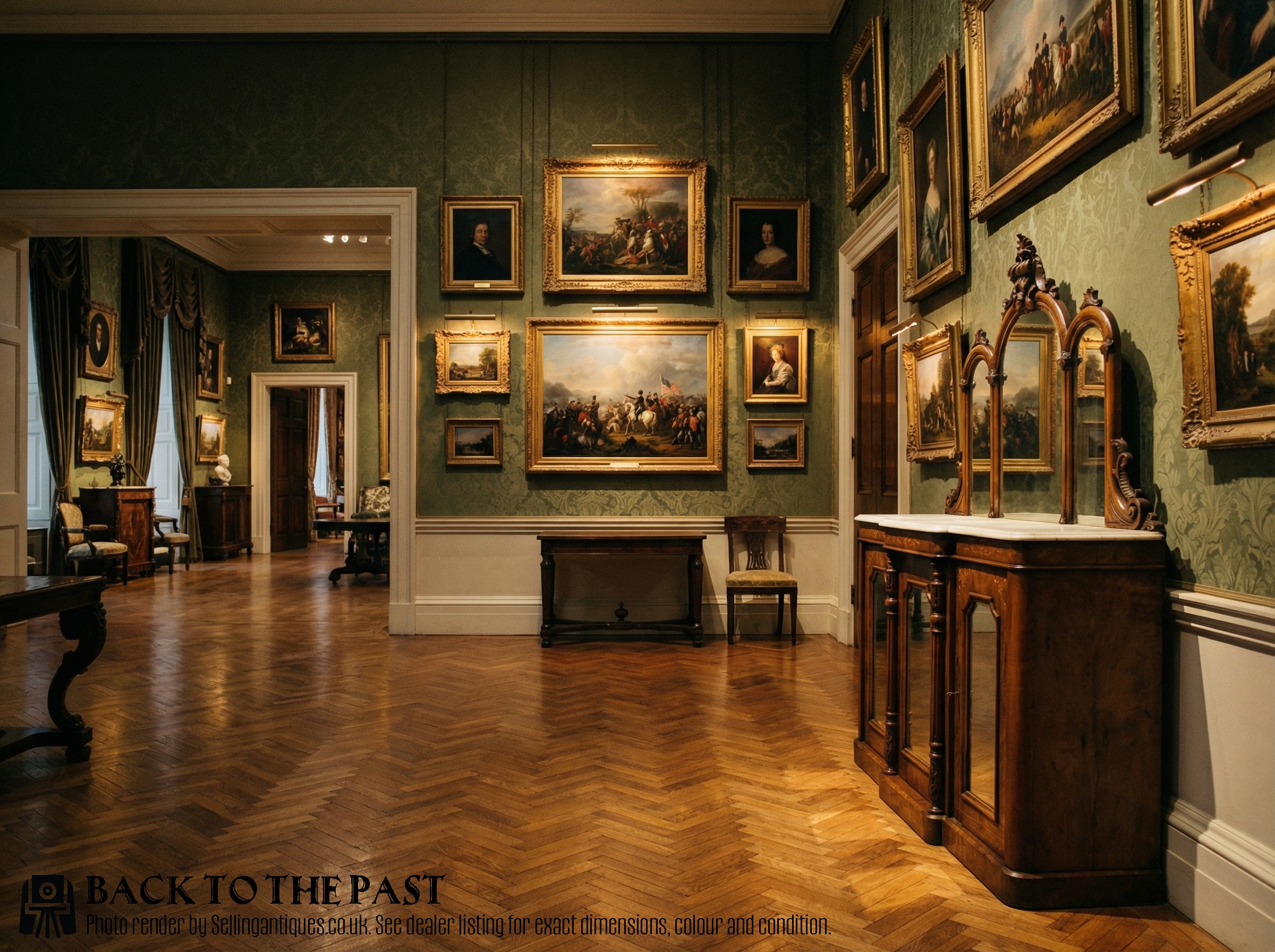
An antique marble sideboard brings striking stone surfaces and rich timbers together, offering both robust utility and grand decorative presence for a dining room or hall.
Antique Marble Sideboard
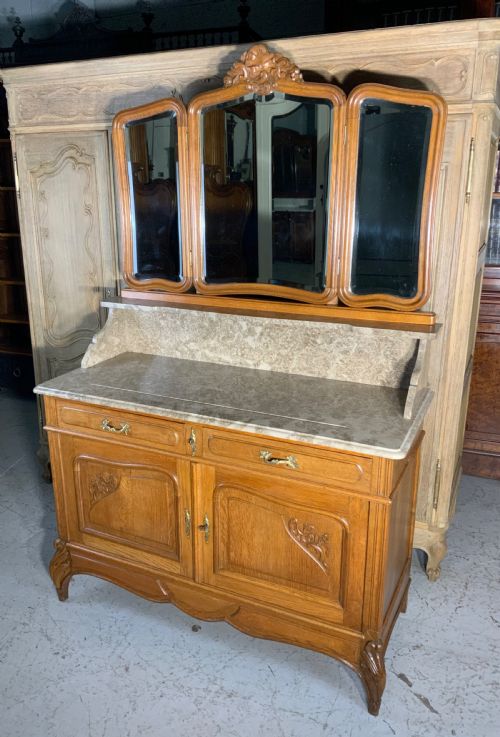
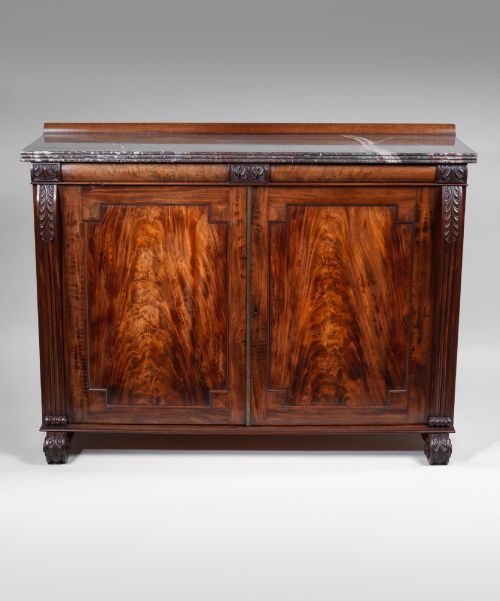
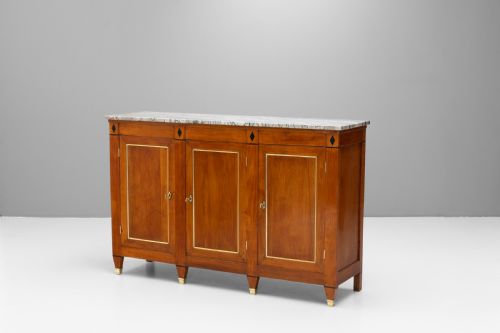
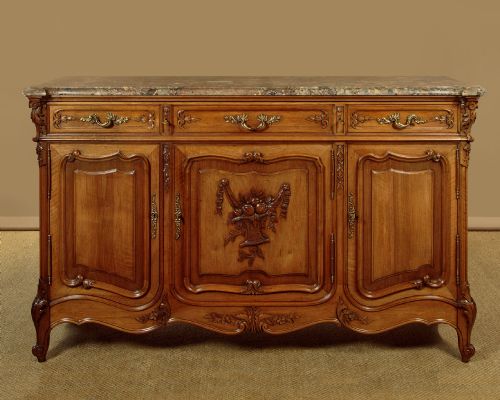
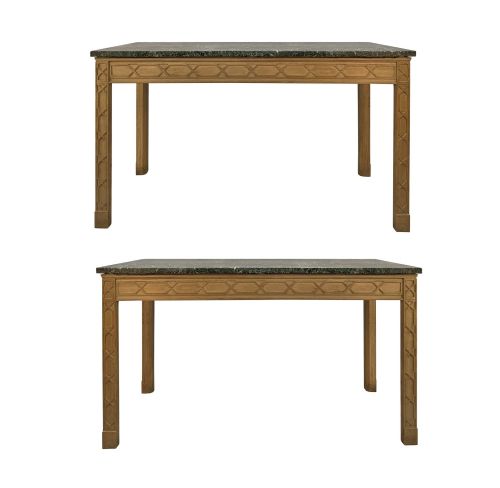
When you search for an antique marble sideboard, you encounter an array of heavy storage furniture designed with stone tops, spanning periods from the Regency era through to the early twentieth century. These pieces frequently appear in Victorian variations, often utilising rich timbers like burr walnut, mahogany, and rosewood alongside French revival styles.
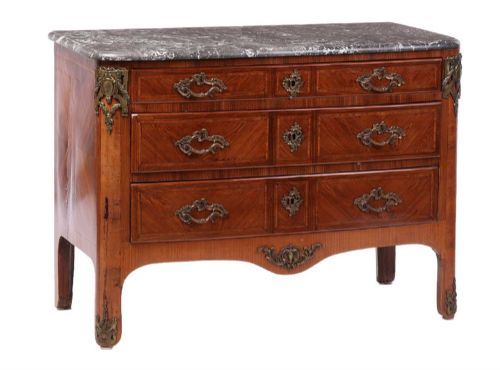
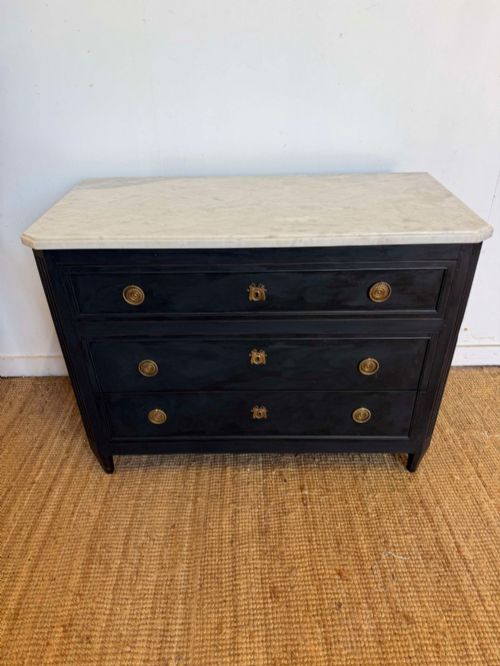
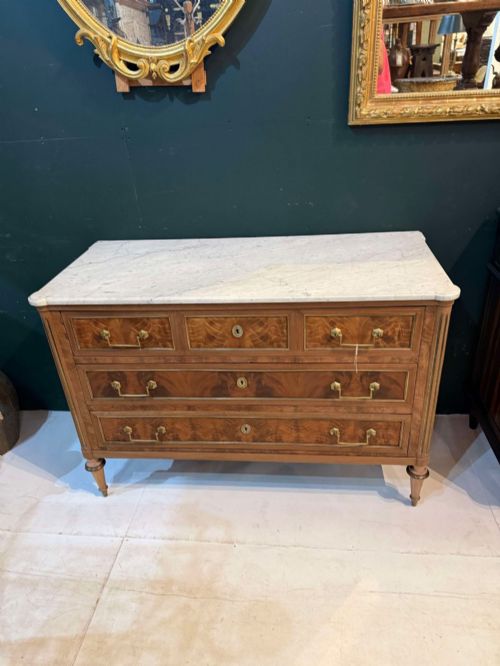
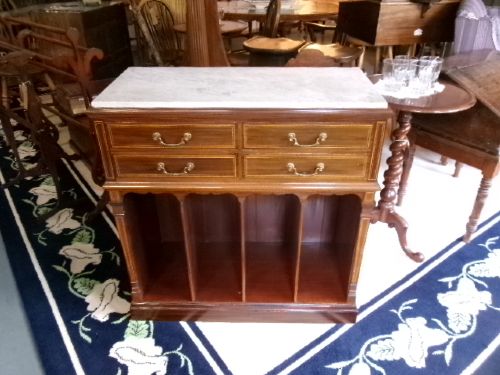
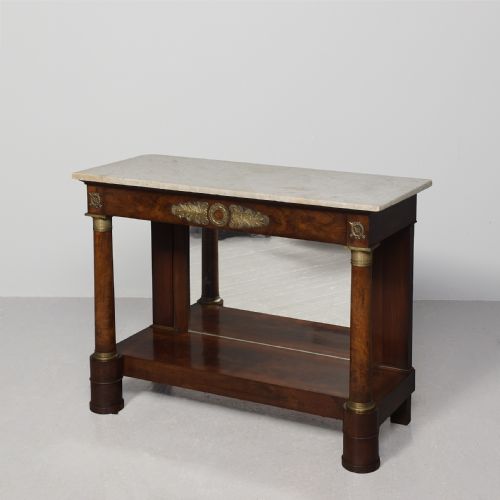
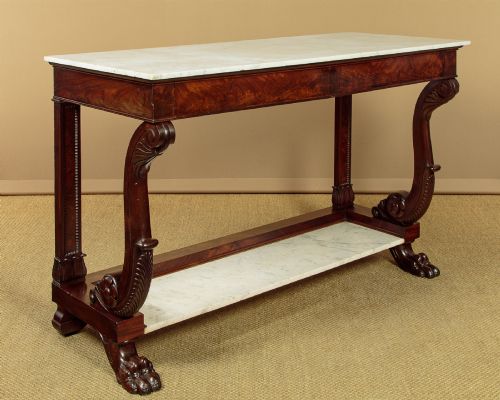
The form encompasses diverse cabinetry including credenzas, commode chests, console tables, and washstands that incorporate fitted marble slabs. Such items served formal reception rooms and parlours where heat-resistant stone surfaces accommodated serving dishes or decorative displays.
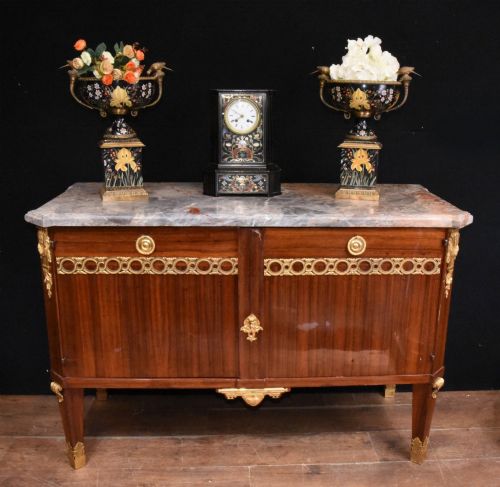
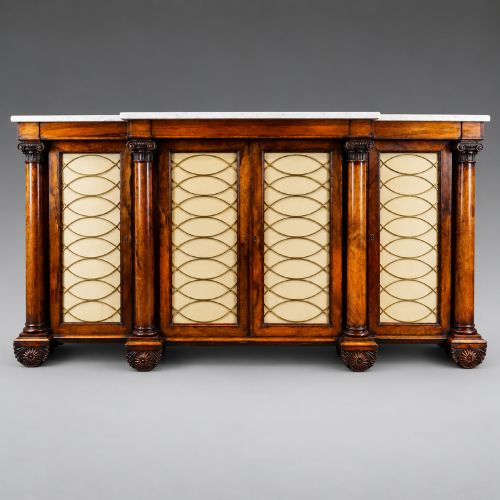
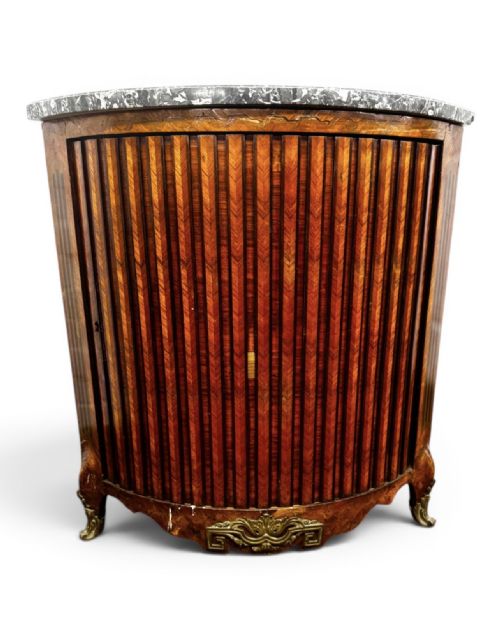
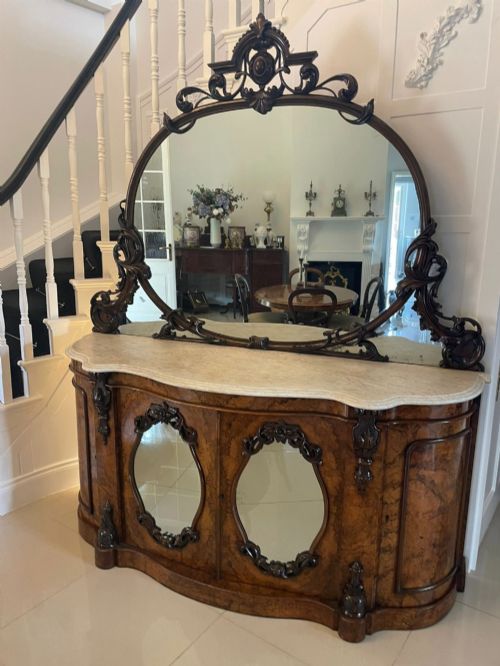
Victorian examples dominate the selection, frequently displaying figured burr walnut veneers, serpentine fronts, and gilt or ormolu mounts. Alongside these, French influences emerge through marquetry inlay and Louis XV revival curves, while Regency pieces introduce rosewood and brass detailing.
Materials and construction methods
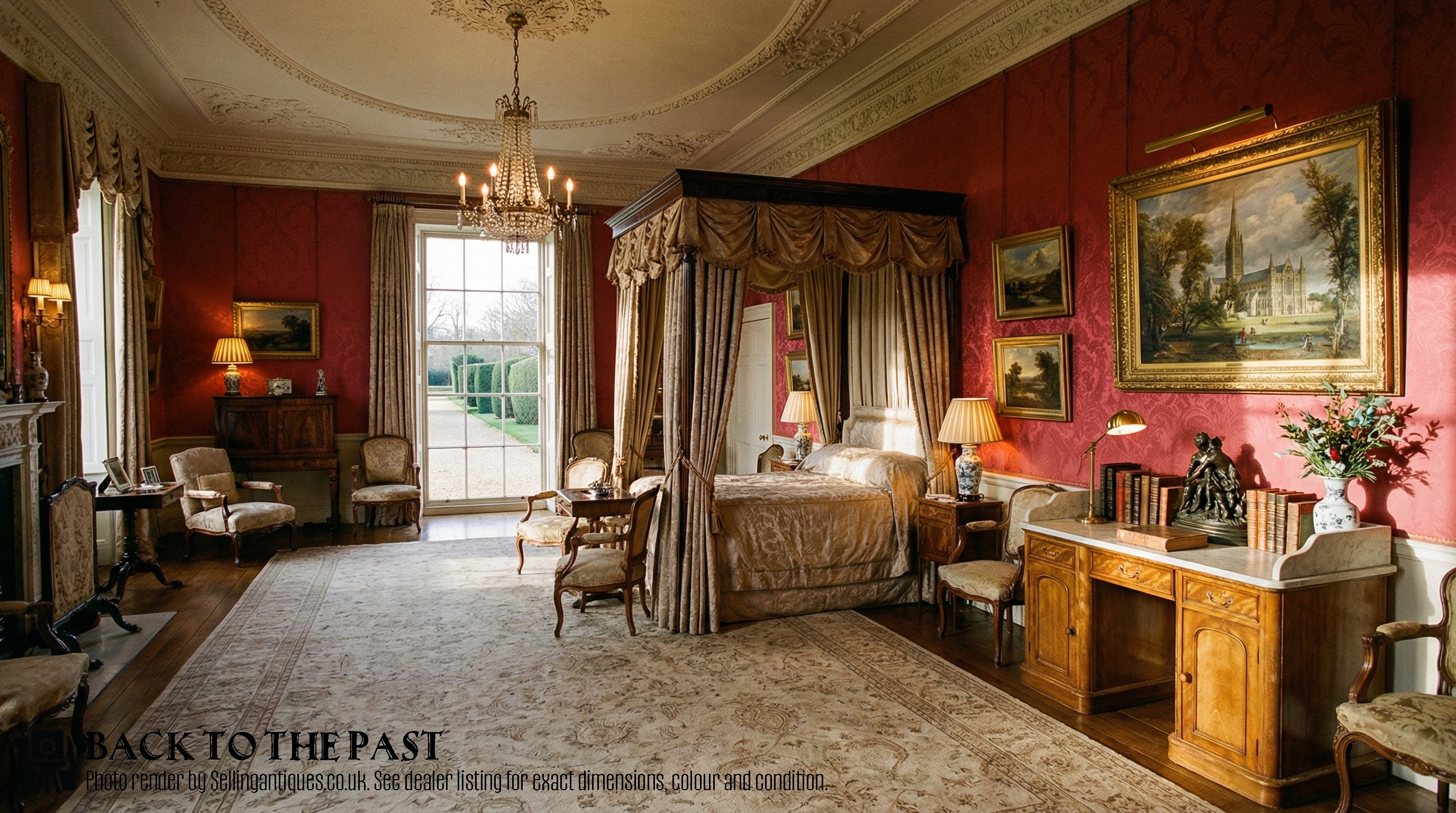
Cabinet makers constructed these pieces using solid hardwood frames faced with decorative veneers such as burr walnut, mahogany, satinbirch, and kingwood. Secondary timbers provided internal structural stability for shelving and drawers while exterior surfaces showcased elaborate grain patterns.
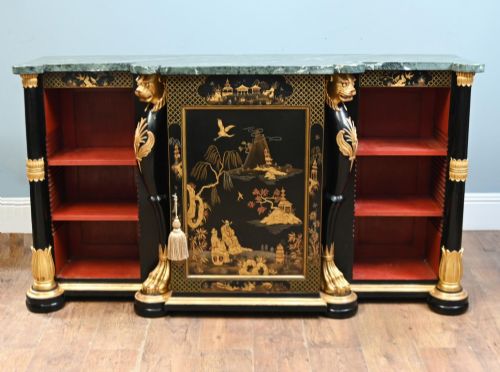
Heavy marble slabs, varying in colour from white to veined darker tones, were precisely cut to fit the upper surface of each cabinet. Metal elements like ormolu mounts, brass grilles, and gilt fittings were integrated into doors and framing to enhance the decorative scheme.
Antique Marble Sideboard Retail Price Guide 2026
Typical asking prices for marble sideboard among the pieces listed under this phrase on Sellingantiques today, from the lower quarter to the upper quarter. They describe what is for sale here now, not the wider market.
Some nineteenth-century dining rooms relied on these cool marble surfaces to keep butter from melting during long Victorian banquets.
Distinctions in craftsmanship and materials
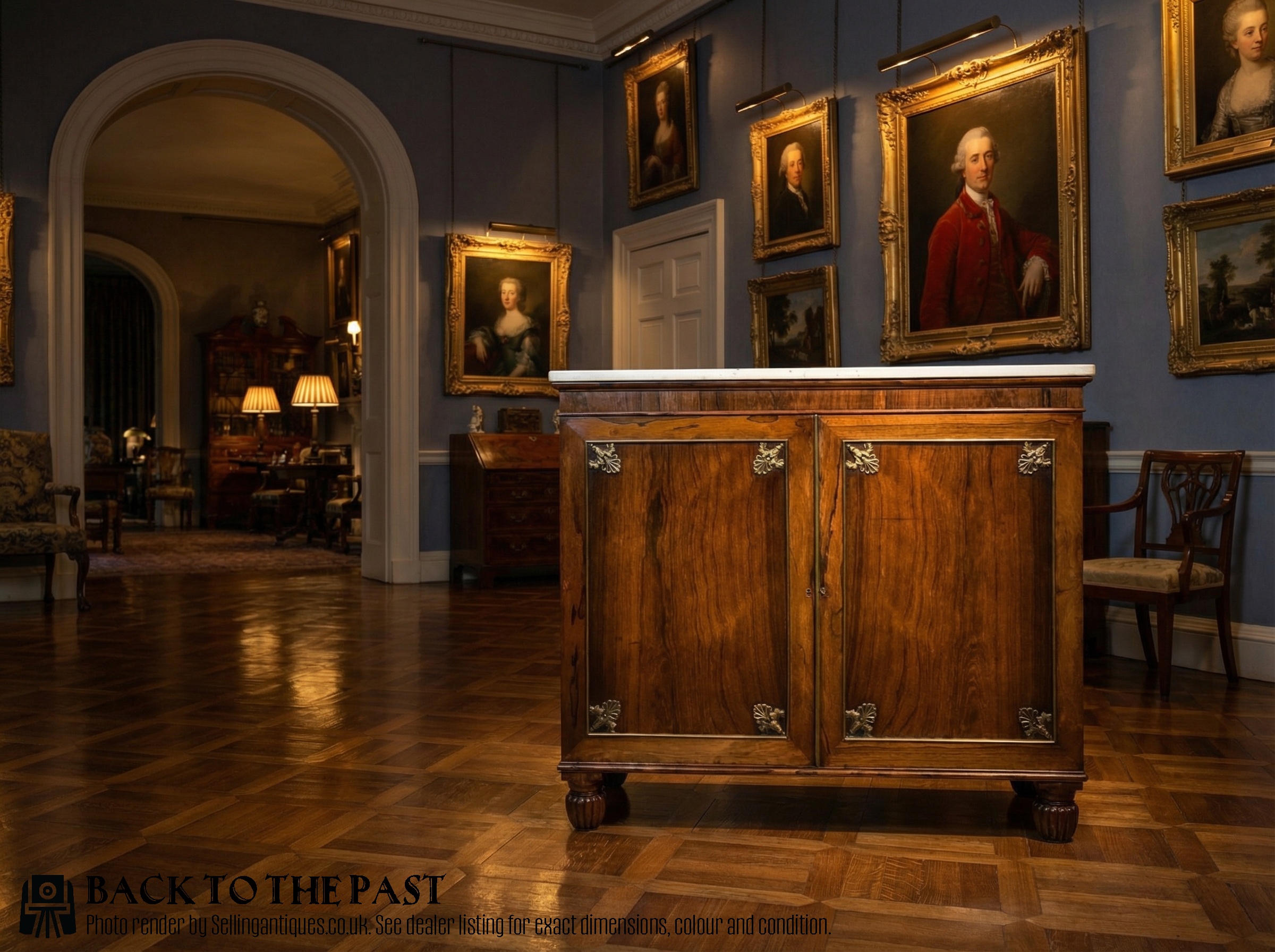
Superior examples separate themselves through the selection of timber veneers, displaying deeply figured burr walnut or carefully matched mahogany grains across the entire frontage. The thickness, polish, and natural veining of the marble top also indicate the tier of production.
Fine craftsmanship reveals itself in complex structural forms such as serpentine fronts, meticulous marquetry inlay, and integrated brass grill doors rather than flat, plain surfaces. Secondary details like finely chased ormolu mounts and robust internal construction elevate a piece above standard utility items.
Gillows
The Antique Marble Sideboard Glossary
- Credenza
- A sideboard or cabinet designed for formal dining rooms, frequently featuring enclosed cupboards and a flat top suitable for serving.
- Ormolu
- Gilt bronze mounts applied to furniture for decorative effect, common in French revival and high-end Victorian pieces.
- Marquetry
- Inlaid patterns of different coloured woods fitted into a veneer to create pictorial or geometric designs on cabinet doors and tops.
- Serpentine
- A gently undulating curved shape seen on the front edges of cabinet tops and carcasses, requiring skilled woodworking.
- Grill front
- Cabinet doors fitted with fine metal latticework or wire mesh rather than solid timber or glass panels.
Antique Marble Sideboard: Frequently Asked Questions
What periods do these sideboards come from?
The pieces span the nineteenth and early twentieth centuries, with significant representation from the Regency and Victorian eras.
Maker attributions and stylistic clues help date individual items within this broad timeline.
How were marble sideboards originally used?
They served primarily in dining rooms and parlours to display plate, store linens, and provide a durable surface for serving food.
The cool stone top proved particularly practical for resting dishes during large gatherings.
How do I care for the marble top?
Cleaning requires mild, non-acidic soap and water to protect the polished stone from etching and staining.
Periodic sealing helps maintain the natural finish against moisture and spills.
How do I identify French revival styles?
French revival pieces often display characteristic Louis XV curves, elaborate marquetry inlay, and prominent ormolu mounts.
Walnut and exotic veneers are frequently utilised to achieve this continental aesthetic.