

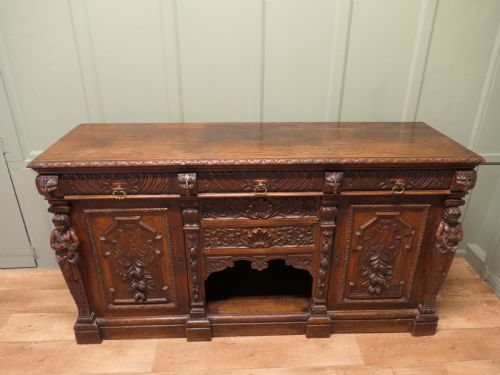
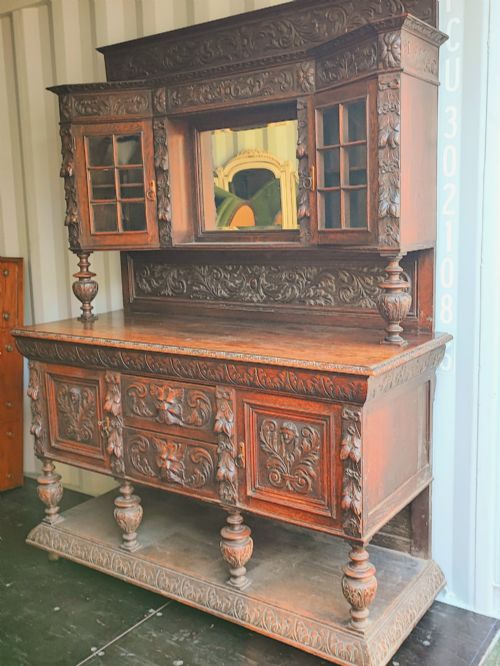
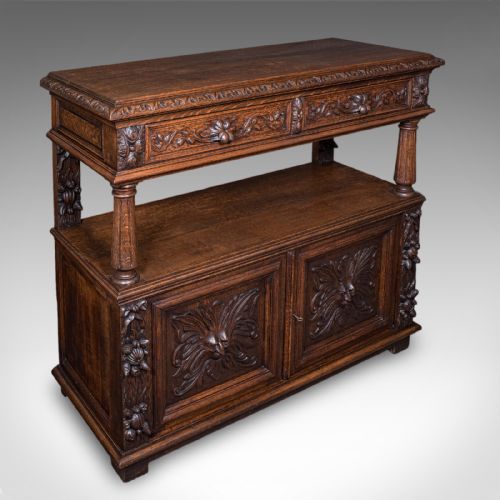
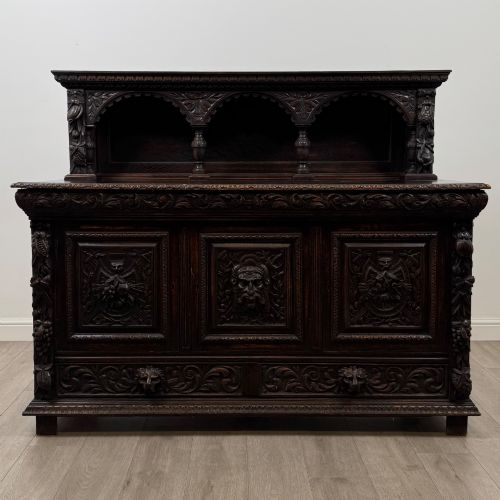


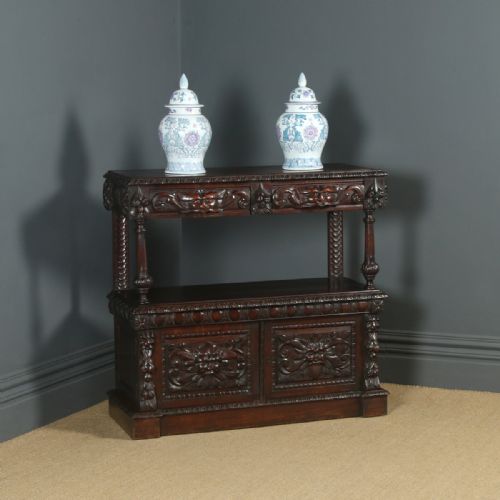
Carved Green Man Buffet
A carved green man buffet brings heavy Victorian presence and foliate mythology straight into a dining room.
Carved Green Man Buffet
A carved green man buffet is a substantial storage piece shaped by Victorian revival tastes during the nineteenth century. These items function primarily as sideboards, servers, and side cabinets designed for domestic dining spaces.
The pieces appearing on this page span the Victorian period, with specific dates clustering around eighteen eighty alongside broader nineteenth-century examples. Forms range from compact cupboards to very large sideboards featuring tiered surfaces and lower storage.
Makers drew heavily on historical design languages, producing works that combine functional utility with elaborate architectural and figural ornamentation. Buyers encounter forms designated variously as sideboards, buffets, servers, and side tables.
How they were made
Construction relies predominantly on solid oak, selected for its strength and capacity to hold deep, sculptural relief carving. Joinery incorporates traditional techniques suited to heavy domestic furniture intended to bear weight.
Surfaces feature prominent foliate mask motifs alongside brass hardware and inset glass, including bevelled mirrors in taller sideboard configurations. The decorative programme draws upon Gothic and Renaissance revival idioms executed entirely in timber.
Carved Green Man Buffet Retail Price Guide 2026
Typical asking prices for carved green man buffet among the pieces listed under this phrase on Sellingantiques today, from the lower quarter to the upper quarter. They describe what is for sale here now, not the wider market.
One listed nineteenth-century piece is specifically noted as being made from pussy oak, a charming historic term for timber with distinctive figuring.
What varies in quality
The depth and vigour of the carving dictate the visual impact of each individual buffet. Pieces displaying high relief and expressive facial details achieve greater sculptural presence than shallower, mechanical toolwork.
Proportion and scale also separate standard productions from exceptional large examples. Superior items integrate doors, tiers, and hardware into a coherent architectural composition.
The Carved Green Man Buffet Glossary
- Green man
- A sculptural architectural ornament depicting a human face emerging from or entwined with foliage and leaves. This traditional motif symbolises rebirth and spring.
- Buffet
- A low side table or cabinet used for serving food or storing dining room utensils. Victorian versions often include upper tiers and cupboards.
- Gothic revival
- An architectural and decorative style drawing inspiration from medieval design. It employs pointed arches, heavy tracery, and dark timber.
- Renaissance revival
- A nineteenth-century stylistic movement reviving sixteenth-century classical European motifs. It is characterised by symmetrical heavy carving and architectural framing.
- Bevelled glass
- Glass panes finished with an angled edge around the perimeter. This treatment catches the light and adds depth to mirrored sideboard backs.
Carved Green Man Buffet: Frequently Asked Questions
Where should I place a buffet?
These substantial pieces anchor dining rooms, large hallways, or spacious living areas effectively. Their depth requires adequate floor clearance so the carved details remain visible.
Keep them away from direct heat sources and strong sunlight to protect the aged timber and any integrated mirror glass.
How do I clean carved oak?
Dust the deep recesses regularly using a soft-bristled brush to prevent dirt accumulation within the foliage carving. Avoid modern silicone sprays that can damage antique wood finishes.
Apply traditional beeswax sparingly and buff gently with a clean cloth to maintain the natural lustre of the oak.
Were these always dining room furniture?
Most examples served as functional storage and display units within Victorian dining spaces. They held serving dishes, cutlery, and glassware during large meals.
Some smaller variants functioned as side tables or dumbwaiters in libraries and drawing rooms.
How can I tell the period?
Examine the timber preparation, joinery methods, and hardware style for nineteenth-century manufacturing indicators. Hand-cut joints and heavy oak construction point directly to the Victorian era.
Stylistic markers like Gothic tracery and Renaissance revival motifs help narrow the date range closer to eighteen eighty.