
Antique Arts and Crafts Table
An antique arts and crafts table brings honest construction and simple utility into a room, offering sturdy oak and clever joinery.
Antique Arts and Crafts Table
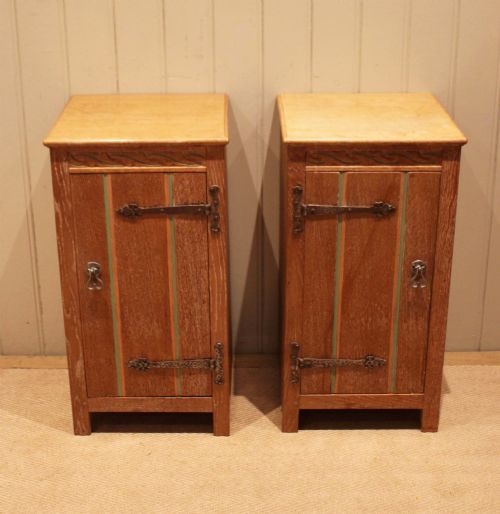
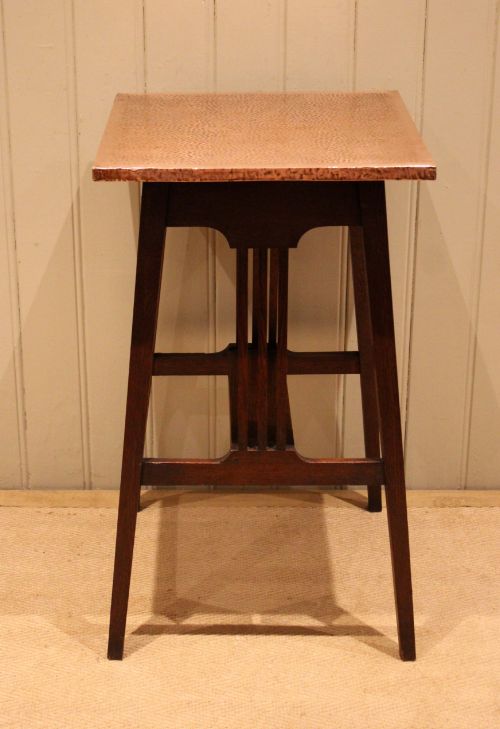
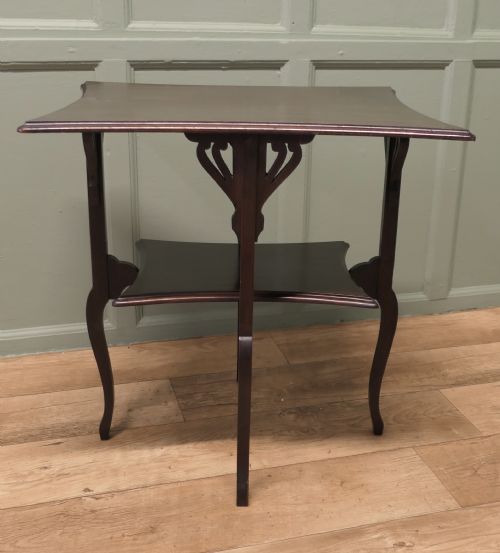
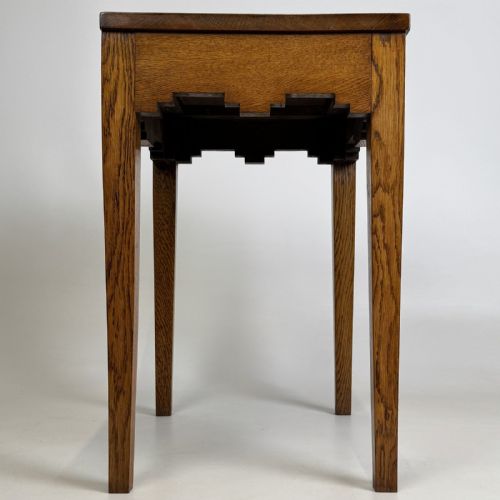
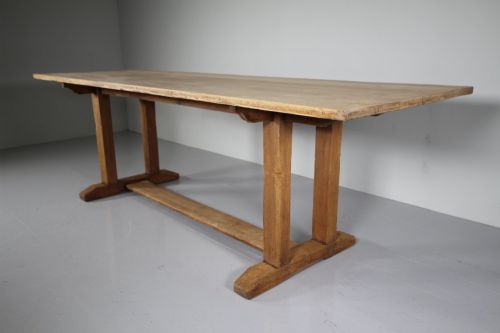
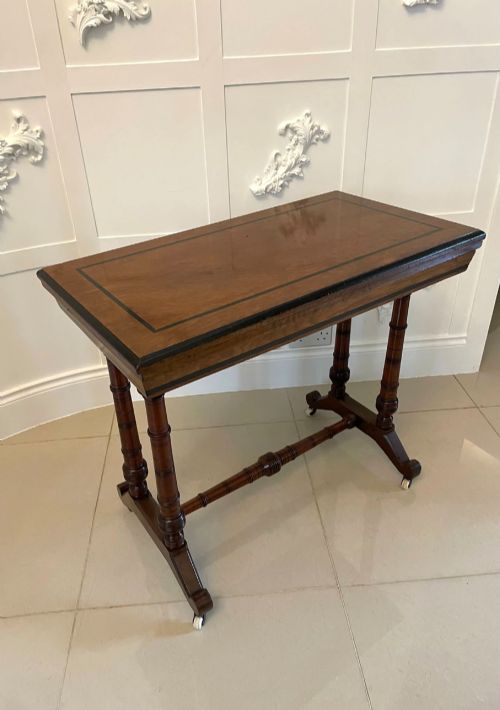
When you search for an antique arts and crafts table, you encounter practical furniture designed to reject industrial mass production in favour of visible craftsmanship. The pieces listed on this page span the late nineteenth century through the Edwardian period and into the nineteen thirties.
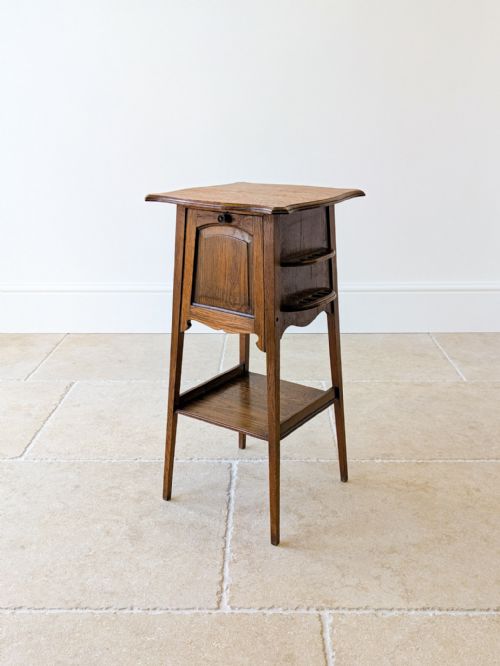
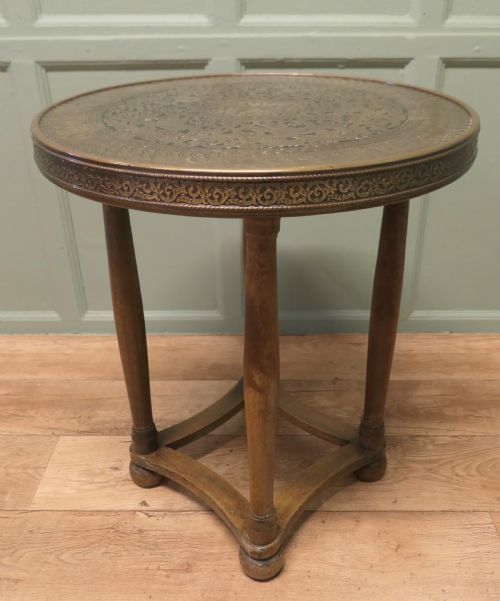
Occasional tables, side tables, and plant stands form the majority of the selection. Dining tables and desks also appear, constructed primarily in solid oak alongside walnut, elm, and mahogany.
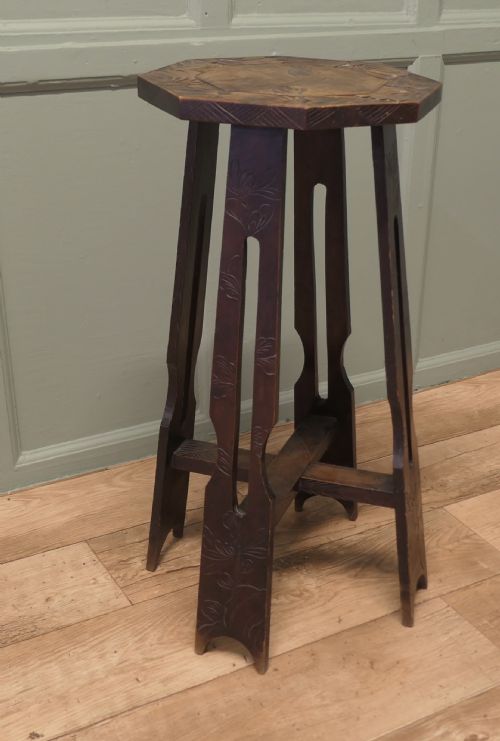
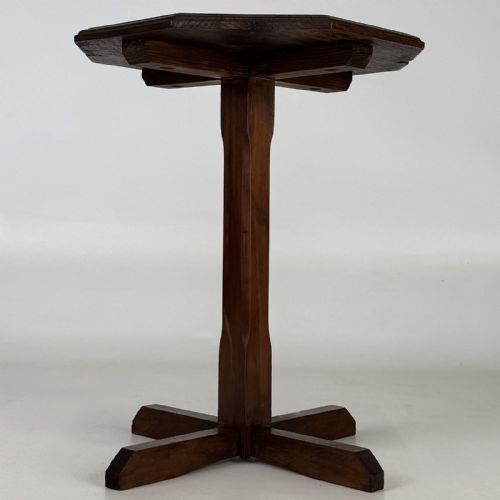
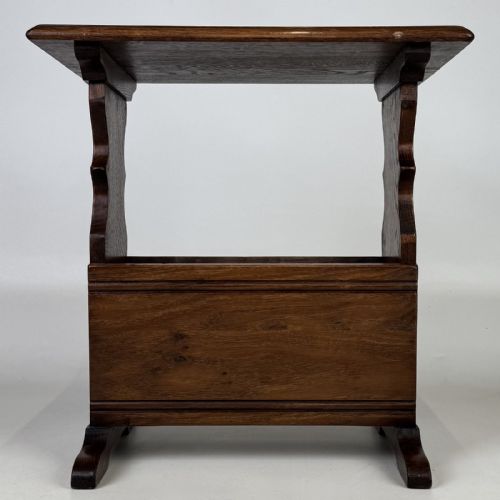
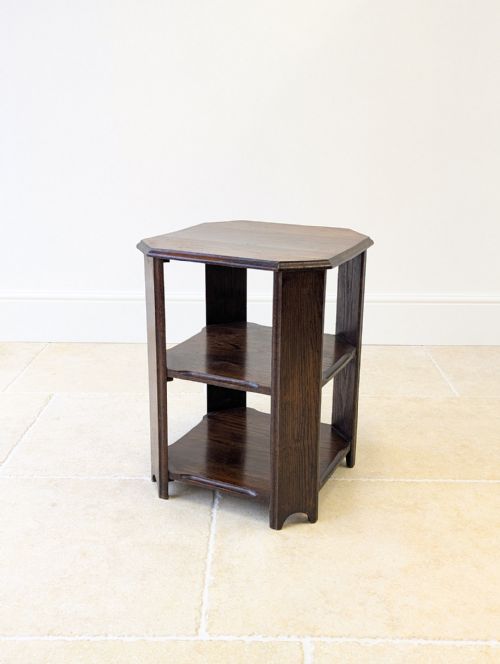
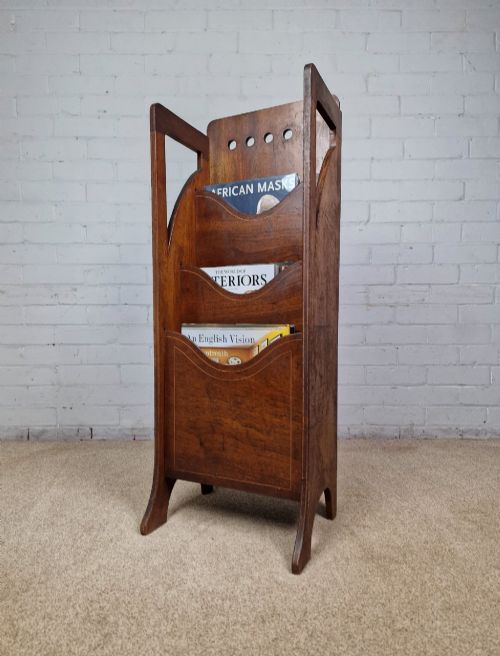
Styles range from plain utilitarian designs to pieces influenced by the Jacobean, Gothic, and Celtic revivals. Makers utilise octagonal tops, stretcher bases, and integrated magazine racks to combine decorative appeal with daily function.
Materials and Technique
Makers relied heavily on solid oak, golden oak, and limed oak, often selecting timber with prominent grain and figuring. Elm and walnut also appear, complemented by brass, copper, iron, and ceramic tiles set into table surfaces.
Construction techniques emphasise traditional joinery over hidden fasteners, displaying exposed tenons, pegged joints, and hand-carved details such as linenfold panels or heart motifs. Metalwork components include hammered brass tops and pewter ornamentation.
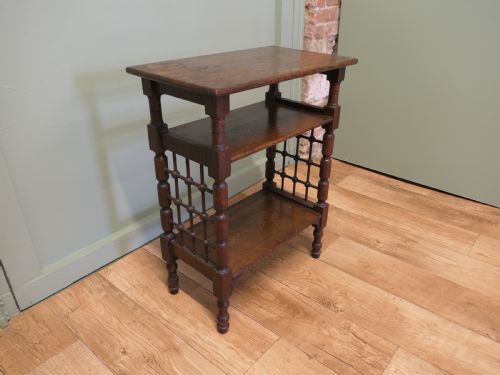
Form variations include octagonal plant stands, refectory dining tables, library writing desks, and side tables fitted with integrated magazine racks.
Assessing the Standard
Quality rests upon the integrity of the timber selection and the precision of the hand-carved or hammered details. Superior examples exhibit carefully chosen oak grain, balanced proportions, and robust structural joinery that withstands decades of use.
Lesser pieces rely on routine factory production with minimal hand finishing. The presence of original hardware, unaltered surfaces, and verified maker attribution elevate a table above standard utilitarian examples.
Liberty & Co·Shapland & Petter·Leonard Wyburd·Finnigans·Guild of Handicrafts·Jack Grimble·Archibald Knox
The Antique Arts and Crafts Table Glossary
- Stretcher base
- A system of horizontal wooden bars connecting the legs of a table to provide structural rigidity. These supports frequently feature pegged joints characteristic of the period.
- Limed oak
- A wood finishing technique that leaves a white or pale pigment in the grain of the timber. This treatment lightens the appearance of the oak while highlighting its natural texture.
- Refectory table
- A long dining table traditionally utilised in communal halls. Arts and crafts examples adapt this sturdy form with straightforward wooden construction and exposed stretchers.
- Linenfold
- A style of wood carving that mimics the appearance of folded fabric. Craftsmen carved these vertical reliefs onto panels for sideboards, desks, and cabinet doors.
Antique Arts and Crafts Table: Frequently Asked Questions
What defines an arts and crafts table?
These pieces prioritise visible hand construction, simple lines, and natural materials over elaborate ornamentation. Solid oak dominates the form, often accented with hammered brass or ceramic tiles.
Designers rejected mass production to champion traditional craftsmanship and utility. The resulting furniture works well in both period interiors and modern spaces.
How do I date an oak side table?
Examine the construction methods, hardware, and surface treatment to establish a period. Tables from the late nineteenth and early twentieth centuries frequently display hand-pegged joints and quarter-sawn oak grain.
Catalogues and maker marks provide further dating evidence. Edwardian pieces tend to feature lighter proportions compared to heavy Victorian designs.
Where should I place an occasional table?
An occasional table suits living rooms, hallways, and bedrooms as a practical surface for lamps, books, or plants. Octagonal and round variants fit neatly into corners or beside armchairs.
The sturdy construction allows for daily use. Placing the timber away from direct heat sources protects the finish and prevents warping.
Are tiled top tables durable?
Ceramic tiles set into wooden tops provide a heat-resistant surface historically utilised for plants or serving dishes. These glazed insets withstand normal daily wear when treated with reasonable care.
Inspect the grout and surrounding wood periodically to ensure moisture does not penetrate the joints. Cleaning requires only a soft cloth and mild soap.