







19th Century Cricket Table
A 19th century cricket table offers a sturdy three-legged form that fits tight corners and small spaces with utilitarian charm.
19th Century Cricket Table
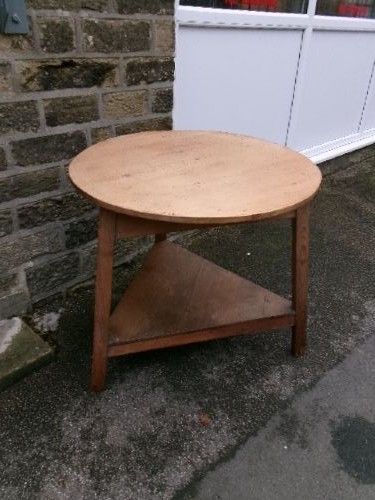
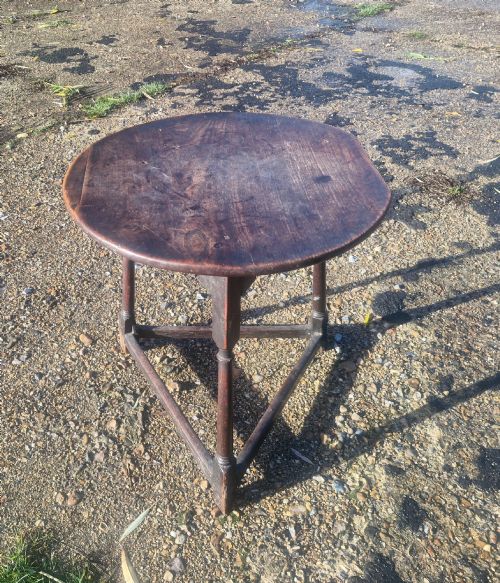
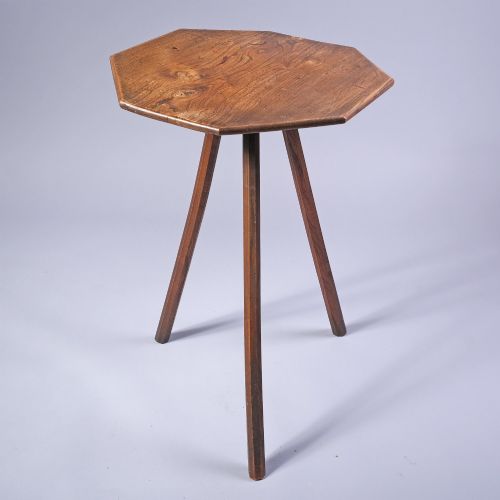
A 19th century cricket table is a distinct three-legged circular table traditionally designed for stability on uneven farmhouse floors. Buyers searching this phrase look for compact occasional or side tables originating from Welsh and English regional vernacular workshops.
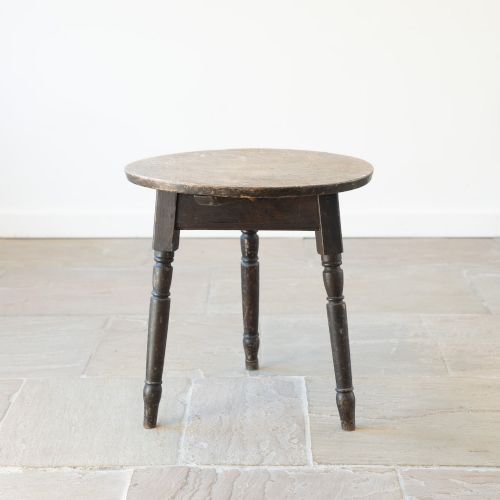
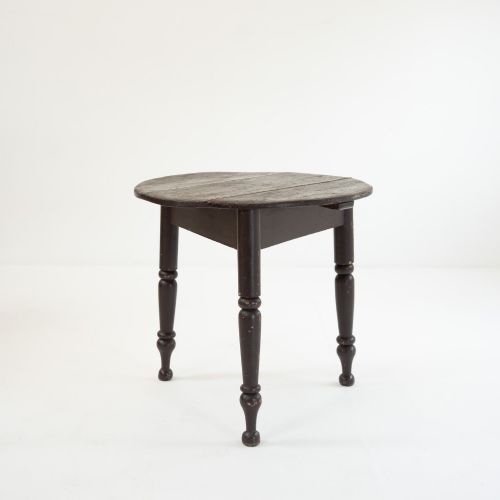
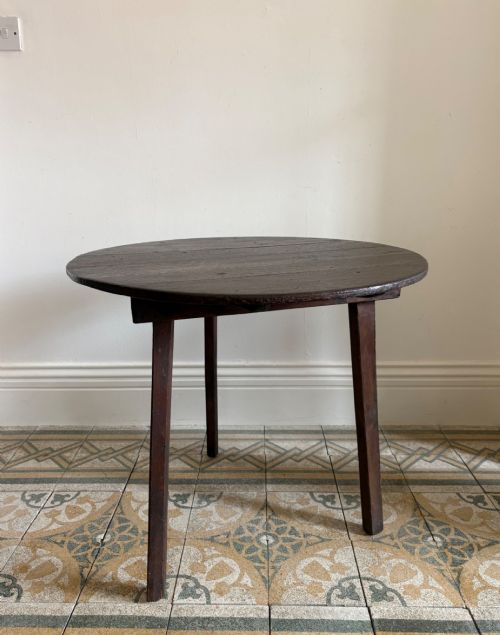
The version most commonly met on this page pairs a sturdy plank top in pine, oak, or elm with three simple turned or pegged legs. Regional variations span from plain pine workhouse tables to painted Welsh tavern pieces and elm-topped examples.
Construction formats combine circular timber tops with triangular framing beneath, often utilising mixed woods where bases are pine and tops are oak or elm. These utilitarian pieces served domestic and tavern functions across rural Britain.
Materials and Technique
Makers utilised native timbers readily available in local regions, combining sturdy pine for bases with durable oak, elm, or pollard oak for the circular tops. Plank construction dominates the tabletops, secured underneath with cross braces or ledges.
Joints rely on traditional pegged construction where the three legs pass directly through the tabletop or slot into a heavy triangular frame beneath. Surface treatments range from clear wax finishes to original layers of paint and milk wash.
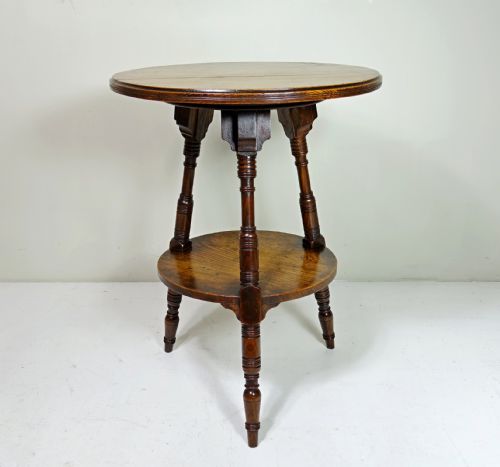
Certain examples incorporate decorative turning on the supports, including bobbin turned legs, while others retain plain tapered or pegged cylindrical legs shaped by local joiners.
19th Century Cricket Table Retail Price Guide 2026
Typical asking prices for 19th century cricket table among the pieces listed under this phrase on Sellingantiques today, from the lower quarter to the upper quarter. They describe what is for sale here now, not the wider market.
Listings feature pine, oak, elm, and ash tables spanning the Georgian and Victorian periods, including painted and plank top variants.
Judging Quality
Quality rests in the choice of timber and the integrity of the original joints joining the three legs to the circular top. Tables featuring dense elm or figured pollard oak tops command greater interest than standard softwood pine variants.
Surface preservation separates standard utilitarian examples from superior survivals, particularly where original paint finishes or untouched historical patina remain intact. The balance of proportions between the diameter of the circular top and the splay of the three legs dictates visual success.
The 19th Century Cricket Table Glossary
- Cricket table
- A small three-legged circular occasional table originating from rural domestic and tavern use. The three legs provide inherent stability on flagstone floors.
- Vernacular
- Regional furniture made by local joiners using native timbers rather than following formal metropolitan design patterns. These pieces reflect local traditions and available materials.
- Plank top
- A tabletop constructed from solid boards joined edge to edge rather than veneered panels. These boards are frequently secured by underlying cleats.
- Bobbin turned
- A style of leg turning that produces a series of rounded spheres resembling wooden bobbins or spools. This decorative detail appears on select regional tables.
- Pollard oak
- Timber taken from trees that have been pollarded, resulting in dense wood with heavily swirled grain patterns. This material is chosen for decorative tabletops.
19th Century Cricket Table: Frequently Asked Questions
What were 19th century cricket tables used for?
These three-legged tables served versatile roles in farmhouses, cottages, and taverns as small eating tables, work surfaces, or stands for household items. Their stable tripod design suited uneven stone and flagged floors.
In public houses and domestic spaces, they provided convenient surfaces that could be tucked into corners or moved easily around the room.
How do I style a cricket table at home?
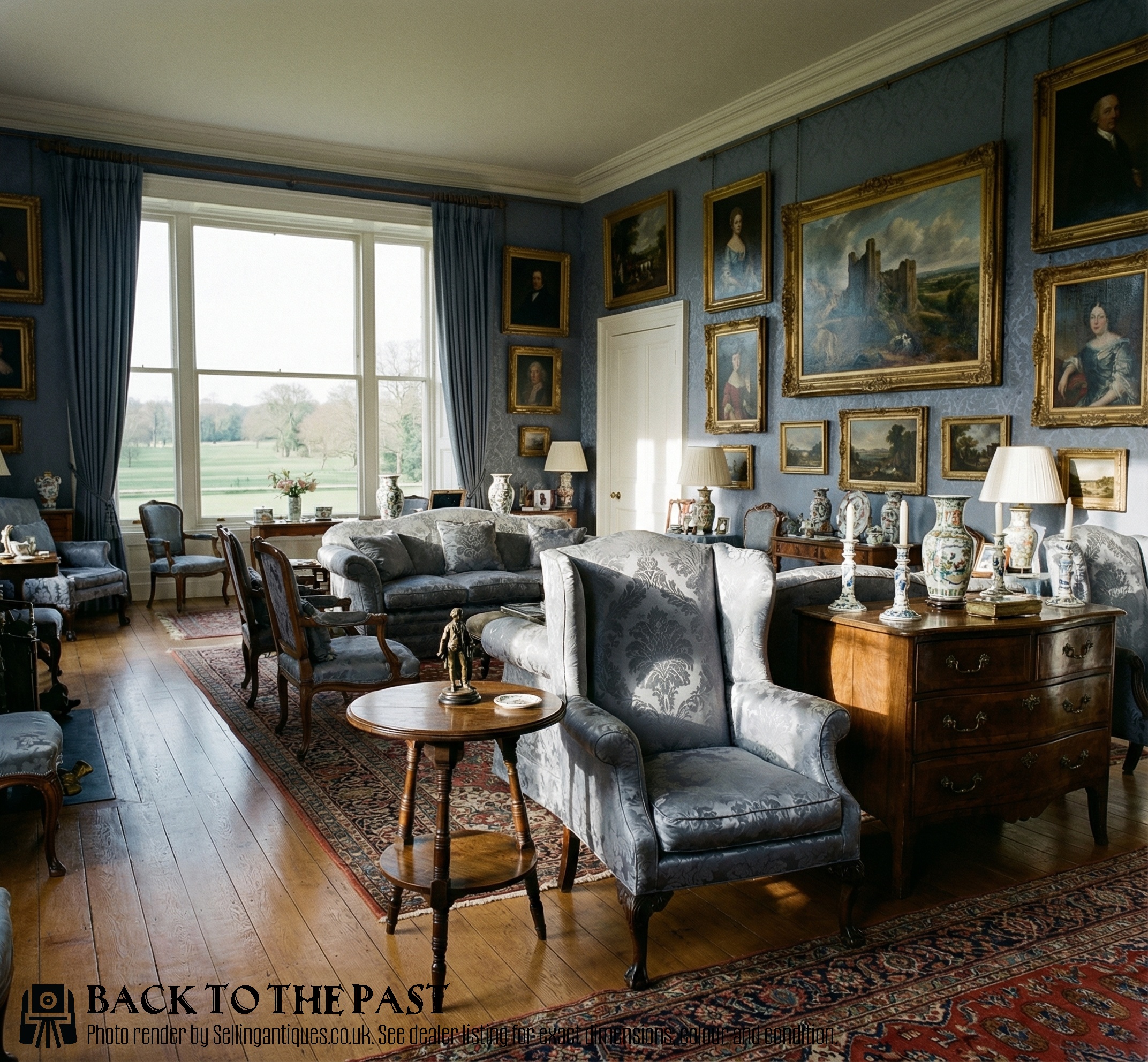
Place a cricket table beside an armchair or in a narrow hallway where a four-legged table takes up too much floor space. The circular top softens straight architectural lines in modern or traditional rooms.
Keep surfaces uncluttered to let the timber grain or original painted finish remain the focal point of the arrangement.
How do I identify a Welsh cricket table?
Welsh examples frequently appear in regional surveys alongside tavern and boarders pieces, often constructed with heavy oak or pine tops. They share the characteristic three-legged tripod format found across British vernacular traditions.
Specific regional variants may display distinct paint layers or mixed timber construction pairing pine bases with hardwood tops.