
Vintage Tripod Table
A vintage tripod table provides a steady three-legged surface for your room, moving easily from beside a chair to a quiet corner.
Vintage Tripod Table
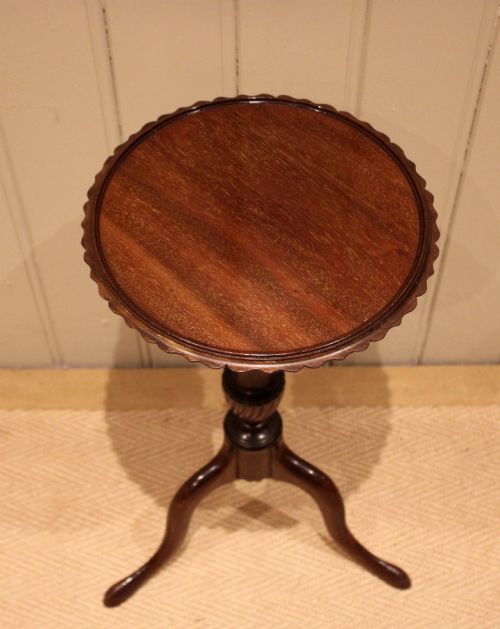
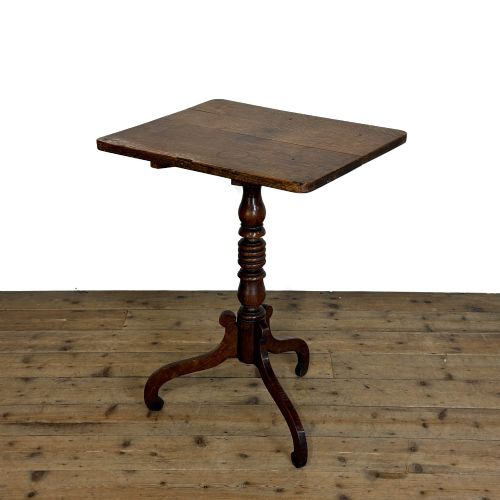
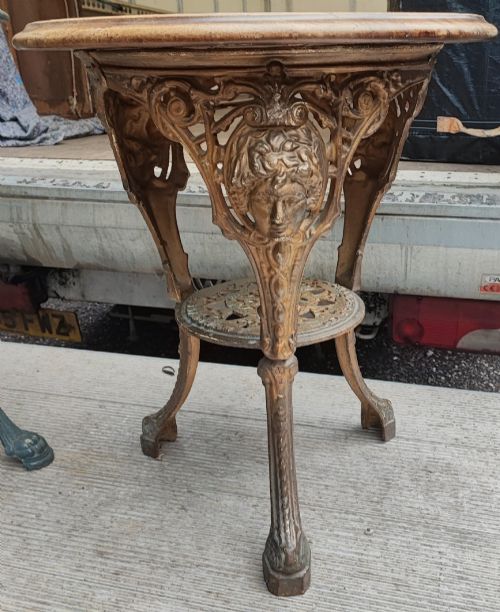
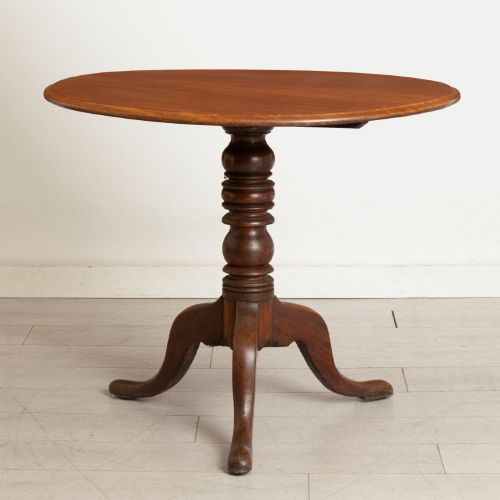
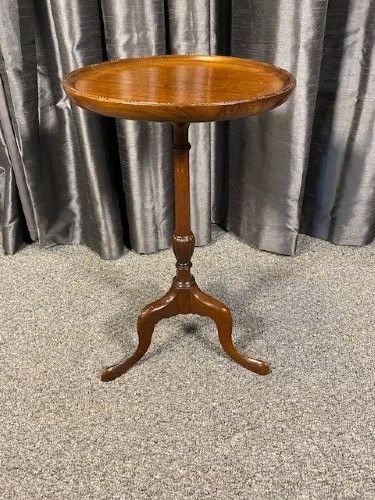
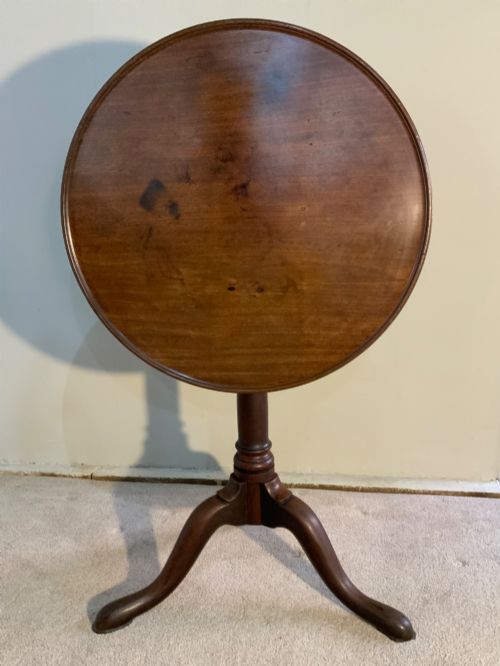
A vintage tripod table brings together centuries of compact table design, resting on a central pillar supported by three splayed legs. When you search for this phrase, you find smaller occasional forms designed to occupy minimal floor space while offering a stable surface.
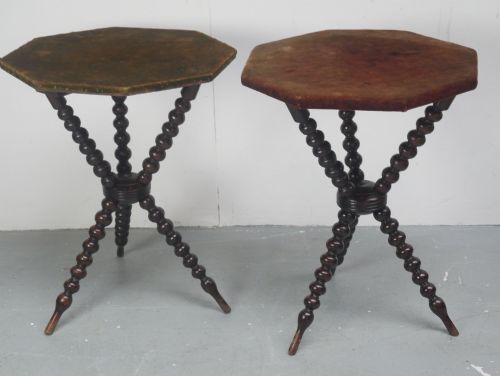
The pieces appearing on this page span several distinct periods, reaching from Georgian and Victorian times through Edwardian examples and into the early twentieth century. These tables served various domestic purposes over the decades, functioning as wine tables, lamp stands, gaming surfaces, and tilt-top breakfast tables.
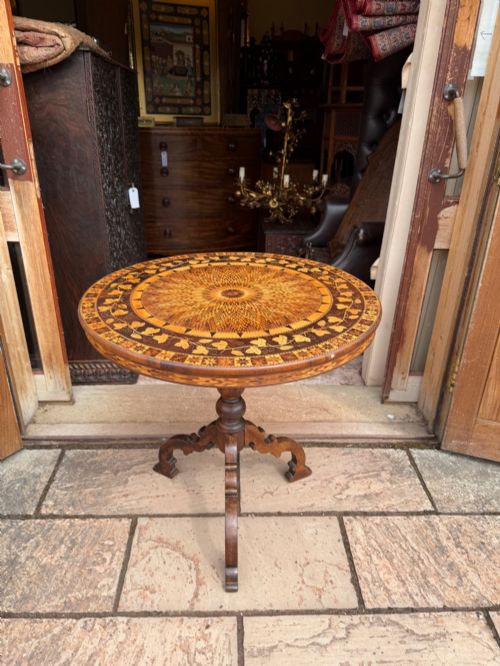
Mahogany and oak dominate the selection, accompanied by walnut, pine, and rosewood. You encounter both simple utilitarian items, such as cricket tables, and more formal pieces featuring marquetry inlay or tilt mechanisms designed to save space when not in use.
Materials and construction methods
Cabinet makers relied primarily on dense timbers like mahogany, oak, and walnut to construct the pillars and legs, ensuring sufficient weight at the base to maintain stability. Tops were often formed from single boards or finely matched veneers fixed to a tilting mechanism or a fixed spider mount.
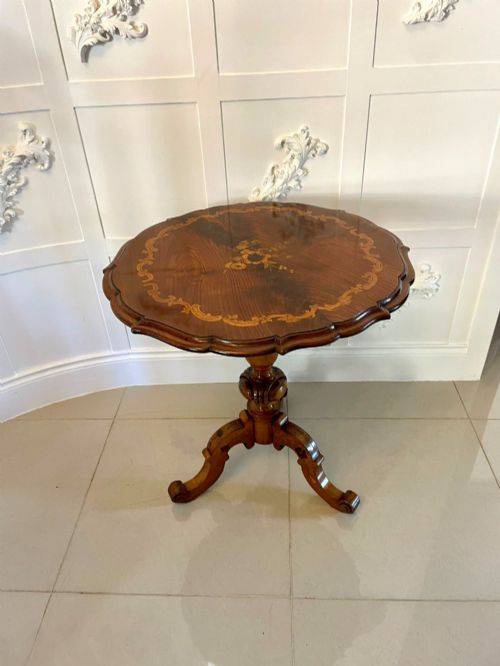
Joinery techniques combined traditional turning for the central columns with precise dovetailing and pegging for the leg attachments. Brass fittings appeared on adjustable elements, while marquetry inlay and chip-carving decorated the more ornate Victorian and Edwardian surfaces.
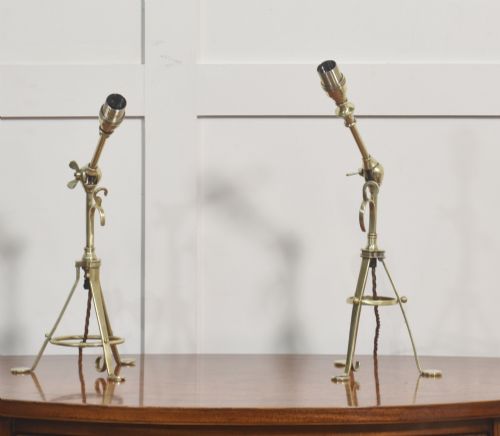
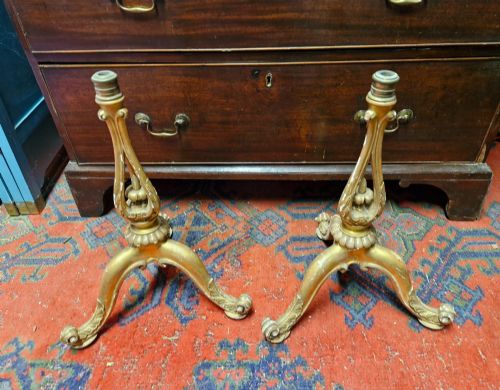
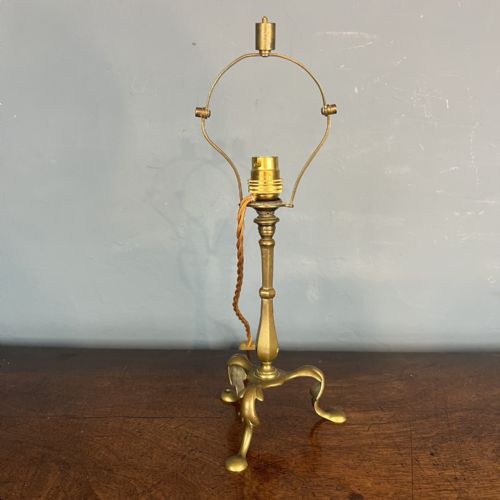
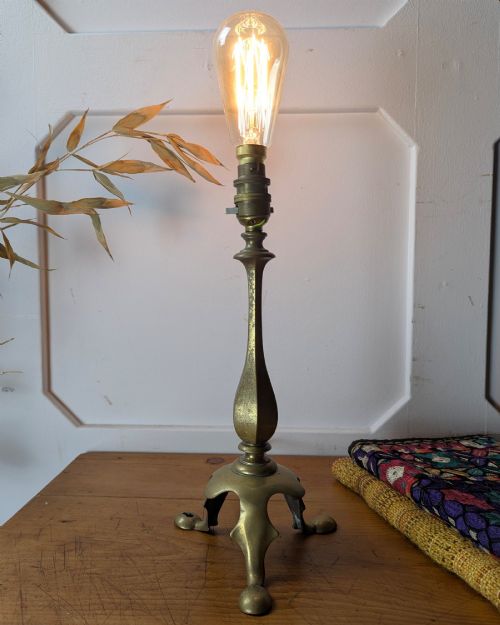
Object types include wine tables, cricket tables, occasional tables, and tilt-top breakfast tables alongside brass lighting.
Distinctions in quality and finish
The standard of a piece rests heavily on the selection of timber, where figured mahogany or burr walnut demonstrates superior natural patterning compared to plain softwood or basic hardwood. Cabinet makers invested greater skill in the turning of the central column and the graceful curve of the three legs.
Surface finishing marks the difference between basic utility items and finer reception room pieces. Hand-rubbed polish, crisp marquetry inlay, and sophisticated tilt-top mechanisms distinguish the more ambitious workshop productions from straightforward domestic furniture.
W.A.S. Benson
The Vintage Tripod Table Glossary
- Tilt-top
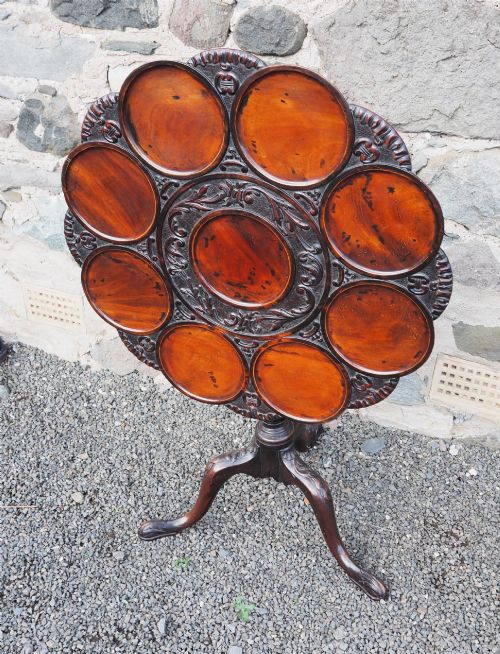
- A table top hinged to the central pillar that folds vertically when not in use. This mechanism allowed tables to be stored flat against a wall.
- Cricket table
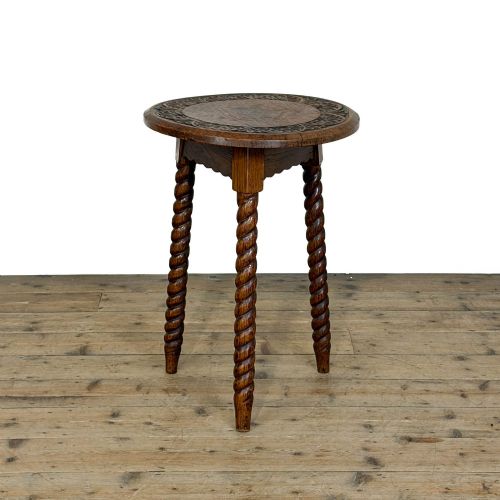
- A small, three-legged occasional table of sturdy construction. These tables originated in domestic settings and often featured a round wooden top.
- Wine table
- A small occasional table designed to hold a single glass or bottle near a seating area. These pieces usually feature a slender pillar and compact top.
- Marquetry
- Decorative veneer work created by fitting together pieces of different coloured wood to form patterns. Craftsmen utilised this technique on premium Victorian surfaces.
- Dumb waiter
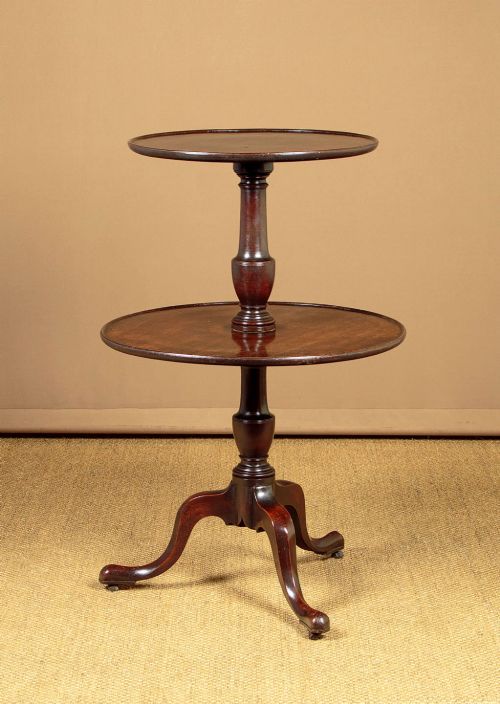
- A multi-tiered standing piece with rotating or fixed circular shelves supported on a central column. These served dining rooms for holding dishes.
Vintage Tripod Table: Frequently Asked Questions
What is a vintage tripod table used for?
These tables function primarily as movable surfaces for lamps, drinks, or decorative objects within a room. Their compact footprint allows them to sit beside chairs or in tight corners without crowding the space.
Many examples include tilt-top mechanisms that enable the surface to fold away against a wall when not in use. This flexibility made them useful in historic interiors and keeps them practical for modern living.
How do I identify a Georgian tripod table?
Georgian examples often display solid mahogany construction with slender, turned central pillars ending in pad or snake feet. The timber possesses a deep, rich colour developed through decades of polishing.
Cabinet makers of this period favoured understated elegance over heavy decoration, relying on proportion and the quality of the wood grain to define the piece.
What is the difference between a cricket table and a wine table?
A cricket table is typically an earlier, oak-constructed piece with three plain legs, originally built for sturdy everyday use in domestic cottages. They often feature simple circular tops and straightforward joinery.
A wine table is generally more refined, standing on a slender turned pedestal designed specifically for holding drinks or small lamps in a formal reception room.
How do I care for a polished wood table top?
Maintain the finish by dusting regularly with a soft, dry cloth and avoiding placement near direct heat sources or strong sunlight. These precautions protect the historic polish from drying out or cracking.
Applying a traditional beeswax polish occasionally helps nourish the timber and preserves the natural lustre of the wood grain without building up a sticky residue.