







Traditional Cricket Table
A traditional cricket table gives you a sturdy three-legged surface rooted in centuries of vernacular British utility.
Traditional Cricket Table
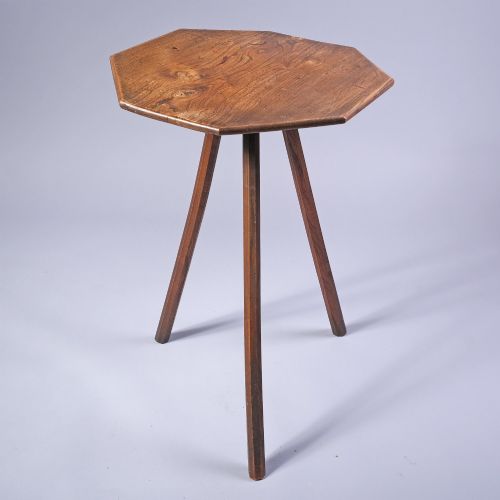
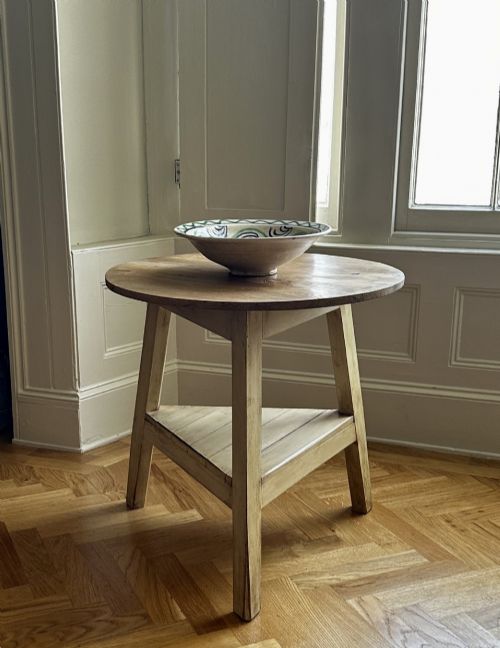
A traditional cricket table is a compact, three-legged occasional table designed for stability on uneven floors. You will most frequently encounter nineteenth-century examples on this page, spanning rustic country, farmhouse, and Victorian vernacular styles.
These side tables appear in circular top formats supported by three splayed legs. The form serves as a versatile piece for corners or beside seating, offering a distinct silhouette shaped by early utility.
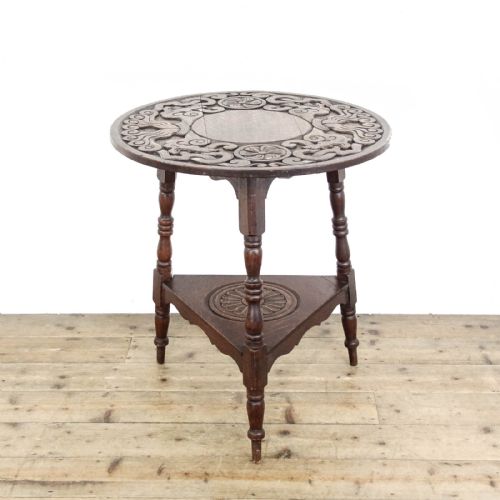
Origins in the evidence stretch from English and Welsh workshops through various regional interpretations. The inventory balances plain timber surfaces with painted finishes and carved details.
How they were made
Maker construction relies on solid native timbers such as pine, oak, elm, ash, and pollard oak. Artisans joined tops to splayed undercarriages using pegged joints and turned components.
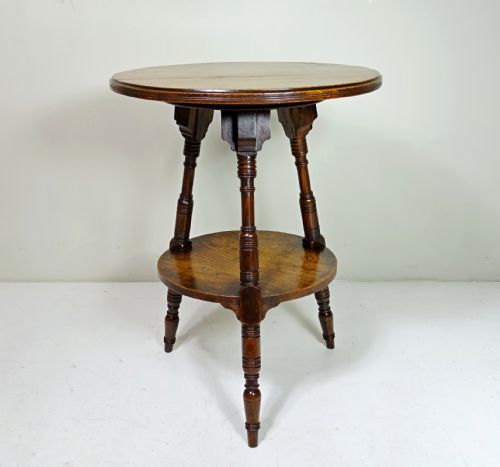
Surface treatments include applied paint, bleached finishes, and carved ornamentation. Turning techniques produce structural elements like bobbin turned legs that add visual rhythm to the simple frame.
The listings here span the nineteenth and early twentieth centuries, featuring pine, oak, elm, ash, and painted surfaces.
What varies in quality
Quality rests in the choice of timber and the crispness of the turning on the legs. Dense woods like elm and pollard oak elevate a piece above standard utility pine.
Proportion and stance define the better examples in this category. A balanced splay of the three legs ensures the table sits firmly without rocking, showing deliberate craftsmanship in the frame.
The Traditional Cricket Table Glossary
- Cricket table
- A small three-legged table with a round wooden top, traditionally used in domestic settings. The design provides inherent stability on irregular floors.
- Bobbin turned
- A method of lathe work producing a series of rounded spheres resembling spools along the length of a leg. This decorative turning appears on nineteenth-century vernacular furniture.
- Pollard oak
- Timber taken from trees that were cut back close to the trunk to encourage dense, highly figured branch growth. It yields a distinctive mottled grain pattern.
- Vernacular furniture
- Practical items made by local craftspeople for everyday use rather than high-style workshop production. These pieces reflect regional traditions and available materials.
- Splayed legs
- Supports angled outward from the centre to create a wide, stable base. This structural choice prevents tipping on uneven ground.
Traditional Cricket Table: Frequently Asked Questions
What is a traditional cricket table?
A traditional cricket table is a small, round, three-legged table originating from British vernacular domestic use. Its three-legged design ensures it remains steady on uneven stone or timber floors.
These tables function primarily as side or occasional tables. They bring history and compact utility to modern interiors.
Why does it have three legs?
Three legs provide absolute stability on uneven surfaces without requiring levelling. Every leg touches the floor simultaneously, making the table practical for older homes.
This structural necessity defines the iconic silhouette of the form. It allows the table to fit snugly into corners and tight spaces.
What woods were used?
Maker workshops utilised native British hardwoods and softwoods including pine, oak, elm, ash, and pollard oak. Elm and oak provided durable surfaces for daily household tasks.
Selected timbers often reflect the regional availability of materials to the maker. Some examples also feature painted finishes over the base wood.
How do I date a cricket table?
Dating relies on timber characteristics, tool marks, construction joints, and stylistic indicators such as turning patterns. Nineteenth-century examples frequently show hand-planed tops and pegged framing.
Comparing the wear patterns and wood shrinkage helps establish the age of the piece. Regional styles from England and Wales offer further contextual clues.
Where can I use one at home?
These compact tables serve well beside armchairs, in narrow hallways, or as bedside surfaces. Their small footprint makes them adaptable to various rooms.
The distinct profile also allows a cricket table to stand alone as a display surface for lamps or plants.