


French Jardiniere Table
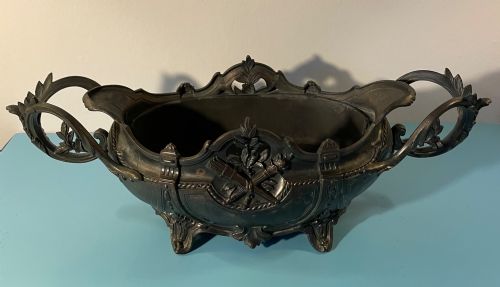
When you search for a french jardiniere table, you enter a world of nineteenth-century plant stands and plant holders made for formal interiors.
French Jardiniere Table
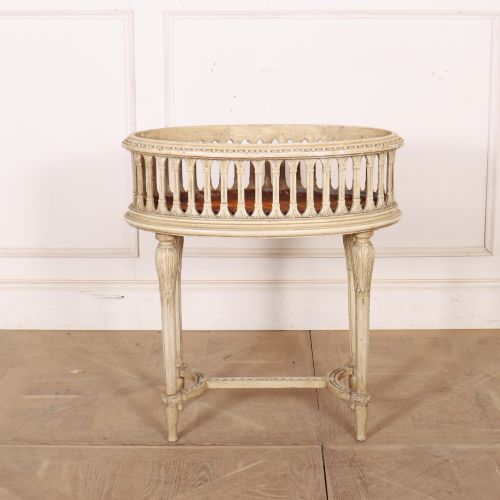
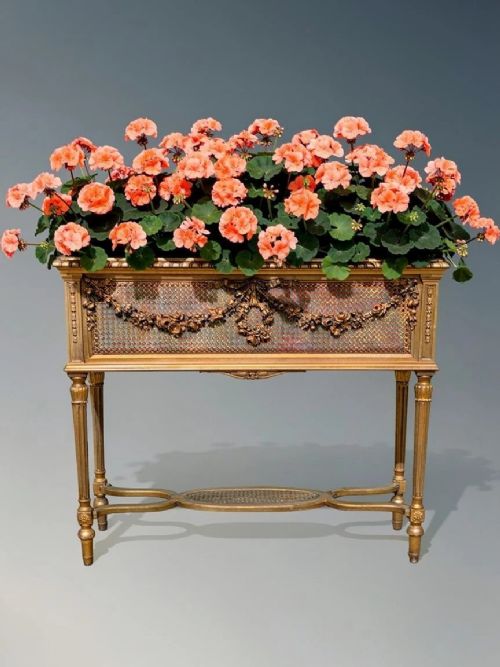
A french jardiniere table combines a decorative plant holder with the sturdy form of an occasional or side table, often doubling as a wine cooler or cellarette in nineteenth-century drawing rooms. These items span periods from the mid-nineteenth century through the Edwardian era, with strong representations of Victorian craftsmanship and Napoleon III design.
Makers and designers drew upon historical idioms, producing pieces in Louis XV, Louis XVI, and Empire styles alongside Rococo revival and occasional Arts and Crafts interpretations. The primary function remained housing live greenery or floral arrangements indoors, protected by removable metal liners or ceramic inserts.
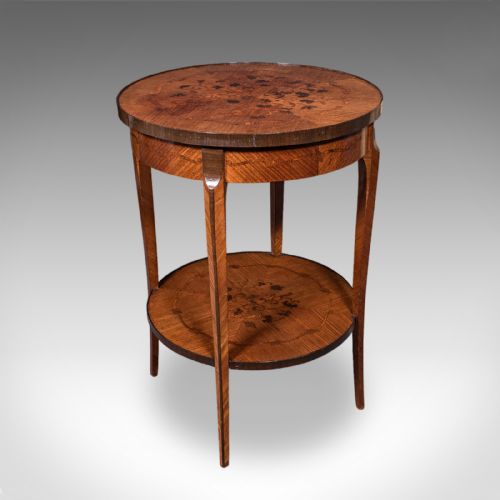
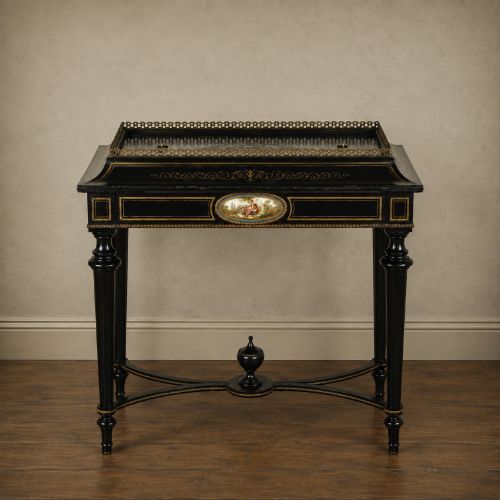
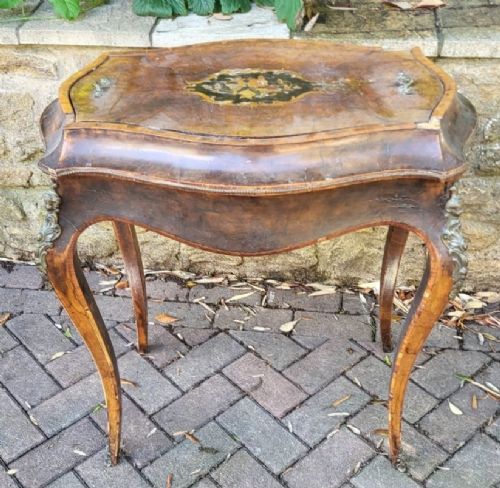
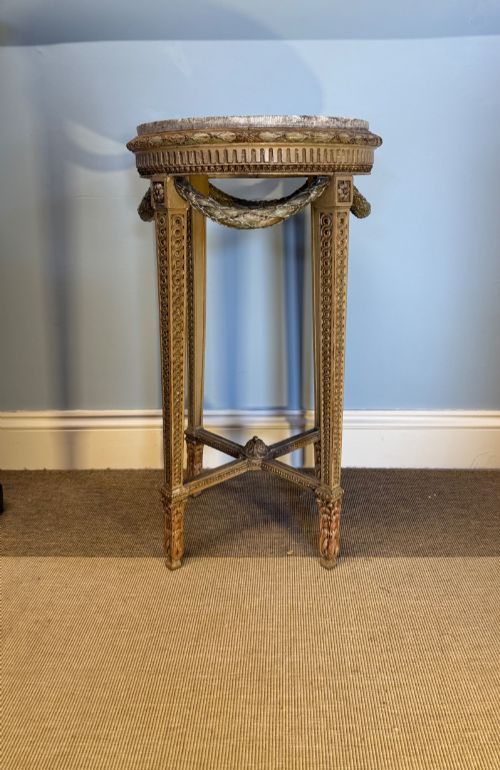
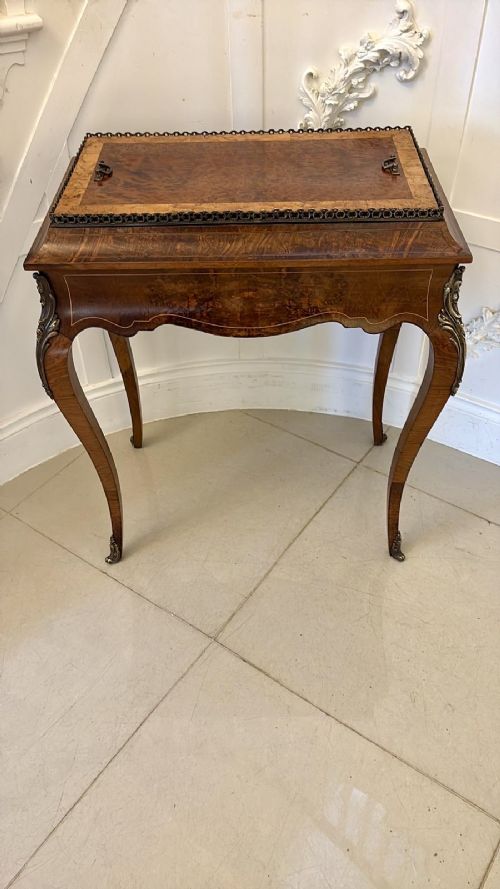
Buyers encounter freestanding pedestal stands, two-tier occasional tables, and table-top plant holders designed to sit upon existing furniture surfaces. Walnut, kingwood, and ebonised wood dominate the wooden frames, frequently enhanced by marquetry, parquetry, or contrasting inlay.
How they were made
Cabinetmakers constructed the main framework using dense timbers such as burr walnut, mahogany, satinwood, and kingwood, often applying intricate marquetry patterns or brass stringing. Ebonised wood provided a dark, dramatic ground for inlaid motifs and metallic decoration.
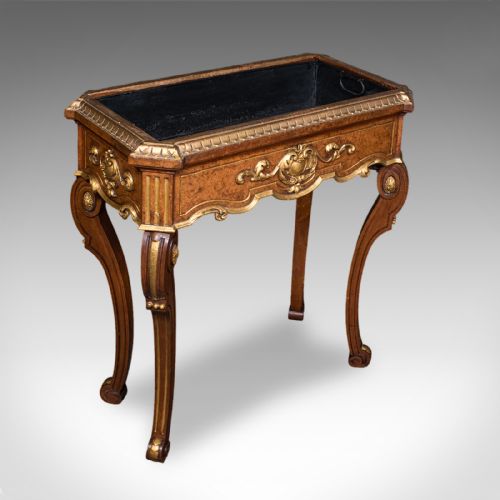
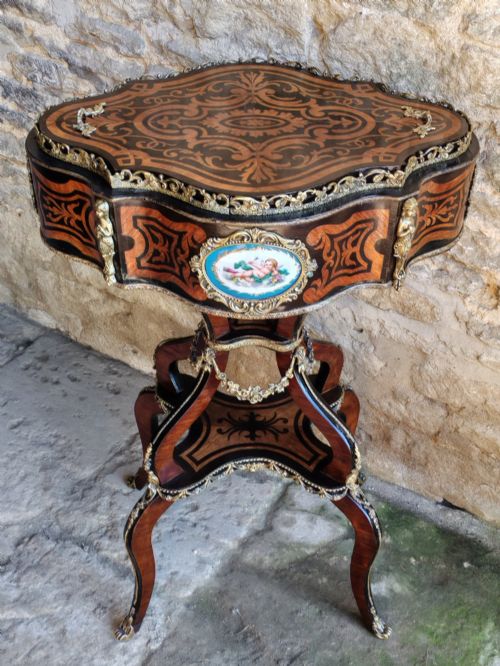
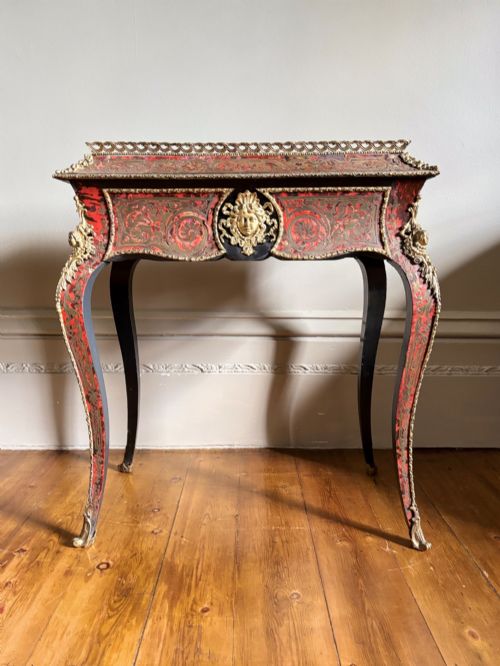
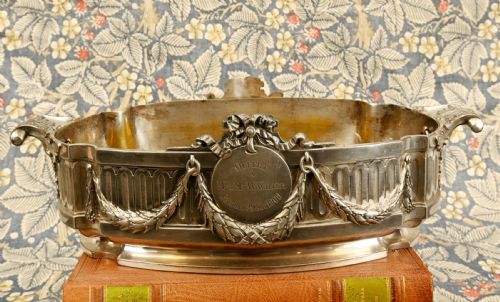
Ormolu mounts, gilt bronze, brass, and silver-plated details decorated the corners, feet, and friezes, framing inset porcelain plaques or painted ceramic panels. Marble tops, copper liners, and brass inserts completed the construction, ensuring water resistance for practical horticultural use.
Several pieces double as covert wine coolers, proving that nineteenth-century hosts valued indoor foliage and chilled refreshment in equal measure.
What varies in quality
The sophistication of the timber veneers and the crispness of the gilt bronze or ormolu mounts dictate the upper tier of the range. Hand-painted porcelain plaques and detailed marquetry inlay require high technical skill, distinguishing bespoke salon pieces from simpler production items.
Structural integrity relies on the preservation of the original metal liner or insert, as water exposure often damages the surrounding wooden joinery over time. Pieces retaining their original hardware and stable veneer work command greater interest from collectors.
The French Jardiniere Table Glossary
- Jardiniere
- A decorative pot or stand designed to hold plants or flowers indoors. They frequently feature waterproof metal liners to protect the surrounding furniture.
- Ormolu
- Gilded bronze mounts applied to furniture and decorative objects during the eighteenth and nineteenth centuries. This technique adds metallic contrast and ornate detail to wooden frames.
- Marquetry
- The art of applying decorative pieces of veneer to a structure to form intricate patterns or pictures. Craftsmen utilised various exotic woods to create contrasting surface designs.
- Boulle
- A style of marquetry using tortoiseshell and brass inlay, popularised during the reign of Louis XIV and revived in nineteenth-century Napoleon III pieces.
- Cellarette
- A lockable container or fitted stand used for holding bottles of wine or liquor. Many nineteenth-century plant holders shared this dual internal function.
French Jardiniere Table: Frequently Asked Questions
What is a french jardiniere table used for?
These pieces served as ornamental plant stands designed to bring living greenery into formal reception rooms and parlours. The waterproof insert allowed plants to be watered without damaging the surrounding decorative woodwork.
Beyond horticulture, many examples doubled as wine coolers, side tables, or occasional display surfaces for the home. Their versatile construction made them central decorative elements in nineteenth-century interior design.
How do I identify a Napoleon III jardiniere?
Napoleon III pieces often feature ebonised wood surfaces combined with ornate ormolu mounts, boulle marquetry, or inset porcelain plaques. This style draws heavily on earlier French royal aesthetics while embracing eclectic Victorian manufacturing techniques.
Look for heavy brass detailing, classical motifs, and deep polished finishes that characterise the period. The inclusion of Sevres-style painted plaques further points toward this mid-to-late nineteenth-century aesthetic.
Are the metal liners original?
Many surviving pieces retain their original copper, brass, or zinc liners, which were essential for containing moisture. Because these liners suffered from corrosion and dampness, replacements are common in older examples.
The presence of an original, fitted metal insert adds historical completeness to the piece. Collectors look closely at the interior housing to determine whether the fittings match the age of the wooden frame.
Where should I place a plant stand at home?
These tables suit bright conservatories, living rooms, and hallways where they can function as focal points or side display surfaces. Placing them near natural light echoes their original nineteenth-century purpose as indoor plant holders.
Protect the antique wood by using saucers inside the metal liner to prevent standing water from reaching the base. Modern placement often involves using the surface for decorative objects or books rather than potted plants.