



Napoleon III Furniture
Napoleon iii furniture brings together opulent French design, rich ebonised woods, and intricate ormolu mounts to transform an interior.

Napoleon III Furniture
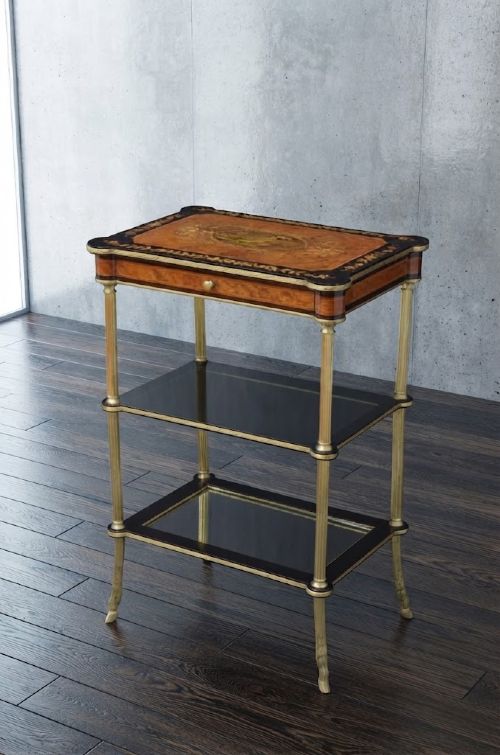
Napoleon iii furniture encompasses the ornate and eclectic decorative arts produced during the Second Empire and subsequent decades of the nineteenth century. Buyers seeking this aesthetic encounter a variety of forms designed for formal entertaining and private salons, including side tables, writing desks, pier cabinets, and display cabinets.
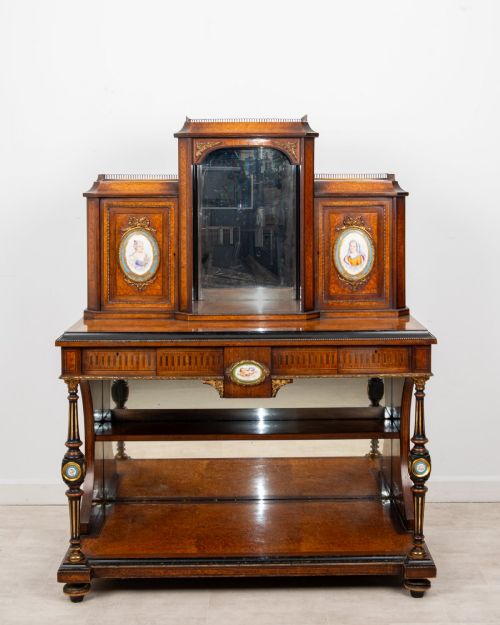
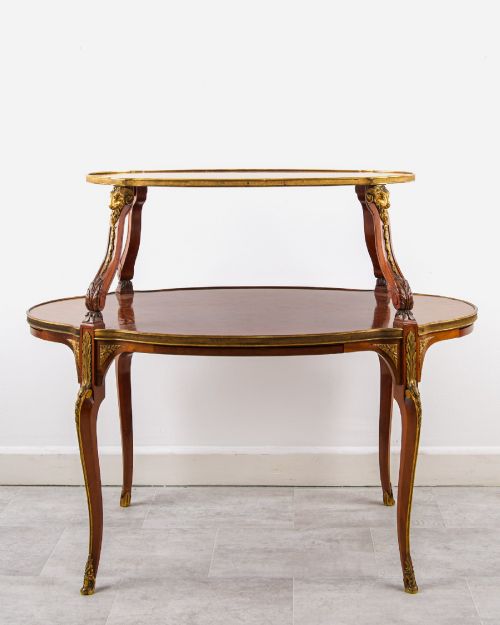
The pieces appearing on this page reflect diverse stylistic revivals, drawing heavily upon Louis XV and Louis XVI motifs alongside contemporary innovations. Walnut, ebonised wood, and exotic veneers dominate the selection, frequently enhanced by decorative elements like porcelain plaques and mirrored tiers.
Originating predominantly from French workshops, these items range from intimate two-tier étagères and jardinière stands to monumental cabinets. The surviving examples demonstrate a preoccupation with surface decoration, luxury, and versatile domestic utility.
How They Were Made
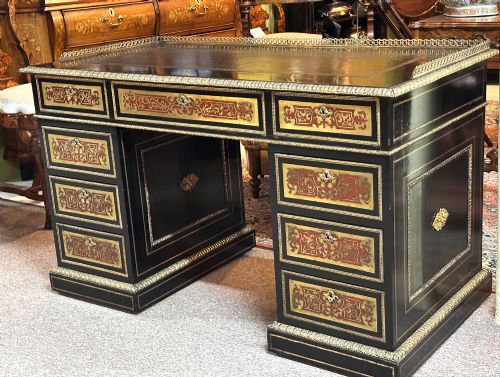
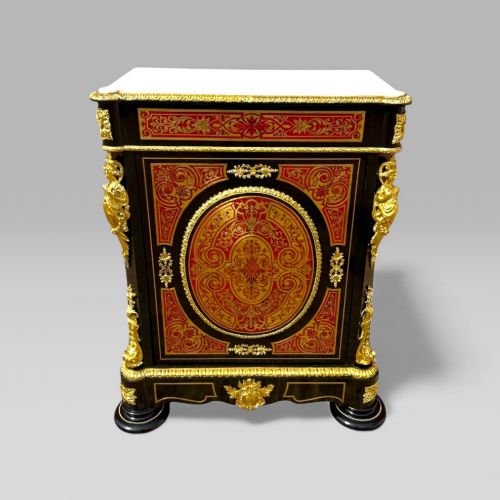
Cabinetmakers utilised dense timbers such as rosewood, kingwood, amboyna, and mahogany as foundations for intricate marquetry and boulle work. Brass and tortoiseshell inlay create shimmering surface patterns that catch the light across tabletops and cabinet doors.
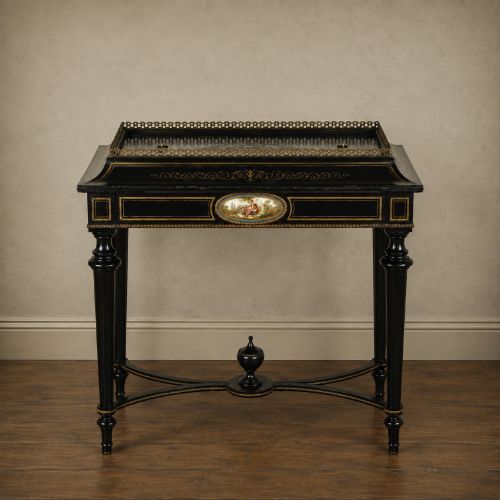
Cast bronze ormolu mounts provide structural framing and sculptural enrichment, affixed to corners, legs, and aprons with precision. Inlaid porcelain plaques, often painted with floral or figural scenes, are frequently set directly into the wooden surfaces of desks and cabinets.
Napoleon III Furniture Retail Price Guide 2026
Typical asking prices for napoleon iii furniture among the pieces listed under this phrase on Sellingantiques today, from the lower quarter to the upper quarter. They describe what is for sale here now, not the wider market.
Listings feature walnut, mahogany, and exotic veneers alongside brass, ormolu, and hand-painted porcelain plaques.
What Varies in Quality
The calibre of napoleon iii furniture rests upon the crispness of the bronze ormolu casting and the precision of the underlying marquetry or brass inlay. Master workshops invested heavily in hand-chased metalwork and carefully selected grain patterns, whereas lesser pieces rely on simpler stamped brass and plain veneers.
Structural integrity and the preservation of delicate decorative components - such as fitted porcelain inserts, mirrored glass, and original marble tops - determine the standing of an individual piece. The depth of the ebonised finish and the tightness of the joinery further distinguish workshop production from mass manufacturing.
Maison Millet·Paul Sormani
The Napoleon III Furniture Glossary
- Boulle work
- A form of marquetry consisting of tortoiseshell and brass inlay, developed by André-Charles Boulle and revived extensively during the nineteenth century. This technique produces a striking contrast between the dark shell and gleaming metallic patterns.
- Ormolu
- Gilded bronze used for decorative mounts, feet, and handles on furniture. The best examples exhibit sharp hand-chasing after casting.
- Bonheur du jour
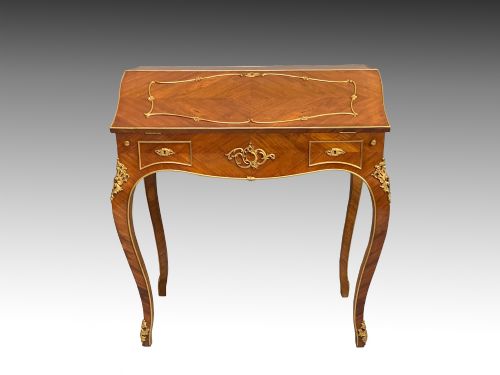
- A small, light writing desk featuring a set of drawers and shelves above the main work surface. These refined pieces were designed principally for ladies' boudoirs.
- Étagère
- An open tiered piece of furniture used for displaying small decorative objects, porcelain, or books. The multiple platforms maximise display space within smaller salon settings.
- Pietra dura
- An artistic technique using cut and fitted polished coloured stones to create geometric or pictorial designs. It appears on the panels of high-status cabinets and tables.
Napoleon III Furniture: Frequently Asked Questions
What is napoleon iii furniture?
This category covers nineteenth-century French decorative arts from the Second Empire period and later revivals, known for eclectic styling and lavish materials. Artisans combined traditional cabinetmaking with bold decorative statements.
Items range from large display cabinets and bookcases to small side tables and sewing work tables, reflecting the era's taste for domestic luxury.
Where were these pieces used?
These furnishings populated the formal salons, drawing rooms, and private boudoirs of prosperous nineteenth-century households. They served both practical functions, like writing and sewing, and decorative roles for displaying collections.
Today, they adapt well to both period interiors and modern spaces as statement focal points.
How do I care for ebonised wood?
Ebonised surfaces require gentle dusting with a soft, dry cloth to prevent abrasion of the dark finish. Avoid using modern aerosol polishes, which can leave a hazy film over time.
Keep pieces away from direct sunlight and steady heat sources to protect the underlying timbers and delicate brass inlays.