

French Inlaid Desk
When you handle a french inlaid desk, you notice how the precision of the marquetry sets the tone for the entire room.

French Inlaid Desk
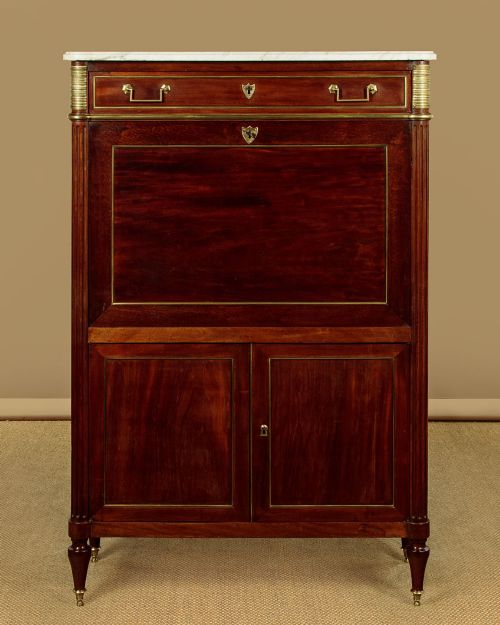
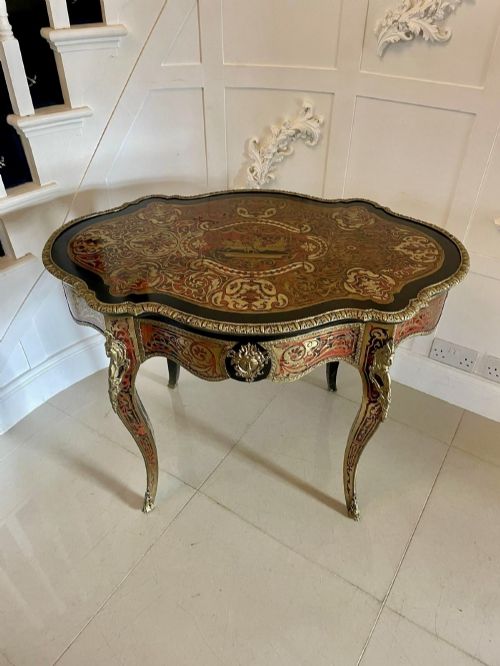
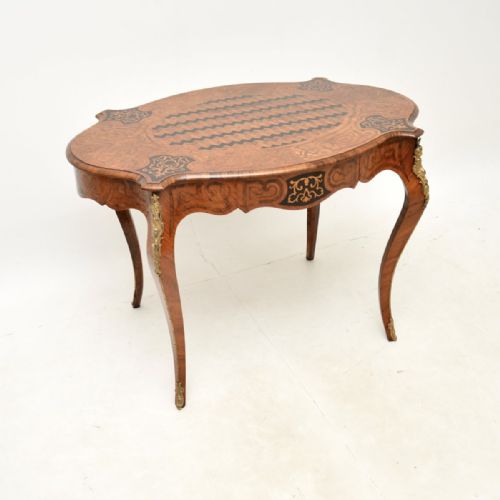
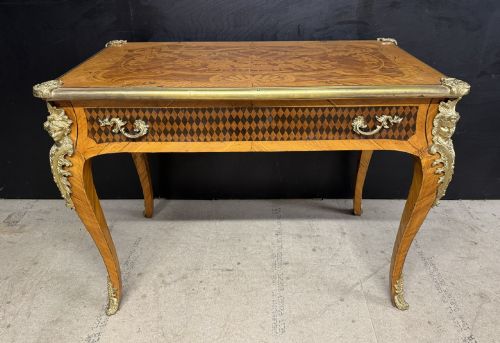
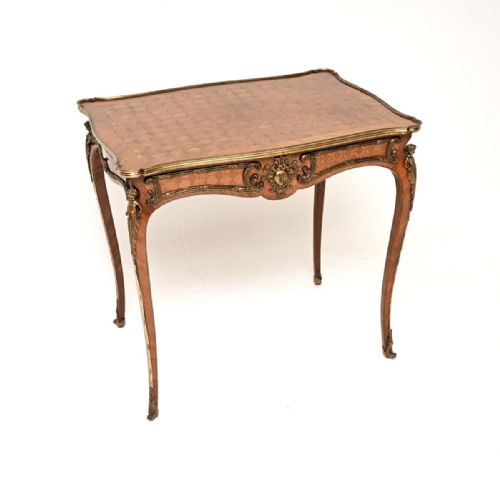
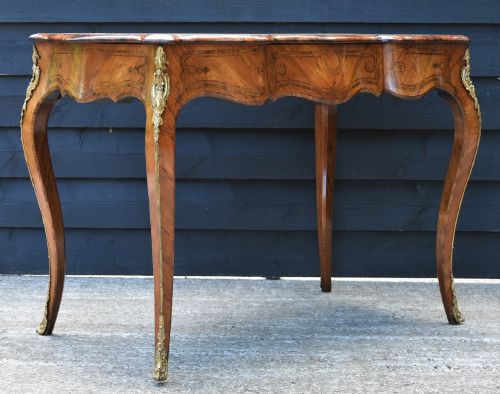
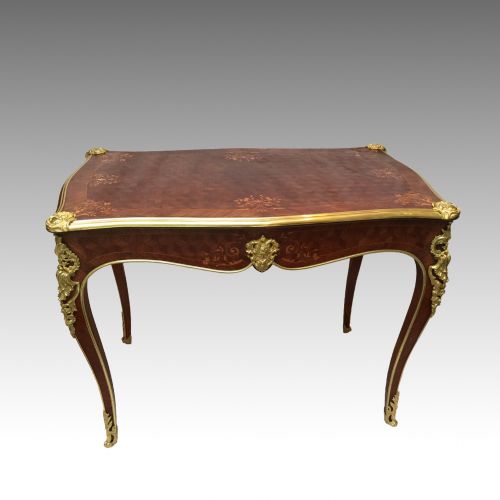
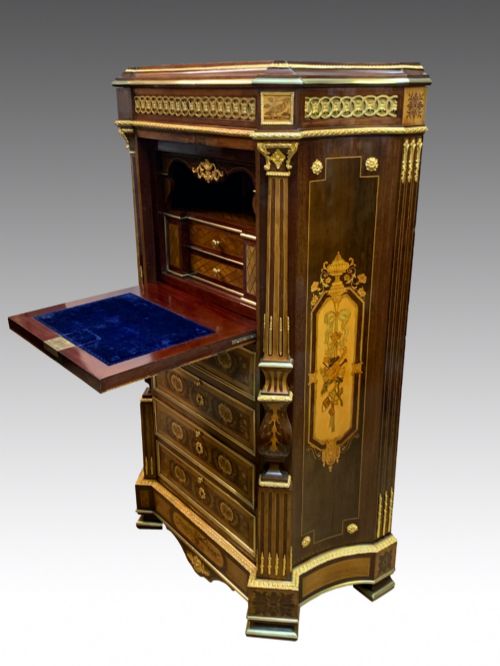
A french inlaid desk combines refined workspace utility with elaborate surface decoration, originating predominantly from nineteenth-century workshops influenced by earlier court aesthetics. Buyers seeking this phrase encounter various forms, most commonly bureau plats, writing tables, and dainty bonheur-du-jours.
The aesthetic leans heavily on Louis XV and Louis XVI revivals, featuring serpentine contours or clean geometric lines. These pieces serve as functional writing furniture while functioning visually as centrepieces due to their decorative wood patterns.

How They Were Made
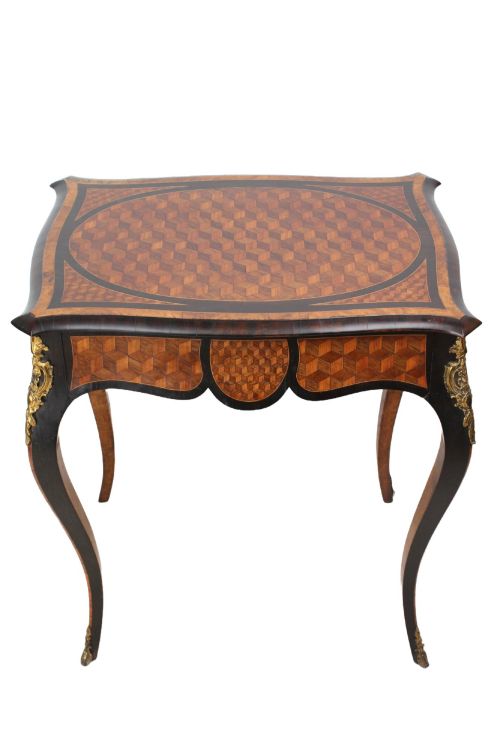
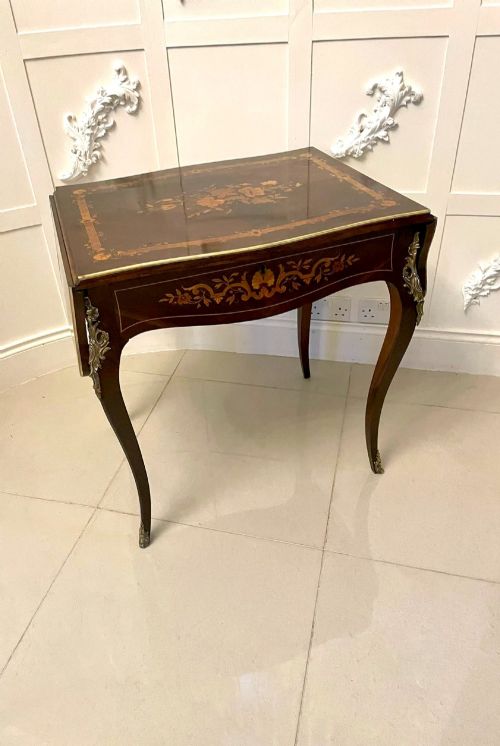
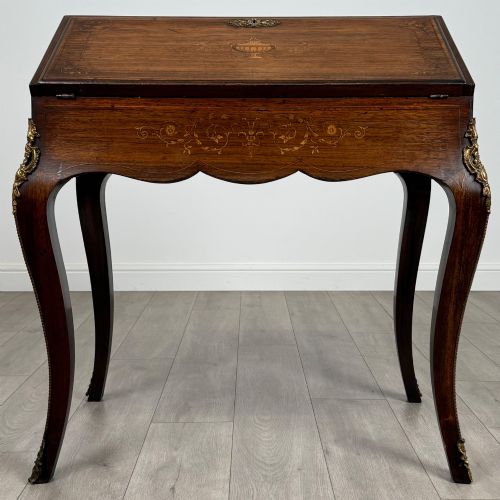
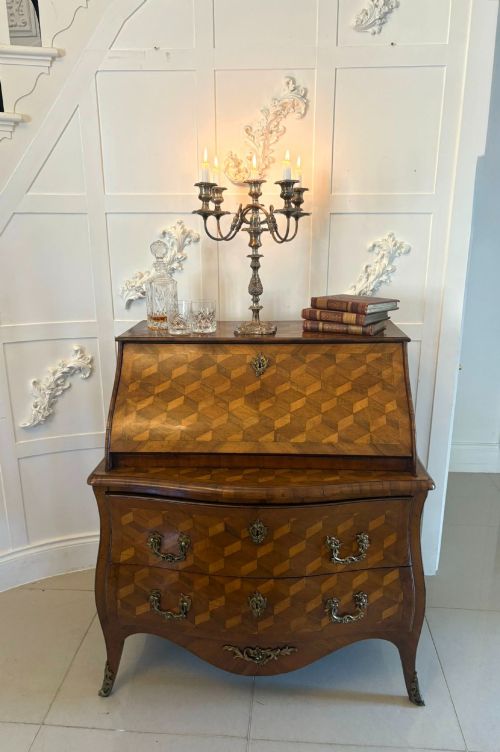
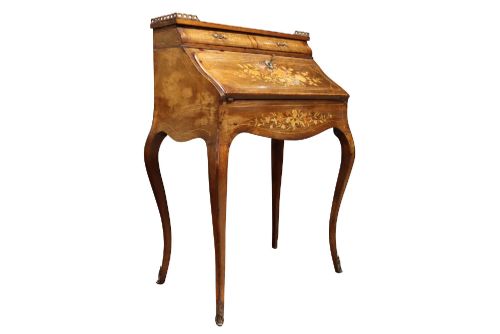
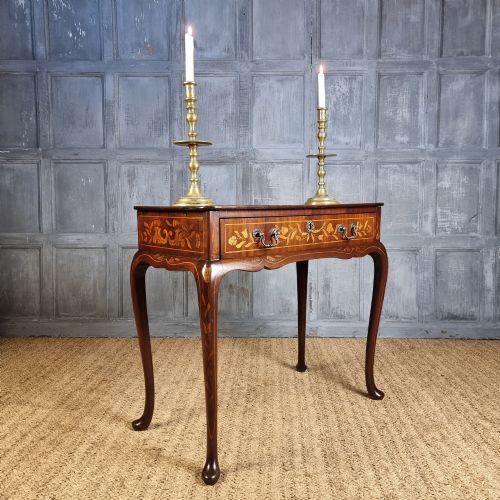
Carpenters constructed carcases using hardwoods like mahogany, walnut, or oak, which provided a stable foundation for decorative veneers. Kingwood, rosewood, and satinwood were then cut into thin sheets and arranged by hand to form intricate geometric parquetry or floral marquetry scenes.
Makers integrated cast ormolu mounts to protect vulnerable corners and accent structural lines, often combining brass inlay with tortoiseshell in Boulle work pieces. Leather inserts frequently lined the writing surfaces, providing a durable plane for correspondence.
French Inlaid Desk Retail Price Guide 2026
Typical asking prices for french inlaid desk among the pieces listed under this phrase on Sellingantiques today, from the lower quarter to the upper quarter. They describe what is for sale here now, not the wider market.
Listings demonstrate a strong preference for nineteenth-century French revival pieces, incorporating kingwood, walnut, and elaborate ormolu mounts.
What Varies in Quality
The standard of execution in the veneer work dictates the standing of the piece, distinguishing meticulous hand-cut motifs from simpler repetitive patterns. Precision in the matching of wood grains across curves and drawers reveals the maker's underlying skill.
Hardware weight and the crispness of the gilt bronze or ormolu mounts also signal grade. Superior examples exhibit harmonious integration of metal mounts that fit the contours of the woodwork without gaps.
JAS Shoolbred·Maison Krieger·Millet
The French Inlaid Desk Glossary
- Marquetry
- Decorative veneer work arranged to form pictorial designs or scenes using various coloured woods. This technique requires patience and precise cutting to fit each wood piece together.
- Parquetry
- Geometric wood inlay patterns such as cubes, lozenges, or chequers applied to a surface. It offers a structured contrast to the organic flow of floral marquetry.
- Bureau Plat
- A freestanding writing table featuring a flat top, usually with drawers along the frieze. These desks lack a superstructure and look finished from all angles.
- Bonheur-du-Jour
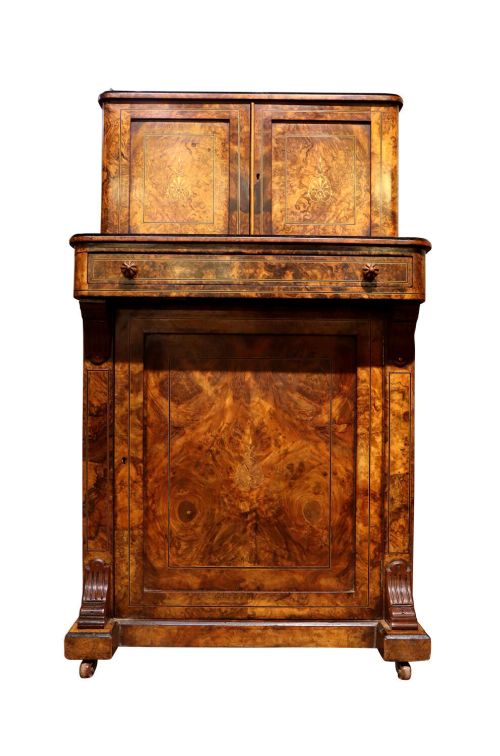
- A small lady's writing desk featuring a light superstructure with shelves, drawers, or a small cabinet above the main writing surface. Popularised in the eighteenth century, they saw a widespread revival during the Victorian era.
- Ormolu
- Gilded bronze mounts applied to furniture edges, feet, and keyholes for decoration and protection. The technique involves coating cast bronze with a mercury-gold amalgam.
French Inlaid Desk: Frequently Asked Questions
How do I use a bureau plat today?
A bureau plat works well as a freestanding writing table or a slim executive desk in a home study. Its finished back allows it to sit proudly in the centre of a room rather than pushed against a wall.
The leather writing surface provides a functional, resilient space for modern writing instruments and laptops, blending historic character with everyday utility.
What is the difference between parquetry and marquetry?
Parquetry relies on geometric arrangements like cubes, bricks, and chequers to create repeatable patterns across a surface. It offers a structured, architectural visual rhythm.
Marquetry employs varied wood veneers to construct pictorial compositions, such as floral sprays, ribbons, or landscapes. Both techniques demand high levels of cabinet-making skill.
Where should I place a bonheur-du-jour?
A bonheur-du-jour suits intimate spaces like drawing rooms, dressing areas, or quiet reading corners where a large partner desk would overwhelm the proportions. The upper tier provides compact display or storage space for stationery.
Because these desks feature finished backs and decorative veneers, they look balanced when viewed from any angle in a room.
How do I care for inlaid wooden surfaces?
Keep inlaid desks away from direct sunlight and heat sources to prevent the delicate rosewood, kingwood, or walnut veneers from drying out and lifting. Consistent indoor humidity protects both the wood and the underlying structure.
Apply a quality wax polish sparingly and buff gently with a soft cloth to maintain the lustre of the timber and the brass or ormolu mounts.