

Antique Marquetry Console
An antique marquetry console brings together intricate wood veneers and sculptural forms, offering practical display surfaces rooted in centuries of cabinet-making skill.

Antique Marquetry Console
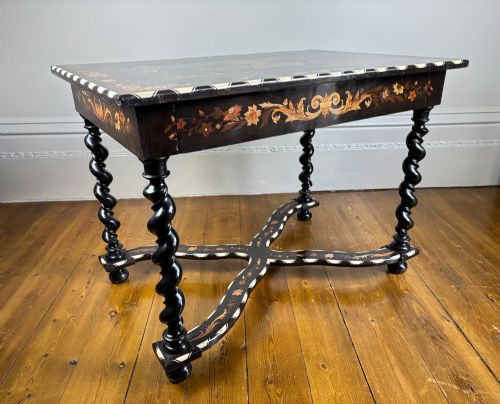
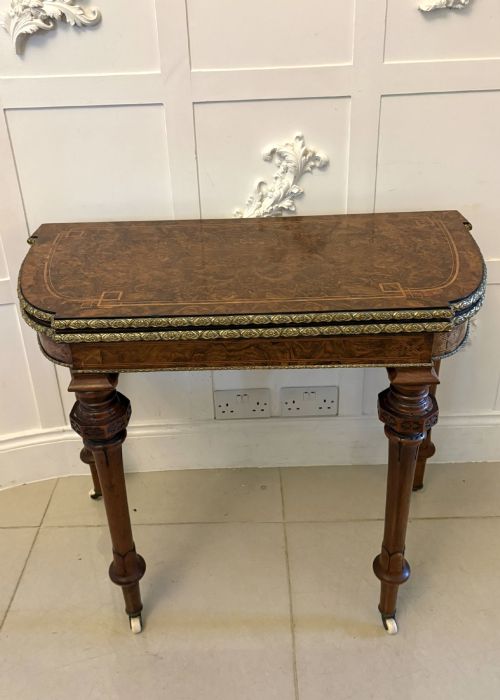
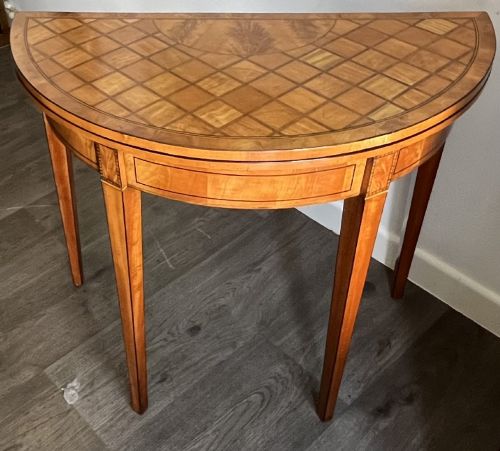
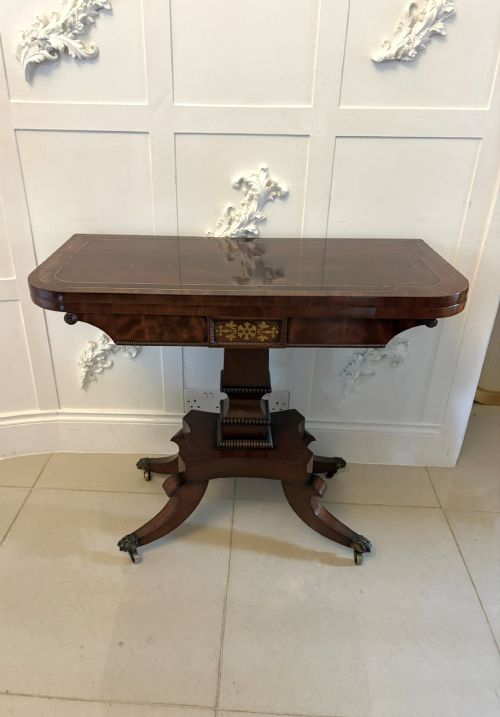
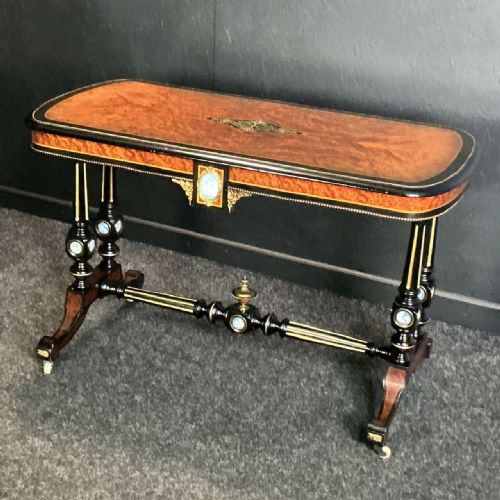
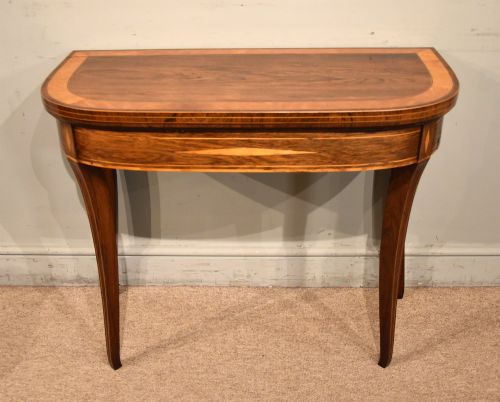
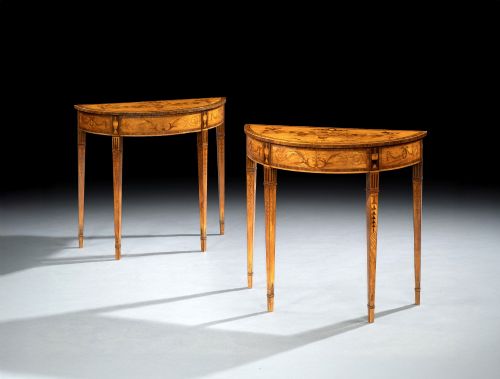
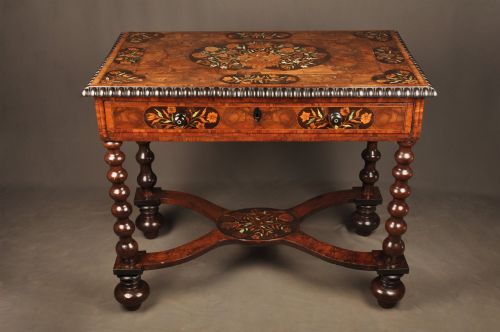
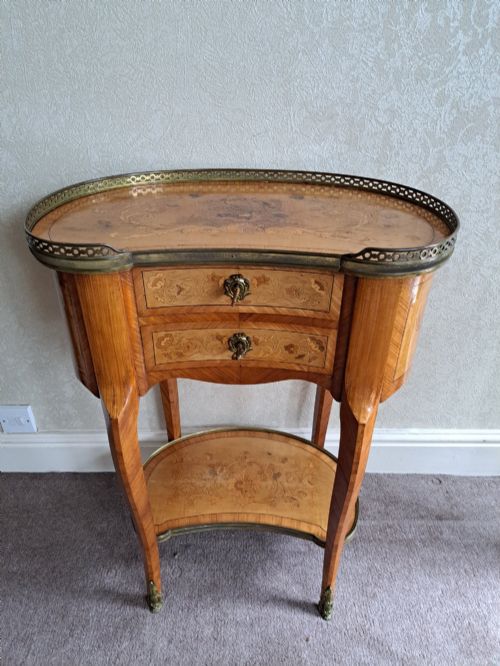
When you search for an antique marquetry console, you encounter tables designed to stand against walls or function as dual-purpose card and games tables. The selection ranges from George III mahogany and satinwood demi-lune pieces to elaborate Victorian French designs in burr walnut and kingwood.
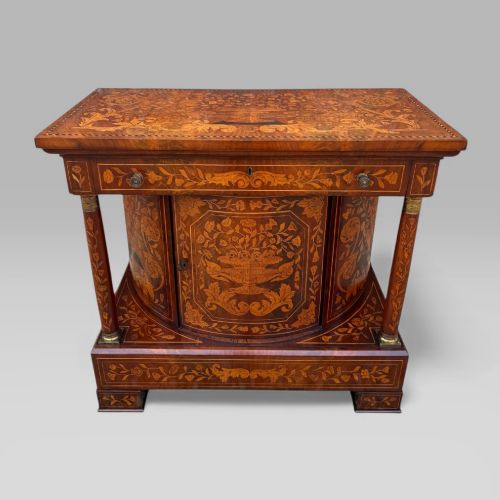
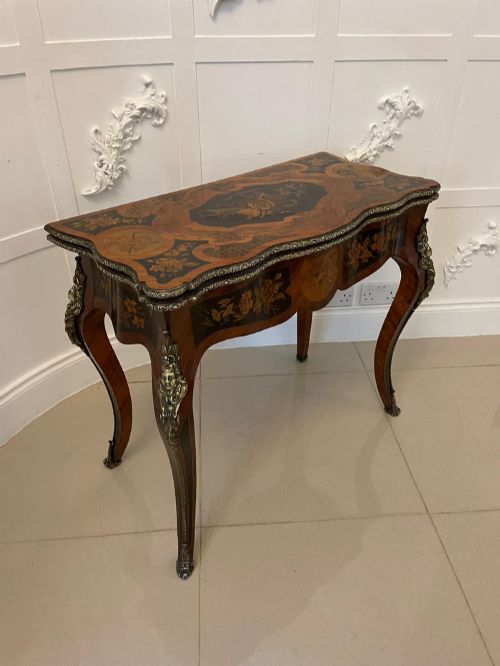
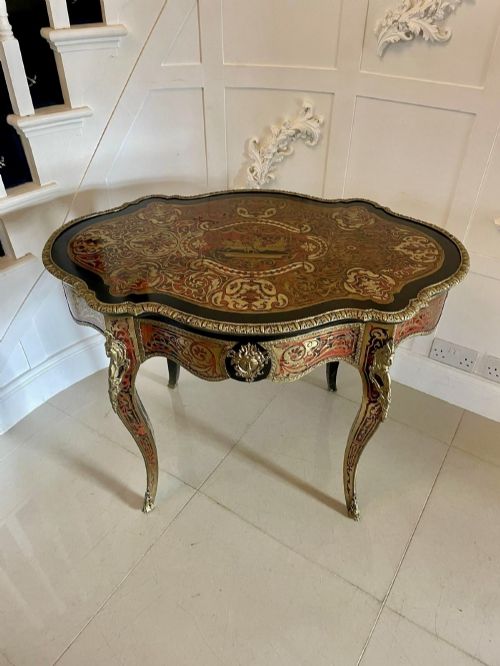
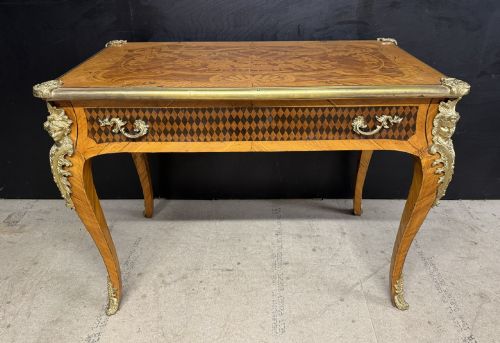
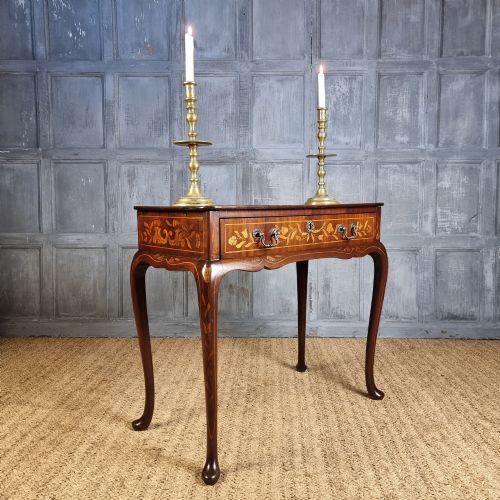
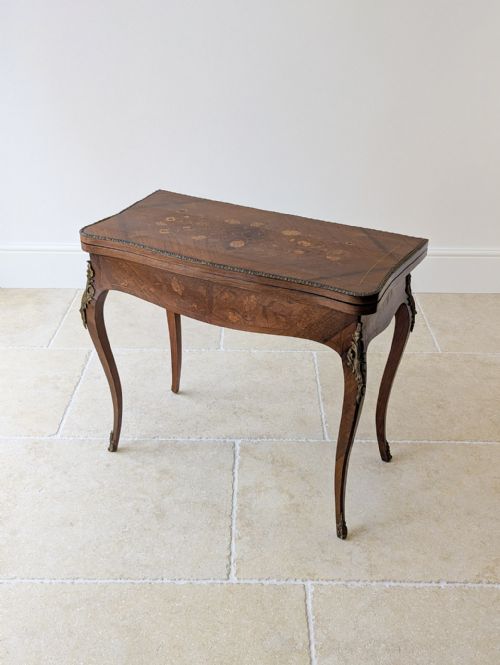
The pieces on this page span the eighteenth and nineteenth centuries, including Dutch floral marquetry wall tables and Louis XV style pieces with serpentine fronts. These tables served primarily as pier tables or serving surfaces in formal reception rooms.
Makers and workshops across England and France produced these forms using rich timbers, often mounting them with ormolu or brass inlay to catch the light in drawing rooms.
Materials and Technique
Cabinet-makers built these consoles using foundational woods like mahogany, oak, or walnut, upon which they laid fine veneers of satinwood, kingwood, rosewood, and tulipwood. The decorative surfaces rely on precision cutting of contrasting wood veneers to form floral or geometric marquetry pictures.
Many examples incorporate cast brass ormolu mounts, gilt bronze details, and occasional bone inlay to frame the marquetry panels. Fold-over card tables and demi-lune console shapes required specialist hinge work and structural joints to support the veneered tops without warping.
Listings feature 18th century Dutch floral marquetry alongside 19th century Victorian burr walnut and French kingwood designs.
Judging Quality
Quality rests in the crispness of the veneer cutting and the natural variety of the timbers used to shade the marquetry design. Superior pieces display seamless integration between the wooden inlay and the structural carcase, without lifting edges or crude filler.
The weight and chasing of the ormolu mounts separate standard production from exhibition pieces. Finer tables maintain tight mitres in the crossbanding and preserve the subtle grain shifts inherent in burr walnut and satinwood.
George Bullock·Edwards And Roberts·François Linke·Millet
The Antique Marquetry Console Glossary
- Marquetry
- A decorative technique where small pieces of contrasting veneer are assembled to form pictorial or geometric patterns on a wooden surface.
- Ormolu
- Gilded bronze mounts and decorative accents applied to the corners, apron, or legs of fine furniture.
- Demi-lune
- A half-moon shape characteristic of side and console tables designed to sit flush against a wall.
- Crossbanding
- A border of veneer laid with the grain running perpendicular to the main panel to frame the central design.
- Pier table
- A decorative table specifically built to stand against the wall between two windows, often paired with a mirror above.
Antique Marquetry Console: Frequently Asked Questions
How were these tables used originally?
Console and pier tables stood against drawing room walls beneath mirrors to display porcelain or clocks. Many doubled as card tables with folding tops lined in baize or leather for evening entertainment.
Their narrow footprints allowed them to occupy hallways and reception rooms without obstructing movement through the house.
How do I live with a marquetry console?
Keep these tables away from direct sunlight and strong heat sources to prevent the delicate wood veneers from drying and lifting. Regular dusting with a soft, dry cloth protects the polished surface without damaging the historic finish.
Avoid placing damp items directly onto the wood, using protective coasters beneath any lamps or decorative objects displayed on the top.
How do I tell George III from Victorian pieces?
George III pieces generally rely on understated mahogany or satinwood carcases with restrained brass inlay and straight tapered legs. They reflect a classical restraint typical of the late eighteenth century.
Victorian interpretations often embrace French revival styles, featuring elaborate burr walnut, heavy ormolu mounts, serpentine curves, and dense floral marquetry patterns.